

7 Steps to Puppy-Proof Your Home Safely

Last Updated: November 6, 2026
Quick Summary
To puppy proof home spaces, get down to your puppy's eye level and check each room for hazards like loose cords, small objects, medications and cleaners. Then secure, raise or block off anything risky before your puppy arrives.
- Get on your hands and knees and look at each room from your puppy's point of view.
- Electrical cords are among the most serious hazards, so bundle them and use cord protectors.
- Choking risks include coins, buttons, rubber bands and hair ties, so pick them up daily.
- Puppies often get into trouble around 6 to 9 months, so keep checking your puppy-proofing plan.
- Walk your yard fence line at ground level to find gaps and check for toxic plants.
Table of Contents
- Build a Puppy-Proofing Checklist by Age and Chewing Style
- How to Puppy-Proof Wires and Electrical Cords
- Puppy-Proofing Furniture, Cabinets, and Small Objects
- Puppy-Proofing Your Yard and Outdoor Spaces
- Creating Safe Zones for Rentals and Temporary Setups
- Booking Your First Puppy Supply Run at Smitty's Pet Store
- Frequently Asked Questions
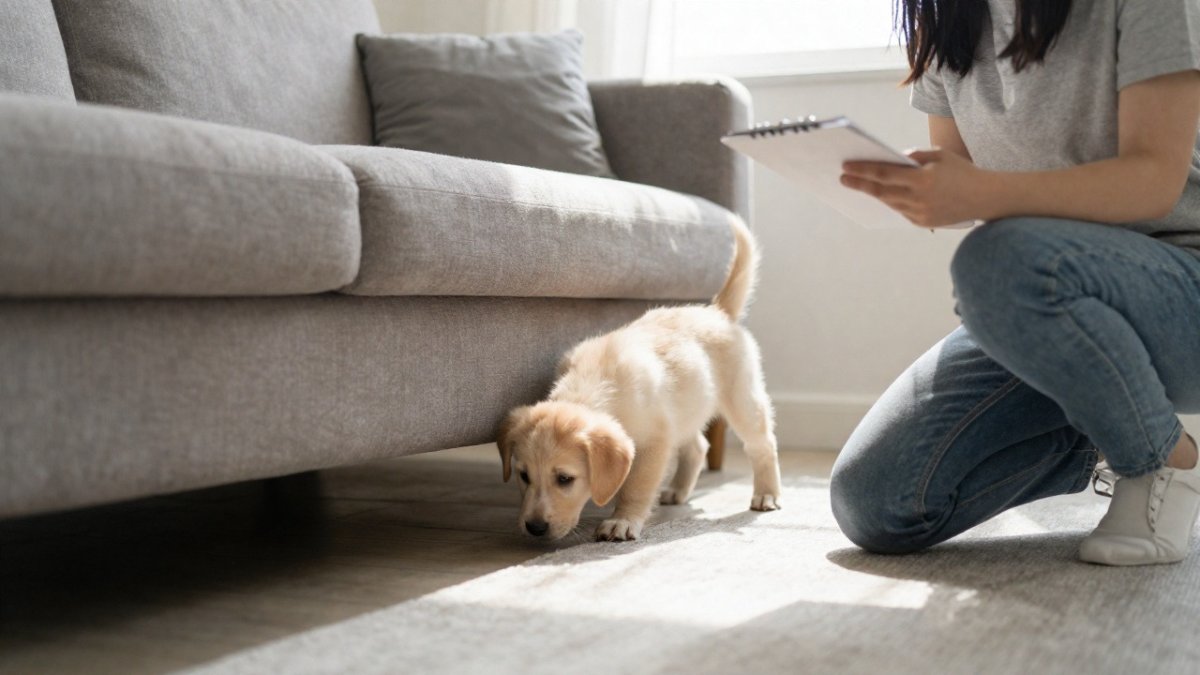
The best place to start is the floor. Get down on your hands and knees and look at each room from your puppy's point of view.
Work through one room at a time. Take a notepad and write down every hazard you find. Most owners are surprised by how many items they missed on the first pass.
- Living room: loose cords, remote controls, plants, small decor
- Kitchen: trash cans, cleaning products, food left on counters
- Bathroom: medications, toilet lids, cosmetics
- Bedroom: shoes, jewelry, phone chargers
- Laundry area: detergent pods, dryer sheets, small socks
Watch out: A puppy can swallow a sock or hair tie in seconds, and that can be a serious problem. Pick up anything small before you let your puppy roam.
Next, check the room from a higher angle too. Puppies climb, so look at the tops of shelves and the edges of tables where a dropped snack could end up.
Once you have your list, you can start fixing things. Move dangerous items up high or behind closed doors first. Then add barriers, like baby gates, to block off rooms you cannot fully secure.
Find a good supply of training and chew items to replace what you removed. Puppies need things to chew, and offering the right toys keeps them busy.
Sources: American Kennel Club puppy safety guidance
Build a Puppy-Proofing Checklist by Age and Chewing Style
Your puppy's age and chewing habits decide which hazards matter most. A young puppy teething at three months chews differently than an adult dog who digs or climbs. Build your checklist around those differences so you spend your effort where it counts.
Start with age. Very young puppies stay low to the ground and mouth everything they reach. Older puppies jump, climb and open cabinets.
Then look at chewing style. Some puppies chew furniture legs, while others go after shoes or wires. Note what your puppy targets most in the first week.
A simple checklist by stage:
- Under 4 months: Remove small objects, secure cords, block stairs
- 4 to 8 months: Add cabinet latches, raise trash cans, check plants
- 8 months and up: Recheck counters, lock up medications, review yard fencing
Common mistake: Owners often relax their guard once a puppy seems calm. Many puppies get into trouble around the 6 to 9 month mark, so keep checking.
Review your checklist every few weeks. As your puppy grows, its reach and strength change, and so should your plan.
How to Puppy-Proof Wires and Electrical Cords
Electrical cords are one of the most serious hazards for a puppy. A chewed cord can cause burns, shocks or worse, so deal with cords before anything else in the living space.
Start by unplugging anything you do not need. Then bundle the remaining cords together and run them along walls or behind furniture where a puppy cannot reach.
Cord protectors and cable raceways are useful tools. They hide wires and make chewing harder. Use them on every cord that stays plugged in.
Check outlets too. Cover unused outlets with safety covers, and keep power strips off the floor where a puppy can grab them.
Watch out: A chewed cord can look fine on the outside and still be damaged inside. Check cords often for nicks or exposed wire, and replace any that look worn.
Keep your puppy away from the cord area while you are out, and use a gate or crate if needed.
Puppy-Proofing Furniture, Cabinets, and Small Objects
Furniture and cabinets hold many of the items puppies get into most often. Taking a few simple steps here can save you a lot of cleanup and worry.
Use cabinet latches on low cupboards, especially those with cleaners or food. Store cleaning products and medications on high shelves or in locked spaces.
Small objects are a choking risk. Keep coins, buttons, rubber bands, hair ties and toy parts off the floor. Pick up clutter every day so nothing gets left behind.
Choose chew toys that are the right size and made for puppies. Avoid toys that break into small pieces or have strings or squeakers that come loose.
For daily chewing, pick sturdy, puppy-safe chew toys in a size your puppy cannot swallow. Rotate them so your puppy stays interested.
For more on picking safe options, see How to Choose Safe Chew Toys for Puppies before you stock up.
Furniture can also be a target. Cover the legs of couches or chairs with a bitter-tasting spray made for pets, and give your puppy a chew toy when you see it going for the furniture.
Here is a quick reference for the main puppy-proofing steps covered in this section.
| Hazard | Action | Note |
|---|---|---|
| Low cabinets | Add cabinet latches | Especially those holding cleaners or food |
| Medications and cleaners | Store high or locked | Keep out of reach at all times |
| Coins, buttons, hair ties | Pick up off floor | Choking risk; clear clutter daily |
| Chew toys | Choose puppy-safe sizes | Avoid toys that break or have loose strings |
| Furniture legs | Apply bitter pet spray | Give a chew toy when puppy goes for furniture |
Puppy-Proofing Your Yard and Outdoor Spaces
Your yard needs the same care as your living room, plus a few hazards that only exist outdoors. Walk the perimeter and look for gaps in fencing, loose boards, and spots where a puppy could dig under.
Check for plants that are toxic to dogs. Many common garden plants can make a puppy sick, so learn which ones to remove and which to fence off. Sago palm, oleander, azalea, rhododendron, and lily of the valley are among the plants most often flagged as dangerous to dogs.
Store garden tools, fertilizers, pesticides, and antifreeze out of reach. Even a small amount of some products can cause serious harm. Antifreeze in particular has a sweet taste that attracts animals, and small spills in the driveway or garage are easy to miss.
Check for water hazards too. Pools, ponds, and water bowls with standing water can be risky for a young puppy, so supervise closely near water. If you have a pool, confirm the fence meets local barrier requirements and that the gate self-closes.
Seasonal and less-obvious outdoor hazards deserve their own pass:
- Holiday decorations: tinsel, ribbon, string lights, and small ornament hooks are common ingestion hazards. Keep extension cords off the ground and unplug decorations when you are not outside.
- Lawn and garden chemicals: fertilizer granules, snail bait, and weed killer can be picked up on paws and licked off. Store them in a locked cabinet and keep the puppy off treated areas until the label says it is safe.
- Compost and mulch: compost piles can contain moldy food that causes tremors, and cocoa-bean mulch is attractive to puppies and contains theobromine. Use pet-safe mulch and fence off compost.
- Outdoor equipment: grill grease traps, citronella candles, and tiki torch fuel are all ingestion risks. Store fuel in a locked cabinet and keep the puppy away from the grill during and after cooking.
- Garage and shed: mouse bait, slug pellets, and spilled oil are Tier 1 hazards. Treat the garage floor like a kitchen counter and keep it clear.
Supervise outdoor time at first. A puppy that is left alone in a yard can dig, escape, or swallow something harmful before you notice.
If you suspect your puppy ate something dangerous outdoors, act immediately. Remove the puppy from the area, note what was ingested and how much if you can, and call your veterinarian or an animal poison-control service right away. Do not wait for symptoms.
Sources: ASPCA toxic and non-toxic plant list
Creating Safe Zones for Rentals and Temporary Setups
Not everyone can puppy-proof a whole house. Renters, people living with roommates and families staying with relatives often need a smaller plan. A safe zone can give you control without changing the whole home.
Pick one room with a hard floor and few hazards. A kitchen, bathroom or laundry area often works well. Clear it fully before your puppy arrives, then use baby gates or an exercise pen to keep the zone closed off.
Before you move in, check your lease for rules about pet-related changes. Many landlords allow removable gates and cord covers but not drilled hardware. Ask first to avoid losing a deposit.
For a temporary setup, bring the puppy's supplies with you. A bed, water bowl, toys and a crate make it easier for your puppy to settle in a small space.
Training helps too. If your puppy struggles in its safe zone, behavior training can address the root cause. Read Dog Behavior Modification vs Obedience Training to see which approach fits.
Choose rewards carefully when you train inside a safe zone. How to Choose Natural Puppy Training Snacks explains what to look for.
If your puppy becomes very upset when left alone in a new space, the cause may be separation anxiety. Why Does My Dog Have Separation Anxiety: Causes & Solutions can help you understand the signs.
For a longer plan on how long settling in can take, see How Long Puppy Crate Training Take.
Sources: American Veterinary Medical Association pet safety resources
Booking Your First Puppy Supply Run at Smitty's Pet Store
Once you have your hazard list and your plan, the last step is gathering what you need. Pick up gates, latches, cord covers, chew toys and a few essentials in one trip so your home is ready before your puppy arrives.
At Smitty's Pet Store, we offer curated everyday essentials and supplies to help make puppy life simpler. Browse our collection to find what fits your home, and check current prices and availability on our website, since pricing depends on the item, quantity and delivery options.
Start your puppy-proofing list today and make your home a safer place for your new companion.
Frequently Asked Questions
What should I do to puppy-proof my house?
Start by walking through each room at puppy eye level and removing anything it could chew, swallow, or knock over. Pick up loose cords, store cleaning products and medications on high shelves or behind latched cabinets, and move houseplants and toxic foods out of reach. Then block off rooms you do not want the puppy entering using baby gates or an exercise pen. Repeat the walkthrough every few weeks, since puppies grow quickly and reach new surfaces as they get bigger and more mobile.
How do I puppy-proof electrical cords and wires?
Unplug cords you do not need, then run the rest along walls or behind furniture where the puppy cannot reach them. Use cord covers, cable raceways, or flexible tubing to protect cords that must stay exposed. Keep outlets covered with safety caps and move power strips behind furniture. Check for chewed areas regularly, and if you find one, unplug the cord immediately and inspect it before use. Any suspected electrical bite should be treated as an emergency and checked by a veterinarian right away.
How can I make my yard safer for a puppy?
Walk the perimeter and look for gaps under fences, loose boards, and spots where the puppy could dig out. Remove toxic plants, fertilizers, pesticides, and slug bait from areas the puppy can access. Check that gates latch securely and that any pool or water feature is fenced off or covered. Supervise outdoor time closely at first, especially in the early weeks, and bring the puppy inside if you cannot watch it. Re-check the yard after storms or landscaping work, since these can create new hazards.
Can I leave my 9-week-old puppy home alone?
A 9-week-old puppy should not be left alone for long stretches. Very young puppies need frequent bathroom breaks, feeding, and supervision, and they can get into trouble quickly. Use a securely puppy-proofed small area such as an exercise pen or crate with water, bedding, and safe chew toys, and keep the time short while you build up their tolerance. Ask your veterinarian for a schedule that fits your puppy's age and needs.
