

How to Choose Natural Puppy Training Snacks

Last Updated: October 30, 2026
Quick Summary
Choose natural puppy training snacks by checking five criteria: pea-sized pieces that break cleanly, softness matched to your puppy's age, low calories per piece, a short ingredient list led by a named protein, and value per training-sized piece. Compare candidates side by side on these points rather than headline price, since the winning treat is rarely the most expensive one.
- A named protein like chicken, beef, duck, or lamb should lead the first five ingredients.
- A 10-pound puppy eating 350-400 calories daily has a treat budget of about 35-40 calories.
- Most soft training treats land between 2 and 6 calories per pea-sized piece.
- Break one soft treat into four pieces to quadruple rewards without changing calories.
- Feeding treats on top of full meals is the most common cause of puppy weight gain.
Table of Contents
- What Sets Natural Puppy Training Snacks Apart
- How to Pick the Best Puppy Training Treats
- Puppy Treat Ingredients to Avoid
- How Many Treats to Give a Puppy During Training
- Soft vs. Crunchy: Matching Texture to Your Puppy
- Single-Ingredient and Whole-Food Options for Sensitive Puppies
- Building a Treat Plan for Your Puppy's Training Week
- Frequently Asked Questions
What Sets Natural Puppy Training Snacks Apart
Natural ingredient puppy training snacks are treats made with recognizable whole foods and minimal processing, rather than artificial colors, flavors, or preservatives. New puppy owners often feel overwhelmed by label claims, so this review of natural puppy training snacks breaks down what actually matters when choosing treats. The core difference comes down to three things: what's in the bag, how the treat is preserved, and whether the pieces are sized for training. A treat marketed as "natural" still has to earn that label through its ingredient list.
Reading the Ingredient List Like a Pro
Start with the first five ingredients. They make up most of the treat by weight. A named protein like chicken, beef, duck, or lamb should lead the list. If "meat meal," "by-product," or a grain appears first, the reward value and nutritional quality drop. Look for short lists you can read aloud without stumbling. Watch for split ingredients too: "chicken, chicken meal, chicken fat" is one protein split into three entries to push it lower on the label.
How to Pick the Best Puppy Training Treats
The best puppy training treats are small, soft, and high-value, so you can reward quickly without overfeeding. But "small and soft" is where most reviews stop, and it's not enough to choose between two bags on a shelf. Use a consistent set of criteria so you can compare options side by side instead of guessing from the front of the package.
The Five Criteria That Actually Matter
1. Piece size and breakability. A treat the size of a pea works for most small and medium breeds. Check whether the piece tears cleanly with your fingers, if it crumbles or requires a knife, it will slow your training rhythm.
2. Softness and chewability. Soft treats reward fast and suit young puppies and small breeds with small mouths. Firmer treats suit older puppies with full teeth or puppies who need more chewing time.
3. Calorie density per piece. This is the number most reviews skip. A 2-calorie piece and a 10-calorie piece are both "small," but one lets you reward five times as often within the same treat budget.
4. Ingredient transparency. A named protein should lead the list, and the list should be short enough to read aloud.
5. Value per training-sized piece. Headline price tells you little. Divide the bag price by the number of training-sized pieces you can actually get out of it, accounting for breakage, to compare ongoing cost across brands and package sizes.
Match the Treat to Your Puppy's Life Stage and Size
A very young puppy (8-12 weeks) needs tiny, soft pieces that break cleanly and don't require much chewing. A small-breed puppy stays on small pieces longer because its mouth stays small. A larger-breed puppy moves to firmer textures sooner as its teeth come in. Single-protein freeze-dried treats suit puppies with sensitive stomachs because there's only one ingredient to track if a reaction appears. Build your shortlist around your puppy's age, size, and chewing ability rather than buying one bag for the whole puppyhood.
A Simple Side-by-Side Comparison
Before you buy, line up two or three candidates and compare them on the same five criteria. The treat that wins is rarely the most expensive one, it's the one that breaks small, rewards fast, and fits your puppy's daily calorie budget.
| Criterion | What to Check on the Label | Why It Matters |
|---|---|---|
| Piece size | Treat dimensions or pieces per ounce | Smaller pieces mean more rewards per bag |
| Breakability | Softness described on packaging; test by hand | Tearable treats stretch your calorie budget |
| Calories per piece | kcal per piece or kcal/kg (convert) | Sets how many rewards fit the 10% treat budget |
| Ingredient list | First five ingredients; named protein first | Short, readable lists signal quality |
| Value per piece | Bag price ÷ training-sized pieces | Compares ongoing cost, not headline price |
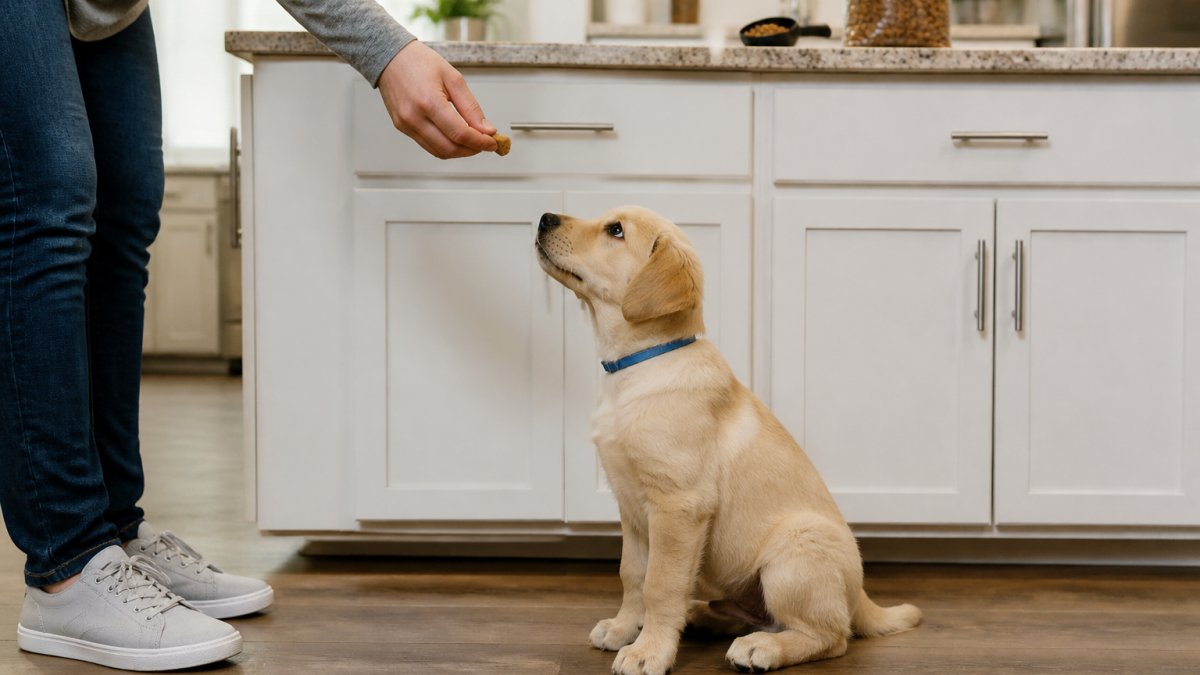
Size, Softness, and Reward Value
Soft treats break apart easily and can be torn into smaller pieces for multiple rewards from one treat. Crunchy biscuits crumble under pressure and leave a mess in your treat pouch. Palatability drives reward value: a treat your puppy will work for beats a "healthier" one they ignore. Test a few options and keep the one your puppy responds to fastest, then confirm it still fits the calorie and size criteria above.
Puppy Treat Ingredients to Avoid
Some ingredients are worth skipping in puppy treats. Artificial colors, added sugar, molasses, and glycerin add calories without nutrition. Watch for propylene glycol and BHA/BHT preservatives. If your puppy has food allergies or dietary sensitivities, avoid common triggers like wheat, corn, and soy until you know how they react.
Readers worried about a puppy's stomach often want gentler options; our guide to natural remedies for dog upset stomach covers what to try when digestion goes sideways.
How Many Treats to Give a Puppy During Training
Treats should make up only a small share of a puppy's daily calories, so check with your veterinarian for the right budget (Creating A Nutritional Plan). The rule is simple; the math is where most owners get into trouble. A 10-pound puppy eating roughly 350-400 calories a day has a treat budget of about 35-40 calories. If your training treat runs 3 calories per piece, that's roughly 12-13 rewards before you hit the ceiling. If it runs 10 calories per piece, you're out of budget after three or four reps. That difference, not brand loyalty, is what separates a treat you can use all session from one you have to ration.
Do the Math Before the Session
You need two numbers off the label: calories per treat (often listed as kcal per piece or kcal/kg, which you'll need to convert) and treats per ounce. Most soft training treats land somewhere between 2 and 6 calories per pea-sized piece; freeze-dried single-protein treats vary widely, so read the bag rather than assuming. Then work backward from your puppy's daily calorie target, which your veterinarian can give you based on age, breed size, and body condition.
A simple pre-session check:
- Note your puppy's daily calorie target (from your vet or the food label's feeding chart).
- Multiply by 0.10 to get the daily treat budget.
- Divide by calories per treat to get the maximum number of rewards per day.
- Split that across your training sessions so you don't blow the budget in the first five minutes.
Adjust Meals on Heavy Training Days
On a day with multiple sessions, a puppy class plus two at-home reps, count the treats first, then reduce the meal portion to balance the total. Don't skip meals; puppies need consistent nutrition for growth. Instead, pull back a small amount from each meal proportional to the treat calories you expect to use. A common pattern is to set aside a portion of the puppy's daily kibble as training rewards, which keeps the calorie total steady and lets you reward generously without tipping into weight gain.
For a deeper breakdown of calories and portions, see our puppy training treat portion control guide.
Soft vs. Crunchy: Matching Texture to Your Puppy
Soft treats win for most training scenarios because they reward fast and break cleanly. Crunchy treats suit puppies who need more chewing time or a teething outlet, but they're harder to portion. Match texture to your puppy's age and mouth size: young puppies and small breeds do better with soft, tearable treats, while older puppies with full teeth can handle firmer options.
If your puppy is a heavy chewer, our guide on how to choose safe chew toys for puppies covers texture and safety beyond treats.
Single-Ingredient and Whole-Food Options for Sensitive Puppies
Single-ingredient treats, like plain freeze-dried meat, can be easier to track for puppies with dietary sensitivities. One protein source means one thing to track if a reaction appears. Whole-food treats such as plain cooked chicken or beef offer the same transparency.
Weighing natural versus organic claims? Our look at whether organic pet food is worth it digs into the label differences.
Building a Treat Plan for Your Puppy's Training Week
A treat plan keeps training consistent and prevents overfeeding. Pick one high-value soft treat for training and one low-calorie option for downtime rewards. Track how many treats your puppy gets per session, then adjust meals to match. Rotate protein sources slowly to spot sensitivities early.
A treat-dispensing enrichment toy can put your plan to work during downtime; our snuffle and foraging toy keeps a puppy busy between sessions.
| Training Scenario | Treat Type | Portion | Frequency |
|---|---|---|---|
| New skill (leash, sit) | Soft, high-value | Pea-sized pieces | Every correct rep |
| Proofing known cues | Low-calorie soft | Quarter pieces | Every 2-3 reps |
| Downtime enrichment | Freeze-dried single protein | 1-2 pieces | Once daily |
| Teething comfort | Crunchy, firm | 1 piece | As needed |
Watch out: feeding training treats on top of full meals is the most common cause of puppy weight gain, so count treats before the session starts.
Choosing treats for a growing puppy can feel like guesswork, but a short ingredient list, the right size, and honest portion control make it manageable. Smitty's Pet Store curates trusted pet supplies and practical guidance to make that decision simpler, from training treats to everyday essentials. Our selection is chosen with care, and we're here to help you feel confident about what goes in your puppy's bowl.
Frequently Asked Questions
What are the best natural treats for puppy training?
The best options are small, soft, high-value treats with short ingredient lists. Look for single-ingredient freeze-dried meat, like chicken, beef, duck, or lamb, or simple whole-food treats you can break into pea-sized pieces. Avoid added sugar, molasses, and artificial colors. Because puppies have small mouths and short attention spans, a treat that crumbles easily or takes too long to chew slows down your training sessions. Natural puppy training snacks with clear calorie information on the label also make portion control much easier.
What ingredients should I avoid in puppy treats?
Check labels for added sugar, molasses, glycerin, artificial preservatives, and unnamed meat by-products. These add calories without training value. If your puppy has food allergies or dietary sensitivities, avoid common triggers like wheat, corn, and soy unless your vet confirms they are safe. Grain-free and gluten-free options exist for puppies with confirmed sensitivities, but they are not automatically better for every dog. Ingredient transparency matters more than marketing claims on the front of the bag.
How many treats can a puppy have during training?
Treats should make up no more than about 10 percent of a puppy's daily calories. Your veterinarian can give you a daily calorie target for your puppy, and the treat budget is a fraction of that total. Subtract those calories from meals to prevent weight gain. Always check the calorie statement on the package, since treat sizes and densities vary widely between brands.
Are soft or crunchy treats better for training a puppy?
Soft treats win for most training sessions because puppies can eat them quickly and get back to the task. A treat that takes 30 seconds to crunch breaks the flow of positive reinforcement. Soft, easy-to-chew pieces also suit small mouths and young teeth. Crunchy treats still have a place as a lower-value reward or for keeping teeth busy, but save them for calm moments rather than fast-paced leash training or recall practice.
