

How Long Does Puppy Crate Training Take

Table of Contents
- How Long Does Puppy Crate Training Take: A Realistic Timeline
- How Long Can a Puppy Stay in a Crate During the Day
- Introducing Your Puppy to the Crate: The First Steps
- Crate Training Tips for Puppies: Building Consistency and Patience
- Puppy Crying in Crate at Night: What's Normal and What Isn't
- A Sample Daily Puppy Crate Training Schedule
- When Progress Stalls: Troubleshooting Regression and Setbacks
- Frequently Asked Questions
Last Updated: October 8, 2026
How Long Does Puppy Crate Training Take: A Realistic Timeline
Puppy crate training doesn't happen overnight. Most puppies need anywhere from a few days to several weeks to feel comfortable in their crate, depending on their age, temperament, and past experiences.
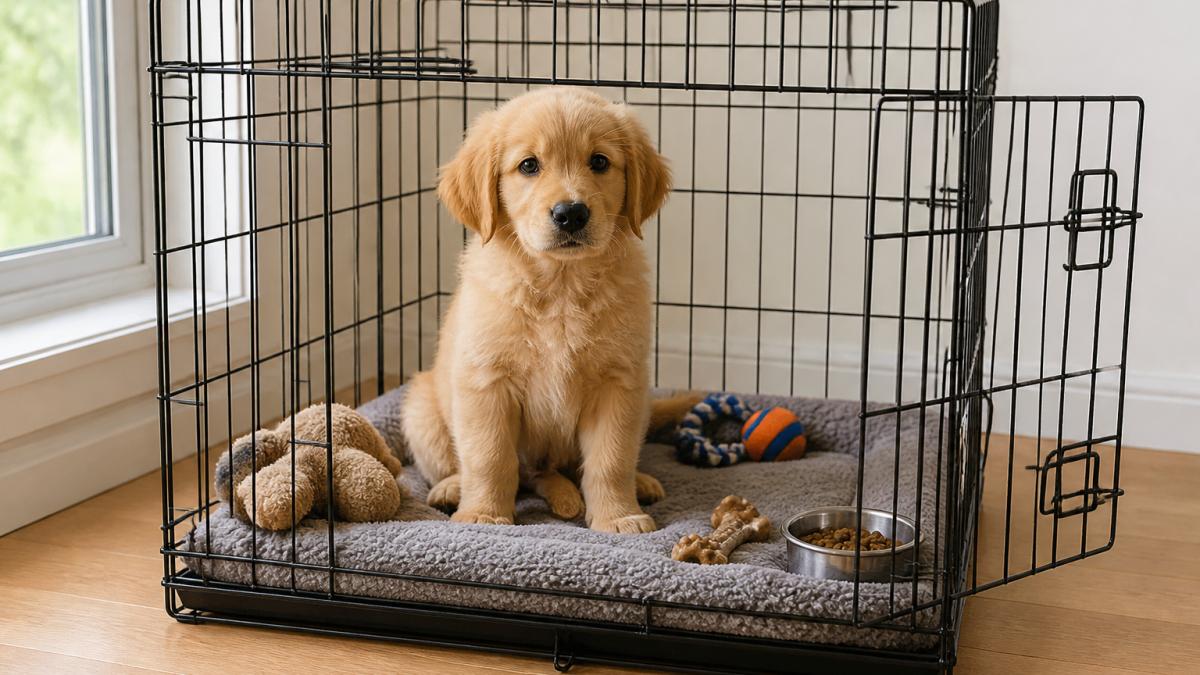
The timeline varies widely. Some puppies adapt in days. Others take weeks. The key difference isn't the puppy, it's whether you're building comfort or expecting bladder control. These are two separate goals, and confusing them is where most training stalls.
Here's what matters: consistent, short practice sessions beat marathon crate time every single time. A puppy that spends 15 minutes in the crate three times a day will progress faster than one locked in for hours. The goal is positive association, not endurance.
Why timelines vary between puppies
Every puppy is different. Age plays a role. Temperament matters even more. Past experiences, whether positive or negative, shape how quickly a puppy accepts the crate.
A confident, naturally calm puppy might settle within days. A fearful puppy or one with no prior exposure might take weeks. Neither timeline is wrong. It's just reality.
Breed tendencies matter too. Some breeds are naturally independent. Others are velcro dogs that panic when separated. Knowing your puppy's baseline helps you set realistic expectations.
Age, temperament, and past experiences matter
Age affects both comfort and bladder control. A 6-week-old puppy has a tiny bladder. It physically cannot hold it for long. A 12-week-old has more capacity but still needs frequent breaks. This is biology, not a training failure.
Temperament determines how quickly a puppy feels safe. Bold puppies explore the crate like an adventure. Anxious puppies need more time and gentler introduction. Neither responds well to force. Patience wins every time.
Past experiences shape expectations. A puppy raised in a crate from birth adapts faster. One that's never seen a crate before needs gradual exposure. If a puppy had a scary experience in a confined space, rebuilding trust takes longer.
How Long Can a Puppy Stay in a Crate During the Day
This is the question that trips up most new owners. The answer depends on age, not preference.
A general guideline: puppies can typically hold their bladder for one hour per month of age, plus one. So a 2-month-old puppy can hold it roughly 3 hours. A 3-month-old, about 4 hours. A 6-month-old, about 7 hours.
This isn't a training achievement. It's physical development. You can't train a puppy's bladder to grow faster.
Potty break frequency and bladder control limits
Very young puppies (8-12 weeks): need bathroom breaks every 2-3 hours, even at night. Long crate stretches aren't realistic yet. Focus on short sessions and frequent outdoor time.
Young puppies (3-4 months): can handle 4-5 hours during the day with regular breaks. Overnight is still challenging. Plan for middle-of-the-night potty trips.
Older puppies (5-6 months): might manage 6-7 hours during the day. Overnight control is improving but still unreliable. Accidents happen, that's normal.
Nearly adult (7+ months): many puppies can hold it through the night and during a full workday. But individual variation is huge. Some need more time.
The mistake most people make is assuming crate training equals potty training. They're connected but separate. A puppy can feel comfortable in the crate and still have accidents.
Introducing Your Puppy to the Crate: The First Steps
Start slow. The crate should feel like a reward, not a punishment. A puppy that associates the crate with good things will run toward it. One that associates it with isolation will resist.
Choosing the right crate size and comfort setup
Size matters. A crate should be big enough for your puppy to stand, turn around, and lie down comfortably. Too large, and the puppy might use one corner as a bathroom.
The Foldable Heavy-Duty Dog Cage from Smitty's Pet Store comes in 5 sizes, from small breeds up to extra-large dogs.

Add comfort. A soft blanket or dog bed makes the crate inviting. Some puppies like a covered crate, it feels den-like and secure. Others prefer open visibility. Watch your puppy's preference and adjust.
Never use the crate as punishment. If your puppy has an accident, don't crate her as a consequence. That teaches her the crate is a bad place. Instead, calmly clean up and move forward.
Creating positive associations with treats, meals, toys, and praise
The first week is about making the crate a happy place. Leave the door open. Toss treats inside.
Feed meals inside the crate. This pairs the crate with something your puppy already loves. Food creates positive association faster than anything else.
Use high-value treats. Not the daily kibble. Special treats she only gets in or near the crate. This builds excitement.
Praise calmly. When your puppy goes in voluntarily, praise her, but keep it low-key.
Add toys. A puzzle toy or chew toy gives her something to do inside the crate. Boredom leads to whining. Engagement leads to contentment.
Gradually close the door. Once your puppy is comfortable going in, start closing the door for a few seconds while you're right there.
Crate Training Tips for Puppies: Building Consistency and Patience
Consistency beats intensity. A puppy trained with the same routine every day learns faster than one with sporadic, unpredictable sessions.
Short practice sessions and gradual time increases
Three 15-minute sessions beat one 45-minute session. Puppies have short attention spans. Multiple short exposures build positive association without overwhelming them.
Follow a pattern. Same time of day, same routine, same rewards. Predictability makes puppies feel safe.
Increase duration slowly. If your puppy is comfortable with 5 minutes, try 7 next time. If she panics, you went too fast. Back up and try again tomorrow.
Practice during the day, not just at night. Daytime crate time teaches comfort. Nighttime is about bladder control. They're different skills.
Foldable Heavy-Duty Dog Cage →
Use crate time strategically. Crate her after meals, after playtime, or when you need her safe while you're busy. Never randomly. Puppies learn patterns, not random events.
A common mistake is assuming one good session means your puppy is trained. Progress isn't linear.
Puppy Crying in Crate at Night: What's Normal and What Isn't
Not all crying is the same. Understanding the difference between protest and distress changes how you respond.
Distinguishing protest whining from distress signals
Protest whining is your puppy saying, "I don't like this." It's annoying but not dangerous. She's healthy, safe, and testing boundaries. This is normal. Ignore it.
Distress signals sound different. Panic barking, frantic scratching, or yelping that sounds painful means something's wrong. She might need a potty break, be too hot, or genuinely scared.
Here's the key: if you respond to protest, you teach her that crying works. She'll cry more. If you respond to distress, you're meeting a real need.
Protest whining: steady, rhythmic, annoying. Your puppy is alert and aware.
Distress: frantic, panicked, sounds urgent. Your puppy seems truly frightened or in pain.
When in doubt, check on her. Make sure she doesn't need a potty break. If she's fine, put her back and ignore the crying.
Managing overnight crate training and sleep schedules
Young puppies can't sleep through the night (How Much Do Puppies Sleep?). A 10-week-old needs a potty break around 3 a.m. This isn't failure, it's biology. Plan for it.
Move the crate to your bedroom. Proximity reduces panic. She can hear you, smell you, and feel less alone. Once she's older and more confident, move the crate gradually.
Use a consistent bedtime. Puppies thrive on routine. Same time every night signals sleep. Her body will start expecting it.
Don't rush overnight success. Some puppies sleep through the night at 4 months. Others need 6 months. Both are normal. Pushing too fast creates stress and setbacks.
Expect accidents. Even a puppy that's been crate-trained will have accidents at night. Bladder control develops gradually. Clean up calmly and move forward.
A Sample Daily Puppy Crate Training Schedule
This schedule works for a 3-month-old puppy. Adjust timing based on your puppy's age and needs.
| Time | Activity | Duration | Notes |
|---|---|---|---|
| 7:00 a.m. | Wake, potty break | 10 min | Immediate outdoor time |
| 7:15 a.m. | Breakfast in crate | 15 min | Door closed, you nearby |
| 7:30 a.m. | Playtime | 20 min | Supervised, high energy |
| 8:00 a.m. | Crate time | 30 min | After activity, natural sleep time |
| 8:30 a.m. | Potty break | 10 min | Always after crate time |
| 12:00 p.m. | Lunch in crate | 15 min | Door closed |
| 12:15 p.m. | Outdoor play | 20 min | Burn energy |
| 1:00 p.m. | Crate time | 45 min | Afternoon nap window |
| 2:00 p.m. | Potty break | 10 min | Essential |
| 5:00 p.m. | Dinner in crate | 15 min | Door closed |
| 5:30 p.m. | Playtime | 30 min | Evening energy release |
| 7:00 p.m. | Potty break | 10 min | Before bedtime routine |
| 8:00 p.m. | Bedtime crate | 8+ hours | Overnight sleep |
| 3:00 a.m. (approx) | Middle-of-night potty | 10 min | Expect this for young puppies |
Week-by-week progression and signs of readiness
Week 1: Focus on exploration and positive association. Puppy enters crate voluntarily. Door stays open most of the time. Goal: comfort, not duration.
Week 2: Start closing the door for short periods (30 seconds to 2 minutes). Puppy stays calm. You're nearby. Gradually extend time.
Week 3: Puppy settles in the crate for 10-15 minutes without panic. You can step away briefly. Feeding meals inside is routine.
Week 4: Puppy rests in the crate for 30+ minutes during the day. Overnight, she still needs potty breaks but settles back in after.
Signs of readiness to increase time: Puppy lies down calmly. She's not panting or drooling excessively. She settles without constant whining.
Signs to slow down: Panic, frantic scratching, or intense distress mean you're moving too fast. Back up a step.
When Progress Stalls: Troubleshooting Regression and Setbacks
Training isn't a straight line. Puppies regress. A puppy that was fine might suddenly panic.
Too much too fast: If you pushed duration too quickly, your puppy lost confidence. Reduce crate time.
Changes in routine: A move, a new person in the house, or a change in schedule can shake a puppy's confidence.
Lack of consistency: If some days you enforce crate time and other days you don't, your puppy gets confused.
Medical issues: If your puppy suddenly can't hold her bladder or seems in pain, see a vet.
The best fix for stalls is patience. Puppies develop at their own pace. Pushing harder usually makes things worse.
Puppy crate training takes time, but it's one of the most valuable skills you can teach.
The right crate makes a real difference.
Frequently Asked Questions
How long does it usually take to crate train a puppy?
Most puppies take 2 to 6 weeks to become comfortable in a crate, though some progress faster. The timeline depends on age, temperament, and prior experiences. Younger puppies (8-12 weeks) may take longer because they have less bladder control and need more frequent breaks. Consistency, patience, and positive reinforcement speed up the process significantly. Some puppies show comfort in days; others need several weeks of gradual practice.
Can I leave my puppy in a crate for 1 hour?
Yes, most puppies 8-12 weeks old can stay in a crate for 1 hour during the day if they've been introduced gradually and have had a recent potty break. A general rule is one hour per month of age, plus one. An 8-week-old puppy can typically hold it for about 3 hours maximum. Always follow potty breaks with short crate sessions and build duration gradually to avoid accidents and anxiety.
How many nights will a puppy cry when crate training?
Puppies often cry for several nights during crate training, typically 3 to 7 nights, depending on age and temperament. Some cry for just a few nights; others may protest for 1-2 weeks. Most protest crying decreases as the puppy becomes familiar with the crate. Distinguish protest whining (normal, rhythmic) from distress signals (continuous, panicked). Consistent response, ignoring protest but responding to potty signals, teaches the puppy when crying gets attention.
What should I do if my puppy cries in the crate?
First, determine whether your puppy needs a potty break or is protesting. If crying started immediately after a break, it's likely protest, ignore it and avoid opening the crate, which rewards the behavior. If 2-3 hours have passed since the last break, take your puppy out for a bathroom trip. Use a calm, matter-of-fact tone and return immediately after. Resume crate time once the puppy is calm. Consistency prevents crying from becoming a habit.