

How to Choose Safe Chew Toys for Puppies

Table of Contents
- Understanding Puppy Chewing Stages and Developmental Needs
- Non-Toxic Dog Toy Materials: What's Safe for Your Puppy
- Puppy Teething Symptoms and Relief Options
- Choosing Toys by Size, Breed, and Chewing Intensity
- Materials to Avoid: Rawhide, Hard Plastic, and Other Hazards
- How to Clean Puppy Toys Safely and Prevent Bacterial Growth
- Best Healthy Treats for Training Young Pets
- Supervision, Safety Features, and Signs of Wear and Tear
- Frequently Asked Questions
Last Updated: September 20, 2026
Understanding Puppy Chewing Stages and Developmental Needs
Puppies chew for different reasons at different ages, and understanding these developmental stages helps you choose the right toys for each phase. Between 8 weeks and 6 months, puppies enter the teething phase, where their baby teeth are falling out and adult teeth are coming in. This is the most critical window for providing appropriate safe chew toys puppies can use without damaging their developing mouths.
During teething, a puppy's gums become sore and inflamed, and they'll chew intensely to relieve the discomfort. The problem isn't the chewing; it's directing that energy toward appropriate toys rather than furniture, shoes, or electrical cords. Puppies given proper outlets for this instinct develop better bite inhibition and fewer destructive behaviors later.
After 6 months, most puppies have their adult teeth but continue chewing into their first year and beyond for mental stimulation and boredom management. Choosing toys appropriate to your puppy's current stage prevents frustration and reduces choking hazards.
Size matters enormously, a toy too small becomes a choking hazard; too large frustrates your puppy. Breed tendency shapes chewing intensity: terriers and pit bull types will destroy soft toys quickly, while smaller breeds may find large toys overwhelming. Match toy size and durability to your puppy's breed and chewing intensity.
Non-Toxic Dog Toy Materials: What's Safe for Your Puppy
The material your puppy chews on directly affects their safety and health. Non-toxic, food-grade rubber is the gold standard for safe chew toys puppies will mouth repeatedly. These materials won't leach chemicals into their saliva or break down into harmful particles. Natural rubber, silicone, and TPR (thermoplastic rubber) are the most reliable options when sourced from reputable manufacturers.
Food-grade rubber meets standards for human food contact, resists bacterial growth, and won't degrade when wet. Silicone toys offer similar benefits and are often used for freezable cooling toys that provide teething relief through cold numbing.
TPU and TPR materials are engineered to withstand aggressive chewing without breaking apart into small, ingestible pieces. The Dog Molars Pet Toy Ball from Smitty's Pet Store uses food-grade ETPU material specifically chosen for this purpose, durable enough for strong chewers but won't splinter or shed fragments. These materials clean easily with warm water and soap.

Latex toys work for light chewers but aren't ideal for puppies with intense chewing drives. Soft latex toys like the Pet Latex Hippo Squeaky Toy are better suited to supervised interactive play than unsupervised chewing. The squeaker requires closer monitoring, if your puppy tears through the toy, they could swallow the squeaker mechanism.
Plush toys with crinkle textures appeal to puppies but are best for supervised interactive play, not solo chewing sessions. Always inspect construction, reinforced seams and secure attachments prevent pieces from coming loose.
Puppy Teething Symptoms and Relief Options
Teething typically begins around 3 to 4 weeks and continues until roughly 7 months. Signs include excessive drooling, swollen gums, mild fever, pawing at the mouth, and an intense desire to chew. Some puppies become slightly irritable or have temporary appetite changes.
Cooling toys numb sore gums through cold temperatures. The Cooling Dog Chew Toy with Dental Cleaning from Smitty's Pet Store freezes solid and offers dual benefits, the cold reduces inflammation while the ridged design cleans teeth. Use for 20 to 30 minutes at a time to prevent gum irritation. Freeze for 1 to 2 hours for ideal firmness without risking tooth fracture.

Textured toys mechanically clean emerging teeth and massage inflamed gums. Ridged surfaces reach between teeth and along the gum line, targeting molars and incisors where puppies chew most intensely during teething.
Wet washcloths frozen in the freezer offer a low-cost alternative. The cloth texture is gentle on developing teeth while the cold soothes sore gums. Rotate between frozen washcloths so your puppy always has a cool option available.
Choosing Toys by Size, Breed, and Chewing Intensity
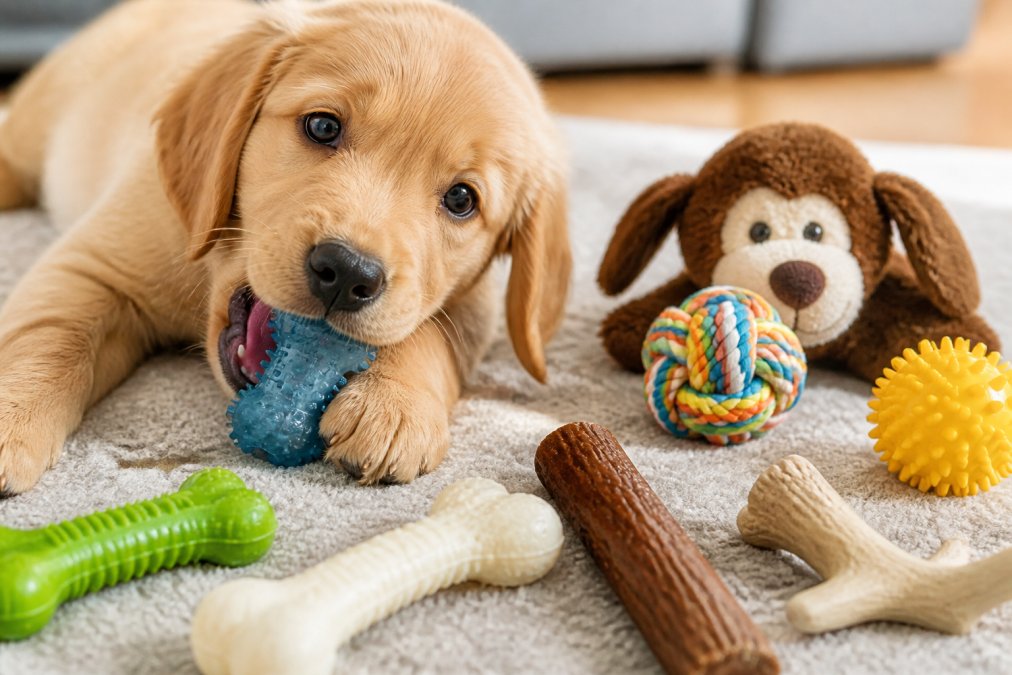
The toy should be large enough that your puppy cannot fit the entire toy in their mouth. For small breeds, toys should be no smaller than their head. For large breed puppies, larger toys are necessary but not so large they're unmanageable.
Terrier breeds, pit bull types, and retrievers are genetically predisposed to intense chewing and need durable materials like food-grade rubber or reinforced TPR. Toy breeds can handle softer textures. Matching material durability to your breed's natural chewing drive prevents rapid toy destruction and frustration.
Age intersects with breed, a 10-week-old Lab needs softer toys than a 6-month-old Lab with emerging adult teeth. Adjust toy hardness as your puppy's adult teeth come in.
| Puppy Type | Ideal Toy Material | Toy Firmness | Recommended Size |
|---|---|---|---|
| Small breed, light chewer | Soft latex, plush | Soft to medium | Fits in palm of hand |
| Small breed, moderate chewer | Food-grade rubber, silicone | Medium | Slightly larger than mouth |
| Large breed, moderate chewer | TPR, food-grade rubber | Medium to firm | Fits comfortably in mouth |
| Large breed, aggressive chewer | Reinforced TPR, durable rubber | Firm | Cannot fit entirely in mouth |
Interactive toys like the Brain Games Treat Dispensing Toy engage foraging instincts and provide mental stimulation. These puzzle toys work best around 4 to 5 months when puppies can focus on problem-solving, encouraging extended engagement and reducing boredom-related destructive chewing.

Materials to Avoid: Rawhide, Hard Plastic, and Other Hazards
Rawhide is unsuitable for puppies, it's highly digestible, leading to intestinal blockages, can splinter or chunk off creating choking hazards, and is often treated with chemicals during processing. For safe chew toys puppies can use unsupervised, rawhide should be avoided entirely.
Dog Molars Pet Toy Ball Interactive →
Hard plastic toys that don't bend or flex are dangerous for developing teeth. Puppies' adult teeth are still calcifying during the first year, and chewing on unyielding surfaces can crack or fracture emerging teeth. Rigid toys like hard nylon chews should be reserved for adult dogs.
Bones, whether real or artificial, carry significant risk. Real bones can splinter and perforate the mouth, throat, or digestive tract. Artificial bone-shaped toys carry the same fracture risk. Cooked bones are especially dangerous because they become brittle and splinter easily.
Toys with small detachable parts, buttons, eyes, bells, or squeakers, pose choking and ingestion risks. A swallowed squeaker mechanism can cause intestinal obstruction requiring surgery. Inspect toys regularly and discard any showing signs of deterioration, missing pieces, or material breakdown.
Certain adhesives and dyes used in toy manufacturing can be toxic. Stick with toys from reputable manufacturers that publish safety certifications. The products at Smitty's Pet Store are selected specifically for material integrity and safety standards.
How to Clean Puppy Toys Safely and Prevent Bacterial Growth
Dirty toys harbor bacteria, mold, and parasites. Regular cleaning is essential, especially during teething. Most food-grade rubber and silicone toys can be cleaned with warm soapy water and a soft brush, scrubbing crevices where bacteria accumulate. Rinse thoroughly and air dry completely.
Weekly washing prevents bacterial buildup. For daily-use toys, rinse with warm water after play and wash thoroughly once weekly. Freezable cooling toys should be washed before and after freezing to prevent ice from trapping bacteria.
Hand washing with warm water and mild dish soap is gentler than the dishwasher. Avoid bleach or harsh chemicals, residue can irritate your puppy's mouth. Vinegar and water (1:1 ratio) is an effective natural cleaning alternative.
Inspect toys during cleaning for damage. Small tears, discoloration, or material breakdown are signs the toy is deteriorating. Discard damaged toys immediately rather than waiting for your puppy to ingest pieces.
Store clean toys in a dry location. A toy box or basket in a dry closet keeps toys clean between uses. Rotate toys regularly so some are always drying while others are in use.
Best Healthy Treats for Training Young Pets
Training treats are rewards for specific behaviors and should be small, soft, and easily consumed. Puppies learn faster with immediate positive reinforcement, so treats must be eaten quickly without interrupting the training session.
Soft, meat-based treats are ideal for training puppies. They're easy to break into tiny pieces, making portion control simple during frequent training sessions. Look for treats with minimal ingredients, meat, organs, and maybe a binder. Avoid treats with artificial colors, flavors, or preservatives. Your puppy's developing system is sensitive, and unnecessary additives can cause digestive upset.
Freeze-dried meat treats offer concentrated nutrition in a lightweight package.
Supervision, Safety Features, and Signs of Wear and Tear
Supervision during chewing sessions is non-negotiable for puppies, especially during the first few months. Watch for signs of distress, excessive drooling beyond normal teething, difficulty swallowing, or gagging. If your puppy seems to be having trouble with a toy, remove it immediately. Some puppies are more aggressive chewers than their toy selection accounts for, and supervision lets you catch problems before they become emergencies.
Frequently Asked Questions
What materials should I avoid in puppy chew toys?
Avoid rawhide, which can splinter and cause choking or intestinal blockages. Hard plastic toys pose ingestion risks and can fracture puppy teeth. Natural bones, cooked bones, and antlers are too hard for developing teeth and cause fractures. Toys with small parts, loose squeakers, or stuffing that can be swallowed are also dangerous. Stick to food-grade rubber, silicone, and soft latex toys designed for puppies.
How do I know if a chew toy is the right size for my puppy?
The toy should be larger than your puppy's mouth so it cannot be swallowed whole. A good rule: your puppy should not fit the entire toy in their mouth at once. Always supervise play to ensure the toy is appropriate for your puppy's size and chewing intensity.
What are the signs of a choking hazard in dog toys?
Watch for toys with loose squeakers, cracked material, peeling rubber, or exposed stitching. If pieces separate easily when you tug on them, the toy is unsafe. Toys that splinter, have sharp edges, or shed material are hazards. Regularly inspect toys for wear and tear, discard any toy showing damage. Toys that are too small to prevent complete mouth entry or too hard to withstand your puppy's bite intensity are also risks.
How often should I replace my puppy's chew toys?
Inspect toys weekly for damage and replace any showing significant wear, cracks, or material loss. Most durable chew toys last 2-6 months depending on chewing intensity. Soft toys and those with squeakers may need replacement sooner. Rotate toys every few days to maintain interest and reduce wear on individual toys. Teething puppies need fresh toys more frequently as they chew more aggressively during developmental stages.