

Puppy Training Treat Portion Control Guide

Last Updated: October 29, 2026
Quick Summary
Treats should make up no more than about 10 percent of a puppy's daily calories, leaving roughly 90 percent for complete and balanced food. This puppy training treat portion control guide recommends measuring the day's allowance once in the morning into a dedicated container, then reducing meals slightly when training sessions are heavy.
- Multiply your puppy's daily calorie target by 0.10 to get the daily treat ceiling in calories.
- Pull a small scoop of kibble from each meal and use it as training rewards to save calories.
- Cut treats into pea-sized pieces before the session so one full treat becomes three to four reward events.
- If the treat container runs empty by mid-afternoon, do not refill it; switch to praise or kibble.
- Talk to your veterinarian before changing your puppy's diet, especially if you are unsure about calorie targets.
Table of Contents
- Why Puppy Training Treat Portion Control Matters
- How Many Treats to Give a Puppy During Training
- Setting a Daily Treat Allowance for Puppies
- Using Kibble for Puppy Training to Save Calories
- How to Measure Dog Treats for the Day
- Choosing Low-Calorie Training Treats and Right-Sizing Rewards
- When to Consult Your Veterinarian About Treats
- Stock Your Treat Station at Smitty's Pet Store
- Frequently Asked Questions
Why Puppy Training Treat Portion Control Matters
Training treats are the easiest way to accidentally overfeed a puppy.
Puppies have small stomachs and fast metabolisms, but they still gain weight when calories in exceed calories out.
New pet parents often do everything right except tracking treats. This guide helps fix that.
The core principle is simple: treats are calories, and calories are part of the daily total.
How Many Treats to Give a Puppy During Training
The short answer: treats should make up no more than about 10 percent of a puppy's daily calories (Creating A Nutritional Plan). That leaves roughly 90 percent for complete and balanced food, which is where the actual nutrition comes from.
Treats as a Share of Daily Calories
Keeping treats to a small slice of the daily diet helps the puppy still get complete nutrition from its regular food. Ten percent is a commonly used ceiling and works well as a planning number. For a puppy eating a modest daily ration, that leaves a surprisingly small treat budget, which is exactly why portioning matters.
Calculating Your Puppy's Daily Calorie Needs
Your puppy's daily calorie needs depend on body weight, breed, age, and activity level. Rather than guessing, use the feeding guide on your puppy's food label as a starting point, then confirm the target with your veterinarian, who can adjust for growth rate and body condition.
The math is straightforward:
- Find the daily calorie target from the food label or your vet.
- Multiply by 0.10 to get the treat ceiling.
- Divide that number by the calories per treat to get the number of treats allowed.
Here is the simple math for turning your puppy's daily calorie target into a treat budget.
| Step | What to do | Note |
|---|---|---|
| 1 | Find the daily calorie target from the food label or your vet | Confirm target with your veterinarian |
| 2 | Multiply by 0.10 to get the treat ceiling | Treats should be about 10 percent of daily calories |
| 3 | Divide that number by the calories per treat | Gives the number of treats allowed |
Setting a Daily Treat Allowance for Puppies
A daily treat allowance for puppies is the total calorie budget you set aside for rewards each day, and it should be measured once in the morning rather than counted on the fly.
Pick a container, portion out the day's treats, and treat that container as the entire supply. When it is empty, training switches to praise, play, or kibble from the meal ration.
Adjusting Meal Portions When Treats Are Added
If your training sessions are heavy, reduce the meal slightly to keep the daily total in balance. A common approach is to pull a small scoop of kibble from each meal and use it as training rewards instead. That way the puppy eats the same daily food, just delivered differently. Watch your puppy's body condition weekly and adjust: ribs should be easy to feel but not visible, and there should be a visible waist from above.
Using Kibble for Puppy Training to Save Calories
Using kibble for puppy training is the single easiest calorie-saving move available. Kibble is already part of the balanced diet, so every piece used as a reward replaces a piece that would have gone in the bowl. Nothing extra enters the daily total.
For puppies who lose interest in plain kibble, an enrichment toy turns the meal into a game. Our Acorn Shape Feeding Toy Ball dispenses treats as your puppy rolls and nudges it, which encourages activity and problem-solving. A treat-dispensing foraging toy can encourage natural foraging instincts and keep your puppy active during downtime.

How to Measure Dog Treats for the Day
How to measure dog treats for the day comes down to one habit: portion once, in the morning, into a dedicated container.
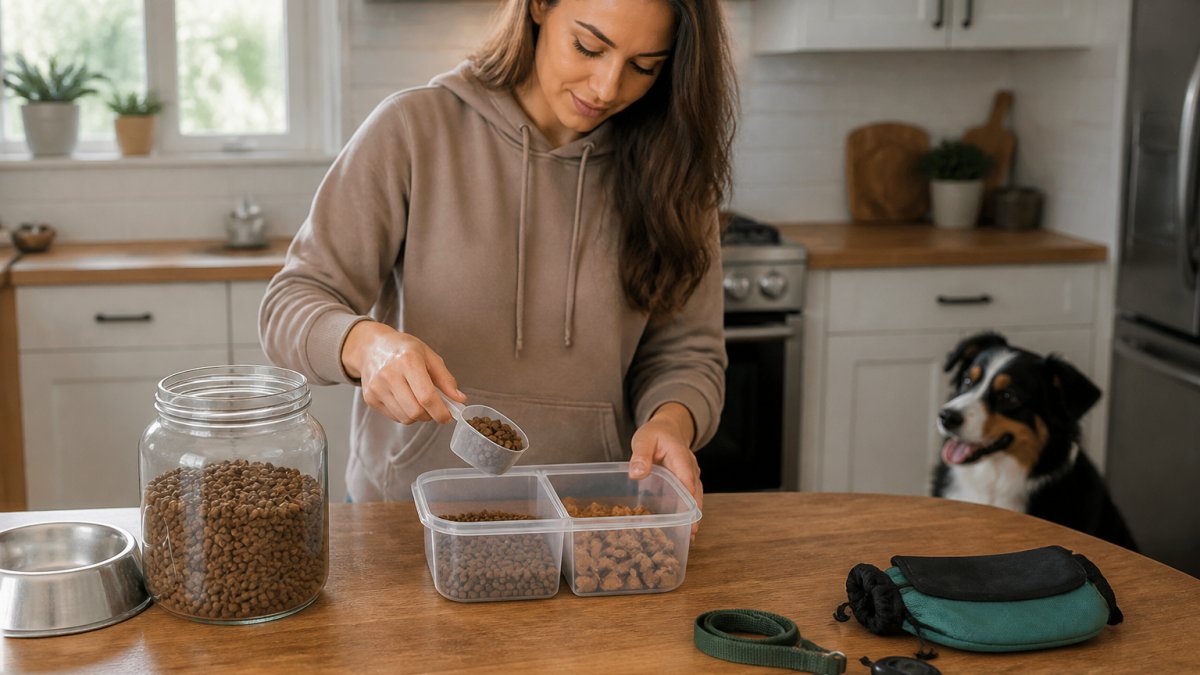
A compartmented container makes this easier because you can pre-portion several days at once. Our food storage slots container features multiple compartments for separating snacks, dry food, or treats, and helps maintain food quality.

Tracking Treats Across Family Members and Sessions
The most common mistake is a household where three people each believe they are handing out a reasonable number of treats. The total is what matters. Write the daily allowance on a sticky note on the container, and make it the rule for everyone: whoever gives a treat takes it from that container. If you train in multiple rooms or on walks, carry a small portion of the day's allowance with you and leave the rest at home.
Watch out: if the container runs empty by mid-afternoon, do not refill it. Switch to praise or kibble for the rest of the day.
Snack Bag With Canned Spoon Embedded In Shovel Cat Dog Feeding Spoon Pet →
Choosing Low-Calorie Training Treats and Right-Sizing Rewards
Low-calorie treats let you reward more often without blowing the budget, and small pieces are just as effective as large ones for training. A puppy cares about the number of rewards, not the size. The gap most guides leave is the mechanics: how to size, deliver, and rotate rewards so a high-repetition session does not quietly consume the whole day's allowance.
Compare Calorie Density, Not Just 'Healthy' Labels
Calorie density varies enormously across treat types, and the package is the only reliable source. Read the guaranteed analysis panel for calories per treat or per ounce, then compare:
- Freeze-dried single-ingredient treats can be lightweight, and checking the label shows calories per piece.
- Soft, semi-moist training treats are convenient but can be calorie-dense per piece, so they reward fewer times per calorie.
- Jerky-style treats vary widely; check the label rather than assuming.
For puppies, keep treats soft and easy to chew, and avoid hard, brittle pieces that can splinter or become a choking risk. If you want to use safe human foods as low-calorie rewards, our guide to safe human foods for puppy training rewards lists options that fit a training budget.
Right-Size Rewards to Pea-Sized Pieces
Cut or break treats into pea-sized pieces before the session, not during it. Pre-sizing does two things: it keeps the calorie count predictable, and it keeps the session moving instead of stalling while you fumble with a bag.
A practical rule: one full training treat becomes three to four reward events. If your daily treat ceiling is 54 calories and a full treat is 3 calories, pre-cutting gives you roughly 54 reward events from an 18-treat budget.
Delivery Mechanics for High-Repetition Sessions
High-repetition training, such as name recognition, sit, and loose-leash basics, can call for dozens of rewards in a few minutes. Three mechanics keep that sustainable:
- Kibble-first rotation. Use kibble from the meal ration for the first pass of a new behavior, then switch to a higher-value treat only when the puppy needs extra motivation.
- Reward the behavior, not the duration. Mark and reward the instant the puppy succeeds, then reset. Small, frequent rewards delivered at the right moment are more effective than a larger reward given late.
- Cap the session, not just the treat. Short sessions of a few minutes with a defined number of rewards per session prevent a single enthusiastic training block from draining the day's allowance.
Rotate Reward Value Without Raising Calories
Puppies get bored with the same reward, and the usual fix is to offer more of it, which is exactly the wrong move for portion control. Instead, rotate value: use plain kibble for easy repetitions, a low-calorie soft treat for harder ones, and reserve the highest-value reward for the single hardest behavior in the session. The calorie cost stays roughly the same while the puppy's motivation stays high.
Puppy-Specific Safety Checks
Before any treat becomes a training reward, check three things: texture (soft enough for a puppy's teeth and small enough to swallow safely), ingredients (avoid known sensitivities and rich, fatty items that can cause digestive upset), and size (pea-sized or smaller for small breeds). Persistent loose stools, refusal to eat meals, or sudden weight change all warrant a call to your vet rather than a treat adjustment.
When to Consult Your Veterinarian About Treats
Talk to your veterinarian before changing your puppy's diet, especially if you are unsure about calorie targets, if your puppy has a health condition, or if you notice weight gain or digestive upset. A vet can confirm your puppy's ideal body condition, set a calorie target, and flag any treats that do not suit your puppy's needs.
Watch out: persistent loose stools, refusal to eat meals, or sudden weight change all warrant a call to your vet rather than a treat adjustment.
Stock Your Treat Station at Smitty's Pet Store
Building a simple treat station makes portion control automatic. You need one container for the daily allowance, one scoop for measuring, and a bag for carrying portions during walks and sessions.
Our snack bag with an embedded scoop works as both a spoon and a shovel and is designed for both wet and dry food. Pair it with a compartmented storage container to keep your daily allowance organized.

Frequently Asked Questions
How many treats can a puppy have during training?
A common guideline is to keep puppy training treats to about 10 percent of your puppy's daily calories, with the other 90 percent coming from a complete food. For a puppy eating 400 calories a day, that leaves roughly 40 calories for rewards. If you use pea-sized low-calorie treats at about 2 calories each, that is around 20 rewards per day. Split that budget across sessions so a busy training day does not quietly turn into overfeeding.
How do I calculate my puppy's daily treat allowance?
Start with your puppy's daily calorie target from the food label or your veterinarian, then take 10 percent of that number. That figure is your daily treat allowance for puppies. Next, check the calorie count on your treat package and divide the allowance by the calories per treat. The result is how many treats fit in a day. Subtract those treat calories from the meal portion so total daily intake stays on target.
Should training treats count toward a puppy's daily calories?
Yes. Treats are food, and the calories add up fast, especially with calorie-dense jerky or freeze-dried options. If you feed a full day of meals plus a handful of treats, you are feeding more than your puppy needs. Count every reward, including tiny pieces and treats given by family members, against the daily total. Then reduce the kibble or wet food portion by the same amount so the day balances out.
How small should puppy training treats be?
Aim for pea-sized pieces, roughly a quarter-inch across. Small rewards let you repeat a behavior many times in a short session without blowing the calorie budget. Treat size matters more than treat count during high-repetition training. Break larger treats into pieces before the session starts so you are not fumbling mid-reward. For very young puppies, even a tiny sliver of a single-ingredient treat is enough to mark a correct behavior.
Can I use part of my puppy's regular food as training treats?
Yes, and it is one of the easiest ways to control calories. Using kibble for puppy training means the reward comes straight out of the meal portion, so nothing extra is added to the day. Measure the full meal into a bowl, set aside a handful for training, and feed the rest at mealtime. For puppies who lose interest in plain kibble, a small piece of freeze-dried treat mixed in can raise the value without adding many calories.
What should I do if my puppy gets too many treats in one day?
Do not panic, but do adjust. Skip the remaining treats for the day and trim the next meal slightly to bring the day back toward the calorie target. Watch for loose stool or an upset stomach, which can happen when a puppy gets richer treats than usual. Going forward, pre-portion the day's treats into a container so family members and training sessions draw from the same measured supply instead of guessing.
Portion control is the difference between a puppy that learns fast and one that gains weight while training. At Smitty's Pet Store, we make that routine simple with a curated selection of practical pet supplies and guidance you can actually use. Our treat-dispensing toys, storage containers, and feeding tools are chosen to make pet care stress-free. Get started with Smitty's Pet Store and build a training routine that keeps your puppy happy, healthy, and on track.
