

7 Natural Remedies for Dog Upset Stomach (2026 Guide)

Table of Contents
- 1. Fasting: Giving Your Dog's Gut a Rest
- 2. Bland Diet for Dogs Recipe: Boiled Chicken and Rice
- 3. Pumpkin Puree: Fiber for Dog Upset Stomach Relief
- 4. Dog Probiotics for Digestive Health: Restoring Gut Balance
- 5. Ginger Root: A Natural Anti-Nausea Remedy
- 6. Hydration Therapy: Keeping Your Dog Hydrated
- 7. When to See a Vet for Dog Vomiting: Red Flags and Emergency Signs
- Transitioning Back to Normal Food: A Step-by-Step Plan
- Frequently Asked Questions
Last Updated: September 18, 2026
1. Fasting: Giving Your Dog's Gut a Rest
A short fast is often the fastest way to calm a dog upset stomach. Withholding food for 12 to 24 hours gives the gastrointestinal tract time to settle without the added work of digestion. The goal is not starvation, it is giving the gut a break while you watch for red flags.
Most healthy adult dogs handle a brief fast well. Puppies, seniors, and dogs with diabetes or other chronic conditions should not fast without veterinary guidance. Offer small amounts of water throughout the fast to support hydration.
Age-specific fasting rules (a gap most guides skip):
- Puppies under 6 months: Do not fast. Their livers and blood sugar regulation are not mature enough to tolerate skipped meals. Instead, offer small amounts of a bland diet every 4 to 6 hours.
- Adult dogs (1-7 years): A 12-hour fast is usually safe for a healthy dog with a normal body condition score. Extend to 24 hours only if your vet advises it.
- Senior dogs (7+ years): Fast no longer than 8 to 12 hours, and only if your dog is otherwise healthy. Seniors dehydrate faster and lose muscle mass quickly during even short fasts.
- Dogs on insulin or oral diabetes medication: Never fast without veterinary direction. Skipping meals while on insulin can cause life-threatening hypoglycemia.
- Dogs on steroids, NSAIDs, or thyroid medication: Ask your vet first. Some medications require food to prevent stomach ulceration.
Breed-specific cautions: Deep-chested breeds such as Great Danes, Standard Poodles, Weimaraners, and Doberman Pinschers are at higher risk for gastric dilatation-volvulus (bloat). For these dogs, a fast followed by a large meal can increase risk. Keep meals small and frequent, and never let a deep-chested dog gulp a full bowl after a fast.
If your dog's stomach settles during the fast, reintroduce food slowly rather than all at once. A common mistake is rushing straight back to a full bowl of kibble, which can trigger another round of vomiting or diarrhea. Start with 1 to 2 tablespoons of a bland diet, wait 2 hours, and increase only if the food stays down.
Medication-interaction checklist before you fast:
- Insulin or glipizide, do not fast
- NSAIDs (carprofen, meloxicam, deracoxib), give with food; do not fast
- Prednisone or prednisolone, give with food; do not fast
- Levothyroxine, give on an empty stomach per label, but do not skip meals overall
- Antibiotics (amoxicillin, metronidazole), give with food; fasting can worsen nausea
If you want to make mealtimes gentler once your dog is eating again, a slow feed bowl from Smitty's Pet Store helps prevent the gulping that often leads to indigestion.

2. Bland Diet for Dogs Recipe: Boiled Chicken and Rice
The classic bland diet for dogs recipe is simple: boiled chicken and white rice. This combination is easy on the stomach, low in fat, and gentle enough for most dogs recovering from mild gastrointestinal distress.
Bland Diet Recipe:
- 1 cup boneless, skinless chicken breast
- 1/2 cup plain white rice
- 2 cups water (for boiling)
Boil the chicken until fully cooked, then shred it. Cook the rice until soft. Mix the two together and serve in small portions, roughly 2 to 3 tablespoons per 10 pounds of body weight, three to four times daily. Skip salt, oil, and seasoning entirely.
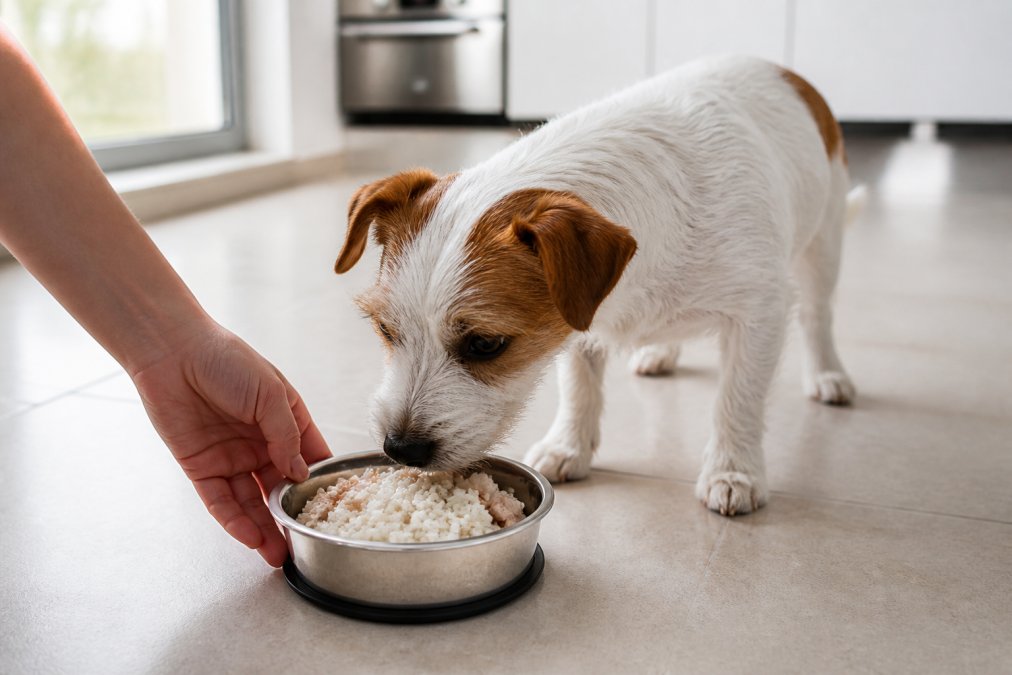
The real difference between a bland diet that works and one that doesn't comes down to portion size. Small, frequent meals keep the gut from being overwhelmed. Feed this way for two to three days, then begin the transition back to regular food.
3. Pumpkin Puree: Fiber for Dog Upset Stomach Relief
Plain pumpkin puree is one of the most reliable home remedies for a dog upset stomach because it delivers soluble fiber that helps regulate gut motility. It works for both diarrhea and constipation, which makes it unusually versatile.
Use plain canned pumpkin, not pumpkin pie filling. Pie filling contains sugar, spices, and sometimes xylitol, which is toxic to dogs. A typical serving is 1 to 2 tablespoons for a medium dog, mixed into food or offered on its own.
Fiber supplementation through pumpkin also supports the gut bacteria that keep digestion steady. Start small. Too much pumpkin can loosen stools rather than firm them.
4. Dog Probiotics for Digestive Health: Restoring Gut Balance
Dog probiotics for digestive health work by reintroducing beneficial bacteria that illness, antibiotics, or stress have wiped out. A bacterial imbalance in the gut often shows up as recurring diarrhea, gas, and poor appetite.
Look for products that list specific strains, such as Lactobacillus and Bifidobacterium, and that state a guaranteed CFU count on the label.
5. Ginger Root: A Natural Anti-Nausea Remedy
Ginger root is a well-known natural remedy for nausea, and it works for dogs the same way it works for people. It settles the stomach and can reduce the vomiting that comes with motion sickness or mild gastritis.
6. Hydration Therapy: Keeping Your Dog Hydrated
Dehydration is the most dangerous side effect of a dog upset stomach, and it can develop quickly when vomiting and diarrhea are involved. Hydration therapy means replacing fluids steadily, in small amounts, rather than letting your dog gulp a full bowl at once.
Oral rehydration schedule for a dog with upset stomach:
- Offer 1 to 2 tablespoons of water every 30 to 60 minutes.
- If your dog keeps that down for 2 hours, increase to 1/4 cup per offering.
- If your dog refuses water, try ice chips or a low-sodium broth (no onion or garlic powder).
- Do not let your dog gulp a full bowl, gulping triggers more vomiting.
Signs of dehydration to check at home:
- Tacky or dry gums
- Loss of skin elasticity (the skin tent test on the back of the neck)
- Sunken eyes
- Lethargy or weakness
- Reduced urine output
7. When to See a Vet for Dog Vomiting: Red Flags and Emergency Signs
Knowing when to see a vet for dog vomiting is the single most important skill in this whole list. Most mild stomach upset resolves within 24 to 48 hours with rest and bland food. Some cases do not, and waiting too long can turn a manageable problem into an emergency.
Emergency symptoms that require immediate veterinary intervention:
- Blood in vomit or stool
- Repeated vomiting that won't stop
- A hard, swollen, or painful abdomen
- Collapse, weakness, or severe lethargy
- Suspected ingestion of a toxin, bone, or foreign object
- Vomiting accompanied by a bloated, distended belly
| Symptom | Home Care OK | Call the Vet Now |
|---|---|---|
| One or two episodes of vomiting | Yes | No |
| Mild diarrhea, still drinking | Yes | No |
| Vomiting more than 3 times in a day | No | Yes |
| Blood in vomit or stool | No | Yes |
| Lethargy or refusal to drink | No | Yes |
| Bloated or painful abdomen | No | Yes |
Transitioning Back to Normal Food: A Step-by-Step Plan
Moving from a bland diet back to regular food is where many recoveries fall apart. The gut needs a gradual reintroduction, not an overnight switch. A bland food transition usually takes three to five days.
- Day 1: 75% bland diet, 25% regular food
- Day 2: 50% bland diet, 50% regular food
- Day 3: 25% bland diet, 75% regular food
- Day 4: 100% regular food, split into smaller meals
- Day 5 onward: Normal portions, monitored for recurrence
Frequently Asked Questions
What can I give my dog for an upset stomach at home?
Start with a 12-24 hour fast for adult dogs, then offer a bland diet of boiled chicken and white rice. Pumpkin puree (1-2 tablespoons for small dogs, 2-4 for large) can help firm up stool. Probiotics designed for dogs support gut health. Always provide fresh water. If symptoms persist beyond 48 hours, call your vet.
When should I see a veterinarian for my dog's vomiting or diarrhea?
Seek veterinary care if vomiting or diarrhea lasts more than 48 hours, if your dog is lethargic, refuses water, has blood in stool or vomit, or shows signs of pain. Puppies, seniors, and dogs with chronic conditions need prompt attention. Persistent vomiting can lead to dehydration and electrolyte imbalance.
Is plain pumpkin safe for dogs with digestive issues?
Yes, plain canned pumpkin (not pie filling) is safe and often recommended for dog upset stomach. Its fiber helps regulate bowel movements. Give 1-2 teaspoons for small dogs, 1-2 tablespoons for large dogs, mixed with food. Start small to avoid adding more digestive upset.
How long should I fast my dog if they have an upset stomach?
For adult dogs, a 12-24 hour fast can rest the gut. Puppies, seniors, and dogs with health conditions should not fast without veterinary guidance. Always provide water. After fasting, introduce a bland diet in small, frequent meals. If your dog is on medication, consult your vet before fasting.
Can probiotics help with a dog's upset stomach?
Yes, dog probiotics for digestive health can restore beneficial bacteria and ease symptoms like diarrhea and gas. Look for products with multiple strains and CFU counts. Probiotics work best alongside a bland diet. Consult your vet before starting, especially if your dog is on antibiotics or has a weakened immune system.
A dog upset stomach is stressful, but most cases resolve with rest, the right food, and steady hydration. When you need reliable supplies to get through the recovery, Smitty's Pet Store offers a curated selection of feeders, waterers, and supplements designed to make pet care simpler. Explore the automatic feeder, the pet feeding waterer, and the pet multivitamin health supplement to build a recovery routine you can trust.