

7 Safe Human Foods for Puppy Training Rewards

Last Updated: October 29, 2026
Quick Summary
Plain cooked chicken, scrambled eggs, carrots, and cucumber are safe human foods for puppy training rewards. Use small pea-sized pieces, subtract treat calories from meals, and match reward value to task difficulty. Never use chocolate, grapes, raisins, onions, garlic, xylitol, alcohol, or macadamia nuts.
- Boil or bake boneless, skinless chicken breast with no salt, oil, or seasoning, then tear into pea-sized pieces.
- Cook scrambled eggs fully with no butter, salt, or milk, and introduce egg as a single new food.
- Carrots and cucumber are low to medium value, best saved for easy reps and calm practice.
- Set aside a daily treat budget in the morning and stop food training when the container is empty.
- Batch prep a week of treats in one hour, label containers with the prep date, and freeze extras.
Table of Contents
- 1. Plain Cooked Chicken: The Lean Protein That Keeps Puppies Focused
- 2. Scrambled Eggs: A High-Value Reward for Fast Learners
- 3. Carrots and Cucumber: Crunchy, Low-Calorie Training Bites
- 4. High Value Training Treats for Puppies: What Makes a Reward Worth Working For
- 5. How to Use Food Rewards for Puppy Training Without Overfeeding
- 6. Foods to Avoid: The Toxic and Dangerous List Every Puppy Owner Needs
- 7. Prep Once, Train All Week: Budget-Friendly Bulk Treat Preparation
- Build Your Puppy Training Treat Kit at Smitty's Pet Store
- Frequently Asked Questions
1. Plain Cooked Chicken: The Lean Protein That Keeps Puppies Focused
The best safe human foods for puppy training rewards start with plain, unseasoned chicken breast. It is lean, easy to digest, and most puppies will work hard for a tiny shred of it.
Boil or bake a boneless, skinless breast with no salt, oil, or seasoning. Cool it, then tear it into pea-sized pieces. Skip the skin and any bones, which are a choking hazard. The USDA Food Safety and Inspection Service guidance on safe poultry handling is worth a quick read before you cook a batch.
A common mistake is overfeeding at the training table. Keep each piece small, about the size of your pinky nail, and count them against your puppy's daily calorie intake.
2. Scrambled Eggs: A High-Value Reward for Fast Learners
Scrambled egg is one of the highest-value training treats for puppies you can make at home. Cook one egg in a nonstick pan with no butter, salt, or milk, then scramble it dry and chop it into small bites.
The soft texture is easy for young puppies to chew.
Watch out: cook eggs fully and never serve them raw. Add no seasoning, and introduce egg as a single new food so you can watch for any reaction. If your puppy has a sensitive stomach, start with a tiny piece and see how digestion holds up.
Eggs are also budget-friendly. A single egg stretches across several short sessions, which keeps high-value rewards affordable during puppy development.
3. Carrots and Cucumber: Crunchy, Low-Calorie Training Bites
Carrots and cucumber give you crunchy training bites for puppies.
Cut carrots into thin sticks or small rounds. Peel cucumber and slice it into bite-sized chunks. These are great for a puppy that is food-motivated but already getting plenty of calories from meals and other rewards.
The trade-off is value. Most puppies will work for a carrot, but not as eagerly as for chicken or egg. Save the crunchy bites for simple behaviors and keep the high-value rewards for the tough stuff.
4. High Value Training Treats for Puppies: What Makes a Reward Worth Working For
A high-value training treat is any food your puppy will work hard to earn, and value is personal. Chicken may be gold to one puppy and boring to another. The reward that wins is the one your puppy will chase across a noisy room.
Here is how we rank reward value for training sessions:
| Reward | Value Level | Best Used For |
|---|---|---|
| Plain chicken | Very high | New cues, distractions |
| Scrambled egg | High | Proofing behaviors |
| Carrots and cucumber | Low to medium | Easy reps, calm practice |
| Store-bought training treats | Medium | General practice |
Match the reward to the difficulty of the task. Easy sits get a crunchy bite. A first "come" from across the yard earns the chicken.
What most guides miss is that reward value drops if you use the same treat every time. Rotate your proteins and textures so your puppy stays food-motivated. Positive reinforcement works best when the reward still feels like a win.
5. How to Use Food Rewards for Puppy Training Without Overfeeding
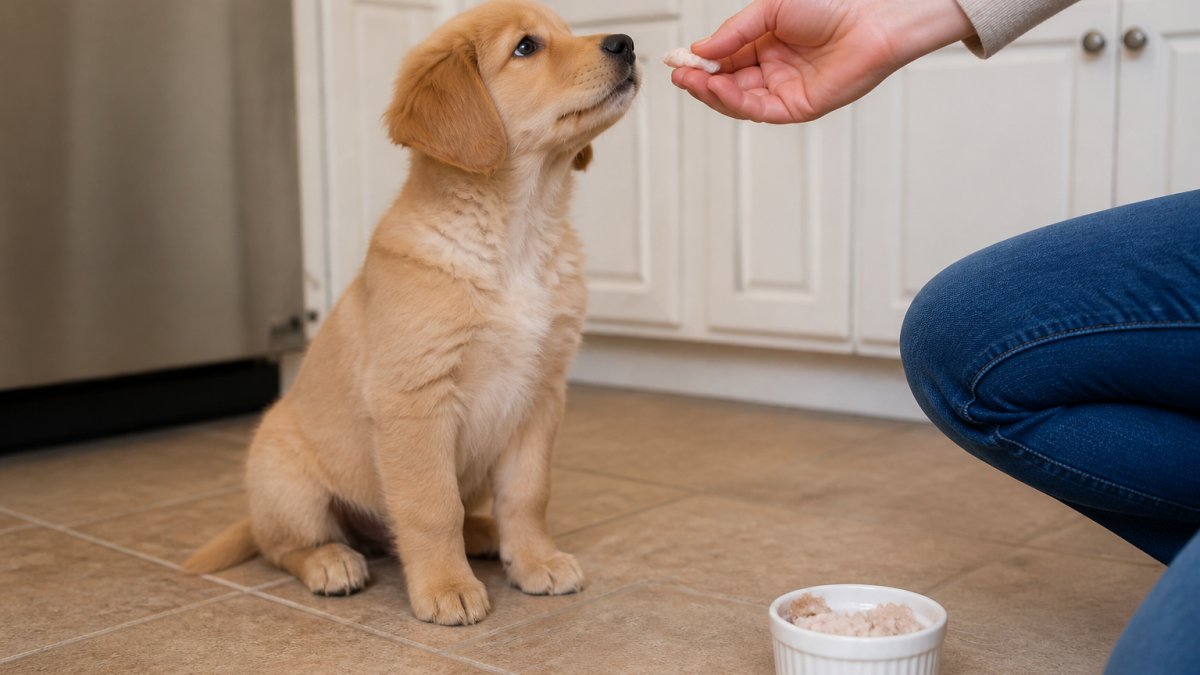
The safe way to use food rewards for puppy training is to subtract treat calories from meals, not add them on top. Treats should make up only a small share of your puppy's daily calorie intake, so plan them into the day.
Start by setting aside a daily treat budget. Measure out the day's rewards in the morning and put them in a small container. When the container is empty, training with food stops for the day. This simple habit protects portion control and prevents overfeeding.
Brain Games Treats Birthday Squeaky Pet Toys Brain Games Treat Dispensing →
A few rules that keep training sessions safe:
- Break rewards into pea-sized pieces
- Reward frequently in short sessions, not long ones
- Use a slow feeder bowl at mealtime to pace eating
- Track high-value rewards separately from low-calorie veggie bites
If your puppy is gaining weight, cut the treat portion first. If training stalls, raise the reward value instead of the volume. Small, frequent rewards beat big handfuls every time.
6. Foods to Avoid: The Toxic and Dangerous List Every Puppy Owner Needs
Some human foods are dangerous for puppies, and a few are genuinely toxic. Chocolate, grapes and raisins, onions and garlic, xylitol sweetener, alcohol, and macadamia nuts should never be training rewards.
Beyond the toxic list, watch for these hazards:
- Cooked bones that can splinter and cause choking
- High-fat or fried foods that upset digestion
- Anything seasoned with salt, onion powder, or garlic
- Raw meat handled without care
The FDA advice on foods that can be dangerous to pets is a solid reference to keep on hand. For a full rundown of what to keep out of reach, our guide to the top toxic foods for pets covers the complete list.
Watch out: xylitol hides in sugar-free gum, peanut butter, and baked goods (the FDA). Check labels before you share anything, and when in doubt, leave it out. A safe reward is always better than a risky one.
7. Prep Once, Train All Week: Budget-Friendly Bulk Treat Preparation
Batch prep is how you keep high-value rewards cheap and ready. Set aside one hour on a weekend to cook, chop, and portion a week's worth of training treats.
A simple bulk routine:
- Boil a pack of chicken breasts and bake a few eggs
- Cool everything fully, then chop into pea-sized pieces
- Portion into daily containers so you never overfeed, using food storage containers to keep bulk-prepared rewards fresh all week
- Store extras in the fridge and freeze what you will not use within a few days
- Keep a small bag in your training pouch for quick access
Label each container with the prep date so nothing sits too long. This approach stretches your budget and means you are never caught without a reward mid-session.
Build Your Puppy Training Treat Kit at Smitty's Pet Store
Training goes smoother when your gear keeps up with your rewards. At Smitty's Pet Store, we help new pet parents build a simple, stress-free routine with supplies chosen to make care easier.
Turn high-value rewards into engaging enrichment with our treat-dispensing puzzle ball. Manage portions at mealtime with a slow feeder bowl. If you want to understand the training methods behind the treats, our guide to behavior modification vs obedience training explains how reward-based training works.


Get started with Smitty's Pet Store and build a training kit that keeps your puppy happy and learning.
Frequently Asked Questions
How many calories should come from treats during puppy training?
Treat portions should be kept small relative to your puppy's daily food intake. When you are doing multiple short training sessions, pre-portion the day's treat allowance into a small container so you do not lose track. If you are using low-calorie options like cucumber or carrot, you can hand out more pieces without blowing the budget.
What is a good high value training treat for puppies?
High value training treats for puppies are foods your puppy will work hard for, even around distractions. Plain cooked chicken and small pieces of scrambled egg are strong options. The key is to reserve these for harder skills like recall or settling around new people. Save plain kibble or cucumber slices for easy behaviors in quiet rooms. Rotating your high value rewards keeps them exciting and prevents your puppy from getting bored with the same treat every session.
Can I give my 9-week-old puppy scrambled eggs?
Yes, if the eggs are fully cooked with no butter, oil, salt, or seasoning. Scramble them plain and cut into pea-sized pieces. Introduce any new food one at a time and watch how your puppy reacts. If your puppy has a known food sensitivity or you are unsure, check with your veterinarian before adding eggs to the rotation.
What human foods are toxic to puppies and must be avoided?
Chocolate, grapes and raisins, onions and garlic, xylitol (found in sugar-free gum and some peanut butters), macadamia nuts, and alcohol are all toxic to puppies and can cause serious harm. Cooked bones can splinter and create choking hazards or internal damage. Also skip anything with caffeine, high salt content, or heavy seasoning. When preparing training treats from human food, keep everything plain: no butter, no salt, no sauces. If you suspect your puppy ate something toxic, call your veterinarian or a pet poison hotline right away.
How do I portion human food for puppy training sessions?
Cut treats into pieces no larger than a pea for small puppies and a small fingernail for larger breeds. Measure out the day's total treat allowance before your first session and keep it in a small container. A kitchen scale helps if you want precision. Use a slow feed bowl for meals so your puppy eats at a steadier pace.
Your puppy's training window moves fast, and the rewards you choose shape how quickly they learn. Build a treat kit that balances value, safety, and portion control, and every session becomes a step forward. Smitty's Pet Store curates trusted supplies and practical guidance so you can parent with confidence. Explore our enrichment toys, slow feeders, and storage essentials, and get started with Smitty's Pet Store today.
