

Puppy Vaccinations: Which Shots a New Puppy Needs

Last Updated: November 7, 2026
Quick Summary
Most puppies need the DHPP combination shot, which protects against distemper, hepatitis, parvovirus and parainfluenza, plus a rabies vaccine. Puppy vaccinations are given as a series starting around 6 to 8 weeks, with doses spaced a few weeks apart, on a schedule your vet sets.
- Core vaccines are DHPP and rabies, recommended for almost every puppy.
- The first DHPP dose is typically given at 6 to 8 weeks of age.
- The first rabies shot generally comes around 12 to 16 weeks of age.
- Non-core vaccines like bordetella depend on lifestyle and exposure risk.
- Keep your puppy's vaccination record and rabies certificate for licensing and boarding.
Table of Contents
- Core Vaccines Every Puppy Needs
- Non-Core Vaccines and When Your Puppy May Need Them
- Puppy Vaccination Schedule by Age
- How Maternal Antibodies and Unknown Vaccine History Change Timing
- When Can Puppies Go Outside After Vaccinations?
- Puppy Deworming Schedule and Its Place in the Plan
- Booking Your Puppy's Next Vet Visit and Keeping Records
- Frequently Asked Questions
Core Vaccines Every Puppy Needs
Puppies need a set of core vaccines, and puppy vaccinations protect against serious, common diseases. Core vaccines are recommended for almost every puppy, regardless of where it lives. This guide helps new pet owners know what to ask their veterinarian. The short answer is that most puppies need the DHPP combination shot and a rabies vaccine, given on a schedule your vet sets.
Core vaccines matter because the diseases they prevent can be deadly. Puppies have young immune systems, so they can be especially vulnerable. Your veterinarian will choose the exact timing for your puppy's vaccinations, since puppy vaccinations are scheduled around each dog's needs.
DHPP: Distemper, Hepatitis, Parvovirus and Parainfluenza
DHPP is a combination vaccine. It protects against four diseases in one series of shots:
- Distemper: a serious virus that affects the lungs, stomach and nervous system
- Hepatitis (adenovirus): a virus that attacks the liver
- Parvovirus: a highly contagious virus that causes severe vomiting and diarrhea
- Parainfluenza: a contributor to kennel cough
Puppies usually get DHPP in a series of doses spaced a few weeks apart. Booster shots continue after that. Ask your vet about your puppy's specific schedule.
Rabies Vaccination
Rabies is nearly always fatal once symptoms appear (the CDC). Rabies vaccination is required for dogs by law in most states, and a rabies certificate is often needed for licensing and boarding. Puppies generally receive their first rabies shot around 12 to 16 weeks of age. Keep the certificate with your puppy's records.
Non-Core Vaccines and When Your Puppy May Need Them
Non-core vaccines are not needed by every puppy. Your vet recommends them based on lifestyle and exposure risk. Common examples include:
- Bordetella (kennel cough): often recommended for puppies that attend daycare, boarding or dog parks
- Leptospirosis: may be advised in areas where the bacteria are present, such as wet or wooded regions
- Canine influenza: may be suggested for dogs that socialize often in groups
- Lyme disease: may be considered in areas where ticks are common
Ask your veterinarian which non-core vaccines fit your puppy's daily life. Recommendations vary by region, so local risk matters.
Puppy Vaccination Schedule by Age
A typical puppy schedule looks like this. Your vet may adjust it for your puppy based on breed, size, regional risk, and the vaccines chosen.
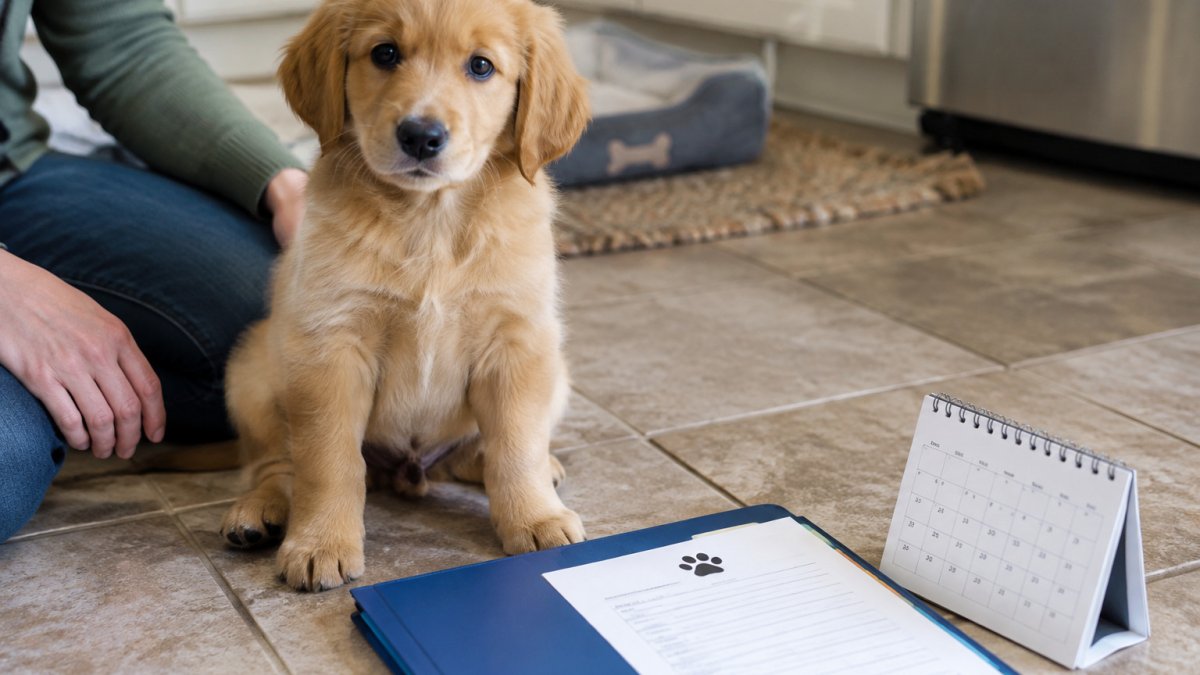
- 6 to 8 weeks: first DHPP dose
- 10 to 12 weeks: second DHPP dose
- 14 to 16 weeks: third DHPP dose and first rabies shot
- 12 to 16 months: booster for DHPP and rabies
- Adulthood: boosters based on your vet's recommendation
Why the Doses Are Spaced Three to Four Weeks Apart
Veterinarians typically space doses a few weeks apart because maternal antibody levels vary from puppy to puppy, so a single shot cannot be guaranteed to take. Your vet will set the exact timing for your puppy.
How Lifestyle Changes the Schedule
Core vaccines follow the same backbone for nearly every puppy, but non-core vaccines are layered in based on exposure risk and are often started once the puppy is old enough for the product label and your vet's protocol:
- Bordetella: often given as an intranasal or injectable dose starting around 8 weeks when daycare, boarding, grooming, or training classes are planned; many facilities require it every 6 to 12 months.
- Leptospirosis: typically a two-dose series spaced 2 to 4 weeks apart, often started at 12 weeks or later, then boosted annually in higher-risk regions.
- Canine influenza: usually a two-dose series spaced 2 to 4 weeks apart, then annual boosters, for puppies that will be in group settings.
- Lyme disease: a two-dose series spaced 2 to 4 weeks apart, then annual boosters, for puppies in tick-heavy areas.
Adult Boosters and the One-Year Rabies Certificate
After the 12-to-16-month booster, your vet will advise on future booster timing based on the vaccine used and local requirements. Keep the rabies certificate with your puppy's records from day one, since licensing and boarding facilities often ask for it.
Watch out: a puppy that misses the 14-to-16-week dose may need the series extended or restarted, so confirm the next date before you leave the clinic rather than assuming the original calendar still applies.
The article lays out a typical puppy vaccine timeline by age, which is summarized below for quick reference.
| Age | Vaccine | Notes |
|---|---|---|
| 6 to 8 weeks | First DHPP dose | Start of the core series |
| 10 to 12 weeks | Second DHPP dose | Doses spaced a few weeks apart |
| 14 to 16 weeks | Third DHPP dose and first rabies shot | Rabies certificate kept for records |
| 12 to 16 months | DHPP and rabies boosters | Follow-up protection |
| Adulthood | Boosters | Based on vet recommendation |
How Maternal Antibodies and Unknown Vaccine History Change Timing
Why a Series Is Needed: The Maternal Antibody Window
Puppies receive antibodies from their mother, which protect them early on but can also affect how well a vaccine works. Antibody levels fall at different rates in different puppies, so your vet will time the series to suit your puppy.
Your vet may adjust the schedule based on the puppy's history and the vaccines used.
When the Vaccine History Is Unknown or Incomplete
A puppy with no records, from a rescue, a rehoming, or an unclear breeder, is common, and the safe default is not to assume protection. A practical catch-up pathway looks like this:
- Bring whatever you have. Texts, breeder notes, shelter intake forms, and prior clinic invoices all help. Even a partial date is useful.
- Ask your vet about the catch-up plan. With an unclear history, your vet will decide whether the series should be restarted or extended.
- Do not skip rabies. Rabies is required by law in most states, and a certificate is needed for licensing and boarding. A puppy with no rabies record should be vaccinated on the state's legal timeline, not held back.
- Recheck non-core decisions. Bordetella, leptospirosis, influenza, and Lyme are chosen on current risk, not on what a previous owner may have given.
- Keep a single record. Ask the clinic for one consolidated vaccination record and photograph it. Bring it to every visit and to boarding or daycare.
Watch out: a puppy with an unknown history should not be treated as fully protected just because it looks healthy, the gap is in the record, not in the puppy's appearance, and restarting a series is safer than assuming immunity.
When Can Puppies Go Outside After Vaccinations?
Puppies are generally not fully protected until they finish the core vaccine series, so ask your vet about outside time and exposure to unfamiliar dogs. Ask your vet when your puppy can safely go outside.
To make the home safe in the meantime, try these steps:
- Keep your yard fenced and secure
- Use a clean, enclosed space for potty breaks
- Set up a safe carrier for vet trips
- Introduce your puppy to new people at home
Safe socialization helps your puppy grow confident. Ask your vet how to balance socialization with protection from disease.
Puppy Deworming Schedule and Its Place in the Plan
Deworming is separate from vaccination but just as important. Puppies can pick up intestinal worms from their mother or the environment. Your vet will create a deworming schedule, often starting at a young age and continuing until your puppy is older. Keep deworming on your calendar alongside your vaccine appointments.
Booking Your Puppy's Next Vet Visit and Keeping Records
Schedule your puppy's next vaccine visit before you leave the clinic. Bring your puppy's vaccination record to every appointment. Keep copies of rabies certificates in a safe place.
For routine care between visits, ask your vet which hygiene products suit your puppy before starting any new grooming routine.
Caring for a new puppy can feel overwhelming, but you do not have to figure it out alone. Smitty's Pet Store is here to help you find trusted supplies and practical tips for your puppy's first year. Browse our curated selection to get the essentials your new companion needs.
Frequently Asked Questions
What shots are mandatory for new puppies?
Most veterinarians consider the core vaccines mandatory for puppies: DHPP, which protects against distemper, adenovirus (infectious hepatitis), parvovirus and parainfluenza, plus rabies, which is required by law in most U.S. states once a puppy reaches the age set by local rules, usually around 12 to 16 weeks. Puppies normally receive DHPP in a series of doses, and your veterinarian will set the exact timing. Your veterinarian can confirm which vaccines your local rules require and which additional shots fit your puppy's lifestyle and exposure risk.
What vaccinations does a puppy need at 8 weeks?
At 8 weeks, most puppies receive the first dose of the DHPP combination vaccine, which covers distemper, adenovirus, parvovirus and parainfluenza. Your veterinarian can also discuss the rest of the vaccination schedule at this visit. Rabies is usually not given until around 12 to 16 weeks. Depending on your region and your puppy's risk, your vet may also suggest an optional vaccine such as Bordetella (kennel cough). Keep the appointment record so the next dose is scheduled on time.
What shots do puppies need at 12 weeks?
At about 12 weeks, puppies usually receive another DHPP booster in the core series, and some are given their first rabies vaccine, depending on local requirements and the veterinarian's schedule. If your puppy is going to daycare, boarding or group classes, your vet may also recommend Bordetella or canine influenza vaccination at this stage. Your veterinarian will let you know when the series is finished, so plan for any further visits after this one.
Can a 2-month-old puppy get vaccinated?
Yes. A 2-month-old puppy, roughly 8 weeks old, is at the age when the first DHPP vaccine is normally given. Your veterinarian can explain how early doses are spaced and whether any need to be repeated. Bring your puppy's breeder or shelter records to the visit if you have them. Your veterinarian can then decide how to space the doses and whether any earlier doses need to be repeated.
