

7 Litter Box Habits That Keep Your Area Spotless

Last Updated: November 6, 2026
Quick Summary
Maintain a clean litter box area with a fixed routine: scoop waste and urine clumps once or twice daily, wipe the rim and floor in front of the entry, and keep litter at 2 to 3 inches deep. Wash the box weekly with mild soap and hot water, and replace all litter monthly to stop odor soaking into the plastic.
- Daily cleaning takes about three minutes when tools stay within arm's reach.
- Weekly tasks take about 15 minutes, including washing the box and mopping the floor.
- Clean the box monthly with vinegar and baking soda, letting it sit for 10 minutes.
- Never mix vinegar with bleach, since the combination releases harmful gas.
- Avoid ammonia and citrus sprays, which can attract marking or irritate cats.
Table of Contents
- Why the Area Around the Box Matters as Much as the Box
- How to Clean Litter Box Daily Without the Hassle
- Litter Box Cleaning Hacks That Save Time and Mess
- How to Keep Litter Box Area Smelling Clean All Week
- How to Clean a Litter Box With Vinegar and Baking Soda
- Choosing Cat-Safe Cleaners and Products to Avoid
- Floor, Wall, and Dust Control Around the Box
- Fixing Persistent Odor and Mess: A Troubleshooting Checklist
- Frequently Asked Questions
Why the Area Around the Box Matters as Much as the Box
Learning how to maintain a clean litter box area starts with one truth most cat owners learn the hard way: the box itself is only half the job. Litter scatters. Dust settles on baseboards. Odor lingers in the air long after you scoop.
Many cat parents scoop faithfully but still can't shake the smell. The fix usually isn't more scooping. It's a routine that covers the whole zone.
A semi-enclosed box can help contain scatter. But no box design cleans the floor around it for you.
How to Clean Litter Box Daily Without the Hassle
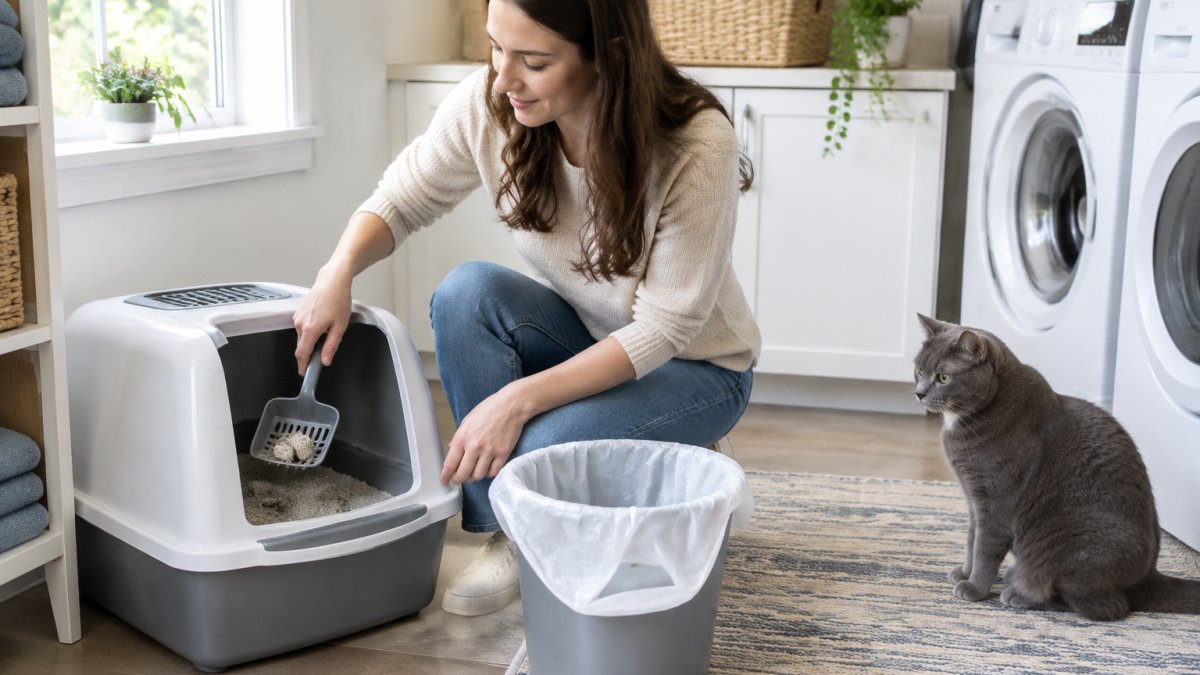
Daily litter box cleaning takes about three minutes when you follow a fixed routine. Speed comes from setup, not effort. Keep your tools within arm's reach and the whole job becomes automatic.
The Two-Minute Scoop Routine
Scoop twice a day if you can, once at minimum. Remove solid waste and urine clumps every time. Cats dislike stepping on soiled litter, and some will start going outside the box if it stays dirty.
Here's the routine we recommend:
- Set a scoop and lined waste bag beside the box before you start
- Scoop solid waste first, then urine clumps
- Check the litter depth, about 2 to 3 inches is ideal
- Top off with fresh litter as needed
- Tie and bin the waste bag right away
Daily Wipe-Downs and Fresh Litter Top-Offs
Run a damp cloth along the box rim and the floor in front of the entry. That's where tracked litter and stray dust collect first. Add fresh litter to keep depth steady, and stir the litter lightly so clumps don't stick to the bottom.
A Simple Daily, Weekly, and Monthly Cleaning Schedule
Use this checklist to stay ahead of odor and mess without overcleaning.
Daily tasks (about 3 minutes total):
- Scoop solid waste and urine clumps once or twice
- Wipe the box rim and the floor in front of the entry with a damp cloth
- Top off litter to maintain 2 to 3 inches
- Vacuum or sweep the immediate floor area for tracked litter
- Take the waste bag out immediately
Weekly tasks (about 15 minutes):
- Wash the box with mild soap and hot water, then dry fully
- Wipe walls and baseboards within a few feet of the box with mild soap and water
- Mop the floor around the box with a pet-safe cleaner
- Launder or rinse the litter mat and any washable rug under the box
- Check the litter for clumping failure and replace if needed
Monthly tasks (about 30 minutes):
- Empty and replace all litter completely
- Deep-clean the box with vinegar and baking soda (see the method below)
- Pull the box away from the wall and clean behind and underneath it
- Inspect the box for scratches or cracks that trap odor and replace if worn
- Wash the scoop and caddy with hot soapy water
Watch out: skipping the weekly wash and only topping off litter lets odor soak into the plastic, and no amount of scooping will fix that.
Time needed for daily, weekly, and monthly litter box cleaning tasks
Litter Box Cleaning Hacks That Save Time and Mess
A few small upgrades cut litter box cleaning time more than any technique. The right tools do the work before you touch a scoop.
- Use a litter mat at the entry to catch tracked litter before it spreads
- Keep a handheld vacuum nearby for quick passes on scatter
- Line the box so a complete litter change takes seconds
- Store a caddy with scoop, bags, cloth, and spray in one spot
- Place a washable rug under the box zone for easy spot cleaning
If you want ready-made options, our guide to quick pet clean-up products for busy owners covers picks that make daily maintenance faster.
How to Keep Litter Box Area Smelling Clean All Week
Odor control comes down to three habits: remove waste fast, refresh litter often, and clean the surfaces around the box. Smell builds in layers. The box, the floor, and the air each need attention.
Wash the box weekly with mild soap and hot water. Replace all litter monthly, or sooner in multi-cat homes. Air out the room daily, and keep a box of baking soda nearby for spot deodorizing.
For litter that pulls its weight on smell, see our picks for the best cat litter for odor control.
Watch out: covering odor with air freshener sprays backfires. Many sprays irritate cats' airways, and the smell returns as soon as the spray fades.
How to Clean a Litter Box With Vinegar and Baking Soda
Vinegar and baking soda clean a litter box safely and cost almost nothing. The pair lifts stuck debris and neutralizes odor without harsh fumes.
Here's the method we use:
- Empty the box completely and bag the old litter
- Sprinkle baking soda over the base and sides
- Spray white vinegar on top, it will fizz
- Let it sit for 10 minutes
- Scrub with a brush, then rinse with hot water
- Dry fully in the sun or with a towel before refilling
Never mix vinegar with bleach. The combination releases harmful gas.
Choosing Cat-Safe Cleaners and Products to Avoid
Mild soap and hot water handle most litter box cleaning safely. For deeper cleaning, stick to pet-safe options and read every label before you spray.
Avoid these:
- Bleach-based cleaners unless fully rinsed and dried
- Ammonia, which smells like urine and can attract repeat marking
- Citrus and essential oil sprays, which many cats find irritating
- Strong pine cleaners, especially around cats that groom nearby
Unsure whether a product is safe? Our guide on how to choose safe pet products walks through what to check on the label.
Floor, Wall, and Dust Control Around the Box
The floor and wall around the box collect dust, tracked litter, and stray spray. Wipe walls near the box weekly with mild soap and water. Vacuum or sweep the floor daily, and mop weekly.
Dust matters too. Litter dust can settle on nearby surfaces. A quick daily vacuum pass helps keep it in check.
For accidents that reach carpet, this guide on cleaning pet stains from carpet naturally covers a safe method.

Surface-Specific Cleaning Steps
Different surfaces need different methods. Use these steps for the area within a few feet of the box.
Tile and grout: Sweep or vacuum loose litter daily. Mop weekly with a mild soap solution, then rinse with clean water. For grout, scrub with a soft brush and a baking soda paste, let it sit for 10 minutes, then rinse. Treat any accident spot promptly.
Hardwood: Sweep or vacuum daily with a soft brush attachment to avoid scratches. Wipe up urine immediately with a cloth, then clean with a damp cloth and mild soap. Dry the surface right away. Avoid soaking the wood, and use a pet-safe cleaner labeled for hardwood.
Carpet and rugs: Vacuum daily to lift tracked litter and dust. For urine, blot with a cloth, then clean with an enzyme-based pet stain remover following the label. Place a washable rug under the box zone so you can launder it weekly.
Walls and baseboards: Wipe weekly with a damp cloth and mild soap. Pay attention to the wall behind and beside the box, where spray and dust collect. For painted walls, test any cleaner in a hidden spot first.
Dust and Allergen Control
Litter dust settles on nearby surfaces and adds to household allergens. Reduce it with these habits:
- Choose a low-dust litter and pour it slowly from a low height
- Vacuum daily with a HEPA filter if possible
- Sweep gently to avoid kicking dust into the air
- Ventilate the room by opening a window or running a fan
- Wipe surfaces with a damp cloth rather than a dry one, which spreads dust
Watch out: dry sweeping and high-pour litter both send fine dust into the air, which is a problem for households with allergies or asthma.
Fixing Persistent Odor and Mess: A Troubleshooting Checklist
Persistent smell or mess usually traces to one of a few causes. Work through this checklist before replacing anything:
| Problem | Likely Cause | Fix |
|---|---|---|
| Lingering odor after scooping | Old litter or unwashed box | Full litter change and weekly wash |
| Litter tracked everywhere | No mat, high sides missing | Add a litter mat, switch to a semi-enclosed box |
| Cat going outside the box | Dirty box or stress | Scoop twice daily, add a second box |
| Dust on nearby surfaces | Dusty litter | Switch to dust-free litter, vacuum daily |
| Smell returns within a day | Odor in floor or wall surfaces | Wipe and mop the surrounding zone |
Our Semi-Enclosed Cat Litter Box ($117.66) features a semi-enclosed hood and a tipping bucket design that makes scooping quicker.
Keeping a litter box area truly clean takes a routine, not willpower. Smitty's Pet Store makes that routine easier with a curated selection of trusted supplies and practical guidance for every pet parent. Our Semi-Enclosed Cat Litter Box includes a scoop, waste bags, and a tipping bucket design that speeds up daily cleanup, while our team is here to help you pick the right litter and tools for your cat. Get started with Smitty's Pet Store and build a cleaner, calmer litter routine this week.
Frequently Asked Questions
How often should you scoop a litter box?
Scoop at least once a day, and twice daily in homes with more than one cat. Daily scooping removes urine clumps and solid waste before odor sets in and before cats decide the box is too dirty to use. Pair scooping with a full litter change every two to four weeks, plus a complete box wash with mild soap and hot water. A covered box with a hood, like a semi-enclosed model, holds odor longer between scoops, so stay consistent with the daily routine.
Can you clean a litter box with vinegar and baking soda?
Yes. Vinegar and baking soda are a safe, low-cost way to deep clean a litter box. Empty the box, rinse with hot water, spray or wipe with white vinegar, then sprinkle baking soda to lift residue and neutralize odor. Scrub with a mild soap, rinse thoroughly, and dry completely before adding fresh litter. Avoid mixing vinegar with bleach, which creates dangerous fumes. Skip harsh cleaners with strong scents, since cats have sensitive noses and may avoid a box that smells like chemicals.
Is Dawn dish soap safe for cleaning a cat litter box?
A small amount of mild dish soap is generally fine for washing a litter box, as long as you rinse it thoroughly and let it dry before adding litter. The concern is residue, not the soap itself. Leftover soap film can irritate paws or discourage cats from using the box. Use a few drops in hot water, scrub the surfaces, and rinse until the water runs clear. For routine cleaning, plain hot water and a dedicated scrub brush handle most messes without any soap at all.
What can you put in a cat litter box to control odor?
Start with clumping litter and keep the depth at about 2 to 3 inches, which makes scooping easier and keeps waste from reaching the bottom of the box. Baking soda sprinkled lightly under the litter helps neutralize smells. Avoid scented litter deodorizers and air fresheners near the box, since strong fragrances can push cats away. Place a litter mat outside the box to catch tracked litter, and wash the box monthly.
