

Best Cat Litter for Odor Control: Top Picks for 2026

Table of Contents
- What Makes the Best Cat Litter for Odor Control
-
Top Cat Litter Picks for Odor Control in 2026
- Dr. Elsey's Precious Cat Ultra: Best Overall for Multi-Cat Homes
- Arm & Hammer Clump & Seal: Best for Baking Soda Odor Destruction
- Ever Clean Extra Strength Unscented: Best Activated Charcoal Option
- PrettyLitter: Best for Health Monitoring and Lightweight Use
- Purina Tidy Cats Breeze System: Best for Dust-Free, Low-Tracking Households
- ökocat Natural Wood Clumping Litter: Best Biodegradable Choice
- World's Best Cat Litter Multiple Cat Formula: Best Corn-Based Natural Litter
- Cat Litter Odor Neutralizer: How Active Ingredients Actually Work
- How Often to Scoop Cat Litter for Maximum Freshness
- How to Keep the Litter Box from Smelling Between Changes
- Multi-Cat Household Considerations
- Conclusion
Last Updated: August 7, 2026
Finding the best cat litter for odor control is one of the most practical decisions you'll make as a cat owner. At Smitty's Pet Store, we've tested and curated a range of options so you can skip the guesswork and go straight to what actually works.
Quick Picks:
- Best Overall: Dr. Elsey's Precious Cat Ultra, hard-clumping, dust-free, no added fragrances
- Best Baking Soda Formula: Arm & Hammer Clump & Seal, moisture-activated odor destruction
- Best Activated Charcoal Option: Ever Clean Extra Strength Unscented, 14-day ammonia shield
- Best Health Monitoring: PrettyLitter, color-changing crystals that flag health changes early
- Best Dust-Free System: Purina Tidy Cats Breeze, pellets and absorbent pads, virtually no tracking
- Best Biodegradable: ökocat Natural Wood Clumping, sustainably sourced, fragrance-free
- Best Corn-Based Natural: World's Best Cat Litter Multiple Cat Formula, outstanding odor control from whole-kernel corn
What Makes the Best Cat Litter for Odor Control
The best cat litter for odor control physically traps or chemically neutralizes odor-causing compounds rather than masking them. Cat waste produces two primary odors: ammonia from urine and volatile sulfur compounds from feces.
Three factors determine effectiveness: absorbency, clumping strength, and active neutralizing agents. High liquid retention slows bacterial breakdown that generates ammonia. Tight clumps enable complete waste removal, reducing time odor-producing material sits in the box. Active ingredients like activated charcoal, baking soda, zeolite, and silica gel bind to odor molecules directly.
Clumping vs. Non-Clumping: Which Controls Odor Better
Clumping litter generally outperforms non-clumping for odor control. It binds moisture into a solid mass, allowing complete removal of urine from the box with each scoop. Non-clumping litter absorbs liquid but disperses it through granules, leaving urine residue behind even after scooping. For multi-cat homes, clumping is almost always the better choice.
Litter Materials: Clay, Crystal, Wood, Corn, and Paper
- Bentonite clay: Absorbs moisture rapidly and forms hard, scoopable clumps. Most affordable and widely available.
- Silica gel crystals: Highly porous with exceptional liquid retention and odor-trapping capability. Lightweight and low-dust, but non-clumping.
- Wood fibers: Neutralize ammonia through chemical reaction with natural wood compounds. Biodegradable and typically fragrance-free.
- Corn: Plant-based, biodegradable, and forms tight clumps. Strong results in multi-cat settings.
- Paper pellets: Highly absorbent and hypoallergenic. Best for post-surgical recovery or cats with respiratory sensitivities.
Scented vs. Unscented Formulas
Most veterinary guidance leans toward unscented litter. Cats have far more sensitive smell than humans, and many avoid heavily scented boxes. According to the American Association of Feline Practitioners' litter box guidelines, strong fragrances are a leading trigger for litter box aversion.
Unscented litters using activated charcoal or baking soda control odor without competing smells.
Top Cat Litter Picks for Odor Control in 2026
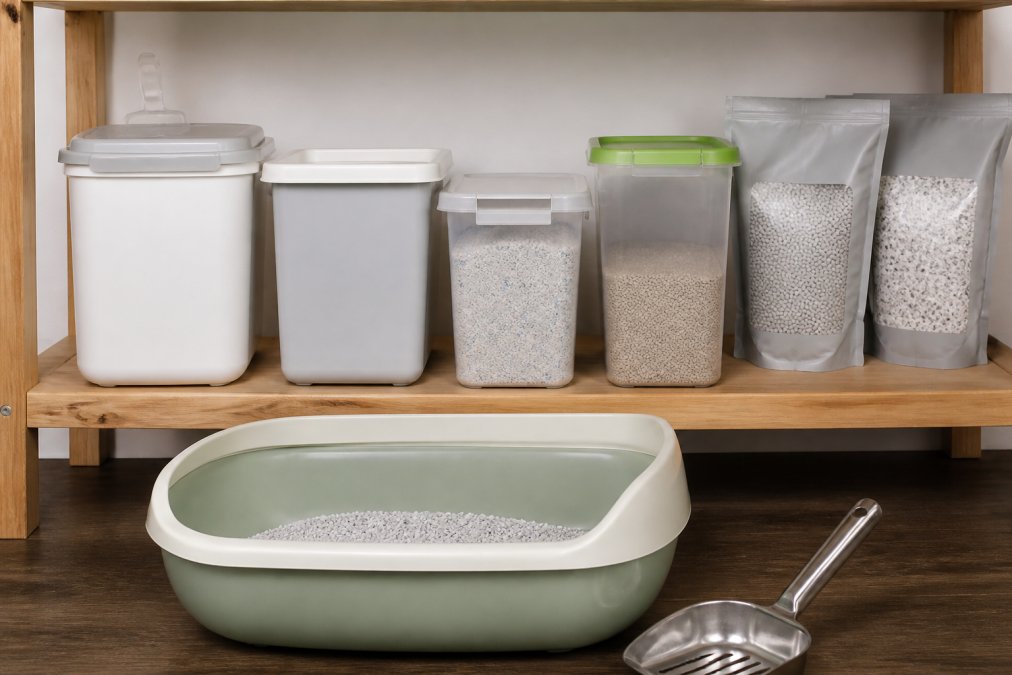
Dr. Elsey's Precious Cat Ultra: Best Overall for Multi-Cat Homes
Dr. Elsey's Precious Cat Ultra is the most consistently recommended clumping clay litter for odor control. The medium-grain bentonite clay forms extremely hard clumps that prevent moisture from seeping to the bottom of the tray. The 99.9% dust-free formula suits cats with respiratory sensitivities and works with sifting and mechanical self-cleaning systems. A 40-lb bag typically costs around $22.99 to $24.99, while a 20-lb box can be found for about $14.99.
Best for: Multi-cat households and cats with allergies or respiratory sensitivities.
Pros: Hard clumps, no added fragrances, low dust, hypoallergenic.
Cons: Heavy bags can be awkward to pour; some tracking reported on smooth floors.
Arm & Hammer Clump & Seal: Best for Baking Soda Odor Destruction
Arm & Hammer Clump & Seal uses moisture-activated micro-granules that form a tight seal around waste, then built-in baking soda chemically destroys sealed-in odors. The 99.9% dust-free formula keeps airborne particles low, and clumps are rock-solid for easy cleanup. A 19-lb box can cost around $15.59, a 28-lb box around $19.99, and a 38-lb box around $26.79.
Best for: Multi-cat households seeking active odor destruction.
Pros: Baking soda actively neutralizes odors, rock-solid clumps, very low dust.
Cons: Scented versions can be strong for sensitive cats; heavier than lightweight alternatives.
Ever Clean Extra Strength Unscented: Best Activated Charcoal Option
Ever Clean Extra Strength Unscented pairs activated charcoal with an Ammonia Shield claiming 14 days of odor control. Activated charcoal works by adsorption, with odor molecules physically binding to its porous surface. Extra-hard clumps mean fewer broken clumps during scooping and less residue in the box. A 25-lb box typically costs between $26.89 and $29.99.
Best for: Cat owners prioritizing long-term odor neutralization without fragrances.
Pros: Activated charcoal plus ammonia shield, very hard clumps, fragrance-free, low-dust.
Cons: One of the heavier options; some users noted increased dust in recent batches.
PrettyLitter: Best for Health Monitoring and Lightweight Use
PrettyLitter's silica gel crystals change color in response to urine pH changes and blood presence, providing early visual indicators of potential health issues like urinary tract infections or kidney problems. According to the Cornell University College of Veterinary Medicine's feline health resources, early detection of urinary issues significantly improves treatment outcomes. Odor control is excellent in weeks one and two; the non-clumping formula loses effectiveness toward weeks three and four as crystals saturate. A 6-lb bag, designed to last one cat for up to a month, costs $24.00 when purchased directly from their website.
Best for: Cat owners wanting health monitoring alongside odor control.
Pros: Color-changing crystals provide health alerts, lightweight, low dust, good early odor control.
Cons: More expensive than clay; non-clumping formula requires monthly changes; odor control diminishes late in cycle.
Purina Tidy Cats Breeze System: Best for Dust-Free, Low-Tracking Households
The Purina Tidy Cats Breeze System uses large zeolite pellets that dehydrate solid waste and allow urine to pass through to an absorbent pad below. The pad contains an Ammonia Blocker that neutralizes urine odor for up to seven days for a single cat. Pellets are 99.9% dust-free and large enough that tracking is virtually eliminated. The estimated annual cost for one cat using the Breeze system is approximately $210 to $420, depending on usage.
Best for: Cat owners prioritizing zero tracking and minimal dust.
Pros: Exceptional urine odor control, virtually no dust or tracking, minimal daily scooping.
Cons: Requires ongoing purchase of specialized pellets and pads; initial and refill costs add up.
ökocat Natural Wood Clumping Litter: Best Biodegradable Choice
ökocat uses sustainably sourced wood fibers that neutralize ammonia through natural fiber chemistry. No artificial fragrances, dyes, or chemical additives. The formula is 99% dust-free, noticeably lighter than clay, and biodegradable and compostable in many municipalities. A 12.6-lb box can last 2+ months.
Best for: Eco-conscious owners wanting natural odor control without synthetic chemicals.
Pros: Biodegradable, sustainably sourced, neutralizes ammonia without fragrances, lightweight, low-dust.
Cons: Natural wood scent may not suit every cat; costs more than standard clay.
World's Best Cat Litter Multiple Cat Formula: Best Corn-Based Natural Litter
World's Best Cat Litter Multiple Cat Formula uses whole-kernel corn to deliver a natural, biodegradable litter that forms tight, scoopable clumps with outstanding odor control for multi-cat households. The 99% dust-free formula is significantly lighter than clay and holds up well under heavy use. A 28-lb bag typically costs around $34.95 to $39.99, while a 15-lb bag is around $19.15.
Best for: Multi-cat households wanting high-performance natural litter.
Pros: Excellent natural odor control, very hard clumps, lightweight, virtually dust-free.
Cons: Higher price point than clay; some cats need time to adjust to corn texture.
| Litter | Type | Best For | Key Odor Tech | Dust Level |
|---|---|---|---|---|
| Dr. Elsey's Precious Cat Ultra | Clay clumping | Multi-cat, sensitive cats | Hard clumping, no additives | 99.9% dust-free |
| Arm & Hammer Clump & Seal | Clay clumping | Active odor destruction | Baking soda + micro-granules | 99.9% dust-free |
| Ever Clean Extra Strength | Clay clumping | Long-term odor control | Activated charcoal + ammonia shield | Low dust |
| PrettyLitter | Silica crystal | Health monitoring | Moisture-locking crystals | Low dust |
| Tidy Cats Breeze | Pellet + pad system | Dust-free, low tracking | Zeolite pellets + ammonia blocker pads | 99.9% dust-free |
| ökocat Natural Wood | Wood fiber clumping | Eco-conscious households | Natural wood fiber chemistry | 99% dust-free |
| World's Best Multiple Cat | Corn clumping | Multi-cat, natural preference | Whole-kernel corn absorption | 99% dust-free |
Cat Litter Odor Neutralizer: How Active Ingredients Actually Work
A cat litter odor neutralizer is any ingredient that chemically binds, absorbs, or destroys odor-causing compounds rather than covering them with competing scent.
Activated charcoal works through adsorption. Its porous surface creates millions of microscopic binding sites where ammonia and volatile organic compounds physically attach and are removed from the air.
Baking soda (sodium bicarbonate) neutralizes ammonia through acid-base reaction. Ammonia is alkaline; baking soda creates an environment that disrupts ammonia's chemical stability.
Silica gel crystals work through physical absorption and moisture-locking. The crystalline structure pulls liquid in and traps it, dehydrating waste and preventing bacterial breakdown that generates odor.
Zeolite is a naturally occurring mineral with a cage-like structure that traps ammonia molecules. It's fragrance-free and works continuously without moisture activation.
The most effective products combine two or more mechanisms. Ever Clean's pairing of activated charcoal with an ammonia shield exemplifies this layered approach.
How Often to Scoop Cat Litter for Maximum Freshness
Scoop at least once daily for every cat in the household. For two or more cats, twice daily is more effective. The longer waste sits, the more time bacteria have to break it down into ammonia and sulfur compounds.
Full litter changes depend on type. Clumping clay typically needs change every two to four weeks. Silica crystal litters like PrettyLitter are designed for monthly changes. Non-clumping formulas need complete replacement more frequently, often every one to two weeks.
Litter Depth, Box Size, and Why Both Matter
Recommended litter depth is three to four inches. Less than two inches prevents complete clump formation, leaving urine residue at the tray bottom. The box should be at least 1.5 times your cat's length from nose to tail base. Larger boxes also improve air circulation around waste, slowing odor buildup between scoopings.
How to Keep the Litter Box from Smelling Between Changes
Daily habits and the box's physical environment both play significant roles. The most effective approach combines daily scooping, regular box washing, and strategic placement.
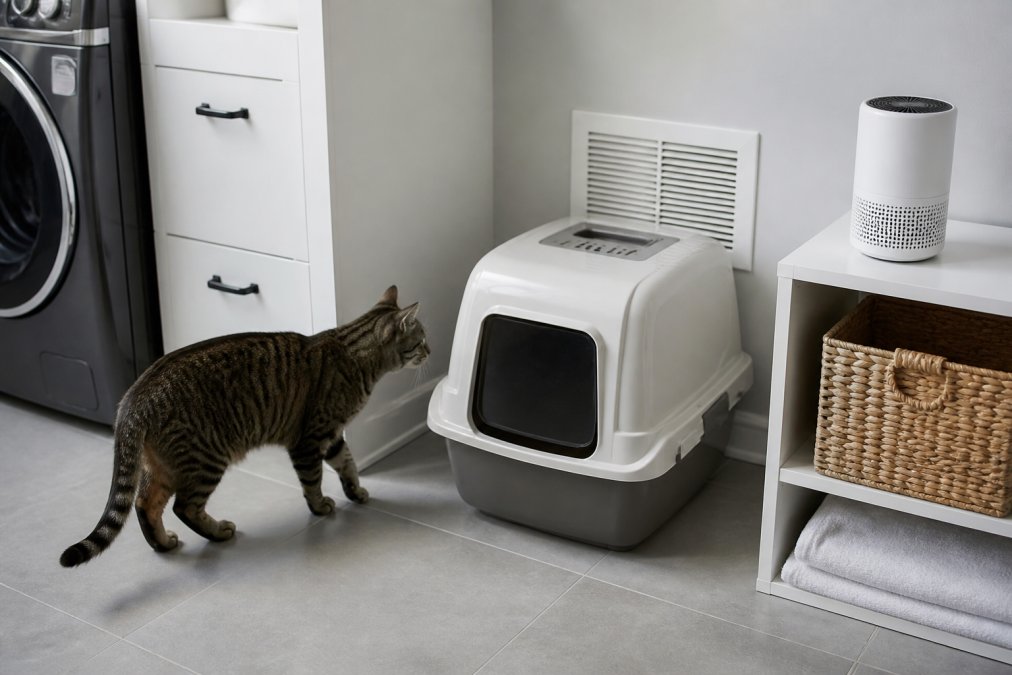
Wash the box with mild, unscented dish soap every two to four weeks. Avoid ammonia-based cleaners, which can intensify the smell cats leave behind. Dry the box completely before refilling; residual moisture accelerates bacterial growth.
Baking soda sprinkled lightly at the bottom before adding litter creates an additional odor-neutralizing layer, especially useful in warm months when ammonia production accelerates.
- Scoop at least once daily (twice for multi-cat homes)
- Wash the box with mild, unscented soap every two to four weeks
- Maintain three to four inches of litter depth
- Add a thin layer of baking soda under fresh litter
- Replace litter fully on schedule (every two to four weeks for clumping clay)
- Check for cracks in the box that harbor bacteria
Litter Box Placement, Ventilation, and Air Circulation
Where you place the box makes a measurable difference. Litter boxes in enclosed spaces with poor airflow trap odors. The best placement combines privacy for the cat with airflow for odor dispersal. Near a floor vent, in a laundry room with a window, or in a bathroom with a ventilation fan are practical options. A small HEPA air purifier placed near the box is one of the most effective tools for managing ambient odor in enclosed spaces.
Avoid placing litter boxes near food and water bowls.
When Odor Is a Health Warning Sign
A sudden, sharp increase in litter box odor, especially strong ammonia smell, can indicate a health issue. Urinary tract infections, kidney disease, and diabetes can alter urine composition, intensifying ammonia production. According to the American Veterinary Medical Association's cat health resources, any sudden change in smell, color, or frequency of a cat's waste warrants a veterinary check rather than simply a litter change.
PrettyLitter's color-changing technology offers an advantage here: it provides a visual flag for pH changes in urine that might otherwise go unnoticed until symptoms become serious.
Multi-Cat Household Considerations
Multi-cat households face odor challenges single-cat homes don't. The standard recommendation is one litter box per cat plus one extra. Two cats should have three boxes, three cats should have four. This reduces waste concentration in any single box and gives each cat a clean option.
Litter choice matters more in multi-cat homes because waste volume is higher. Formulas marketed for multi-cat use, including Dr. Elsey's Precious Cat Ultra, Arm & Hammer Clump & Seal Multi-Cat, and World's Best Cat Litter Multiple Cat Formula, use higher concentrations of odor-neutralizing agents and stronger clumping formulas.
Scooping frequency needs to increase proportionally. For three cats, twice-daily scooping is a practical minimum. For guidance on choosing the right litter for your household, visit the Smitty's Pet Store cat care resources for curated recommendations.
Choosing the best cat litter for odor control comes down to matching the right ingredients and format to your household's needs. Multi-cat homes generally do best with high-performance clumping clay or corn-based formulas with active neutralizing agents. Single-cat households have more flexibility to explore silica crystals or natural wood fiber options. Whatever you choose, daily scooping and proper box placement will always outperform any litter that sits in a poorly ventilated corner and gets scooped twice a week.
Frequently Asked Questions
Does clumping litter control odor better than non-clumping?
Clumping litter generally outperforms non-clumping for odor control because it seals urine into tight, scoopable clumps before ammonia can build up and spread. Non-clumping litter absorbs liquid but allows it to pool at the box bottom, which accelerates urine saturation and fecal odor. That said, high-quality silica crystal litters like PrettyLitter can match clumping performance in the first few weeks through superior moisture-locking and odor-neutralizing properties.
How do I stop my cat litter from smelling in the house?
Scoop solid waste and urine clumps at least once daily. Top off litter to maintain a depth of 3 to 4 inches, and do a full litter replacement every one to two weeks. Place the box in a ventilated area away from HVAC returns to prevent odors from circulating through the home. A fragrance-free cat litter odor neutralizer with activated charcoal or baking soda can reduce ammonia between cleanings. Wash the box itself with mild soap monthly.
How often should you completely change cat litter?
For clumping litters, a full change every two to four weeks works for most single-cat households, provided you scoop daily. Multi-cat homes may need a complete change every one to two weeks. Non-clumping and crystal litters require full changes more frequently, often every one to two weeks, because liquid cannot be removed incrementally through scooping. Always replace litter immediately if you notice persistent odor despite regular scooping, which can signal urine saturation at the box bottom.
What kind of litter do vets recommend for odor control?
Most veterinarians favor unscented, clumping clay litters because they are familiar to cats, easy to scoop, and do not mask health-related changes in urine color or smell with added fragrances. Fragrance-free formulas with activated charcoal or baking soda, like Dr. Elsey's Precious Cat Ultra or Ever Clean Extra Strength Unscented, are frequently cited as good options. Vets also note that hypoallergenic, dust-free formulas reduce respiratory irritation for both cats and their owners.
Can unusual litter box odor signal a health problem in my cat?
Yes. A sudden, sharp increase in ammonia smell can indicate a urinary tract infection or kidney disease, both of which alter urine concentration. Unusually foul fecal odor may point to digestive issues or parasites. PrettyLitter's color-changing crystals are specifically designed to flag pH changes and blood in urine. If odor changes dramatically despite consistent cleaning and fresh litter, schedule a vet visit rather than simply switching litter brands.
Persistent litter box odor is one of the most common frustrations pet owners bring to Smitty's Pet Store. Our curated selection of cat litters focuses on products that genuinely neutralize odor rather than just masking it, and our practical guidance is designed to help you build habits that keep your home fresh without spending hours on maintenance. Browse our cat litter collection at Smitty's Pet Store and get started with a setup that works for your cats and your household.
This article was written using GrandRanker