

How to Spot Signs of Common Health Issues in New Kittens

Last Updated: October 31, 2026
Quick Summary
The earliest sign of illness in new kittens is usually a change from normal: less energy, less interest in food, or different litter box habits. Watch daily for lethargy, appetite loss, vomiting, diarrhea, sneezing, or discharge, and treat any sign in a kitten under four weeks as urgent. Difficulty breathing, straining to urinate, or not eating for a full day means go to the vet now.
- A kitten that turns down food for more than a day needs attention.
- Diarrhea lasting more than a day warrants a same-day call to your vet.
- Weigh kittens every few days on a kitchen scale to track weight gain.
- Separate a sick kitten with its own food, water, and litter box.
- Never give human medications, as many common drugs are toxic to cats.
Table of Contents
- Why Early Warning Signs Matter in New Kittens
- Signs a Kitten Is Sick: The First Things to Watch
- Upper Respiratory Infection in Kittens: Sneezing, Discharge, and Breathing Trouble
- Kitten Diarrhea and Vomiting: When It Is Normal and When It Is Not
- Intestinal Parasites, Poor Weight Gain, and Coat Changes
- Kitten Emergency Symptoms: When to Stop Watching and Go
- Age-Specific Symptom Guidance and Monitoring at Home
- What to Record Before You Call the Vet
- Frequently Asked Questions
Why Early Warning Signs Matter in New Kittens
New kittens hide illness well. That survival instinct means a sick kitten often looks fine until something is seriously wrong.
Kittens are fragile in their first weeks and months. Their immune systems are still developing, and their small bodies lose strength fast.
Below, we break down the signs by body system and pair each one with a clear urgency level.
If you want a wider prevention overview as your kitten grows, our guide on common pet health problems and prevention covers the health issues most worth watching for.
Signs a Kitten Is Sick: The First Things to Watch
The earliest sign of illness in a kitten is usually a change from normal: less energy, less interest in food, or different litter box habits. Watch for these shifts daily, because small changes add up fast.
Lethargy and Behavior Changes
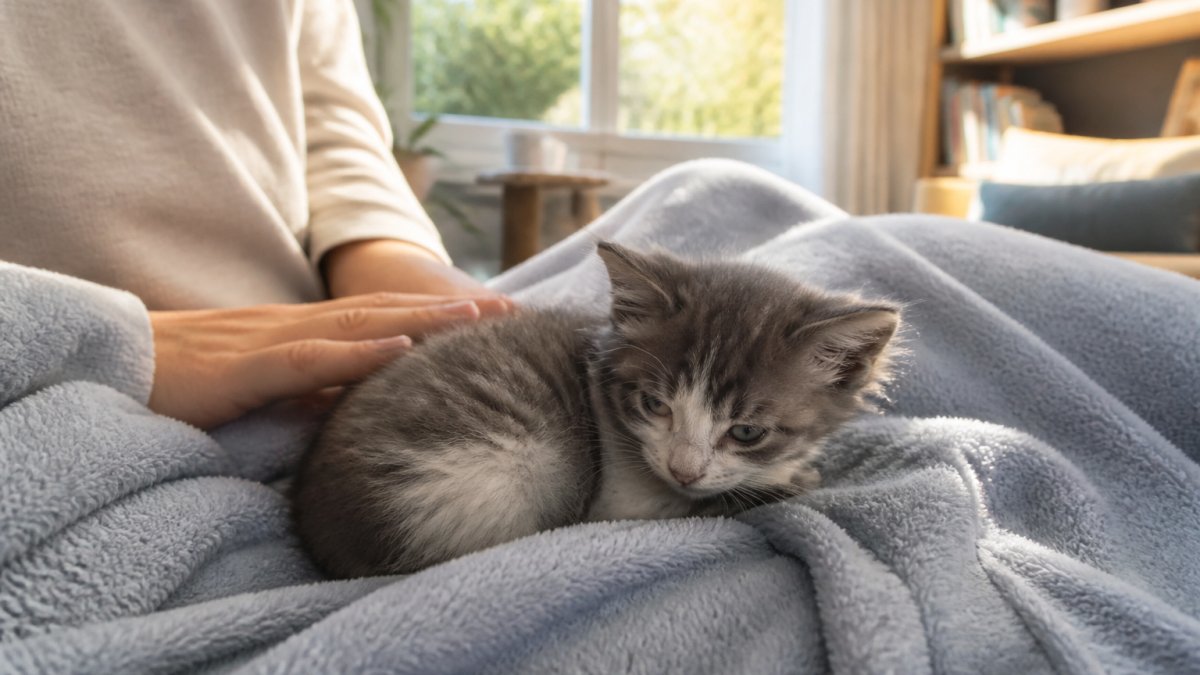
Lethargy means more than a nap. A healthy kitten sleeps a lot, then wakes up ready to play. A sick kitten stays flat, avoids interaction, and seems limp when picked up.
Watch for:
- Refusing to play when coaxed
- Hiding in corners or under furniture
- Trembling or shivering
Behavior changes count too. A friendly kitten that suddenly hisses or pulls away may be in pain.
Loss of Appetite, Water Intake, and Litter Box Habits
Appetite monitoring is one of the most reliable tools you have. A kitten that turns down food for more than a day needs attention. So does one that stops drinking. If you are also rethinking bowl hygiene, see our comparison of stainless steel vs plastic water bowls for cats with acne.
Check the litter box daily for:
- Fewer or no stools
- Loose or watery stool
- Straining to urinate
Changes in litter-box use can point to digestive problems, parasites, or a urinary issue.
Upper Respiratory Infection in Kittens: Sneezing, Discharge, and Breathing Trouble
An upper respiratory infection in kittens is one of the most common illnesses vets see. It usually brings sneezing, a runny nose, and eye discharge. Most cases are mild, but young kittens can worsen quickly.
Watch for these signs:
- Frequent sneezing
- Nasal discharge, clear or thick
- Runny or crusty eyes
Difficulty breathing is the red flag. If your kitten breathes with an open mouth, pumps its sides, or makes a wheezing sound at rest, call your vet right away.
Kitten Diarrhea and Vomiting: When It Is Normal and When It Is Not
Kitten diarrhea and vomiting can be mild or serious, and the difference often comes down to frequency and duration. A single soft stool in an otherwise playful kitten is usually not an emergency.
Normal-ish:
- One soft stool, kitten still eating and playing
- Occasional hairball vomit in older kittens
Call the vet:
- Diarrhea lasting more than a day
- Vomiting more than twice in a day
- Blood or mucus in stool
Some foods are toxic to cats and can cause sudden vomiting or diarrhea. Before you assume a mild upset, check our list of toxic foods for pets to avoid to rule out a dietary cause.
Intestinal Parasites, Poor Weight Gain, and Coat Changes
Intestinal parasites are a common reason new kittens fail to thrive. Roundworms, tapeworms, and other parasites steal nutrients and show up as poor weight gain or weight loss.
Other clues include:
- A dull, rough coat
- Visible worms or rice-like segments in stool
- Scooting the rear on the floor
Skin problems, ear issues, crusting sores, and red or swollen gums can also point to underlying illness. A kitten with a poor coat condition is often a kitten with a health issue worth checking.
Kitten Emergency Symptoms: When to Stop Watching and Go
Not every alarming sign is a drop-everything emergency, and not every mild sign can wait until next week. The useful skill is sorting a symptom into one of three buckets: go now, call today, or monitor and call if it worsens. Kittens under about four weeks old should have almost any symptom treated as urgent, because their small bodies and immature immune systems leave little reserve.
Go now: emergency care
These signs mean stop monitoring and get the kitten seen immediately, day or night:
- Difficulty breathing, open-mouth breathing, pumping flanks, wheezing at rest, or gums that look pale, blue, or gray
- Repeated vomiting or diarrhea with weakness, more than two vomits in a day, watery diarrhea with a kitten that will not stand, or any blood in vomit or stool
- No eating or drinking for a full day, especially in a kitten under eight weeks
Call today: prompt appointment
These signs are not usually a midnight emergency, but they should not wait a week either. Call when the clinic opens and describe the symptom and its duration:
- Diarrhea lasting more than a day in a kitten that is still eating and playing
- Sneezing with clear nasal discharge but normal breathing and appetite
- One episode of vomiting in an otherwise bright kitten
Monitor and record: watch closely
A single soft stool, one sneeze, or a quiet afternoon in a kitten that still eats and plays is usually a watch-and-log situation. Record the time the sign started, note appetite and litter-box output, and reassess in 12 to 24 hours. If the sign repeats or the kitten's energy drops, move up to "call today."
Age changes the threshold
- Under four weeks: almost any symptom is a call-now situation. Newborns cannot regulate body temperature and deteriorate fast.
- Four to twelve weeks: the weaning and vaccination window. Respiratory and digestive signs are common but can escalate; use the buckets above and lean toward calling.
- Over twelve weeks: a bit more reserve, but the same red flags still apply.
Use this guide to sort what you see into the right next step.
| Symptom | Action |
|---|---|
| Difficulty breathing, open-mouth breathing, pale or blue gums | Go now |
| Repeated vomiting or watery diarrhea with weakness | Go now |
| No eating or drinking for a full day | Go now under eight weeks; call today for older kittens |
| Straining to urinate with no result | Go now |
| Diarrhea more than a day, or vomiting more than twice a day | Call today |
| Sneezing with clear discharge, normal appetite and breathing | Call today; monitor closely |
| One soft stool, one sneeze, quiet afternoon but still eats and plays | Monitor and record for 12 to 24 hours |
| Any sign in a kitten under four weeks | Lean toward calling now |
Age-Specific Symptom Guidance and Monitoring at Home
Age is a major factor in how fast a kitten can decline and how urgently a symptom should be treated. For first-time owners, our guide for new pet owners offers confidence-building support while you monitor symptoms at home.
How age changes the risk
- Newborn (birth to about four weeks): cannot regulate body temperature, depends entirely on the queen, and has almost no reserve. Any sign, poor nursing, crying, cold to the touch, diarrhea, is urgent. Hypothermia and dehydration can develop within hours.
- Weaning age (about four to eight weeks): the window when intestinal parasites, diarrhea, and upper respiratory infections are most common. Kittens are still fragile; a day without food matters.
- Older kittens (about eight to twelve weeks and beyond): more stable, but the same red flags apply. Mild signs can often be monitored for 12 to 24 hours before calling.
Symptom-to-action decision guide
Use this to connect what you see to the next step:
- Breathing hard, open-mouth breathing, or blue/pale gums → go now.
- Repeated vomiting or watery diarrhea with weakness → go now.
- No eating or drinking for a full day → go now for kittens under eight weeks; call today for older kittens.
What to record at home
A short log turns "he seems off" into data your vet can use:
- Weight: weigh every few days on a kitchen scale; a kitten that is not gaining is a kitten to call about.
- Food and water intake: note how much was eaten and drunk in the last 24 hours.
- Litter box: number and consistency of stools, and whether urine is being produced.
Contagion and multi-cat homes
Respiratory infections, intestinal parasites, and ringworm spread easily between cats. If one kitten is sick:
- Separate the sick kitten in a quiet room with its own food, water, and litter box.
- Wash hands after handling, and avoid sharing bowls, bedding, and toys until the vet clears the kitten.
- Keep other cats' vaccinations and parasite prevention current, and ask your vet whether the others need checking.
Limits of home care
Symptom lists cannot diagnose the underlying cause. Never give human medications, many common drugs are toxic to cats, and dosing is weight-dependent. Let your veterinarian confirm what is actually wrong before you treat.
What to Record Before You Call the Vet
A short written record makes your vet visit faster and more accurate. Fill this in before you call:
- Weight today, and weight one week ago
- How much food and water consumed in the last 24 hours
- Number and consistency of stools
This record turns a vague "he seems off" into useful data. Vets use it to judge urgency and pick the right tests.
Frequently Asked Questions
What is the most common sickness in kittens?
Upper respiratory infections are the most frequently seen illness in young kittens, and they usually show up as sneezing, a runny nose, eye discharge, and congestion. Intestinal parasites and digestive upset like diarrhea are also common, especially in kittens coming from shelters or multi-cat homes. Because these issues can escalate quickly in small bodies, any kitten showing repeated sneezing, poor appetite, or loose stool for more than a day should be checked by a veterinarian.
How can I tell if my new kitten is sick?
Watch the basics first: eating, drinking, litter box use, and energy. Signs a kitten is sick include skipping meals, hiding more than usual, sleeping through playtime, or producing stool that is loose or bloody. Weigh your kitten every few days on a kitchen scale and note the number. A kitten that stops gaining weight or drops weight is a red flag. Record what you see so your vet has a clear timeline.
What symptoms in a kitten are an emergency?
Kitten emergency symptoms include difficulty breathing, open-mouth breathing, repeated vomiting, bloody diarrhea, a kitten that will not eat for more than 12 hours, or one that feels cold and limp. Newborn kittens that cry constantly or feel cool to the touch need immediate help. Do not wait for a morning appointment if you see these signs. Call an emergency veterinary clinic right away, since young kittens decline faster than adult cats.
When should I take a kitten to the vet for symptoms?
Call your vet the same day if your kitten has diarrhea or vomiting lasting more than 24 hours, eye or nose discharge that keeps coming back, or a lack of appetite for a full day. Any fever, dehydration, or breathing change warrants a same-day call. For mild sneezing with normal eating and energy, a scheduled visit within a day or two is reasonable. When in doubt, call and describe what you are seeing.
A new kitten brings joy, but the first months also ask for close attention. Smitty's Pet Store is here to make that easier with a curated selection of trusted supplies and practical guidance for everyday care. From monitoring tools to grooming essentials, our thoughtfully chosen products help you parent with confidence. Get started with Smitty's Pet Store and give your kitten a healthier, happier start.
