

Stainless Steel vs Plastic Water Bowls for Cats With Acne

Table of Contents
- Understanding Feline Chin Acne and Bowl Material Connection
- Stainless Steel Bowls: Benefits and Drawbacks for Cats With Acne
- Plastic Bowls and Feline Acne: Why Material Matters
- Ceramic vs Stainless Steel Cat Bowls: A Material Comparison
- How to Clean Cat Water Bowls Properly
- Bowl Replacement and Troubleshooting: A Practical Protocol
- When to Seek Veterinary Care for Cat Acne
- Frequently Asked Questions
Last Updated: October 10, 2026
Understanding Feline Chin Acne and Bowl Material Connection
Feline chin acne is a common skin condition affecting cats of all ages, and water bowls for cats with acne play an important role in management. Many pet parents and veterinarians suspect that food and water bowls play a role. At Smitty's Pet Store, we help owners understand how bowl material, cleaning habits, and other factors may contribute to this condition.
Chin acne in cats appears as small blackheads, bumps, or inflamed spots on the chin and lower lip. The condition can be uncomfortable and may lead to secondary bacterial infections if left untreated.
Plastic bowls develop microscopic scratches over time, creating spaces where bacteria and food residue accumulate. Stainless steel and ceramic alternatives resist scratching and bacterial buildup more effectively.

Stainless Steel Bowls: Benefits and Drawbacks for Cats With Acne
Stainless steel bowls are often recommended for cats prone to chin acne. This nonporous material resists scratches and doesn't harbor bacteria the way plastic does.
Stainless steel doesn't degrade or develop micro-scratches like plastic, making it inherently more sanitary. Many pet parents report that switching to stainless steel bowls reduces their cat's acne breakouts.
Drawbacks include noise when collar tags clink against the metal, light reflection that bothers some cats, and higher cost than plastic, though durability justifies the investment.
For cats with acne, water bowls for cats with acne made from stainless steel specifically offer an advantage over plastic. Water sits longer in bowls than food, allowing bacteria and saliva to accumulate. A nonporous stainless steel surface minimizes this risk. Our Automatic Pet Feeder with Timer & Stainless Steel Bowl combines convenience with a hygienic stainless steel bowl, starting at $46.65. The feeder's programmable timer ensures consistent feeding schedules while the stainless steel bowl resists bacterial growth and surface wear.

Plastic Bowls and Feline Acne: Why Material Matters
Plastic bowls are affordable but present challenges for cats with acne. Plastic is porous and develops micro-scratches easily from daily use, washing, and a cat's rough tongue.
These microscopic scratches create ideal conditions for bacteria and biofilm to settle and multiply. For cats prone to chin acne, plastic bowls may worsen the condition or prevent improvement.
Plastic bowls degrade faster than stainless steel or ceramic, absorb odors and stains, and eventually crack or break.
If your cat has active breakouts, switching away from plastic is a logical first step.
Ceramic vs Stainless Steel Cat Bowls: A Material Comparison
Ceramic bowls are nonporous, durable, and cost less than stainless steel, but occupy a middle ground in performance.
Glazed ceramic can chip or crack with impact, exposing porous clay underneath and creating bacteria traps. Ceramic bowls break more easily during washing and handling.
Stainless steel remains superior for cats with acne because it never chips or cracks under normal use and provides reliable long-term protection against bacterial accumulation.
For water bowls specifically, stainless steel edges out ceramic because water sits stationary for hours, allowing bacteria to multiply. A nonporous, unbreakable stainless steel surface minimizes risk.
| Material | Porosity | Durability | Bacteria Risk | Best For Acne | Cost |
|---|---|---|---|---|---|
| Plastic | Porous | Low | High | No | Low |
| Ceramic | Nonporous | Medium | Low | Moderate | Medium |
| Stainless Steel | Nonporous | High | Very Low | Yes | High |
How to Clean Cat Water Bowls Properly
Water bowls require different care than food bowls because water sits stationary for hours, allowing bacteria and biofilm to accumulate.
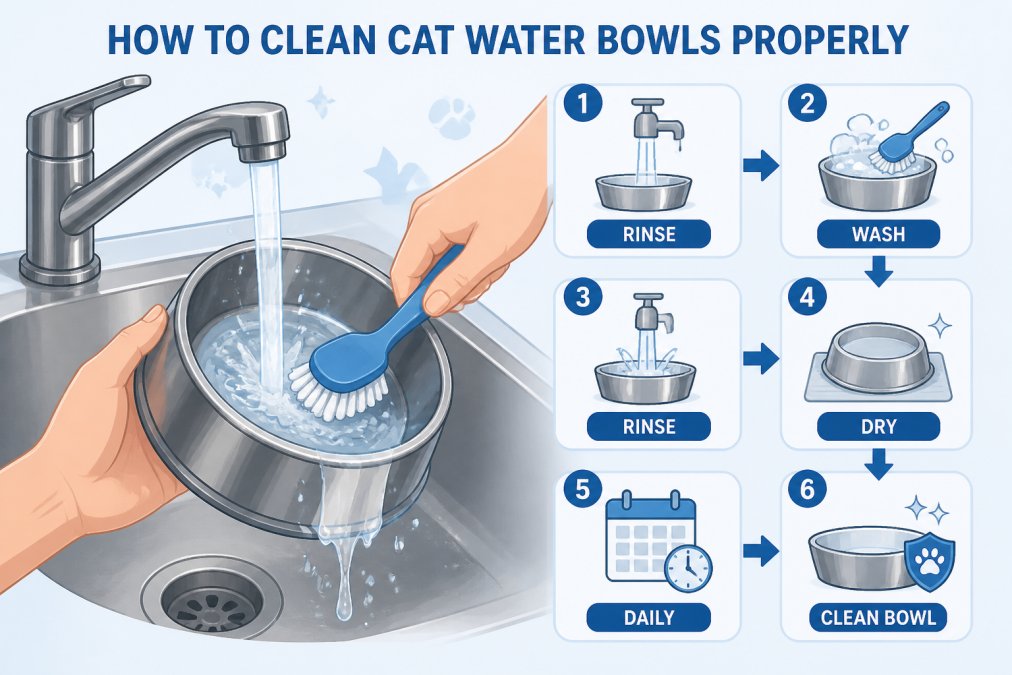
Daily Cleaning Routine
Wash water bowls every morning and evening with hot water and dish soap using a soft brush or non-abrasive sponge.
Use a soft-bristled toothbrush for stainless steel crevices and scrub ceramic gently to avoid chipping.
Water Freshness and Replacement Frequency
Change your cat's water at least twice daily, morning and evening. Cats with acne benefit from fresh water every 12 hours or less.
Deep Disinfection Protocol
Plastic bowls should not go in the dishwasher; hand-wash with hot water only.
Inspection for Damage
Inspect bowls weekly for signs of wear. Stainless steel should feel completely smooth; replace if rough spots or pitting appear.
For ceramic bowls, check the glaze for chips, cracks, or crazing. Discard chipped ceramic bowls immediately.
Plastic bowls degrade visibly. Look for cloudiness, discoloration, cracks, or rough texture. Replace when visible scratches appear.
Drying and Storage
Automatic Pet Feeder with Timer & Stainless Steel Bowl →
Allow bowls to air-dry completely before refilling. Store clean, dry bowls in a cabinet away from dust and pet hair.
Bowl Replacement and Troubleshooting: A Practical Protocol
If your cat has active chin acne, implement a systematic bowl-change protocol to identify which factors matter most.
Step 1: Switch to stainless steel immediately. Replace all plastic bowls with stainless steel alternatives. Many pet parents see improvement within 2-4 weeks.
Step 2: Establish a daily cleaning routine. Wash bowls with hot water and soap every morning and evening. Don't skip this step, cleaning matters as much as material choice. Consistency is key.
Step 3: Monitor acne severity. Track your cat's chin condition daily for fewer blackheads, reduced inflammation, and less scratching.
Step 4: If acne persists after 4 weeks, consider other causes. Bowl material may not be the primary trigger for your cat.
Step 5: Introduce ceramic as a test. If stainless steel hasn't resolved acne after a month, try ceramic bowls to rule out a stainless steel-specific reaction (rare but possible).
Step 6: Evaluate water bowl placement. Place water bowls away from food bowls on non-slip bases; cats naturally prefer separate water sources.
When to Seek Veterinary Care for Cat Acne
Not all chin acne resolves with bowl changes and cleaning.
Distinguishing Mild, Moderate, and Severe Acne
Feline chin acne exists on a spectrum. Recognizing where your cat falls helps you decide whether to continue home management or seek veterinary care.
Mild acne appears as small, dark blackheads on the chin and lower lip with no inflammation or behavioral changes. It often improves within 2-4 weeks of switching to stainless steel bowls and daily cleaning.
Moderate acne includes visible inflammation, redness, and swelling around the chin and lower lip. Blackheads may be present alongside small pustules (pimple-like bumps).
Severe acne presents with significant swelling, pronounced redness, and multiple pustules or nodules. You may notice pus, bleeding, or open sores on the chin.
When to Seek Immediate Veterinary Care
Contact your veterinarian immediately or visit an emergency clinic if your cat shows any of the following:
- Signs of infection: Pus, blood, or discharge from the chin; swelling that worsens daily; or a foul odor from the affected area. Secondary bacterial infections can spread quickly and may require oral or topical antibiotics.
- Behavioral distress: Excessive scratching, head shaking, or reluctance to eat or drink due to chin pain. These signs indicate the acne is causing significant discomfort.
- Facial swelling: Swelling that extends beyond the chin to the lower jaw, cheeks, or neck may indicate a deeper infection or abscess requiring drainage and treatment.
- Systemic signs: Fever, lethargy, loss of appetite, or vomiting alongside chin acne may suggest a systemic infection or underlying illness.
- Rapid progression: Acne that worsens dramatically within days despite bowl changes and cleaning may indicate an allergic reaction, contact dermatitis, or infection.
Routine Veterinary Visit: What to Expect
During a routine visit for moderate acne or persistent mild acne, your veterinarian will:
- Perform a visual examination of the chin and lower lip, noting the distribution, severity, and appearance of lesions.
- Ask about your cat's diet, bowl materials, collar type, and grooming habits to identify potential irritants.
- Perform a skin scraping or fungal culture to rule out ringworm or mites, which can mimic acne.
- Discuss your cleaning routine and bowl replacement frequency to assess hygiene practices.
- Recommend treatment if needed, which may include medicated shampoos, topical antibiotics, or oral antibiotics for infected lesions.
Your veterinarian may also recommend dietary changes if a food allergy is suspected, or suggest removing or changing your cat's collar if contact dermatitis is likely.
Ruling Out Other Conditions
Several conditions mimic feline chin acne and require professional diagnosis:
- Ringworm (feline dermatophytosis): A fungal infection that causes circular patches of hair loss, scaling, and sometimes pustules. It is contagious to other pets and humans. A fungal culture or Wood's lamp examination can confirm diagnosis.
- Mites (Demodex or Sarcoptes): Parasitic mites cause itching, scaling, and pustules. Skin scrapings under a microscope reveal mites.
- Contact dermatitis: Irritation from collar materials, plastic bowl residue, or environmental irritants causes localized inflammation. Removing the irritant and using topical steroids (prescribed by your veterinarian) resolves the condition.
- Bacterial folliculitis: A deeper skin infection affecting hair follicles, causing pustules and sometimes nodules. Bacterial culture identifies the organism and guides antibiotic selection.
- Feline herpes virus (FHV-1): In rare cases, viral infection causes chin ulcers or pustules alongside respiratory or ocular symptoms. Antiviral treatment may be recommended.
Your veterinarian can distinguish these conditions through examination, culture, or microscopy, ensuring your cat receives appropriate treatment.
The 4-6 Week Rule
Frequently Asked Questions
Can plastic water bowls cause acne in cats?
Plastic bowls can contribute to feline chin acne, though they're not always the sole cause. Plastic surfaces develop micro-scratches over time where bacteria and food residue accumulate. These scratches create tiny crevices that harbor biofilm, which irritates sensitive skin around a cat's chin. Additionally, some cats may experience contact irritation from plastic material itself. However, other factors like food allergies, poor hygiene, and saliva buildup also play roles. Switching to stainless steel or ceramic can help, but it's not a guaranteed cure for all cats.
Are stainless steel bowls better for cats with chin acne?
Stainless steel bowls offer advantages for cats prone to acne. Unlike plastic, stainless steel has a nonporous surface that resists scratches and doesn't harbor bacteria in crevices. It's durable, easy to disinfect, and doesn't retain odors or residue. Many cat owners report improvement when switching from plastic to stainless steel, though results vary. The Automatic Pet Feeder with Timer & Stainless Steel Bowl ($46.65) combines a hygienic stainless steel bowl with scheduled feeding, reducing food sitting time and bacteria growth. However, stainless steel isn't a cure-all; proper cleaning and bowl replacement remain essential.
How often should I wash my cat's water bowl?
Water bowls should be washed daily, ideally twice per day if your cat uses it throughout the day. Daily cleaning removes saliva, bacteria, and biofilm that accumulate on surfaces. If using a plastic bowl, inspect for scratches and consider replacing it every 3-6 months, as damaged surfaces trap bacteria more easily. Stainless steel bowls last longer and resist bacterial buildup better, so they can maintain hygiene longer between replacements. Hot water and dishwasher cycles help disinfect, but hand-washing with attention to the bowl's edges and bottom is also effective. If your cat develops acne symptoms, increase cleaning frequency to twice daily or switch to a fresh bowl immediately.
What's the best bowl material for a cat with chin acne?
Stainless steel and ceramic are the best materials for cats with acne. Stainless steel is nonporous, durable, resists bacteria, and is easy to disinfect in the dishwasher. Ceramic glazed bowls are also nonporous when properly glazed, though they can chip or crack if dropped. Plastic should be avoided or replaced frequently because scratches create bacteria-trapping crevices. Glass is another option but can break and pose safety risks. The Automatic Pet Feeder with Timer & Stainless Steel Bowl provides a hygienic stainless steel option with the added benefit of portion control and consistent feeding schedules, which can reduce bacteria growth from food sitting too long.
When should I take my cat to the vet for chin acne?
Contact your veterinarian if your cat shows persistent blackheads or red bumps on the chin, especially if they worsen despite bowl changes and increased cleaning. Seek immediate care if acne becomes infected, shows drainage, causes swelling, or if your cat seems uncomfortable or is excessively licking the area. Severe acne can lead to skin infection or inflammation requiring antibiotics or other treatment. A vet can rule out other causes like food allergies or mites and recommend medicated treatments if needed. Even mild acne warrants a vet visit if it lasts more than a few weeks, as early intervention prevents complications and confirms whether bowl material is truly the underlying issue.