

Keep Senior Dogs Comfortable During Winter: A Guide

Table of Contents
- Why Senior Dogs Need Extra Winter Care
- What Temperature Is Too Cold for a Dog
- How to Keep an Older Dog Warm Indoors
- Winter Walks for Older Dogs: Timing and Preparation
- Winter Paw Care for Dogs: Protection and Maintenance
- Managing Joint Stiffness and Arthritis in Cold Weather
- Recognizing Signs of Cold Stress and When to Call Your Vet
- Winter Nutrition and Hydration for Senior Dogs
- Frequently Asked Questions
Last Updated: October 10, 2026
Why Senior Dogs Need Extra Winter Care
As your dog ages, their body becomes less efficient at regulating temperature, making senior dogs winter care particularly important.
Winter poses real risks for older pets.
Older dogs have slower circulation and may take longer to warm up after being outside.
The good news: with the right setup and routine, your senior dog can stay comfortable all season long. This guide covers everything you need to know.
What Temperature Is Too Cold for a Dog
Most dogs start feeling uncomfortable around 45°F. For senior dogs, small breeds, and short-haired dogs, the danger zone starts around 50°F.
Watch for these signs that your dog is too cold:
- Shaking or shivering
- Reluctance to go outside
- Seeking warmth constantly
- Lifting paws off the ground frequently
- Whining or anxious behavior
- Stiff movement or limping
A large, thick-coated dog handles cold better than a small dog with a thin coat. Senior dogs with arthritis feel cold more intensely because stiff joints ache in low temperatures.
If the temperature drops below 20°F, most senior dogs should stay indoors except for brief bathroom breaks.
How to Keep an Older Dog Warm Indoors
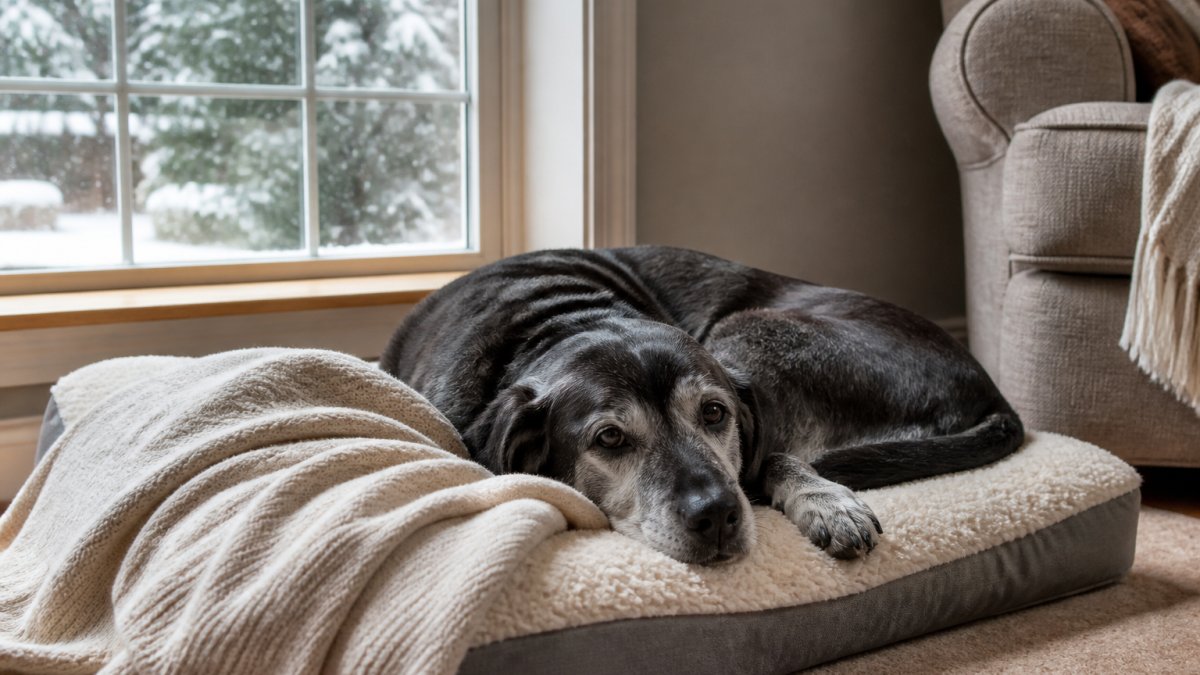
Your home should be your senior dog's warm sanctuary during winter, with comfortable resting spaces away from cold.
Create Draft-Free Resting Areas
Senior dogs spend 14-18 hours sleeping each day and need a quiet, warm spot away from drafts and cold air. Avoid placing beds near windows, doors, or air vents. Block drafts under doors with draft stoppers and close blinds at night to reduce heat loss. Choose a room with natural light to help regulate your dog's mood and sleep cycle.
Use Self-Heating Bedding and Blankets
Self-heating pet beds reflect your dog's body heat back to them without requiring electricity, providing warmth and joint support. The Self-Heating Thermal Pet Blanket Bed from Smitty's Pet Store uses thermo-reflective fibers and is machine washable. Layer soft fleece or wool blankets on top for extra warmth and wash bedding weekly.

Safe Heating Pads and Heat Sources
Never use human heating pads with senior dogs, they can overheat or burn your dog's skin.
If you use a heating pad, place it under the bed, not directly against your dog's skin.
Space heaters can work, but keep them at least 3 feet away from your dog's bed. Never leave a space heater running unattended.
Avoid heat lamps, which can cause burns. Don't use electric blankets designed for humans, they lack the safety features of pet heating pads.
Winter Walks for Older Dogs: Timing and Preparation
Senior dogs still need outdoor time for bathroom breaks and mental stimulation, but winter walks should be shorter, more frequent, and better planned.
Dress Your Dog for Cold Weather
Senior dogs almost always benefit from winter clothing. The Pet Sweater from Smitty's Pet Store provides an extra layer with a simple slip-on design. For colder days, the Polar Fleece Pet Jacket offers serious warmth without bulk and dries quickly if wet.


Always dry your dog thoroughly after coming inside. Wet fur loses its insulating ability and can make your dog colder. Use a warm towel or blow dryer on low heat.
Adjust Walk Duration and Frequency
Senior dogs shouldn't be out in cold weather for long periods. Aim for multiple short walks instead of one long walk.
A good winter routine for senior dogs includes 3-4 walks per day, 5-15 minutes each, during the warmest part of the day. Skip walks if temperature is below 20°F. Watch your dog closely, if your dog shivers, limps, or shows reluctance, go back inside immediately.
Winter Paw Care for Dogs: Protection and Maintenance
Winter paws take a beating from snow, ice, road salt, and ice melt products. Inspect paws daily for cracks, cuts, redness, swelling, or ice lumps. Wash paws with warm water after every walk and dry thoroughly between toes. Consider dog booties for salted sidewalks. Apply pet-safe paw balm to protect against drying and cracking. Keep fur between paw pads trimmed short to prevent ice buildup.
Managing Joint Stiffness and Arthritis in Cold Weather
Cold weather makes arthritis significantly worse by increasing joint inflammation and stiffness. Provide cushioned support surfaces throughout your home and use rugs for traction. Keep your senior dog at a healthy weight, as extra weight stresses arthritic joints. Gentle exercise like short, slow walks helps maintain mobility. Some vets recommend supplements like glucosamine or omega-3 fatty acids. Maintain consistent indoor temperature of 68-72°F to avoid triggering joint pain.
Recognizing Signs of Cold Stress and When to Call Your Vet
Hypothermia (dangerously low body temperature) causes severe shivering followed by no shivering, weakness, collapse, confusion, slow breathing, and pale gums. If suspected, bring your dog inside immediately, wrap in warm blankets, offer warm water, and call your vet. Do not apply direct heat. Frostbite (frozen tissue) affects ears, paws, tail, and nose, causing pale or grayish skin, blistering, and swelling. Thaw slowly with warm water and call your vet immediately.
Winter Nutrition and Hydration for Senior Dogs
Winter changes your senior dog's activity level, metabolism, and drinking behavior. Unlike younger dogs, seniors cannot always self-regulate food intake or recognize thirst cues, so you must actively monitor and adjust their diet and water intake.
Assessing Winter Calorie Needs
Senior dogs often become less active in winter, leading to weight gain that stresses arthritic joints. However, some senior dogs need more calories in winter to maintain body temperature. Weigh your dog monthly and assess body condition by feeling ribs, they should be easily felt but not prominent. Track activity level and consult your veterinarian about calorie needs, especially if your dog has diabetes, thyroid disease, or heart disease.
Self-Heating Thermal Pet Blanket Bed →
Hydration: The Overlooked Winter Risk
Senior dogs drink significantly less water in winter for several reasons:
- Lower activity means fewer reminders to drink
- Cold weather suppresses thirst (dogs evolved to drink less in cold climates)
- Indoor heating reduces humidity, causing faster water evaporation from the mouth and nose
- Older dogs have reduced thirst sensation and may forget to drink
Dehydration in senior dogs causes:
- Worsening of joint stiffness (dehydrated cartilage is less flexible)
- Kidney stress (especially dangerous for dogs with existing kidney disease)
- Urinary tract infections (concentrated urine is more prone to infection)
- Constipation (common in winter; dehydration makes it worse)
- Cognitive decline (dehydration affects brain function in older dogs)
Practical Hydration Strategies
Offer warm water instead of cold water. Many senior dogs prefer slightly warmed water in winter and will drink more of it. Warm water is also easier for dogs with dental sensitivity to consume. You can:
- Use a heated water bowl (thermostat-controlled to stay at 80-90°F)
- Refill the bowl with warm water 2-3 times daily
- Offer warm water after walks and meals
Place water bowls in multiple locations throughout your home, especially near your dog's bed and resting areas.
Add moisture to food. Mix a small amount of warm water, low-sodium broth, or wet food into your dog's dry kibble.
Monitor urine output. In winter, you may not notice changes in your dog's bathroom habits because outdoor walks are shorter. Watch for:
- Reduced frequency of urination
- Dark yellow or amber urine (sign of concentration/dehydration)
- Straining or difficulty urinating
- Accidents indoors (can indicate urinary tract infection from dehydration)
If you notice these signs, increase water intake and contact your veterinarian.
Encourage drinking after meals and walks. Offer water immediately after your dog eats or comes inside from a walk. This is when dogs are most likely to drink.
Winter Nutrition Adjustments
Soften dry food if your dog has dental issues. Cold weather doesn't directly affect teeth, but senior dogs with dental disease or missing teeth may chew less efficiently in winter. Soften kibble by:
- Mixing with warm water (let it sit 5 minutes to absorb)
- Adding warm low-sodium broth
- Switching to wet or canned food for part of the day
Softer food is easier to eat and often more palatable, which can increase overall food intake if your dog is underweight.
Prioritize fat and protein content. Fat provides concentrated calories (9 calories per gram vs. 4 for protein and carbohydrates) and supports skin and coat health. Protein maintains muscle mass, which is critical for senior dogs because they naturally lose muscle with age. Look for foods with:
- Fat content of 12-18% (appropriate for most senior dogs)
- Protein content of 18-25%
- Omega-3 fatty acids (from fish oil or flaxseed), which reduce inflammation and may help joint pain
Manage treats carefully. Treats should not exceed 10% of daily calories. In winter, when your dog is less active, treats can quickly lead to weight gain. Healthy options include:
- Small pieces of cooked chicken or turkey
- Carrots or green beans (low calorie, good for joint health)
- Plain pumpkin (aids digestion and hydration)
- Freeze-dried meat treats (high protein, low carb)
Avoid high-calorie treats, table scraps, and foods high in sodium or sugar.
Weight Management Throughout Winter
Weigh your dog every 2-4 weeks during winter. A gain of more than 5% of body weight over the season is significant and should trigger a feeding adjustment. For example:
- A 50-pound dog gaining 2.5+ pounds over 3 months needs fewer calories
- A 20-pound dog gaining 1+ pound over 3 months needs fewer calories
If your dog is losing weight despite adequate food, contact your veterinarian. Weight loss in senior dogs can indicate thyroid disease, diabetes, dental disease, or other serious conditions that worsen in winter.
Special Considerations for Dogs with Chronic Conditions
Diabetic dogs may need insulin adjustments in winter if activity changes significantly.
Dogs with kidney disease need consistent hydration and may benefit from prescription diets formulated for kidney support.
Dogs with heart disease should not be overfed; excess weight stresses the heart.
Dogs with arthritis benefit from anti-inflammatory nutrients (omega-3s, glucosamine) and should maintain a lean weight to reduce joint stress.
Discuss your senior dog's specific winter nutrition plan with your veterinarian, especially if your dog has any chronic health conditions.
Frequently Asked Questions
What temperature is too cold for a dog?
Most dogs start to feel uncomfortable below 45°F, and temperatures below 32°F pose serious risks for senior dogs and small breeds. At 20°F and below, frostbite and hypothermia can develop quickly. Senior dogs with arthritis or thin coats are especially vulnerable. Wind chill also matters, a 30°F day with strong wind feels much colder. Always monitor your senior dog closely and limit outdoor time when temperatures drop below freezing.
How do I know if my senior dog is uncomfortable in the cold?
Watch for shivering, reluctance to go outside, whining, or seeking warmth constantly. Some senior dogs move stiffly or limp more in cold weather due to joint stiffness and arthritis. Others may have accidents indoors because they're uncomfortable going out, or they may eat less. If your dog seems anxious, hunches their back, or tucks their tail tightly, they're likely too cold. Bring them inside immediately and warm them gradually.
Can cold weather make arthritis worse in dogs?
Yes. Cold temperatures cause muscles and joints to stiffen, making arthritis pain worse in senior dogs. You may notice your older dog moving more slowly, limping, or having difficulty standing up after rest. Keeping senior dogs warm indoors with cushioned bedding, gentle exercise, and supportive surfaces helps reduce discomfort. Consult your veterinarian about pain management options if cold-weather stiffness significantly affects your dog's quality of life.
How long should I walk my senior dog in winter?
Keep winter walks for older dogs short and frequent rather than long. Most senior dogs benefit from 10-15 minute walks in cold weather, depending on their fitness level and tolerance. Watch for signs of fatigue, shivering, or reluctance to continue. Older dogs tire more quickly in cold, and their bodies lose heat faster. Multiple short walks spread throughout the day are better than one long outing, and always allow time to dry off and warm up afterward.
Winter doesn't have to mean discomfort for your senior dog. The right bedding, protective clothing, and careful planning keep older dogs warm and happy all season. At Smitty's Pet Store, we stock everything you need, from self-heating beds to winter jackets, plus the guidance to use them right. Start with a quality thermal bed, add a sweater for outdoor time, and monitor your dog closely. Your senior dog will thank you for the extra care.