

Preventative Care for Senior Dogs Explained

Table of Contents
- What Counts as Preventative Care for Senior Dogs
- Signs of Aging in Dogs to Watch For
- Senior Dog Wellness Exam Checklist
- Senior Dog Blood Work Cost and What It Screens For
- At-Home Care: Dental Health, Mobility, and Nutrition
- Environmental Modifications and Financial Planning for Senior Care
- Common Mistakes in Senior Dog Preventative Care
- Frequently Asked Questions
Last Updated: September 28, 2026
What Counts as Preventative Care for Senior Dogs
Preventative care for senior dogs explained simply is the shift from reacting to illness toward anticipating it. It combines routine veterinary exams, diagnostic screening, dental hygiene, nutrition adjustments, and parasite control into one ongoing plan.
Signs of Aging in Dogs to Watch For
The clearest signs of aging in dogs are subtle behavioral and physical changes, not dramatic ones. Owners often notice slower walks, stiffness after rest, or more sleeping before anything clinical appears, but "slower walks" means nothing without a baseline.
The five-check monthly baseline:
- Sit-to-stand test. With your dog lying on a non-slip surface, time how long it takes to rise. A healthy senior rises in about one to two seconds. Anything consistently over three seconds, or a dog that needs a rocking motion to get up, is worth a vet conversation.
- Stair audit. Watch one full trip up and one down. Note whether your dog pauses on the landing, takes the stairs one at a time instead of trotting, or avoids them entirely when it used to bound up.
- Walk-and-turn observation. Walk your dog on a flat surface at a normal pace, then a trot. Watch from behind for hip sway or head bob, and from the side for a shortened stride on one side.
- Resting respiratory rate. Count chest rises for 15 seconds while your dog is asleep, then multiply by four. Most healthy dogs rest between 15 and 30 breaths per minute. A sustained rise above that range can be an early signal of heart or respiratory changes.
- Orientation check. Move a piece of furniture two feet and see whether your dog navigates around it. Dim the lights at dusk and watch for hesitation. These catch vision and cognitive changes earlier than a formal exam.
What each change tends to mean:
- Reluctance to climb stairs or jump onto furniture, usually joint pain or muscle loss, not "just slowing down."
- Cloudy eyes or bumping into objects, lenticular sclerosis is common and usually benign, but a true cataract or sudden vision loss is different and needs a same-week call.
- Weight gain or unexplained weight loss, weight gain tracks with reduced activity and thyroid changes; unexplained loss is the more urgent of the two and should be checked within days, not months.
- Bad breath or visible tartar buildup, periodontal disease, which is one of the most common conditions vets treat in seniors.
- Confusion, pacing, or staring at walls, possible cognitive dysfunction. The clinical name is canine cognitive dysfunction, and it is treatable enough that early detection changes the outcome.
- Changes in house training habits, often a urinary tract infection, kidney change, or cognitive issue rather than a behavioral problem.
Senior Dog Wellness Exam Checklist
A senior dog wellness exam checklist keeps you organized and ensures nothing gets missed. Bring it to every visit.
What to confirm at each exam:
- Full physical examination, including weight and body condition score
- Dental check for tartar, gum disease, and loose teeth
- Joint and mobility assessment
- Diagnostic blood work and urinalysis
- Parasite prevention status (heartworm, flea and tick)
- Vaccination review for seniors
- Discussion of any behavioral changes
What Happens During a Senior Wellness Exam
During a senior wellness exam, the veterinarian performs a head-to-tail physical examination and orders diagnostic screening tailored to your dog's age and history: weight tracking, dental inspection, joint palpation, and blood work.
Senior Dog Blood Work Cost and What It Screens For
Senior dog blood work cost varies by clinic, region, and how many tests your vet orders, so ask for a written estimate before the visit. The panel matters more than the price: comprehensive screening catches problems a physical exam cannot.
Typical senior panels screen for:
- Complete blood count (CBC): infection, anemia, immune issues
- Blood chemistry: liver and kidney function, blood sugar
- Thyroid testing: hypothyroidism is common in older dogs
- Urinalysis: kidney health, hydration, urinary infections
At-Home Care: Dental Health, Mobility, and Nutrition
At-home care carries most of the daily weight in a senior preventative routine. Veterinary visits happen twice a year; brushing, movement checks, and feeding happen every day.
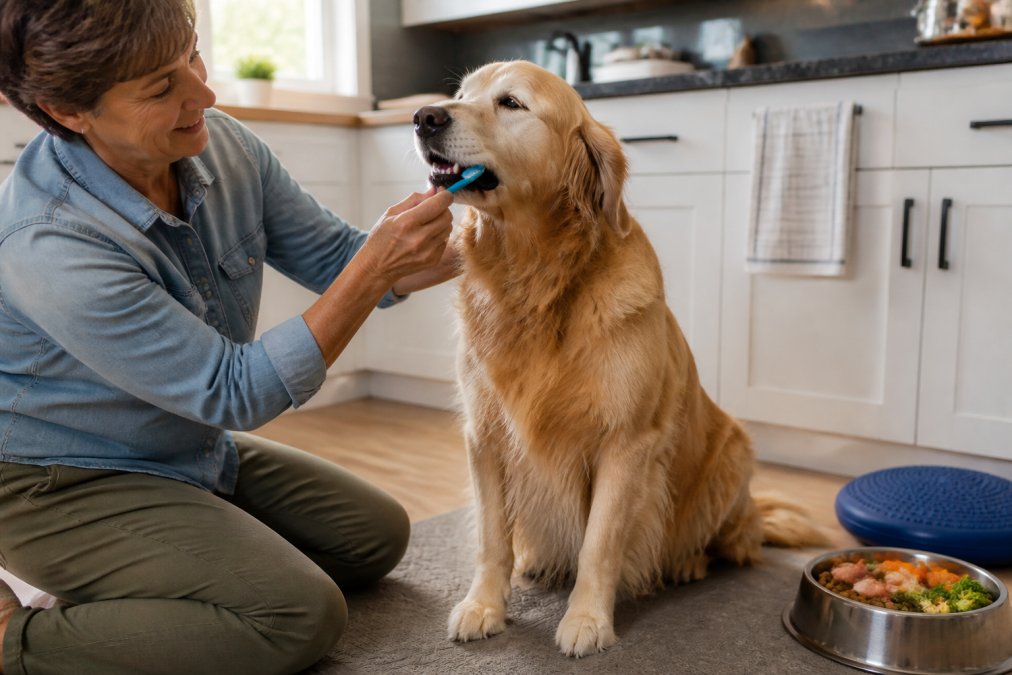
Dental Hygiene for Senior Dogs
Dental hygiene for senior dogs prevents more than bad breath. Periodontal disease is linked to pain, tooth loss, and difficulty eating, and is one of the most common conditions vets treat.
Mobility Assessments and Joint Support
A simple home mobility assessment tells you more than a single vet visit can. Once a month, walk your dog on a flat surface and watch for stiffness, shortened stride, or reluctance to rise.
Try this routine:
Pet Multivitamin Health Supplement →
- Time how long it takes your dog to stand from lying down
- Watch for a head bob or limp at a walk and a trot
- Check whether your dog still jumps into the car or onto the couch
- Note any hesitation on stairs
Environmental Modifications and Financial Planning for Senior Care
Environmental modifications and financial planning are the two areas most guides skip, and both make a real difference. Small home changes reduce injury risk, and a savings plan keeps you from choosing between care and cost.
Home adjustments, ranked by impact:
- Non-slip rugs or mats on hard floors. This is the highest-value change you can make. Slick flooring is where most senior dogs slip, and a single slip can cause a cruciate ligament injury that requires surgery to fix. Runner rugs along the main traffic path, kitchen to living room, bedroom to door, cover most of the risk.
- A ramp or low step for the couch and car. Jumping down is harder on joints than jumping up. A ramp removes the landing impact entirely.
- Raised food and water bowls. Reduces neck and shoulder strain for dogs with arthritis in the cervical spine.
- A supportive orthopedic bed. Memory foam or egg-crate style, thick enough that your dog's elbows do not rest on the floor.
- Night lights for dogs with reduced vision. Especially along the path to the door for late-night bathroom trips.
- A baby gate at the top of stairs. For dogs with cognitive decline who may wander or misjudge a step at night.
The financial side, in plain terms:
- Wellness exams. Twice a year for most seniors, more often with chronic conditions.
- Diagnostic screening. Blood work, urinalysis, and any imaging your vet recommends. This is the category that grows fastest with age.
- Dental cleaning. Requires anesthesia, so it carries pre-anesthetic blood work and monitoring costs on top of the procedure itself.
- Parasite prevention. Monthly heartworm, flea, and tick prevention continues for life.
- Prescription medications. The category most owners underestimate, because it is recurring rather than one-time.
- Emergency reserve. A separate fund for the unexpected, bloat, injury, sudden illness.
How pet insurance behaves for seniors:
- Enrollment age. Premiums rise with the pet's age at enrollment, and many insurers stop accepting new enrollments once a dog passes a certain age. A policy taken out when the dog is young is dramatically cheaper than one taken out at ten.
- Pre-existing conditions. Anything diagnosed before the policy starts is typically excluded for the life of the policy. This is why enrolling before a senior diagnosis matters more than the premium itself.
Common Mistakes in Senior Dog Preventative Care
The most common mistakes in senior dog preventative care come from treating an older dog like a younger one. Age changes the rules for exams, exercise, and nutrition.
Mistakes to avoid:
- Sticking to annual exams. Senior dogs need bi-annual checkups and more frequent screening.
- Skipping blood work to save money. Early detection is cheaper than late treatment.
- Ignoring dental care. Dental cleaning prevents pain and tooth loss.
- Missing parasite prevention. Heartworm, flea and tick protection still matters for seniors.
- Over-vaccinating without a review. Vaccination schedules for seniors should be tailored, not automatic.
- Missing cognitive dysfunction signs. Confusion and pacing are not always "just aging."
Frequently Asked Questions
At what age is a dog considered a senior?
Most dogs are considered seniors around 7 years old, though this varies by breed and size. Large breeds may enter their senior years as early as 5 or 6, while small breeds often stay in middle age until 8 or 9. Your veterinarian can assess your dog's individual health status and recommend a preventative care schedule tailored to their specific age, breed, and existing conditions.
How often should a senior dog have a wellness exam?
Senior dogs should have a wellness exam every 6 months, or twice a year. Because dogs age faster than humans, a lot can change in 12 months. Bi-annual checkups allow your vet to catch early signs of chronic conditions, adjust medications, and update vaccinations. If your dog has an existing health issue like arthritis or thyroid disease, your vet may recommend quarterly visits to monitor progress.
What is included in a senior dog blood panel?
A senior dog blood panel typically includes a complete blood count (CBC), a chemistry profile, thyroid testing, and a urinalysis. These tests screen for anemia, infection, liver and kidney function, diabetes, and thyroid imbalances. Your vet may also recommend heartworm testing and parasite screening. The results give a baseline for metabolic health and help detect age-related changes before symptoms appear.
What is the 7 7 7 rule for dogs?
The 7 7 7 rule is a guideline for newly adopted dogs: 7 days to decompress, 7 weeks to settle in, and 7 months to feel fully at home. It is not a medical rule for senior dogs. For senior preventative care, focus on the 6-month wellness exam schedule and daily at-home monitoring instead. If you recently adopted a senior dog, give them time to adjust while staying consistent with vet visits.
Is it worth adding preventative care to pet insurance for older dogs?
It depends on your dog's current health and your budget. Preventative care add-ons usually cover wellness exams, vaccinations, and some screenings, which can offset costs if you are diligent about bi-annual checkups. However, many insurers raise premiums significantly for senior dogs or exclude pre-existing conditions. Compare the monthly add-on cost against what you would pay out-of-pocket for two exams and routine blood work per year.
What are the most common health issues in senior dogs?
Senior dogs most commonly face arthritis and joint pain, dental disease, heart conditions, kidney and liver disease, diabetes, thyroid imbalances, and cognitive dysfunction. Weight management and joint supplements can help with mobility, while regular dental cleaning and parasite prevention address other risks. Early detection through diagnostic screening is the best way to slow or manage these conditions before they impact quality of life.
Aging dogs need a routine that changes with them, and building that routine is easier with the right supplies on hand. Smitty's Pet Store carries the everyday essentials that make senior care manageable: a 3-sided dog toothbrush for faster dental hygiene, a pet multivitamin for daily nutritional support, and a paw protection cream for sensitive pads on long walks. Get started with Smitty's Pet Store and give your senior dog a preventative routine you can actually keep up with.