

Professional Dog Teeth Cleaning Cost vs Home Care: 2026

Table of Contents
- Dog Teeth Cleaning Cost Breakdown: Professional vs. At-Home
- Why Professional Dog Teeth Cleaning Requires Anesthesia
- Signs of Periodontal Disease in Dogs You Shouldn't Ignore
- Step-by-Step: How to Brush a Dog's Teeth at Home
- Can Pet Insurance Dental Coverage Reduce Your Costs?
- The Anesthesia-Free Dental Cleaning Controversy
- How to Build a Preventative Dental Routine That Saves Money
- Conclusion
- Frequently Asked Questions
Last Updated: September 7, 2026
The gap between a professional dog teeth cleaning cost and a home care routine is often wider than owners expect. Professional cleanings under anesthesia routinely run several hundred dollars, while a solid at-home routine costs a fraction of that. This guide from Smitty's Pet Store breaks down the real expenses of both paths and how daily habits can reduce how often your dog needs that pricey professional procedure.
Professional dental care and home care are not either-or choices; they work together. Skipping professional cleanings leads to periodontal disease, which drives up costs through extractions and advanced care. Neglecting home care means those professional visits happen more often. Understanding the genuine dog teeth cleaning cost breakdown helps you plan a budget that protects both your dog's health and your wallet.
Dog Teeth Cleaning Cost Breakdown: Professional vs. At-Home
Professional veterinary dental cleanings are the standard of care for canine oral health. A typical cleaning includes scaling above and below the gumline, polishing, and a full oral examination. Because veterinarians must administer anesthesia and monitor your dog throughout, the total cost also covers pre-anesthetic blood work, IV fluids, and the anesthesia drugs themselves.
Average Cost Ranges for Professional Cleanings
While prices vary by region and clinic, most pet owners in the United States can expect to pay between $300 and $800 for a routine professional dental cleaning for a healthy dog. This figure typically includes the physical exam, anesthesia, monitoring, scaling, and polishing. However, this baseline cost rarely tells the full story, the average cost lands near $500, but that number climbs quickly when additional services are required.
Here is a realistic breakdown of what itemized costs look like at a typical general practice:
| Service | Typical Cost Range |
|---|---|
| Pre-anesthetic blood work | $75 - $150 |
| IV catheter and fluids | $50 - $100 |
| Anesthesia and monitoring | $100 - $200 |
| Dental scaling and polishing | $150 - $300 |
| Dental radiographs (full mouth) | $100 - $250 |
| Extractions (per tooth) | $25 - $100+ |
A cleaning that requires full-mouth radiographs and a few extractions can easily push the total past $1,000. For a dog with advanced periodontal disease requiring multiple extractions, the bill can reach $2,000 or more. This is why the American Veterinary Medical Association recommends that owners budget for the possibility of additional procedures, not just the base cleaning fee.
Why the Price Varies by Dog Size and Breed
One factor that significantly influences cost is the size and breed of your dog. Small breeds like Chihuahuas, Yorkshire Terriers, and Pomeranians are disproportionately prone to dental disease because their teeth are crowded into small jaws, creating tight spaces where plaque and tartar accumulate rapidly. A 2023 study found that small-breed dogs under 15 pounds are nearly three times more likely to require extractions during a routine cleaning than larger breeds.
This breed-specific risk translates directly into higher costs. A 10-pound Maltese with crowded teeth may need more time under anesthesia, more radiographs, and a higher likelihood of extractions than a 70-pound Labrador Retriever with well-spaced teeth. When requesting a quote, ask specifically how your dog's breed and current dental condition might affect the final price, as some clinics offer tiered pricing based on the complexity of the procedure.
Geographic Pricing Differences
Location also plays a major role in pricing. Veterinary costs in metropolitan areas on the coasts run 20% to 40% higher than the national average, while clinics in the Midwest and rural areas typically charge below it. A cleaning that costs $400 in Ohio might cost $650 in Seattle. It is worth calling two or three clinics in your area to compare itemized estimates, as pricing can vary by hundreds of dollars even within the same city.
The Real Cost of At-Home Dental Care
At-home care costs dramatically less, but it requires consistency. The essential tools include an enzymatic toothpaste formulated for dogs, a toothbrush designed for canine mouths, and dental chews or toys for supplemental cleaning. A quality veterinary-approved toothbrush costs around $20, and toothpaste lasts for months. Dental chews and water additives add a recurring monthly expense, but the total annual cost of home care typically remains far below a single professional cleaning.
A comprehensive home care kit, including a toothbrush, a tube of enzymatic toothpaste, a package of dental wipes, and a month's supply of dental chews, costs roughly $50 to $75 upfront. Recurring costs for chews and toothpaste replacements run about $15 to $30 per month, bringing the annual cost of a diligent home care routine to approximately $230 to $435 per year. Compare that to the $500 to $1,000+ you might spend on a single professional cleaning, and the financial case for daily brushing becomes clear.
The Hidden Cost of Skipping Professional Care
The most expensive approach to dental care is no care at all. Untreated periodontal disease does not stay confined to the mouth, bacteria from infected gums enter the bloodstream and can damage the heart, liver, and kidneys over time. Treating these secondary conditions adds thousands of dollars in veterinary bills. In severe cases, owners face the heartbreaking decision between a $3,000 surgical procedure and euthanasia. Investing in both professional cleanings and a consistent home routine is the most cost-effective strategy over the life of your dog.
Why Professional Dog Teeth Cleaning Requires Anesthesia
Anesthesia is not optional for a proper veterinary dental cleaning. It is the only way a veterinarian can perform a thorough examination and treatment while keeping your dog safe and pain-free. Without anesthesia, a dog will not stay still enough for the vet to clean below the gumline, where most periodontal disease begins, or for the dental radiographs needed to evaluate the health of the tooth roots and surrounding bone.
Anesthesia-free cleaning, sometimes marketed as a gentler alternative, only removes visible tartar above the gumline. This leaves the harmful bacteria below the gums untouched, creating a false sense of security while periodontal disease progresses silently. The American Veterinary Dental College explicitly states that anesthesia-free scaling is not an acceptable substitute for professional dental cleaning because it fails to address disease below the gumline.
Signs of Periodontal Disease in Dogs You Shouldn't Ignore
Periodontal disease is the most common dental condition in dogs, and it progresses through stages that owners can spot early. The first signs are often subtle: bad breath that persists despite brushing, and a visible yellowish-brown tartar buildup along the gumline. As the disease advances, you may notice red, swollen gums, which signals gingivitis.
More serious indicators include bleeding gums, loose teeth, difficulty eating, and pawing at the mouth. Many dogs hide their discomfort, so behavioral changes like refusing hard food or becoming irritable when touched near the head warrant a closer look. Recognizing these signs of periodontal disease in dogs early allows you to seek treatment before the condition requires extractions or causes systemic health problems.
| Sign | What It Means | Action Needed |
|---|---|---|
| Persistent bad breath | Bacteria buildup in the mouth | Start daily brushing, schedule a vet exam |
| Yellow-brown tartar on teeth | Mineralized plaque above the gumline | Professional cleaning likely needed |
| Red or swollen gums | Gingivitis, early periodontal disease | Vet visit required |
| Bleeding when brushing | Advanced gum inflammation | Immediate veterinary appointment |
| Loose or missing teeth | Significant bone loss | Urgent dental evaluation |
Step-by-Step: How to Brush a Dog's Teeth at Home
Learning how to brush a dog's teeth correctly is the single most effective home care habit you can build. Yet most owners who try give up within the first week because they skip the critical acclimation phase. The key is to break the process into small, positive steps over several days before the brush ever touches a tooth.
Phase 1: Acclimation (Days 1-3)
Start by letting your dog taste the enzymatic toothpaste from your finger. Choose a flavor your dog enjoys, such as poultry or peanut butter, and let your dog lick it off your finger several times a day for two to three days. This builds a positive association with the taste.
Next, introduce the sensation of having their mouth touched. Gently lift your dog's lip for a few seconds at a time, then reward with praise and a small treat. Do this multiple times daily. If your dog pulls away, do not chase or restrain them, shorten the session and try again later.
Phase 2: Introducing the Brush (Days 4-7)
Once your dog is comfortable with lip lifting, introduce the toothbrush. Let your dog sniff and lick the brush first, then apply a small amount of toothpaste to the brush and let your dog lick it off. This confirms that the brush is not a threat.
On the next session, gently insert the brush into your dog's mouth and brush just one or two teeth for five seconds. Keep the session positive and brief. Gradually increase the number of teeth and the duration over the next several days, working up to 30 to 60 seconds per session.
Phase 3: Proper Brushing Technique
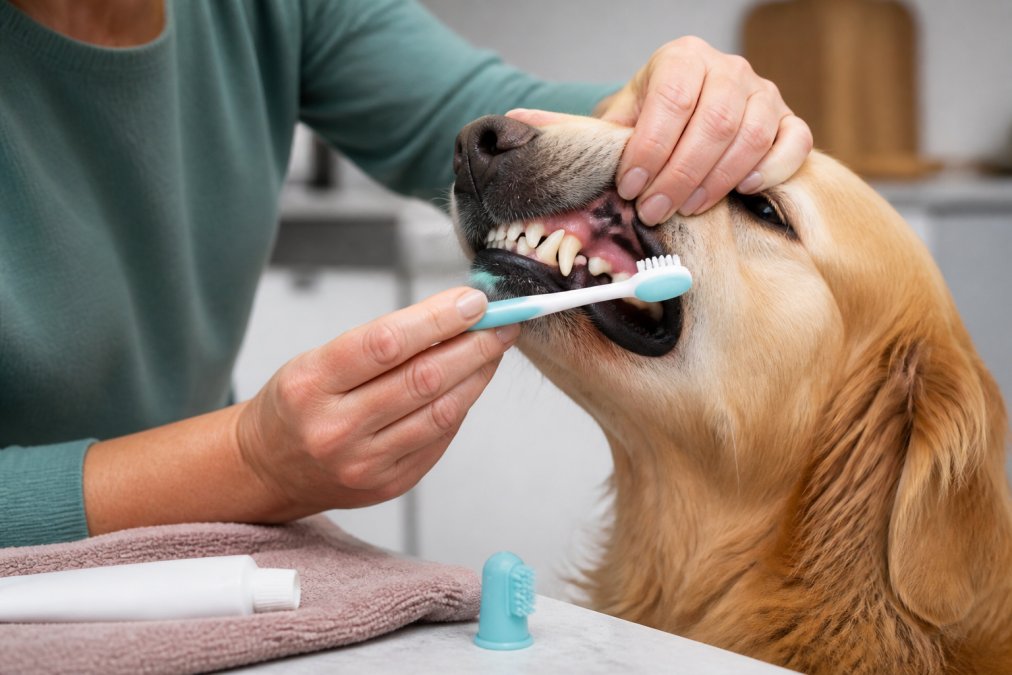
Hold the brush at a 45-degree angle toward the gumline. This angle allows the bristles to reach slightly below the gumline, where plaque and bacteria accumulate and cause periodontal disease. Focus on the outer surfaces of the teeth, which face the cheeks and lips, as plaque accumulates most heavily there because the tongue naturally cleans the inner surfaces.
Use gentle circular motions or small back-and-forth strokes on a few teeth at a time. Do not scrub aggressively, as this can damage the gums. Work in short sessions, brushing one quadrant of the mouth at a time if needed. For dogs that become restless, brush the front teeth one day and the back teeth the next, alternating until you cover the full mouth over two sessions.
Troubleshooting Common Problems
Many dogs resist brushing, and owners often interpret this as failure. Resistance is normal, especially in the first few weeks. Here are common problems and practical solutions:
- Dog turns head away or mouths the brush: This is often a sign that the toothpaste flavor is not appealing or the session is too long. Switch flavors, shorten sessions, and always end on a positive note with a treat.
- Dog bites down on the brush: Do not pull the brush out forcefully, as this can hurt the dog's teeth or your hand. Instead, gently stop moving the brush and wait for the dog to release it. Reward calm behavior and try again with a smaller brush.
- Dog will not open their mouth: You do not need the mouth wide open to brush the outer surfaces. Simply lift the lip with one hand and brush the exposed teeth. For the inner surfaces, which are less prone to tartar, you can often skip them entirely.
- Dog is too small or has a tiny mouth: Use a finger brush or a small-headed toothbrush designed for toy breeds. Some owners find that dental wipes wrapped around a finger are easier to maneuver in very small mouths.
Choosing the Right Tools: Toothbrush and Toothpaste
Never use human toothpaste, as it contains ingredients toxic to dogs. Select an enzymatic toothpaste formulated for pets and a toothbrush sized for your dog's mouth. Standard brushes work, but a 3-sided dog toothbrush from Smitty's Pet Store cleans the top, left, and right surfaces of each tooth in a single stroke, cutting brushing time in half while doing a more thorough job. At $23.81, it is a small investment compared to the cost of professional cleanings.

For dogs that resist brushing entirely, dental toys provide a passive alternative. The Dog Molars Pet Toy Ball uses a textured surface to clean teeth during chew sessions, while the Cooling Dog Chew Toy combines dental cleaning with a freezable core for hot days. These tools do not replace brushing, but they supplement it and help dogs that tolerate neither brushing nor finger brushes.
How to Build the Habit That Lasts
Consistency matters more than perfection. The American Veterinary Medical Association recommends daily brushing as the gold standard, but even three to four times per week provides meaningful protection against plaque accumulation. Attach brushing to an existing daily routine, such as after the evening walk or before bedtime, so it becomes automatic. Dogs that receive consistent brushing from a young age typically require professional cleanings less frequently, and when they do need them, the procedure is often faster, less invasive, and less expensive because there is less tartar and inflammation to address.
Can Pet Insurance Dental Coverage Reduce Your Costs?
Pet insurance dental coverage can offset the cost of professional cleanings, but the terms vary widely between providers. Many policies cover dental accidents and illnesses, including extractions and treatment for periodontal disease, but exclude routine cleanings as preventative care. Some insurers offer wellness add-ons that reimburse a portion of annual dental prophylaxis costs.
Before enrolling, read the policy documents to understand what counts as a dental illness versus routine maintenance. Pre-existing conditions, including periodontal disease diagnosed before coverage begins, are typically excluded. For owners who plan ahead and enroll while their dog is young and healthy, dental coverage can make professional cleanings more affordable. The North American Pet Health Insurance Association publishes annual data on coverage trends and reimbursement rates to help owners compare options.
The Anesthesia-Free Dental Cleaning Controversy
The anesthesia-free dental cleaning debate comes down to a fundamental question: does removing visible tartar without anesthesia actually protect your dog's health? Veterinary dental specialists argue it does not. Scaling above the gumline without addressing subgingival bacteria leaves the primary cause of periodontal disease untouched, risks damaging tooth enamel if the dog moves unexpectedly, and prevents the dental radiographs needed to diagnose disease below the gumline.
Proponents of anesthesia-free cleaning point to lower costs and the avoidance of anesthesia risks, particularly for senior dogs. While the concern about anesthesia is understandable, modern veterinary protocols including pre-anesthetic blood work and continuous monitoring make the procedure safe for most dogs, including older ones. The American Animal Hospital Association guidelines for dental care recommend professionally performed cleanings under anesthesia as the standard for preventing and treating periodontal disease.
How to Build a Preventative Dental Routine That Saves Money
A preventative dental routine is a cost-benefit analysis that favors consistent home care. Each professional cleaning you avoid through effective daily habits represents significant savings, and the tools required cost a fraction of one vet visit. The routine combines daily brushing as the foundation, dental chews for mechanical cleaning between brushings, and regular oral examinations at home to catch problems early.
Start by brushing three to four times per week, working toward daily sessions. Offer dental chews or a cleaning toy like the Cooling Dog Chew Toy on non-brushing days to maintain momentum. Schedule an annual professional cleaning as your vet recommends, and use the home routine to extend the benefits between visits. This approach, supported by the American Veterinary Medical Association's dental care resources, keeps your dog's mouth healthy while minimizing how often you face the full cost of professional intervention.

Conclusion
The professional dog teeth cleaning cost vs home care comparison is not about choosing one over the other. Professional cleanings under anesthesia provide the medical standard of care that home tools cannot replicate, while daily brushing and dental toys reduce the frequency and severity of dental disease between visits.
At Smitty's Pet Store, we help you build that home routine with tools designed for real dogs and busy owners. Our 3-sided toothbrush makes brushing faster and more effective, and our dental chew toys keep teeth clean even when your dog resists the brush. Get started with Smitty's Pet Store and give your dog a healthier mouth without letting dental care costs spiral out of control.
Frequently Asked Questions
How much should a vet charge to clean a dog's teeth?
Professional dog teeth cleaning cost can range from $300 to $1,000 or more, depending on your location and the clinic. The total depends on the level of care required. A basic cleaning with anesthesia, scaling, and polishing might be at the lower end. The price increases if your dog needs pre-anesthetic blood work, dental radiographs, or extractions for advanced periodontal disease. Always ask for a detailed veterinary quote before the procedure.
Why is professional dog teeth cleaning so expensive?
The cost reflects the comprehensive care involved. Your dog requires general anesthesia, which demands monitoring by trained staff. The procedure includes a full oral examination, dental radiographs to check below the gumline, scaling to remove plaque and tartar buildup, and polishing. If your vet finds signs of periodontal disease, they may perform extractions, which adds to the cost. Pre-anesthetic blood work is also crucial for safety.
Can I clean my dog's teeth at home instead of going to the vet?
Yes, daily home care is essential for canine dental hygiene, but it complements, not replaces, professional care. Brushing with an enzymatic toothpaste and using dental chews helps control plaque and tartar buildup. However, once tartar hardens below the gumline, only a professional cleaning under anesthesia can remove it. Think of home care as your first line of defense to reduce the frequency of professional cleanings and prevent costly extractions.
What are the risks of skipping professional dental cleanings for dogs?
Skipping professional cleanings allows plaque to harden into tartar, which leads to gingivitis and periodontal disease. This causes painful inflammation, bad breath, and tooth loss. More seriously, bacteria from the mouth can enter the bloodstream, potentially damaging the heart, liver, and kidneys. Addressing these advanced health issues later is far more expensive and painful for your dog than preventative care.
How often do dogs actually need professional dental cleanings?
Most veterinarians recommend a professional dental cleaning once a year. However, the frequency depends on your dog's breed, age, and home care routine. Small breeds often need more frequent cleanings due to crowded teeth. Dogs that have daily brushing and use dental chews may be able to extend the interval, but you should always follow your vet's advice based on your dog's specific oral health needs.