

Affordable Pet Care Routine for Busy Owners

Table of Contents
- Why Affordable Pet Care Routine Matters for Busy Owners
- Set Up a Consistent Feeding Schedule That Saves Time
- Time-Saving Pet Care Hacks You Can Use Today
- Affordable Preventative Pet Care That Protects Your Budget
- Budget-Friendly Pet Enrichment Ideas for Mental Stimulation
- Create an Emergency Pet Care Fund Without Breaking the Bank
- Build Your Affordable Pet Care Routine This Week
- Conclusion
Last Updated: August 19, 2026
Why Affordable Pet Care Routine Matters for Busy Owners
An affordable pet care routine is the foundation that keeps your pets healthy while protecting your budget and your sanity as a busy owner. The challenge isn't loving your pets enough, it's finding a system that works when you're juggling work, family, and everything else demanding your time.
Pet ownership costs add up fast. Veterinary visits, food, grooming, preventive medications, and emergency care can strain finances quickly, especially when you're managing multiple pets with different needs. Yet skipping routine care creates bigger problems: a dental issue that could've been prevented with regular brushing becomes a $1,500 extraction. A parasite infestation that basic prevention would've stopped turns into weeks of treatment and vet bills.
The real opportunity isn't choosing between quality care and affordability, it's building a system that delivers both. At Smitty's Pet Store, we've helped countless busy owners create sustainable routines that prevent costly emergencies while fitting into realistic schedules. The pets stay healthier, the owners feel less stressed, and the bank account takes fewer hits.
This guide walks you through creating an affordable pet care routine that actually works for your life. You'll discover time-saving hacks, budget-conscious preventative strategies, and practical automation tips that take the guesswork out of daily pet care. The goal isn't perfection, it's consistency that compounds into healthier, happier pets.
Set Up a Consistent Feeding Schedule That Saves Time
A consistent feeding schedule is the easiest win in pet care. It costs nothing extra, takes minimal planning, and prevents behavioral problems while supporting digestive health.
The foundation is simple: feed your pets at the same times every day. Morning, evening, or split schedules depending on your pet type, consistency matters more than the specific times. Dogs thrive on routine. Cats adjust better when feeding happens at predictable intervals. This predictability reduces anxiety-driven eating, prevents overeating, and makes house-training easier for dogs.
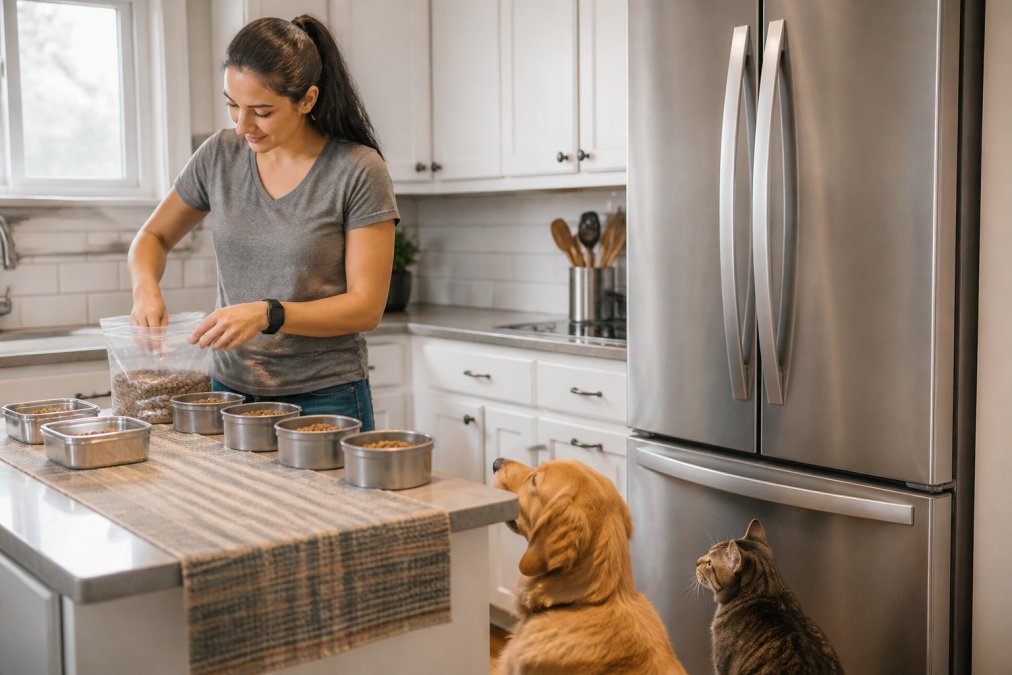
Set up your feeding routine like this:
-
Choose your feeding times based on your schedule, not your pets' demands. If you leave at 7 AM and return at 6 PM, feeding at 7 AM and 6 PM makes sense. Stick with it.
-
Portion meals in advance on weekends if you have time. Many owners prep five days' worth of portions in small containers. This eliminates daily guessing and prevents overfeeding from casual extra scoops.
-
Use a simple chart or phone reminder to track feeding. A laminated sheet on the refrigerator works for households. Phone alarms cost nothing and work anywhere.
-
Store food properly in airtight containers. Opened bags lose freshness and attract pests. Sealed containers keep food fresh longer and reduce waste.
-
Measure portions consistently. Use the same scoop or scale every time. Eyeballing portions leads to slow weight gain that compounds into health problems.
The time investment is minimal, maybe 10 minutes weekly for prep. The payoff is significant: stable weight, fewer digestive issues, reduced begging behavior, and one less daily decision to make. Feeding schedules also create natural opportunities to observe your pets daily, catching early signs of illness before they become expensive problems.
Time-Saving Pet Care Hacks You Can Use Today
Busy owners don't need more tasks, they need smarter ones. These hacks compress pet care into manageable time blocks without sacrificing quality.
Automate Medication and Supplement Reminders
The most common mistake is relying on memory for medications and supplements. Pets miss doses. Owners accidentally double-dose. Pills get forgotten for weeks.
Use your phone's calendar or a free app to set recurring reminders for every medication and supplement. Set the alarm for the actual time you give the medication, not a vague "sometime today." When the alarm sounds, you give the medication immediately. This takes 30 seconds per alarm but prevents missed doses that could undermine your pet's health.
For multiple pets with different medications, create a simple spreadsheet or use a pet health tracking app. List each pet, each medication, the dose, the frequency, and the reason. Print it and keep it on your refrigerator. When you refill prescriptions, update the spreadsheet. This becomes your single source of truth instead of hunting through multiple bottles wondering what goes where.
If your pet takes supplements or medications during meals, pair them with feeding time. Give the medication right before or after the meal. This creates one habit loop instead of multiple daily tasks. Your brain remembers "medication happens at feeding time" more reliably than remembering separate medication times.
Batch Grooming Tasks by Day
Grooming doesn't have to happen daily, but consistency prevents matting, skin issues, and behavioral problems. The trick is batching tasks by day so grooming becomes a weekly ritual instead of scattered random efforts.
Assign each grooming task to a specific day: teeth brushing on Monday, nail trimming on Wednesday, ear cleaning on Friday. This spreads tasks across the week and prevents grooming fatigue. You're not doing everything at once, you're doing one task, consistently, on the same day.
For brushing, keep your brush in a visible spot. Brush your dog or cat for five minutes while watching TV. That's it. Five minutes daily prevents most matting and reduces shedding dramatically. The time cost is nearly zero if you do it while doing something else.
Nail trimming scares many owners, but it's learnable. Watch a five-minute YouTube video from your vet's clinic showing proper technique. Trim just the clear part of the nail, avoiding the pink quick. If you're nervous, trim only one nail per session. Consistency matters more than speed. Many pets need trimming every 3-4 weeks. Set a recurring calendar reminder and do it on the same day each time.
Dental care is non-negotiable for long-term health. Brush teeth three to four times weekly if possible, daily if your pet tolerates it. Use pet-specific toothpaste, human toothpaste is toxic to pets. Brush for 30 seconds per side. This single habit prevents dental disease, saves thousands in future dental extractions, and extends your pet's lifespan.
Affordable Preventative Pet Care That Protects Your Budget
Preventative care is the single best investment in affordable pet care routines. Every dollar spent preventing problems saves five dollars treating emergencies.
Vaccination Schedules and Wellness Exams
Vaccinations prevent diseases that are expensive to treat and often fatal. Your veterinarian will recommend a vaccination schedule based on your pet's age, lifestyle, and local disease risks.
Puppies and kittens need a series of vaccines starting at six to eight weeks, then boosters every three to four weeks until 16 weeks old. Adult pets typically need annual or tri-annual boosters depending on the vaccine. Senior pets (seven years and older) benefit from twice-yearly wellness exams to catch age-related issues early.
Schedule wellness exams annually for young adult pets, twice yearly for seniors. These exams cost a fraction of treating advanced disease. Your vet checks weight, heart rate, teeth, ears, skin, and lymph nodes. They catch problems early when treatment is simpler and cheaper. Many vets offer wellness packages that bundle exams with basic bloodwork at a discount.
Ask your vet about community clinics or low-cost vaccination events in your area. Many areas have programs offering vaccines at reduced rates. If cost is a barrier, these programs make preventative care accessible.
Parasite Prevention and Dental Hygiene
Fleas, ticks, and heartworms are preventable with consistent medication. Skipping prevention creates expensive infestations and disease risks.
Heartworm prevention is critical. A single heartworm infection costs thousands to treat and can be fatal. Monthly heartworm prevention is inexpensive compared to treatment. Ask your vet about the most cost-effective prevention option for your pet.
Flea and tick prevention prevents disease transmission, allergic reactions, and secondary infections from scratching. Monthly topical treatments, oral medications, or collars all work. Consistency is essential, one missed month can lead to infestation. Set calendar reminders for application dates.
Dental hygiene prevents tooth decay, gum disease, and systemic infections. Brush teeth regularly. Dental treats and water additives provide supplementary support but don't replace brushing. Professional dental cleanings by your vet become necessary periodically. Prevention reduces the frequency and cost of professional cleanings.
Budget-Friendly Pet Enrichment Ideas for Mental Stimulation
Mental stimulation prevents behavioral problems and keeps pets engaged. You don't need expensive toys, creativity and consistency matter more.
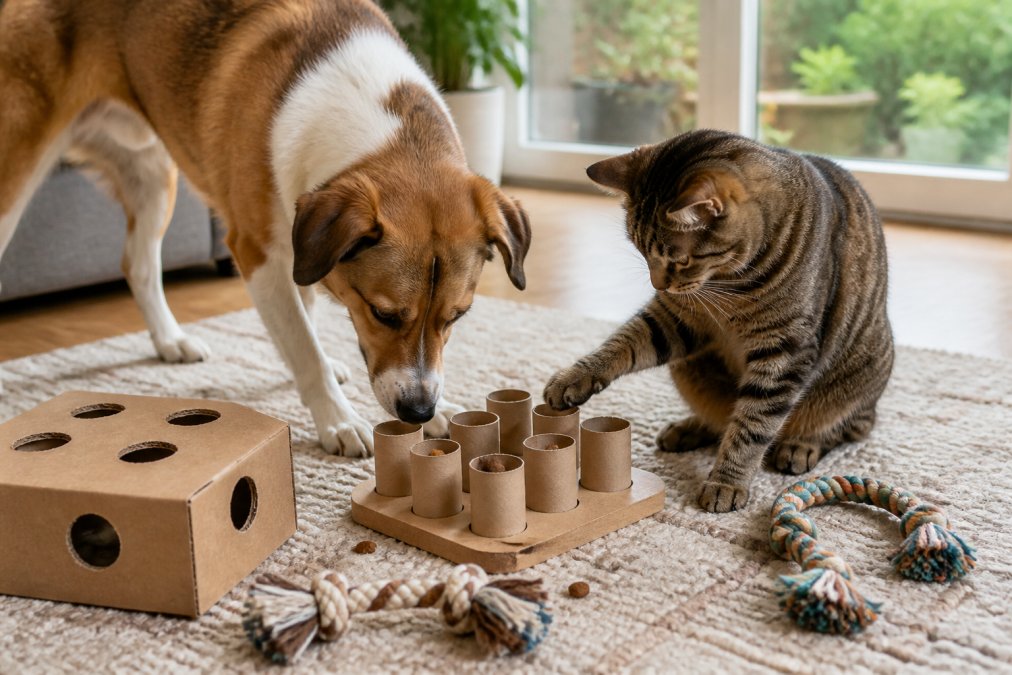
DIY enrichment costs almost nothing. Puzzle feeders made from toilet paper rolls stuffed with treats, cardboard boxes with cutout holes, or muffin tins with treats hidden under tennis balls engage pets mentally. These homemade options work as well as expensive commercial versions.
Rotate toys weekly instead of leaving everything out. Pets lose interest in toys they see constantly. Rotating toys creates novelty without buying new ones. Store unused toys in a closet and swap them out weekly.
Create a scent enrichment routine. Hide treats around the house and let your pet search. This engages natural hunting instincts and provides mental stimulation. Dogs particularly enjoy nose-work games. Cats enjoy the hunt and reward.
Exercise prevents destructive behavior and maintains healthy weight. Daily walks for dogs, play sessions for cats, and enrichment time for rabbits or other pets should be non-negotiable. Exercise doesn't have to be expensive, a walk in your neighborhood costs nothing and provides physical and mental stimulation.
Interactive play with you is free and often preferred by pets. Fifteen minutes of focused play with a ball, rope toy, or laser pointer engages your pet and strengthens your bond. This costs nothing beyond the initial toy purchase.
Create an Emergency Pet Care Fund Without Breaking the Bank
Emergency vet bills are unpredictable and expensive. A dedicated emergency fund prevents financial panic during crises.
Start small. Set aside $25 or $50 monthly in a separate savings account labeled "pet emergency." After one year, you have $300-600. After two years, $600-1,200. This modest fund covers many emergencies without derailing your budget.
The goal is $1,000-2,000 per pet. This covers most emergency visits. Larger emergencies might exceed this, but having something is better than having nothing.
Automate the savings. Set up automatic monthly transfers on payday. You won't miss money you never see in your checking account. This removes the decision-making and makes saving automatic.
Ask about payment plans at your vet. Many emergency clinics offer financing for large bills. Understanding your options before emergencies happen reduces stress during crises.
Pet insurance is worth exploring, though premiums vary widely. Some plans cover emergencies and chronic conditions. Others cover only accidents. Review plans carefully. Insurance doesn't prevent emergencies, but it can reduce the financial impact of expensive treatments. Compare a few options to understand what's available in your area.
Build Your Affordable Pet Care Routine This Week
Implementation beats perfection. You don't need a perfect system, you need a started one.
Pick one area this week: feeding schedule, medication reminders, or grooming task. Implement that single change. Get comfortable with it. Next week, add another. This gradual approach builds sustainable habits instead of overwhelming yourself with simultaneous changes.
Use your phone ruthlessly. Set reminders for medications, feeding times, grooming tasks, and vet appointments. Your phone is your external brain for pet care. Let it do the remembering.
Create a simple one-page pet health checklist listing vaccines, medications, grooming tasks, and vet visit dates. Update it as things change. This becomes your reference document when you're unsure what's due.
Talk to your vet about affordability. Many vets have resources for cost-conscious owners. They can recommend generic medications, preventative strategies that save money long-term, and community resources. Your vet wants your pet healthy, they're often willing to work with your budget.
Share the routine with anyone who cares for your pets. If a family member or pet sitter helps, they need the same information: feeding times, medication schedules, emergency contacts, and behavioral notes. A simple written guide prevents miscommunication and ensures consistency.
Building an affordable pet care routine isn't about spending less money, it's about spending it strategically on prevention instead of emergency treatment. Consistency in feeding, preventative care, and mental stimulation prevents expensive problems while keeping your pets healthier and happier.
Smitty's Pet Store is designed to support this routine with a curated selection of quality essentials, grooming products, and supplies chosen specifically to help busy owners maintain consistent, affordable pet care. We understand the challenges of juggling pet care with a demanding schedule, and our carefully selected products are meant to make that routine simpler and more sustainable. Start with one habit this week, use the systems outlined above, and you'll build a routine that works for your life and your pets' health.
Frequently Asked Questions
How can I create a consistent pet care routine with a full-time job?
Start by batching similar tasks on specific days: grooming on Sunday, nail trims on Wednesday, playtime in the evening. Use phone reminders for feeding times and medication. Automate what you can through pet care apps and timers. Even 15 minutes of dedicated daily attention, split into morning and evening, maintains a consistent routine without overwhelming your schedule. The key is predictability, not perfection.
What are the most cost-effective ways to maintain pet health on an affordable pet care routine?
Focus on preventive care: regular wellness exams catch issues early when treatment costs less. Keep vaccinations current and use affordable preventative pet care options like community clinics. Brush your pet's teeth at home to avoid expensive dental procedures. Buy flea, tick, and heartworm prevention in bulk. Establish an emergency fund of $500-$1,000 to cover unexpected vet bills. Prevention always costs less than emergency treatment.
What are some time-saving pet care hacks for busy owners?
Use automatic feeders and water fountains to reduce daily tasks. Set phone reminders for medications so you don't forget. Batch grooming activities into one day per week. Keep a pet health checklist on your phone to track vaccinations and exams. Use puzzle feeders and toys to provide mental stimulation without extra effort. These time-saving pet care hacks free up 30-45 minutes per week while keeping your pet healthy and engaged.
How do I balance pet enrichment with a busy schedule?
Budget-friendly pet enrichment ideas include rotating toys weekly, creating DIY puzzle feeders from household items, and scheduling 10-minute play sessions during lunch breaks or after work. Puzzle toys and treat-dispensing toys provide mental stimulation while you're busy. Rotate toys every few weeks to keep novelty without buying new ones. Even short, focused play sessions prevent behavioral problems and boredom without requiring hours of your time.
This article was written using GrandRanker