

Natural Flea Prevention for Cats: Safe Methods That Work

Table of Contents
- Why Natural Flea Prevention Matters for Cats
- How to Get Rid of Fleas on Cats Naturally
- Non-Toxic Flea Spray for Cats: What Actually Works
- Cat Flea Prevention Tips for Long-Term Protection
- Essential Oil Safety: What You Must Know Before Use
- Natural Methods vs. Conventional Medicine: Finding Balance
- Conclusion
Last Updated: August 27, 2026
Why Natural Flea Prevention Matters for Cats
Fleas are a serious health threat to cats of all ages. A single flea can lay hundreds of eggs, creating an infestation within weeks (the CDC). Many cat owners turn to natural approaches to avoid potential side effects of synthetic pesticides, especially for kittens, senior cats, and those with health conditions. Natural flea prevention for cats offers a gentler alternative that can be effective when applied correctly.
At Smitty's Pet Store, we understand that every cat is different. Some respond well to botanical remedies, while others need a combination of approaches. This guide walks you through the safest, most effective natural methods available.
How to Get Rid of Fleas on Cats Naturally
Getting rid of an active flea infestation naturally requires patience and consistency. Natural methods work by creating an environment where fleas can't thrive, combining multiple approaches for 3-4 weeks.
The foundation is breaking the flea life cycle. Fleas have four stages: egg, larva, pupa, and adult (the CDC). Most natural remedies target adult fleas, but preventing eggs and larvae from developing is critical. Environmental control matters as much as treating your cat directly.
Diatomaceous Earth Application
Food-grade diatomaceous earth is one of the most effective natural flea killers. Microscopic particles cut through the flea's waxy outer shell, causing fatal moisture loss. Never use pool-grade diatomaceous earth, which is toxic to cats.
Dust a light layer of food-grade diatomaceous earth directly onto your cat's fur, working it down to the skin. Focus on the base of the tail, behind the ears, and along the spine. Avoid the face and eyes. Leave it on for 24-48 hours, then bathe your cat thoroughly. Repeat weekly for 3-4 weeks to catch fleas at different life stages.
Diatomaceous earth only works on adult fleas it contacts directly and won't penetrate bedding or carpets effectively. It's useless against flea eggs and larvae already in your home. Many cat owners find it works best as part of a broader strategy.
Essential Oils and Botanical Repellents
Essential oils like cedarwood, thyme, peppermint, and rosemary have natural repellent properties that fleas find unpleasant. These compounds interfere with flea sensory systems, making treated areas less attractive for feeding and egg-laying. They work best preventatively rather than for active infestations.
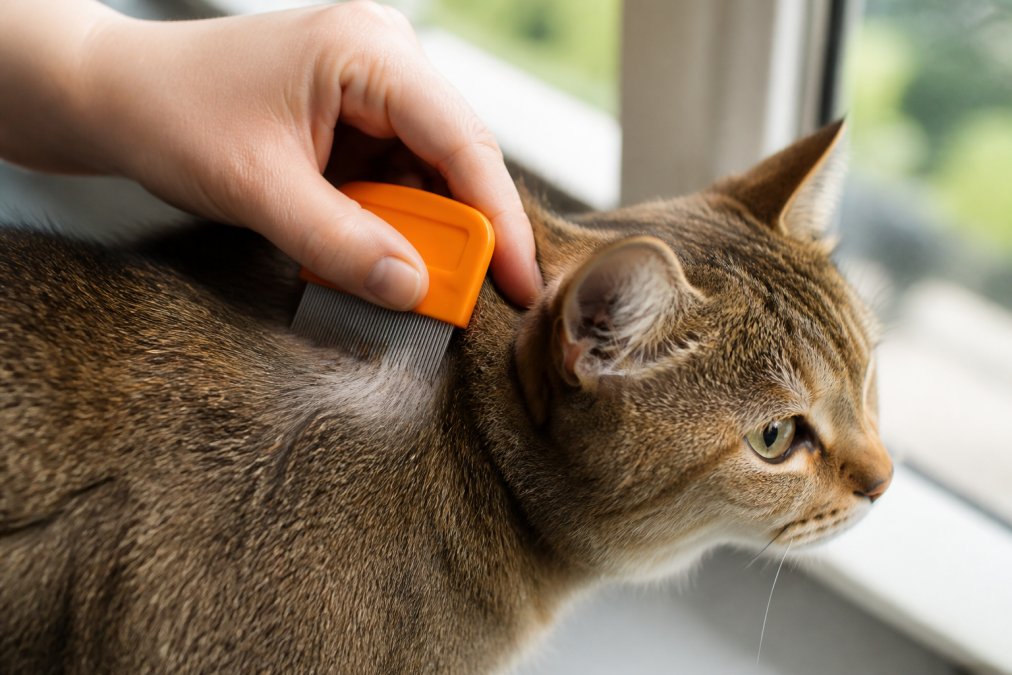
Dilute essential oils in a carrier oil and apply to your cat's collar, bedding, or the base of the tail. Some owners create a spray by mixing a few drops of essential oil with water and vinegar, then mist it on furniture and bedding. A flea comb dipped in diluted essential oil can help remove fleas while depositing repellent directly on the fur.
Geraniol, found in geranium oil, is particularly effective and appears in several commercial natural flea products. However, these oils work best preventatively and are less effective once a heavy infestation has established.
Apple Cider Vinegar and Home Remedies
Apple cider vinegar is popular in natural pet care, though its flea-fighting ability is modest. The theory is that acidity makes your cat's skin less hospitable to fleas. Some owners add diluted apple cider vinegar to drinking water or create a rinse.
Apple cider vinegar alone won't eliminate fleas, but it can support other methods. It's safe at diluted levels and may help maintain skin health. Other home remedies like lemon juice and salt baths have anecdotal support but limited scientific backing and shouldn't be your primary strategy for active infestations.
Non-Toxic Flea Spray for Cats: What Actually Works
A non-toxic flea spray for cats must balance effectiveness with safety. Many commercial sprays marketed as "all-natural" contain concentrated essential oils that can irritate sensitive skin or cause respiratory issues. The safest approach is diluting essential oils properly or choosing sprays formulated specifically for feline safety.
Look for products that list active ingredients clearly. Geraniol-based sprays are generally safer than concentrated essential oil formulas. Neem oil sprays also show flea-repellent properties, though they have a strong smell.
Apply spray lightly to bedding, furniture, and your cat's environment rather than directly onto fur. If applying to your cat, use a light mist and never spray the face, ears, or eyes. The main limitation is coverage, fleas hide in carpet fibers and furniture seams where sprays don't penetrate. Combine spraying with vacuuming, washing bedding, and treating your cat directly.
Cat Flea Prevention Tips for Long-Term Protection
Preventing fleas is easier than treating an infestation. A layered prevention strategy keeps your cat protected year-round.
Start with regular grooming. A fine-toothed flea comb used 2-3 times weekly catches adult fleas before they reproduce. Dip the comb in soapy water to kill fleas as you remove them.
Maintain a clean home environment. Vacuum carpets and furniture weekly, wash your cat's bedding in hot water every 7-10 days, and declutter areas where fleas hide. Good ventilation disrupts their life cycle.
Consider your cat's lifestyle. Indoor cats have lower flea risk, but they're not immune, fleas can enter on clothing or other pets. If your cat goes outside, inspect it carefully after each outing and increase grooming during warm months.
Environmental Flea Control
Adult fleas spend only 5% of their life on your cat; the other 95% is spent in carpets, bedding, and furniture as eggs, larvae, and pupae (peer-reviewed research). Ignoring environmental treatment is why many natural flea prevention efforts fail.
Vacuum thoroughly and frequently, focusing on carpet edges, under furniture, and dark corners. Empty the vacuum immediately into a sealed bag. Wash all bedding, blankets, and cat toys in hot water weekly.
For yard control, keep grass short and remove leaf litter. Beneficial nematodes (microscopic organisms that prey on flea larvae) can be applied to soil and are safe for cats and humans.
Age and Health-Specific Recommendations
Not all natural flea prevention methods suit every cat. Kittens under 8 weeks are extremely sensitive to essential oils and herbal treatments. For young kittens, stick to mechanical methods: grooming with a flea comb and frequent bathing. Consult your veterinarian before applying any essential oil-based product.
Senior cats and those with health conditions require extra caution. Cats with liver disease, kidney problems, or respiratory issues may struggle to metabolize essential oils. Diluted diatomaceous earth and flea combing are safest. Always discuss natural flea prevention with your vet if your cat has a diagnosed condition.
Pregnant or nursing cats need special consideration. Essential oils can pass into breast milk. Mechanical flea removal and environmental control are safest during pregnancy and nursing.
Cats with skin allergies may react to essential oils even at diluted concentrations. Introduce any new remedy gradually and watch for excessive scratching, redness, or hair loss.
Essential Oil Safety: What You Must Know Before Use
Essential oils are powerful plant concentrates. Cats metabolize them differently than humans, their livers lack certain enzymes that break down aromatic compounds, making them more vulnerable to toxicity. This doesn't mean you can't use essential oils safely, but you must understand the risks.
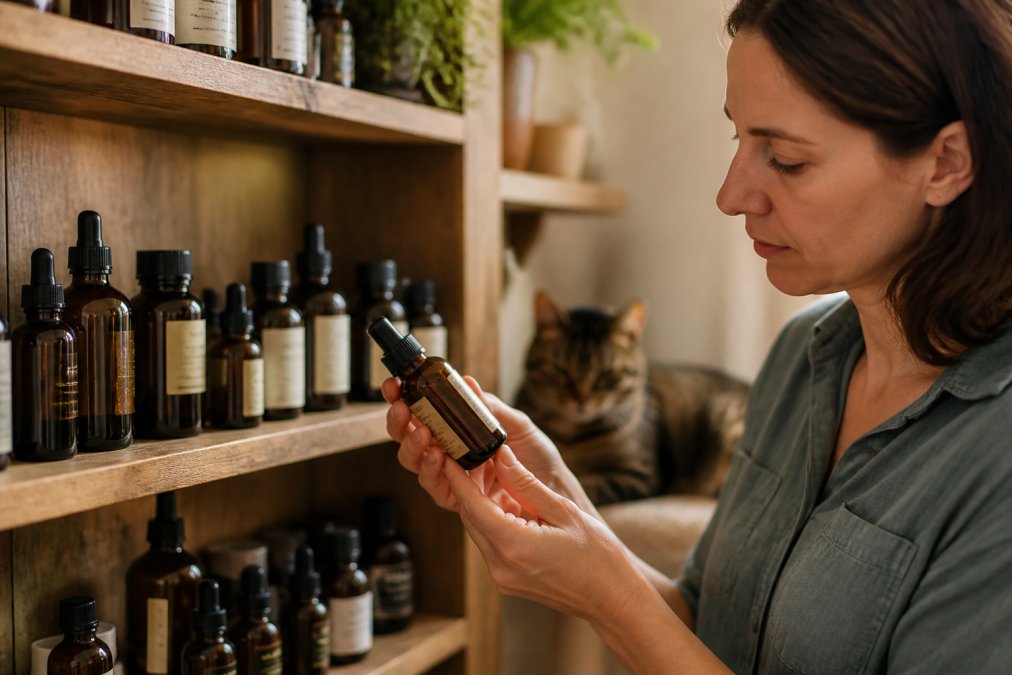
Never apply undiluted essential oils directly to your cat's skin or fur. Always dilute with a carrier oil like coconut oil, a safe ratio is 1-2 drops of essential oil per tablespoon of carrier oil. Apply sparingly and monitor your cat for adverse reactions.
Some essential oils are riskier for cats. Eucalyptus, tea tree, citrus oils, and wintergreen should be avoided entirely. Cedarwood, thyme, and peppermint are safer when properly diluted, but still require caution. Never use essential oil diffusers in rooms where cats spend significant time, inhalation exposure can accumulate to toxic levels.
Watch for toxicity signs: drooling, vomiting, tremors, difficulty breathing, or unusual behavior. If your cat shows these symptoms, stop use immediately and contact your veterinarian. Toxicity can develop gradually with repeated exposure.
The safest approach is using essential oils only in your cat's environment on bedding or furniture, rather than directly on the cat's body. This provides flea-repellent benefits while minimizing absorption and inhalation risk.
Natural Methods vs. Conventional Medicine: Finding Balance
The debate between natural and conventional flea prevention often presents a false choice. Many cat owners find combining approaches works better than relying on either alone.
Conventional prescription flea treatments work faster and more thoroughly on active infestations. They're formulated specifically for feline safety and tested extensively. If your cat has a severe infestation or lives in a high-risk environment, conventional treatment may be most responsible. These treatments also prevent ticks and other parasites that natural methods don't address.
Natural methods excel at prevention and maintenance. Once you've cleared an infestation using conventional treatment, natural prevention, regular grooming, environmental control, and botanical repellents can keep fleas from returning.
Your cat's age, health status, and lifestyle should guide your choice. A healthy adult indoor cat might thrive on natural prevention alone. A kitten, senior cat, or one with health conditions might benefit from professional veterinary guidance and conventional options when needed.
The real key is consistency. Whether you choose natural or conventional methods, stopping treatment prematurely is the most common reason flea prevention fails. Fleas reproduce so rapidly that even a two-week gap can restart an infestation. Commit to your chosen method for the full treatment period, then maintain prevention year-round.
Keeping your cat flea-free doesn't require choosing between safety and effectiveness. Natural flea prevention for cats works best when you understand each method's strengths, apply them correctly, and stay consistent. At Smitty's Pet Store, we carry a curated selection of natural flea prevention products, from food-grade diatomaceous earth to properly diluted essential oil formulations, chosen specifically for feline safety. Start with regular grooming and environmental control, add the natural method that fits your cat's needs, and you'll have a comprehensive prevention strategy that keeps your cat comfortable and protected year-round.
| Method | Best For | Application Frequency | Primary Limitation |
|---|---|---|---|
| Flea Comb | Prevention & early detection | 2-3 times weekly | Labor-intensive, misses hidden fleas |
| Diatomaceous Earth | Active infestations | Weekly for 3-4 weeks | Ineffective against eggs/larvae |
| Essential Oil Sprays | Environmental prevention | Weekly on bedding | Limited penetration, toxicity risk |
| Apple Cider Vinegar | Supportive prevention | 2-3 times weekly | Minimal standalone effect |
| Environmental Cleaning | Breaking flea cycle | Weekly vacuuming, bi-weekly laundry | Requires sustained effort |
Frequently Asked Questions
Are essential oils safe for natural flea prevention on cats?
Many essential oils are toxic to cats due to their liver's inability to metabolize certain compounds. Oils like tea tree, eucalyptus, and lavender can cause serious harm. Safer alternatives include geraniol and cedarwood in heavily diluted forms, but always consult your vet first. Never apply undiluted essential oils directly to your cat's skin or fur. When using natural flea prevention for cats, safety must come before convenience.
How can I tell if my cat has fleas?
Look for small dark specks (flea dirt) in your cat's fur, especially around the neck and tail base. You may see your cat scratching excessively or notice small red bumps on the skin. Use a flea comb to check for live fleas, they appear as tiny brown insects moving quickly through the fur. If you spot any signs, start flea prevention immediately to prevent a full infestation from developing.
Is diatomaceous earth safe for cats?
Food-grade diatomaceous earth is generally considered safe for topical use on cats when applied properly. It works by damaging the exoskeletons of fleas and other parasites. However, avoid letting your cat inhale the powder, as it can irritate respiratory passages. Apply it sparingly to affected areas, keep it away from eyes and mouth, and bathe your cat after 24-48 hours. Always use food-grade, never pool-grade diatomaceous earth.
What natural flea prevention methods work best for senior cats or those with health conditions?
Senior cats and those with existing health issues require gentler approaches. Flea combs, regular bathing with mild natural shampoos, and environmental control are safest options. Avoid essential oils and strong herbal treatments unless approved by your vet. Consult your veterinarian before using any natural remedy, as their liver and kidney function may be compromised. A vet can recommend cat flea prevention tips tailored to your pet's specific health status and age.
This article was written using GrandRanker