

Best Grooming Tools for Long Hair Cats

Table of Contents
- Quick Comparison Table: Top Grooming Tools for Long-Haired Cats
- Why Long-Haired Cats Need Specialized Grooming Tools
- Best Cat De-Shedding Tools for Undercoat Removal
- Slicker Brushes and Self-Cleaning Options for Daily Maintenance
- How to Remove Mats from Long-Haired Cats
- Cat Grooming Frequency: Daily vs. Weekly Routines
- Gentle Tools for Cats with Grooming Anxiety and Sensitive Skin
- Specialized Combs and Tools for Finishing and Detangling
Last Updated: August 20, 2026
Quick Comparison Table: Top Grooming Tools for Long-Haired Cats
| Tool | Best For | Key Feature | Price Range |
|---|---|---|---|
| FURminator Undercoat deShedding Tool | Heavy shedding and undercoat removal | Stainless steel deShedding edge with FURejector button | $31.87-$33.60 |
| Coastal Pet Safari Self-Cleaning Slicker Brush | Daily detangling and light brushing | Self-cleaning button for easy hair removal | $11.99-$19.99 |
| Andis Pet Steel Grooming Comb | Everyday coat care and finishing | Dual tooth pattern (coarse and fine) | $11.99-$25.00 |
| GoPets Dematting Comb with 2 Sided Rake | Stubborn mats and thick undercoats | Double-sided with rounded teeth for sensitive skin | $39.99-$54.99 |
| KONG ZoomGroom Cat Brush | Sensitive or brush-shy cats | Soft rubber fingers for gentle grooming | $6.99-$9.99 |
| Four Paws Magic Coat Love Glove | Cats that dislike traditional brushes | Flexible rubber nubs for bonding and massage | $7.99-$12.00 |
Why Long-Haired Cats Need Specialized Grooming Tools
Long-haired cats have two distinct coat layers: the topcoat (visible guard hairs) and the undercoat (dense, softer hair underneath). Without proper tools, the undercoat becomes a matting factory. Dead hair gets trapped, moisture accumulates, and loose fur turns into painful knots that pull at the skin, leading to infections, reduced air circulation, and increased shedding.
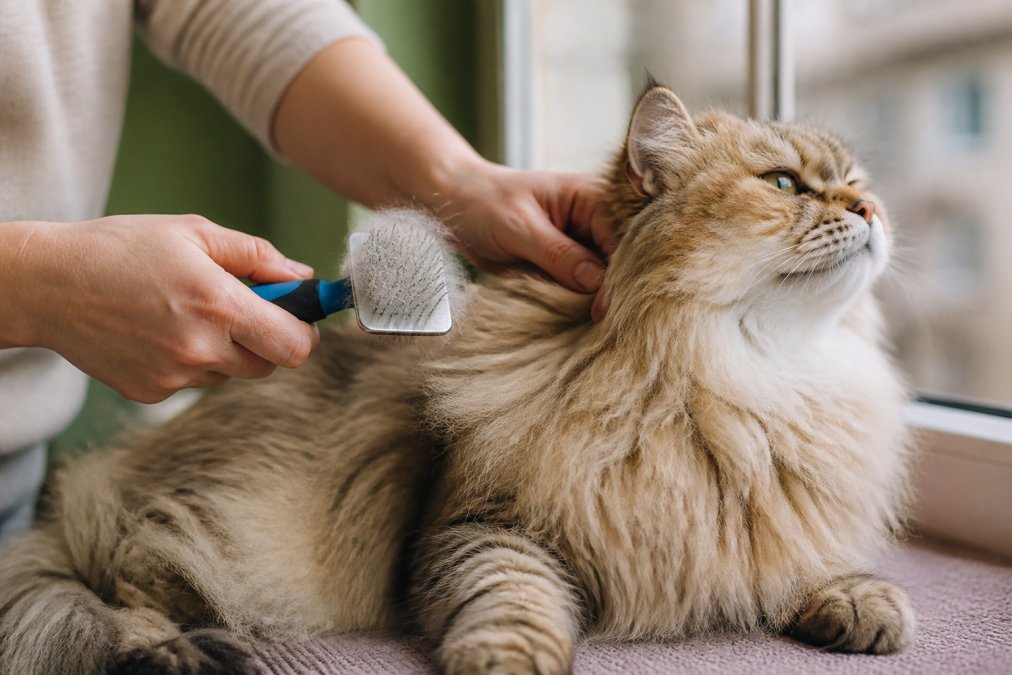
Regular grooming with the right tools prevents these problems. A proper undercoat rake removes loose hair before it tangles. A slicker brush handles daily maintenance and small tangles. A steel comb finishes the job and keeps the coat healthy and shiny.
The best grooming tools for long-haired cats do three essential things: they remove loose undercoat without damaging the topcoat, they prevent mats before they form, and they're gentle enough that your cat doesn't dread the experience.
Best Cat De-Shedding Tools for Undercoat Removal
De-shedding tools are the heavy hitters of grooming, designed to reach through the topcoat and pull out dead undercoat hair. If you're going to invest in one premium tool, this is it.
FURminator Undercoat deShedding Tool
The FURminator is the standard that other deShedding tools measure themselves against. Its stainless steel deShedding edge cuts through topcoat without cutting skin. The curved design follows your cat's natural body contours, which matters when working around ribs, shoulders, and legs.
The FURejector button is genuinely useful, press it and collected hair retracts instead of requiring manual removal. One limitation: this tool only works on completely dry coats. Wet or damp fur will clog the blade.
Best for cats with heavy shedding and thick undercoats prone to hairballs. The FURminator reduces shedding noticeably and helps prevent matting that leads to professional grooming bills.
DakPets Pet Deshedding Brush
The DakPets delivers similar results to the FURminator at a lower price point. Its 4-inch precision stainless steel blade works beneath the topcoat to remove loose undercoat fur. The detachable design allows easier cleaning and access to hard-to-reach areas like behind the ears or between paw pads.
Many users report the blade is slightly gentler than the FURminator, making it a better choice for cats with sensitive skin or previous bad grooming experiences.
GroomRaker Cat Deshedding Tool
The GroomRaker uses flexible fingers instead of a rigid blade, reaching deep into thick undercoats while feeling more like a massage than a tool. This design is particularly useful for Maine Coons and Persians.
Cats often tolerate this better, especially those with grooming anxiety. The trade-off: it won't remove quite as much loose undercoat in a single session as a blade-style tool.
Slicker Brushes and Self-Cleaning Options for Daily Maintenance
De-shedding tools handle the deep work, but slicker brushes are your daily workhorse. They remove loose fur from the topcoat, prevent small tangles from becoming mats, and keep your cat's coat looking glossy between deeper grooming sessions.
Coastal Pet Safari Self-Cleaning Slicker Brush
The Coastal Pet Safari is the practical choice for daily grooming. Its coated stainless steel pins are fine enough to catch small tangles before they develop into mats, yet gentle enough for regular use. The self-cleaning button retracts the pins, ejecting collected hair instantly.
The brush head is appropriately sized for cats, not oversized like some dog-focused slicker brushes. Use it 3-4 times per week on a long-haired cat, and you'll notice significantly less loose hair on your furniture.
Hertzko Self-Cleaning Slicker Brush
The Hertzko competes directly with the Coastal Pet Safari. The fine, bent wire bristles penetrate slightly deeper into the coat. The ergonomic comfort-grip handle stands out if you have hand fatigue or arthritis, with noticeably more cushioning than the Coastal Pet Safari.
For long-haired cats, both perform the same essential function: daily detangling and loose hair removal. Choose based on handle comfort and brush head size.
How to Remove Mats from Long-Haired Cats
Mats escalate quickly. A small tangle becomes a mat becomes a painful knot becomes a professional groomer's emergency. Understanding how to address them before they reach that stage saves money, stress, and vet bills.
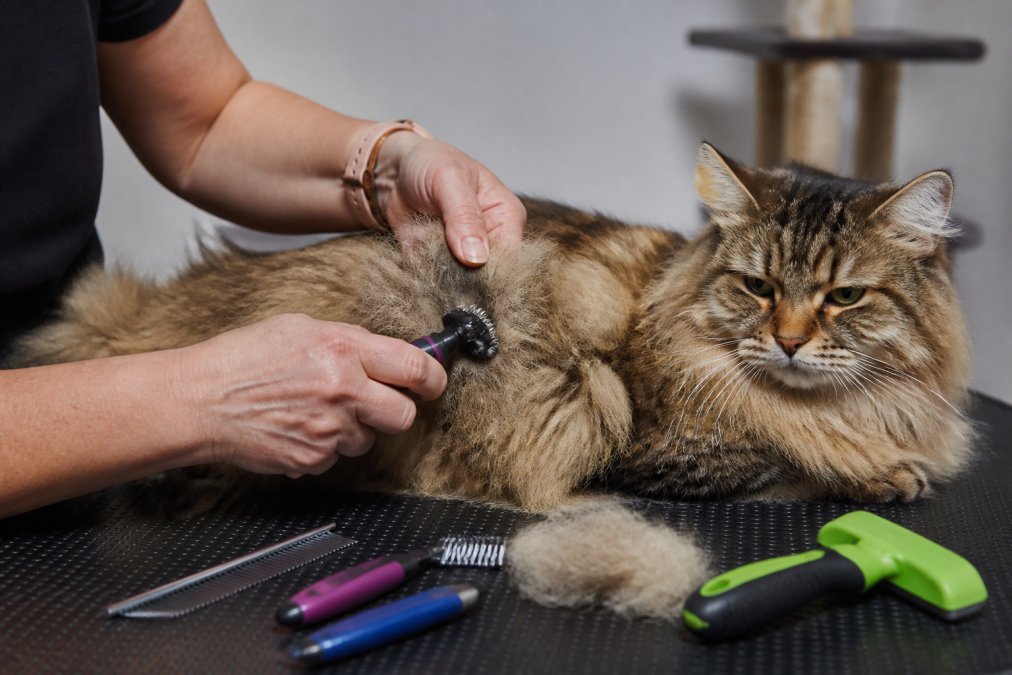
Tools That Work Best for Stubborn Mats
Not all grooming tools handle mats equally. A slicker brush will slide over a mat without penetrating it. You need a tool designed specifically for mat removal.
The GoPets Dematting Comb with 2 Sided Rake excels here. The lower-density side with sharp stainless steel blades cuts through stubborn mats without pulling. The rounded ends prevent scratching sensitive skin.
For less severe tangles, the Andis Pet Steel Grooming Comb's dual tooth pattern handles both detangling and finishing.
Step-by-Step Mat Removal Process
Mat removal requires patience. Here's the approach that works:
1. Assess the mat's severity. Small tangles respond to a slicker brush. Medium mats need a dematting comb. Severe mats matted to the skin warrant a professional groomer.
2. Work from the outside in. Start at the outer edges where hair is looser, and gradually work toward the core using a dematting comb's lower-density side.
3. Use the right grip. Hold the mat base gently with one hand to avoid pulling the skin. Work the comb through with your other hand to distribute tension.
4. Finish with a fine comb. Once the mat is loosened, switch to the fine-tooth side to remove remaining loose hairs and smooth the coat.
5. Know when to stop. If you've been working for more than 10 minutes on one mat and it's still not coming free, stop. Your cat is stressed, and you risk skin irritation.
Cat Grooming Frequency: Daily vs. Weekly Routines
How often you groom depends on your cat's coat type, shedding patterns, and lifestyle. Long-haired cats with dense undercoats need more frequent grooming than short-haired cats. A Persian or Maine Coon left ungroom for two weeks will develop mats requiring professional removal.
Daily grooming is ideal for cats with heavy shedding or those prone to matting. A 5-minute session with a slicker brush or undercoat rake removes loose hair before it tangles, especially important during spring and fall shedding peaks.
Weekly grooming works for cats with moderate shedding and good coat health. One deeper session with a deShedding tool plus 2-3 light maintenance sessions with a slicker brush keeps the coat healthy and mat-free.
Seasonal intensity matters. During heavy shedding seasons, increase frequency. A cat needing weekly grooming in winter might need 3-4 times per week in spring.
Start with a realistic schedule you can actually maintain. Two grooming sessions per week beats a commitment to daily grooming that you abandon after a month.
Gentle Tools for Cats with Grooming Anxiety and Sensitive Skin
Not all cats tolerate traditional brushes. Some have had negative grooming experiences. Others have genuinely sensitive skin that reacts to metal bristles. For these cats, you need tools that feel less like grooming and more like petting.
KONG ZoomGroom Cat Brush
The KONG ZoomGroom is soft rubber with nubby fingers that remove loose hair without metal bristles that stress-prone cats often resist. The texture is closer to a massage tool than a brush.
Many cats that reject traditional brushes accept the ZoomGroom because it doesn't feel threatening. The massaging action actually relaxes some cats, turning grooming into something they seek out rather than avoid.
The limitation is depth. The rubber fingers don't penetrate a dense undercoat the way metal tools do. Use it as part of a grooming routine, not as your only tool.
Four Paws Magic Coat Love Glove Cat Grooming Mitt
The Love Glove puts grooming in your hand, literally. Flexible rubber nubs cover the palm and fingers, removing loose hair while you pet your cat. For cats that associate brushes with stress, a glove feels like interaction, not grooming.
You can groom while watching TV or just hanging out with your cat. It doesn't require the focus that traditional grooming does, which means you're more likely to do it regularly.
Like the ZoomGroom, the Love Glove handles surface grooming and loose hair removal but isn't designed for deep undercoat work or mat removal. Combine it with a deShedding tool for complete grooming coverage.
Specialized Combs and Tools for Finishing and Detangling
After you've done the heavy lifting with deShedding tools and slicker brushes, finishing combs refine the coat and catch any remaining loose hairs.
Andis Pet Steel Grooming Comb
The Andis comb is a professional-grade finishing tool that belongs in every long-haired cat owner's grooming kit. The dual tooth pattern, coarse and fine, handles multiple grooming tasks in one tool.
Use the coarse side for detangling and removing loose clumps of fur. Switch to the fine side for finishing and creating that polished look. Professional groomers use this exact comb, which tells you something about its quality and effectiveness.
GoPets Dematting Comb with 2 Sided Rake
The GoPets is the specialized tool for stubborn tangles and mats. Its double-sided design gives you two different tools in one: the lower-density side with sharp stainless steel blades cuts through mats; the higher-density side detangles and removes loose undercoat.
The rounded ends prevent scratching sensitive skin. This tool shines when you're dealing with problem areas: behind the ears, under the chin, between the back legs.
The right grooming tools transform the experience for both you and your cat. Start with the essentials, a deShedding tool for undercoat removal and a slicker brush for daily maintenance, and add specialized tools as your cat's needs demand. With consistent grooming using proper tools, long-haired cats stay mat-free, shed less, and develop healthier coats.
At Smitty's Pet Store, we understand that grooming shouldn't be stressful or overwhelming. Our curated selection of grooming tools is chosen specifically for long-haired cats, and our team can help you find the right combination for your cat's coat type and temperament. Visit Smitty's Pet Store today to explore tools that make grooming simpler and your cat happier.
[American Veterinary Medical Association guidance on pet grooming(/products/pet-grooming-tool-dog-comb) and skin health | avma.org]
Feline behavior research on stress reduction during handling
Professional grooming standards and best practices from the National Board of Certification for Animal Acupressure and Massage
Frequently Asked Questions
How often should I brush my long-haired cat to prevent mats?
Long-haired cats need brushing at least 3-4 times per week, ideally daily, to prevent mats and tangles from forming. Daily brushing removes loose fur, dead hair, and dander before they tangle together. Cats with thick undercoats or those prone to matting benefit from daily sessions with a slicker brush or deShedding tool. Even 10-15 minutes daily prevents serious matting and reduces shedding throughout your home.
What is the best cat de-shedding tool for reducing loose fur?
The best de-shedding tools reach beneath the topcoat to remove loose undercoat hair without damaging the outer coat. The FURminator Undercoat deShedding Tool and DakPets Pet Deshedding Brush both use stainless steel blades designed specifically for this purpose. For cats with very thick or dense undercoats, the GroomRaker Cat Deshedding Tool offers flexible fingers that gently lift loose hair. Choose based on your cat's coat density and sensitivity to grooming.
How do I properly remove mats from long-haired cats without hurting them?
Start by identifying the mat and gently working from the outer edges inward using a dematting tool like the GoPets Dematting Comb. Work slowly and hold the base of the mat against the skin to avoid pulling. For stubborn mats, use the lower-density side of a dual-sided rake first, then switch to the higher-density side for final detangling. If a mat is severely tangled or close to the skin, consult a professional groomer rather than risk injuring your cat's sensitive skin.
What grooming tools work best for cats with anxiety or sensitive skin?
Cats with grooming anxiety or sensitive skin respond better to gentle tools like the KONG ZoomGroom Cat Brush or Four Paws Magic Coat Love Glove Grooming Mitt. These tools use soft rubber instead of metal, providing a massaging sensation that many cats find soothing. Start with short grooming sessions of 5-10 minutes to build tolerance. Pair grooming with treats or playtime to create positive associations, and avoid tools with sharp edges that might irritate sensitive skin.
Should I groom my long-haired cat daily or weekly?
Daily grooming is ideal for long-haired cats to maintain coat health and prevent mats, but at minimum aim for 4-5 times per week. Daily brushing takes just 10-15 minutes and significantly reduces shedding, hairballs, and matting. If daily grooming isn't possible, alternate between lighter daily sessions with a slicker brush and deeper weekly sessions with a de-shedding tool. Cats with Maine Coon or Persian-type coats especially benefit from daily attention to prevent serious tangles.
This article was written using GrandRanker