

Dog Grooming Clippers vs Scissors for Home Use

Table of Contents
- Dog Grooming Clippers vs Scissors: The Core Differences
- Best Dog Grooming Clippers for Beginners
- How to Use Grooming Shears Safely
- Preventing Clipper Burn on Dogs
- Matching Tools to Coat Type and Breed
- Ergonomics, Maintenance, and Cost: What Home Groomers Overlook
- Frequently Asked Questions
Last Updated: September 19, 2026
Dog Grooming Clippers vs Scissors: The Core Differences
Most home groomers assume clippers do the heavy lifting while scissors handle the finishing touches. That split is roughly right, but the details matter more than the summary suggests. According to American Kennel Club grooming guidance, regular coat care keeps a dog's skin healthy and catches problems early. At Smitty's Pet Store, we hear the same question from new pet parents every week: which tool do I actually need?
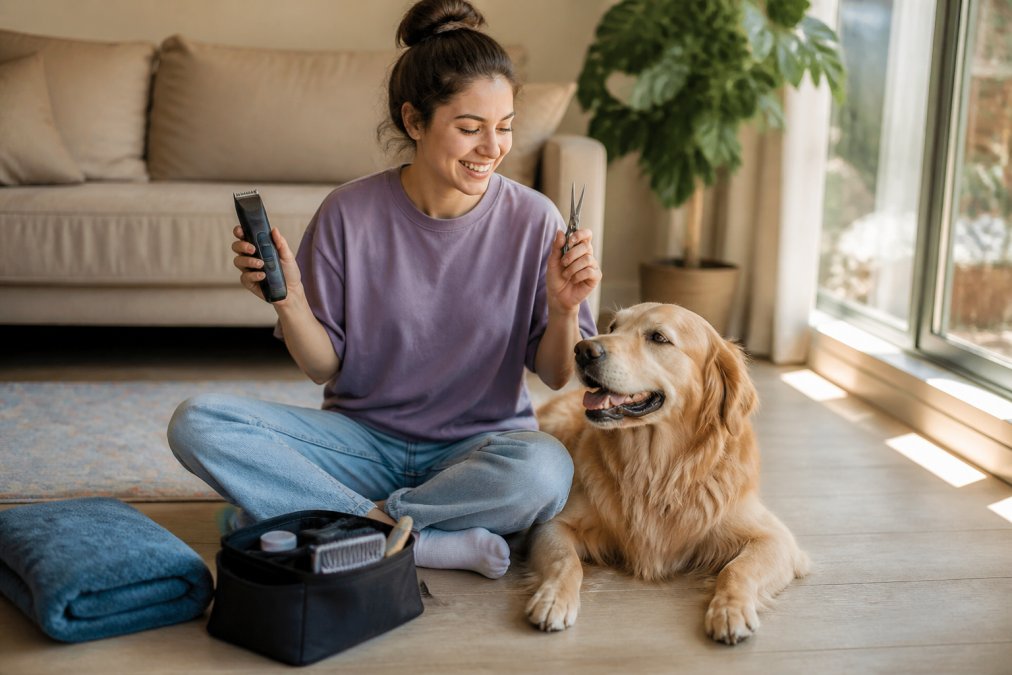
Dog grooming clippers are electric tools with a moving blade that cuts hair close to the skin.
What Clippers Do Best
Electric clippers win on speed and coverage. A cordless clipper lets you move around a wiggly dog without dragging a cord through the room.
They work best for:
- Short, smooth coats that need regular trimming
- Sanitary areas around the belly and rear
- Bulk removal before any scissor work begins
- Dogs who tolerate buzzing sounds
What Scissors Do Best
Grooming shears give you control a clipper can't match. They're the tool for faces, feet, and any spot where one wrong pass shows.
They shine for:
- Finishing work after clipping
- Hair around the eyes, muzzle, and paws
- Thinning shears that blend harsh lines
- Nervous dogs who flinch at vibration
Best Dog Grooming Clippers for Beginners
The best dog grooming clippers for beginners are quiet, cordless, and sold with guard combs included. Those three features remove the biggest early frustrations: scared pets, tangled cords, and uneven cuts. But "quiet" and "cordless" are marketing words until you know what numbers and features actually back them up.
Here is what to compare before you buy:
- Motor type. Rotary motors run quieter and cooler and are the better fit for nervous dogs and thick coats. Pivot motors are cheaper and more powerful but louder and hotter. For home use on one dog, rotary wins almost every time.
- Noise level. Most dogs startle above roughly 70 decibels, which is about the volume of a normal conversation pushed to a raised voice. Look for a clipper rated in the 50-65 dB range. If a listing doesn't publish a decibel rating, that's a signal.
- Blade system. Detachable blades (often labeled with a #10, #7F, or #4F) snap off for cleaning and swapping. A #10 blade is the standard for sanitary trims and paw pads; a #7F or #4F leaves more length for body work. Fixed-blade clippers are cheaper but limit you to one cutting length.
- Guard combs. These plastic or metal attachments clip over the blade to give you adjustable lengths, typically from about 1/8 inch up to 1 inch. They're how beginners avoid accidentally shaving a dog to the skin.
- Runtime and charging. Cordless clippers commonly run 45-90 minutes per charge, with a full charge taking 1-5 hours. If your dog's coat is thick or you groom in stages, a clipper that also runs corded while charging saves you from a mid-groom stall.
- Weight and grip. A clipper over about 1 pound gets heavy fast when you're holding it at odd angles around a wiggly dog. A slimmer barrel and a rubberized grip reduce hand fatigue on longer sessions.
A few practical notes that most beginner guides skip:
- Corded clippers never run out of power and often cost less, but the cord limits your movement and can snag on a nervous dog's legs. Cordless is worth the premium for most home groomers.
- A clipper that ships with a hard storage case and a blade brush is telling you the manufacturer expects you to maintain it. That matters, because a dirty blade runs hot.
- Cheap clippers often use proprietary blades you can't replace. If the blade dulls and there's no replacement part, the whole tool is disposable.
Corded vs. Cordless: A Quick Decision
If you groom one small, calm dog a few times a year, a corded clipper is fine and cheaper. If your dog is anxious, large, or thick-coated, or if you plan to groom every 4-6 weeks, go cordless with a corded fallback. The flexibility is worth it, and you'll finish the job in one sitting instead of two stressful ones.
How to Use Grooming Shears Safely
Safe scissor work comes down to three habits: sharp blades, small cuts, and a calm dog. Dull shears tear hair instead of cutting it, which pulls skin and causes nicks.
Follow this order:
- Brush the coat free of tangles first
- Hold shears with your thumb and ring finger only
- Cut away from the body, never toward it
- Work in small sections, checking length as you go
- Keep your free hand between the blade and skin
Preventing Clipper Burn on Dogs
Clipper burn happens when a hot or dull blade drags across skin. The result is redness, irritation, and a dog who fights the clipper next time. It's the most preventable grooming injury there is.
Professional Pet Grooming Kit →
Prevention comes down to four habits:
- Check blade temperature every few minutes with the back of your hand
- Use coolant spray or let the blade cool on a towel
- Replace or sharpen dull blades rather than pushing through
- Take breaks every 10 to 15 minutes
Matching Tools to Coat Type and Breed
Coat texture decides which tools earn their place in your kit. A tool that works on a poodle can be useless on a husky. Most guides stop at coat categories, but the real value is knowing which breeds fall into each one and what that means for your blade choice.
| Coat Type | Example Breeds | Best Primary Tool | Blade / Setting Notes |
|---|---|---|---|
| Short and smooth | Beagle, boxer, dachshund, Labrador | Electric clippers | #10 blade for sanitary areas; guard combs for body length |
| Curly or woolly | Poodle, bichon, Portuguese water dog | Clippers plus thinning shears | #10 or #7F blade; clip every 4-6 weeks to prevent matting |
| Double coat | Husky, German shepherd, golden retriever, Akita | Undercoat rake, then scissors | Do not shave; clippers can damage the topcoat |
| Silky or long | Yorkie, shih tzu, Maltese | Grooming shears | Precision trimming; avoid bulk removal with clippers |
| Wire or terrier | Schnauzer, Scottish terrier, wire fox terrier | Hand scissoring plus stripping knife | Preserves coat texture; clippers soften the wire coat |
Why Double Coats Are the Exception
Double-coated breeds are the single biggest source of home-grooming mistakes. These dogs have a soft undercoat for insulation and a longer topcoat that sheds water and dirt. The undercoat sheds seasonally, and the topcoat grows slowly.
Instead:
- Use an undercoat rake to pull loose undercoat out during shedding season.
- Follow with a slicker brush to lift the topcoat.
- Use scissors only for tidying feet, sanitary areas, and any stray long hairs.
- If the coat is impacted, work it out over several sessions or see a groomer.
Hair Density Changes the Plan
Two dogs of the same breed can have very different coat densities. Thick, dense coats need detachable blades and more frequent sharpening, a #10 blade that glides through a beagle will bog down in a shepherd's undercoat. Fine, sparse coats cut fast, so slow down and use a longer guard comb to avoid over-cutting.
When Breed Doesn't Tell the Whole Story
When in doubt, ask a groomer to identify your dog's coat type before you invest in tools. A five-minute conversation can save you from buying the wrong clipper or, worse, damaging a coat that takes months to recover.
Ergonomics, Maintenance, and Cost: What Home Groomers Overlook
Watch for these signs your tools are working against you:
- Blisters or calluses forming on your fingers
- Wrist ache the day after grooming
- Repeated dropped shears
Smitty's Pet Store curates grooming supplies with exactly this in mind, so you're not guessing which clipper or shear fits your dog's coat.
Frequently Asked Questions
Can I use regular scissors to groom my dog?
Household scissors are not designed for dog hair. They lack the sharp, curved blades needed for clean cuts and can pull or catch the coat, causing discomfort. They also put you at higher risk of nicking your dog's skin. Grooming shears, especially curved and thinning types, are made for coat work and give you more control. For most home grooming, a dedicated pair of grooming shears plus a good set of dog grooming clippers covers nearly everything.
Are clippers or scissors safer for beginners grooming dogs at home?
Clippers are generally safer for beginners working on the body, legs, and sanitary areas because the blade guard and comb attachments create a buffer between the metal and your dog's skin. Scissors demand steadier hands and more practice. Start with a cordless clipper with guard combs for bulk work, then add grooming shears for finishing touches around the face, paws, and tail once you build confidence.
How do I prevent clipper burn on dogs?
Clipper burn comes from heat buildup and friction. Take breaks every few minutes to let the blade cool, use a coolant spray or blade oil, and never press the blade hard against the skin. Check the blade temperature on your wrist before continuing. Keep your dog's coat clean and mat-free so the clipper glides instead of dragging. A clipper with adjustable speed settings also helps you slow down on sensitive areas.
What is the best way to maintain grooming scissors and clipper blades?
Oil clipper blades before and after each session, brush out trapped hair, and remove the blade to clean underneath. Store scissors in a dry case to prevent nicks and rust. Replace or sharpen blades when you notice pulling, snagging, or uneven cuts. Home users typically need professional sharpening once or twice a year depending on how often they groom. Dull tools cause more harm than good.