

Choosing the Right Cat Bed for Anxious Cats: A Calming Guide

Last Updated: November 4, 2026
Quick Summary
Choosing the right cat bed for anxious cats means picking a shape that feels like a hiding place, not an open stage. Enclosed, cave, or tent styles give a nervous cat cover on most sides, while a quiet spot and a slow introduction matter as much as the bed itself.
- An anxious cat usually wants walls, a roof, or a raised edge between itself and the room.
- Place the new bed in a quiet spot and leave it alone for a few days without picking the cat up.
- Run a two-week test with a folded blanket or draped towel before buying.
- Measure your cat asleep in its preferred position and add roughly two to three inches on each side.
- If your cat hides most of the day or over-grooms to bald patches, talk to your veterinarian first.
Table of Contents
- Why the Right Cat Bed Matters for an Anxious Cat
- Cat Bed Styles Compared: Which Shape Suits a Nervous Cat
- What a Bolster Cat Bed Offers a Cat That Curls Up
- Calming Cat Bed Benefits: Warmth, Security, and Better Rest
- How to Introduce a New Bed to a Nervous Cat
- Choosing the Right Cat Bed: A Decision Framework for Anxious Cats
- Shop Calming Cat Beds at Smitty's Pet Store
- Frequently Asked Questions
Why the Right Cat Bed Matters for an Anxious Cat
Choosing the right cat bed for anxious cats comes down to one idea: a nervous cat needs a resting spot that feels like a hiding place, not an open stage.
An anxious cat is one that startles easily, avoids handling, over-grooms, or hides during normal household activity. A bed alone won't cure that.
That distinction matters. Beds support calm; they don't replace veterinary care for serious anxiety.
How to Tell If Your Cat Is Actually Anxious
Watch the patterns, not a single moment. A cat that startles at the dishwasher once is normal. A cat that bolts every time someone walks past the hallway is telling you something.
Look for these signals:
- Hiding for most of the day, especially in low-traffic corners or under furniture
- Flattened ears, a tucked tail, or a crouched posture when approached
- Over-grooming to the point of bald patches
If several of these show up daily, talk to your veterinarian before assuming a bed will solve it. Anxiety with physical symptoms, sudden behavior changes, or appetite loss deserves a professional look.
Cat Bed Styles Compared: Which Shape Suits a Nervous Cat
Shape decides how exposed your cat feels, and that single factor drives most of the choice. A nervous cat usually wants walls, a roof, or a raised edge between itself and the room.
Here's how the main styles stack up:
| Style | What It Gives a Nervous Cat | Watch For |
|---|---|---|
| Enclosed or tent bed | Full cover on most sides, a private cave feel | Too small an opening makes a shy cat hesitate |
| Cave or covered bed | A hooded roof with a soft interior | Heat buildup in warm rooms |
| Bolster bed | Raised edges to press against while curled | Open top feels exposed to a very fearful cat |
| Donut bed | A deep, round nest for curling | Less support for cats that stretch out |
| Mat or blanket | Low-profile warmth anywhere | No sense of security for a hiding-prone cat |
Cave, Covered, and Enclosed Beds
These are the strongest first pick for a cat that hides. An enclosed bed wraps the cat on most sides, which mimics the tight spaces cats seek out on their own.
Our enclosed cat tent and pet bed is built for exactly this: a tent design that gives privacy, breathable waterproof fabric, and four sizes from S through XL. It works indoors and is lightweight and portable for travel.

One honest limit: a cat that has never used a covered bed may ignore it for a week. That's normal. More on introductions below.
Bolster, Donut, and Mat-Style Beds
A bolster cat bed suits the cat that curls into a tight ball and likes pressure against its back. The raised edges give something to lean into.
Donut beds do the same job with a rounder, deeper nest.
For a cat that stretches out flat and refuses to curl, a mat may actually be the better fit. Match the bed to the sleeping position you already see.
What a Bolster Cat Bed Offers a Cat That Curls Up
A bolster cat bed gives a curling cat two things at once: a soft floor to nest into and raised edges to press its spine and paws against.
The trade-off is openness. A bolster bed has no roof, so a cat that hides under furniture may still feel exposed.
Our pet bed and blanket set offers a deep, cozy design with raised edges, in five plush fabrics and three sizes. It is suitable for cats and dogs.

Calming Cat Bed Benefits: Warmth, Security, and Better Rest
Calming cat bed benefits come from three things working together: warmth, a sense of security, and less disturbance during sleep. Cats sleep a large share of the day, and poor rest shows up as irritability and more hiding.
A self-heating layer reflects body heat back without electricity. Our self-heating thermal pet blanket bed uses a thermo-reflective core and a soft faux lambswool exterior, and it's machine washable.

Security comes from shape and placement.
How to Introduce a New Bed to a Nervous Cat
Introduce a new bed slowly and let the cat choose it. Rushing the introduction is the most common reason a perfectly good bed sits unused for weeks.
Here's the sequence we recommend:
- Place the bed in the chosen quiet spot without calling attention to it.
- Put something that smells like your cat inside, such as a worn blanket or a favorite toy.
- Leave it alone for a few days. Don't pick the cat up and put it in.
- Toss a treat or a bit of kibble near the bed to build a positive association.
- Let the cat investigate on its own schedule, and reward any sniffing or stepping in.
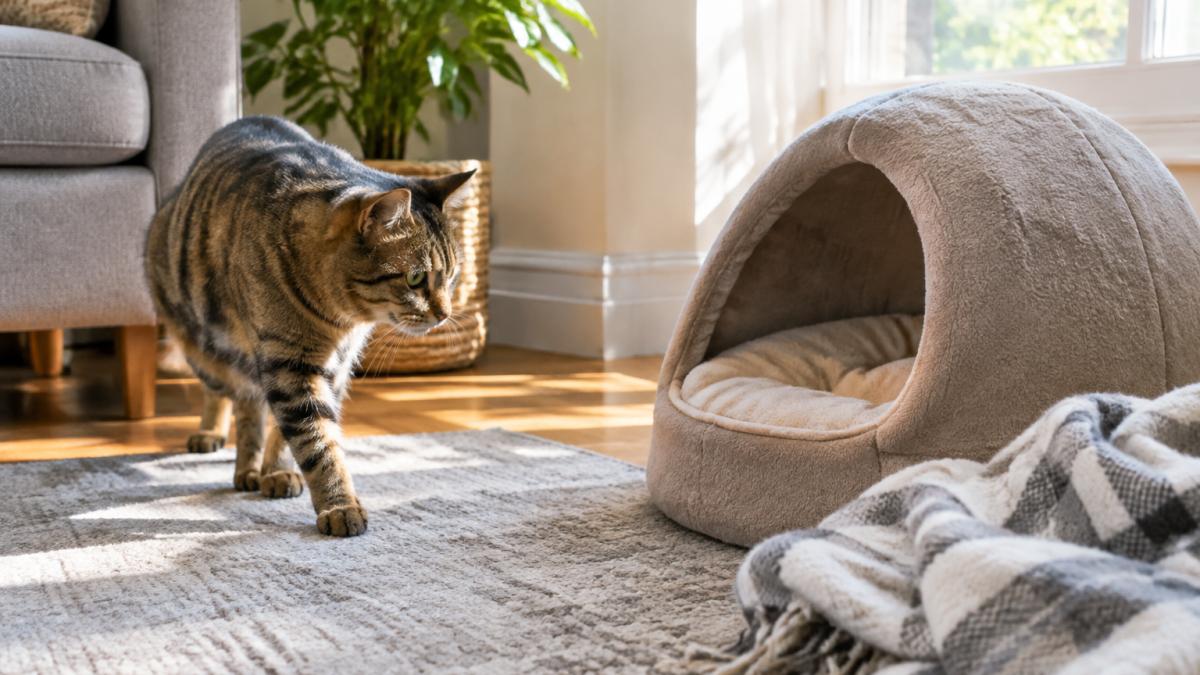
Watch out: moving the bed around during the first week resets the cat's confidence in it. Pick the spot and leave it there.
If your cat stays tense around the new bed after a couple of weeks, calming support may help alongside the introduction. Our guide to the best calming supplements for anxious pets covers the options worth discussing with your vet.
Choosing the Right Cat Bed: A Decision Framework for Anxious Cats
Most guides tell you to match the bed to your cat's personality. That advice is hard to act on because "personality" is not something you can watch. Behavior is. Use this decision path to turn what you already see into a bed choice, then test it before you commit.
Step 1: Observe where your cat already rests
Spend three or four days noting where your cat settles on its own, not where you put it. The pattern tells you more than any breed or age generalization.
- Under furniture, in closets, or behind curtains: your cat is choosing cover. Start with an enclosed or cave-style bed.
- On the back of a sofa or a windowsill, curled tight: your cat wants height and a pressed-in edge. Try a bolster or donut bed on a raised surface.
- Stretched flat on a hard floor or in a doorway: your cat avoids nests. A flat mat or low bolster is the better first test.
Step 2: Match the hiding style, not the label
A cat that hides under a bedspread is not the same as a cat that hides in a closet. The first wants light cover it can push off; the second wants walls. If your cat tucks under loose fabric, a cave bed with a low, wide opening will feel familiar. For households with more than one cat, our managing multiple pet households guide covers where to place each bed.
Step 3: Run a two-week test with a low-cost proxy
Before buying, simulate the bed. Fold a blanket into a nest in the spot you are considering, or drape a towel over two chairs to create a temporary cave. If your cat uses the proxy within a few days, the style is right and placement is close. If it ignores the proxy entirely, the problem is likely location or exposure, not the bed itself.
Step 4: Size for the sleep position you actually see
Measure your cat nose to tail base while it is asleep in its preferred position, then add roughly two to three inches on each side. A cat that curls needs less length but more depth; a cat that stretches needs length and a flat base. A bed that is too large feels exposed to a nervous cat, and one that is too small forces it to hang over the edge, which defeats the sense of cover.
Step 5: Decide when a bed is not the answer
A bed is one part of a comfortable environment. If your cat is hiding for most of the day, over-grooming to bald patches, refusing food when the house is busy, or showing sudden behavior changes, the bed is a small part of a larger plan. Talk to your veterinarian before spending more on bedding. A common pattern is that owners buy three or four beds before realizing the cat needs a quieter room, a predictable routine, or professional guidance.
Shop Calming Cat Beds at Smitty's Pet Store
A nervous cat doesn't need a fancy bed. It needs the right shape, a quiet spot, and a slow introduction. Get those three right and most cats claim their bed within a week or two.
Our pet bed and blanket set, enclosed tent bed, and self-heating blanket bed offer different options for cats with different sleeping habits.
Frequently Asked Questions
What features make a cat bed good for anxiety?
Look for a bed that gives your cat a sense of security: raised edges or a covered top, soft faux fur or plush fabric, and a size that lets them curl up snugly. Warmth matters too, since anxious cats often seek out warm spots. A washable cover keeps the bed fresh, which matters because cats avoid resting spots that smell unfamiliar. Place the bed in a quiet, low-traffic corner so your cat can retreat without being disturbed.
Do hooded or covered cat beds help with anxiety?
For many anxious cats, yes. A covered or enclosed bed mimics the hiding places cats naturally seek, blocking sightlines and reducing disturbance from foot traffic and noise. That said, not every cat wants to be fully enclosed. Watch how your cat sleeps: if they tuck under furniture or burrow under blankets, a cave-style bed is a strong fit. If they sprawl out in the open, a bolster bed with raised edges may suit them better.
How do I introduce a new bed to a nervous cat without scaring them?
Set the bed in a quiet spot your cat already favors, and leave it alone for a day or two so it picks up familiar household smells. Place a worn T-shirt or a blanket your cat already sleeps on inside. Never pick your cat up and put them in the bed. Instead, reward any investigation with treats or praise. If your cat ignores it for a week, try moving the bed to a different corner rather than forcing the issue.
Should I choose a heated bed for an anxious cat?
Some cats prefer warm spots, especially seniors and cats that seek out sunny spots or radiators. A self-heating blanket bed that reflects your cat's own body heat is a low-risk option because it needs no electricity. If you use an electric heated bed, choose one with a chew-resistant cord and a low, pet-safe temperature setting, and never let your cat use it unattended until you know how they respond.
When is a cat bed not enough for an anxious cat?
A bed helps with rest and retreat, but it does not treat underlying anxiety. If your cat hides almost constantly, stops eating, overgrooms, or shows distress when left alone, talk to your veterinarian. Those signs can point to medical issues or anxiety that needs a behavior plan. A calming cat bed is one part of a comfortable environment, not a substitute for professional guidance.
If your cat is still hiding after a careful introduction and a good placement, the next step is a calmer foundation: the right bed, the right spot, and the right support. Smitty's Pet Store can help you get there with a curated selection of calming beds, plush fabrics, and washable designs built for daily use. Get started with Smitty's Pet Store and give your anxious cat a resting spot it actually trusts.
