

Managing Multiple Pet Households: A Practical Guide

Table of Contents
- Why Managing Multiple Pets Requires a Different Approach
- Introducing New Pets to Existing Pets: A Step-by-Step Protocol
- Multi-Pet Household Feeding Schedule: Preventing Conflict at Mealtime
- Preventing Resource Guarding in Dogs and Other Pets
- Recognizing Signs of Stress in Multi-Pet Households
- Creating a Stable Routine and Individual Attention
- Financial Planning and Emergency Preparedness for Multiple Pets
- Pet-Proofing Your Home and Using Management Tools
Last Updated: August 15, 2026
Why Managing Multiple Pets Requires a Different Approach
Managing multiple pets is fundamentally different from caring for a single animal. Each pet has established routines, favorite spots, and a sense of ownership over their space. A new arrival disrupts this equilibrium, risking resource guarding, territorial aggression, and chronic stress that affects every animal's health.
You're not just doubling your workload, you're multiplying your decision points. Feeding becomes complex. Exercise needs vary wildly between a senior dog and a young cat. Grooming schedules, play preferences, and sleeping arrangements require individual consideration. This guide covers the practical systems that work: introducing new pets properly, preventing conflict at mealtime, recognizing when your pets are stressed, and building routines that actually work for a household with different species and ages.
Introducing New Pets to Existing Pets: A Step-by-Step Protocol
Introducing a new pet to an existing one is the single most critical moment for long-term household peace. Rush this process and you can create behavioral problems that take months to resolve.
The 3-3-3 Rule and Timeline Expectations
The 3-3-3 rule provides a realistic framework: three days for your new pet to decompress, three weeks to start settling into routines, and three months before you can truly assess whether the animals will coexist peacefully.
During the first three days, keep your new pet completely separate in a quiet space with their own food, water, litter box, and toys. Your existing pets can smell and hear the new arrival, but there's no direct contact.
The three-week phase is when controlled introductions begin. Start scent swapping by rubbing a towel on one pet and placing it near the other. Feed them on opposite sides of a closed door so they associate positive experiences with each other's presence. Allow brief visual contact through a cracked door or baby gate.
The three-month phase is the reality check. After twelve weeks of living together, you'll have a genuine sense of whether these animals can coexist peacefully or whether management strategies will be necessary long-term.
Managing First Meetings and Initial Interactions
When you're ready for the first face-to-face meeting, control every variable. Choose a neutral space, not a room where either pet spends significant time. Have both animals on leash or in carriers initially.
Keep the first meeting brief, five to ten minutes is enough. Watch for body language. Relaxed ears, soft eyes, and natural curiosity are good signs. Stiff posture, raised hackles, or intense staring suggest stress. If either pet shows stress signals, separate them and try again later.
Use high-value treats during these early meetings. When your pets are calm and near each other, reward them. This creates a direct link: "When the other animal is present, good things happen."
Supervise all interactions for at least the first month. Even if initial meetings go smoothly, unsupervised time can create problems.
Multi-Pet Household Feeding Schedule: Preventing Conflict at Mealtime
Feeding is where most multi-pet conflicts start. Food triggers territorial behavior and resource guarding in ways that almost nothing else does. A well-designed feeding strategy prevents these conflicts before they begin.
The core principle is simple: feed your pets separately. If you have a dog and a cat, feed the dog in the kitchen and the cat in a separate room or elevated area where the dog can't access it.
Separate Feeding Areas and Timing Strategies
Create designated feeding stations for each pet. Feed your pets at the same time so no one is finished and tempted to investigate another pet's bowl. Alternatively, feed them at staggered times so one pet finishes and moves away before the next begins eating.
Remove uneaten food after 15-20 minutes. This prevents grazing and eliminates the temptation for one pet to eat from another's bowl. For pets with different dietary needs, separate feeding becomes essential.
Multiple water bowls in different locations reduce competition and give each pet independent access.
Preventing Resource Guarding in Dogs and Other Pets
Resource guarding is when a pet shows aggressive or defensive behavior over something they value: food, toys, space, or attention. It ranges from subtle (stiffening body, turning away) to obvious (growling, snapping, biting). Left unaddressed, it escalates.
The mistake most pet parents make is punishing resource guarding. This actually makes it worse. A dog that growls over their food and gets scolded learns that people approaching their food is even more threatening.
Recognizing Early Signs and Training Interventions
Early signs of resource guarding are subtle. Your dog might eat faster when other pets are nearby, position their body between their bowl and other animals, or give a hard stare.
The intervention starts with prevention. Feed separately, as discussed above. The "trade up" game helps: while your dog is eating, approach slowly and calmly, then place a higher-value treat next to their bowl. Most dogs will leave their current food for something better. Repeat this regularly, and your dog learns that people approaching their food means something good happens.
If your dog shows intense resource guarding, stiff body, hard stare, growling, or snapping, consult a professional trainer or veterinary behaviorist.
Recognizing Signs of Stress in Multi-Pet Households
Stress in multi-pet homes often goes unnoticed because it's subtle. Your pets might not be fighting, but they could be chronically anxious, which affects their health and behavior.
Body Language and Behavioral Cues to Monitor
Stressed pets show predictable physical signs. A stressed dog might have ears back, a tucked tail, and a tense body. A stressed cat might hide more, avoid social areas, or show dilated pupils. Both species might have changes in appetite or bathroom habits.
Behavioral changes are equally important. A normally social pet that becomes withdrawn is stressed. A calm pet that suddenly becomes hyperactive or aggressive is stressed. Changes in grooming habits, either excessive or neglected, indicate stress. So do changes in sleep patterns.
In multi-pet households, watch for avoidance behaviors. If one pet consistently stays in a separate room, they're likely stressed by another animal's presence. Some pets show stress through physical symptoms like digestive issues, skin problems, or excessive shedding. Others show it through behavioral problems like house soiling, destructive behavior, or aggression.
When to Seek Professional Help
If your pets show consistent stress signals or behavioral problems that don't improve with management changes, consult your veterinarian first. Rule out medical issues. Once medical causes are eliminated, ask for a referral to a veterinary behaviorist or certified professional dog trainer.
A professional can assess whether your pets can coexist peacefully or whether they need permanent separation.
Creating a Stable Routine and Individual Attention
The most overlooked element of managing multiple pets is consistency. Pets thrive on predictability. When routines are stable, stress decreases and behavioral problems often resolve on their own.
Daily Schedules That Work for Multiple Pets
Build a daily schedule that accommodates each pet's needs. Write it down. A sample schedule might look like: 6:30 AM wake-up and senior dog walk; 7:00 AM feed all pets in separate areas; 8:00 AM younger dog exercise session; 12:00 PM midday bathroom break; 2:00 PM interactive play with cat; 5:00 PM second dog walk; 6:00 PM feed all pets again.
The exact times matter less than the consistency. Your pets learn when to expect feeding, exercise, and attention. This predictability reduces anxiety and behavioral problems.
One-on-One Bonding Time and Personalized Care
Individual attention is non-negotiable. Even in a multi-pet household, each pet needs dedicated time with you. Schedule individual time with each pet every day, 15 to 30 minutes is enough. Use this time for activities that pet enjoys: a walk, play session, training, grooming, or quiet cuddle time.
During this time, no other pets are present. You're creating a space where each animal gets your full focus. Individual time also helps you notice changes early, allowing you to detect health or behavioral issues before they escalate.

Financial Planning and Emergency Preparedness for Multiple Pets
Managing multiple pets comes with financial realities that many new pet parents underestimate. Planning ahead prevents financial stress and ensures your pets get the care they need.
Budgeting for Multiple Pets and Pet Insurance
Multiple pets mean multiple food bills, multiple vet visits, and multiple emergency expenses. A rough estimate: each pet costs between $500 and $2,000 annually for basic care. Emergencies can cost thousands.
Start with a dedicated pet care budget. Track what you actually spend for one month, then project annually. Include food, litter, toys, grooming supplies, routine vet care, and preventative medications. Then add a buffer for unexpected expenses.
Pet insurance becomes increasingly valuable in multi-pet households. With multiple animals, the likelihood of at least one needing unexpected care increases. Compare plans that cover multiple pets; some insurers offer discounts for insuring more than one animal.
Emergency funds matter too. Set aside money specifically for pet emergencies. Preventative care reduces emergency costs by catching problems early when they're cheaper to treat.
Emergency Evacuation and Disaster Planning
Multi-pet households need specific emergency plans. If you need to evacuate quickly, can you safely transport all your pets? Do you have carriers or crates for each?
Create an emergency kit for each pet. Include food, water, medications, medical records, recent photos, and comfort items. Keep these kits accessible so you can grab them quickly.
Identify pet-friendly hotels or shelters in your area. Many standard emergency shelters don't accept pets. Microchip each pet and keep registration information current. In the chaos of evacuation, pets can get separated. A microchip gives them a way home even if they lose their collar.
Pet-Proofing Your Home and Using Management Tools
Your physical environment either supports or undermines managing multiple pets. A well-designed space reduces conflict, prevents accidents, and makes your life significantly easier.
Baby Gates, Exercise Pens, and Separate Safe Spaces
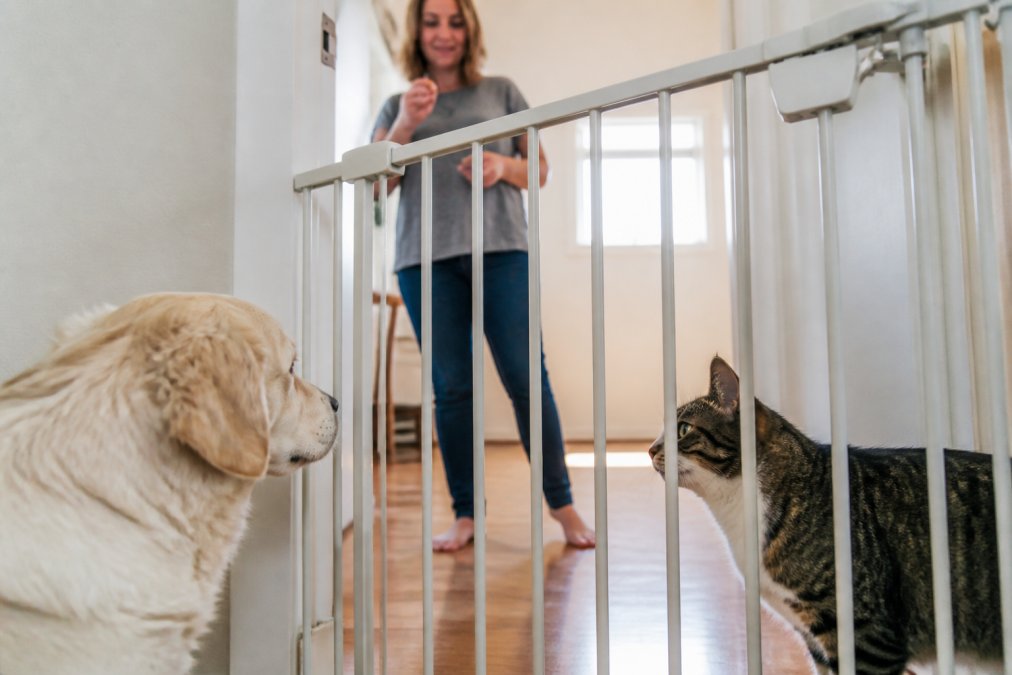
Baby gates are among the most useful tools for managing multiple pets. They allow visual and olfactory contact while maintaining physical separation. A gate between the kitchen and living room lets your dog see family activity while preventing them from accessing the cat's litter box or food.
Exercise pens create temporary enclosures for individual pets. Useful for giving one pet safe space while others have freedom, or for containing a new pet during the introduction phase. Crate training serves multiple purposes: a safe space where a pet can retreat, a management tool for preventing unsupervised interaction, and a training aid.
Separate safe spaces are essential. Each pet should have a room or area where they can retreat without encountering other animals. Vertical space matters for cats. Cat trees, shelves, and wall-mounted perches give cats escape routes and elevated spaces where they feel safe.
Environmental Enrichment for Each Pet's Needs
Enrichment reduces stress and behavioral problems. A bored pet is more likely to create conflict or develop destructive behaviors. Enrichment appropriate to each pet's species and personality keeps them mentally stimulated and emotionally satisfied.
For dogs, enrichment includes walks, play, training, and puzzle toys. Puzzle toys that dispense treats engage problem-solving instincts. Rotating toys keeps novelty high.
For cats, enrichment includes climbing structures, hunting games, and interactive play. Feather wands, laser toys, and toys that mimic prey movements engage their predatory instincts. Window perches provide visual enrichment.
Match enrichment to each pet's life stage and temperament. A young, high-energy dog needs significantly more than a senior dog. Smitty's Pet Store offers a curated selection of pet supplies, which may include enrichment items for various pet types, such as puzzle toys, treat-dispensing toys, climbing structures, and chewing materials.
Managing multiple pets is challenging, but it's deeply rewarding. When your household runs smoothly, your pets are happy, and you feel confident in your approach, the effort becomes invisible. The strategies in this guide, proper introductions, separated feeding, stress recognition, consistent routines, and smart environmental design, create the foundation for a peaceful, thriving multi-pet home. Start with the area causing you the most stress, implement one change at a time, and build from there. With patience and intention, your multi-pet household can become a harmonious space where every animal feels secure and loved.
Frequently Asked Questions
What is the 3-3-3 rule for introducing new pets to a household?
The 3-3-3 rule is a timeline for introducing new pets to existing pets. The first 3 days focus on adjustment to the new environment, the next 3 weeks on gradual introductions and bonding, and the final 3 months on settling into household routines. This phased approach reduces stress and allows pets to build positive associations with each other at their own pace.
How do you prevent resource guarding in multi-pet households?
Prevent resource guarding by feeding pets in separate areas, removing toys and chews when conflicts arise, and using positive reinforcement when pets show calm behavior around valued items. Feed high-value items like bones or puzzle toys in individual spaces. Practice trading exercises where your pet gives up an item for something better, building trust and reducing territorial behavior over time.
What are the signs of stress in multi-pet households?
Watch for behavioral cues like excessive hiding, loss of appetite, aggression, or withdrawal from family activities. Body language signals include flattened ears, tucked tails, stiff posture, or avoidance of other pets. Some pets may show separation anxiety or destructive behavior. If stress persists, consult your veterinarian to rule out medical issues and consider professional behavioral assessment.
How should you schedule feeding time for multiple pets with different dietary needs?
Create a multi-pet household feeding schedule by feeding pets in separate rooms or using baby gates to prevent access to other pets' food. Feed senior pets and those with special diets at different times if needed. Use puzzle toys and enrichment feeders to slow eating and reduce competition. Consistency matters, feed at the same times daily to establish routine and reduce anxiety around mealtime.
This article was written using GrandRanker