

Cat Grooming Gloves Review for Long Hair: Top Picks

Table of Contents
- Why Long-Haired Cats Need a Different Grooming Approach
- Cat Grooming Gloves Review for Long Hair: Quick Comparison Table
- How to Groom a Long Haired Cat: Step-by-Step Routine
- The Best Brush for Long Haired Cat: Glove vs. Comb vs. Deshedding Tool
- Cat Shedding Solutions: Gloves, Vacuums, and Daily Maintenance
- Sizing, Ergonomic Fit, and Coat Texture: What Most Reviews Miss
- Sanitization and Hygiene Protocols for Multi-Pet Households
- Conclusion: Choosing the Right Grooming Tool for Your Cat
- Frequently Asked Questions
Last Updated: September 16, 2026
Why Long-Haired Cats Need a Different Grooming Approach
Long-haired cats require a different grooming approach because their two-layer coat traps loose fur instead of releasing it, which makes mats and tangles far more likely than on a short-haired cat. This guide from Smitty's Pet Store covers what actually works for that coat type, and where most cat grooming gloves fall short.
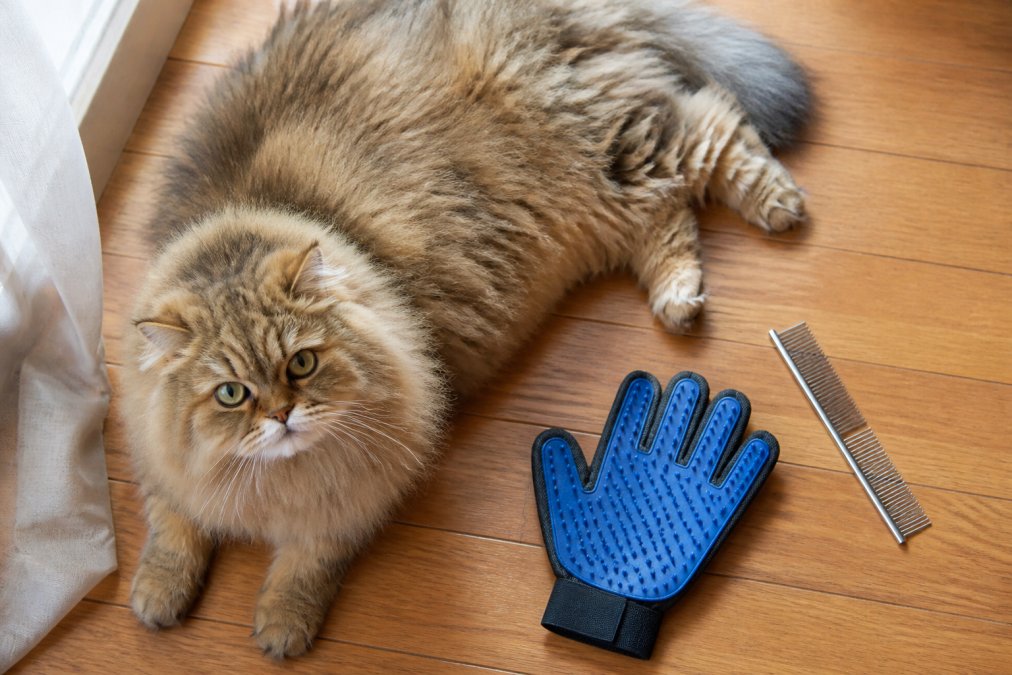
Cat Grooming Gloves Review for Long Hair: Quick Comparison Table
The quick answer: for long-haired cats, use a glove for daily surface hair and bonding, and a comb or deshedding tool for the undercoat. No single tool covers both jobs.
Here is how the four tools we recommend compare.
| Tool | Price | Best For | Coat Layer |
|---|---|---|---|
| Pet Grooming Brush | $25.34 | Daily surface hair, gentle massage | Surface |
| Vacuum Brush Attachment | $30.82 | Mess-free deshedding, mats and tangles | Undercoat + surface |
| Floating Hair Removal Brush | $26.17 | Size-matched fit for cats and dogs | Surface |
| Dog Grooming Comb | $24.92 | Detangling long fur, finishing pass | Undercoat + surface |
How to Groom a Long Haired Cat: Step-by-Step Routine
Learning how to groom a long haired cat comes down to five steps, done in the same order every time, in short sessions. Consistency matters more than duration.

- Start calm. Let the cat settle on a familiar surface. Keep the first sessions to a few minutes.
- Work the surface first. Run the Pet Grooming Brush with the direction of the coat to lift loose fur and get the cat used to the sensation.
- Go against the grain gently. Short strokes lift more surface hair and give a massage-like feel that most cats tolerate well.
- Follow with the comb. The Dog Grooming Comb reaches the undercoat, separates tangles, and catches what the glove left behind. Pay attention to the armpits, behind the ears, and the tail base.
- Finish with a treat. End on a positive note so the routine stays easy to repeat.
The Best Brush for Long Haired Cat: Glove vs. Comb vs. Deshedding Tool
The best brush for a long haired cat is a comb or deshedding tool for the undercoat, paired with a glove for daily surface work. Each tool solves a different problem, and the mistake is expecting one to do all three jobs.

- Grooming gloves: Best for loose surface fur, massage, and cats that dislike rigid tools. They will not clear a dense undercoat on their own.
- Combs: Best for detangling and finishing. The Dog Grooming Comb uses stainless steel teeth and a non-slip handle for a controlled pass through long fur.
- Deshedding tools: Best for shedding season, when the undercoat releases in volume. The vacuum attachment collects hair as you work instead of scattering it.
Cat Shedding Solutions: Gloves, Vacuums, and Daily Maintenance
Effective cat shedding solutions combine daily surface removal with periodic deep deshedding, because loose fur you catch at the source never reaches your furniture. The mechanism is simple: a long-haired cat's undercoat releases loose fur continuously, but the outer coat traps it against the skin instead of letting it fall. A glove lifts what's already at the surface. It does not reach the undercoat band where the bulk of the shedding load sits.
How to layer the tools in the right order
The order matters more than the individual tools. A practical sequence for a long-haired cat:
- Glove pass first, with the grain. This lifts surface fur, warms the coat, and gets the cat used to being handled. Two minutes is enough.
- Comb pass second, working section by section. The comb separates tangles while they're still loose and finds the undercoat band the glove couldn't reach. Pay attention to the armpits, behind the ears, and the tail base, the three spots where mats start.
- Deshedding pass third, during shedding season only. The vacuum attachment or a manual deshedding tool clears the undercoat the comb loosened. Doing this before the comb means you're pulling at tangles the comb hasn't separated yet, which is how cats learn that grooming hurts.
- Glove pass last, as a finisher. A quick glove stroke smooths the coat, picks up the flyaway fur the comb and deshedder loosened, and ends the session on a sensation most cats enjoy.
A realistic frequency rhythm
- Daily: a two-minute glove pass to catch surface hair and keep the coat familiar to touch.
- Two to three times weekly: a comb pass to separate tangles before they tighten.
- Weekly in shedding season: a deshedding pass with the vacuum attachment to clear the undercoat.
- After every session: remove trapped fur from the tool and store it dry.
Grooming frequency matters more than any single tool. A cat groomed briefly every day sheds less than one groomed thoroughly once a month, because the daily pass catches loose fur before it works its way into a mat. The weekly deep pass handles what the daily pass can't reach.
Sizing, Ergonomic Fit, and Coat Texture: What Most Reviews Miss
Fit and coat texture decide whether a tool works, and most reviews skip both. This is the section the top-ranking "best of" lists never write, because it requires you to think about your hand and your cat's coat instead of just picking a product off a list.
Why glove fit matters more than tip count
A grooming glove transfers force through your palm and fingers. If the glove gaps at the wrist, the palm slides during a stroke and you compensate by gripping harder, which is exactly the pressure that makes a cat flinch and bolt. If the fingers are too long, the silicone tips bunch at the fingertips and drag instead of glide. If the fingers are too short, the tips sit on your knuckles and you lose the fine control you need around the armpits and tail base.
- Palm width: Lay your hand flat and measure across the widest part of your palm, below the knuckles. Most adjustable-strap gloves are built around a range, not a single size, so match your palm width to the strap's adjustment range rather than to a "small/medium/large" label.
- Finger length: Your fingertips should reach within about a quarter inch of the tip of each glove finger. More slack than that and the tips fold; less and the glove pulls against your nail beds.
- Wrist closure: The strap should sit snug enough that you can't slide the glove off with a gentle tug, but loose enough that you can flex your wrist fully. A glove that passes the tug test but restricts wrist flex will tire your hand within a few minutes.
Coat texture changes the technique, not just the tool
Long hair is not one coat. Two cats with the same coat length can need different handling:
- Silky coats (think a coat that falls in smooth, separated strands and sheds loose fur readily) release surface hair with almost no resistance. A glove alone handles most of the daily load here, and a light comb pass once or twice a week is enough to catch what the glove lifts.
- Woolly or cottony coats (a dense, slightly crimped undercoat that holds loose fur close to the skin) are the ones that mat. On these cats, the glove is a warm-up and a finishing tool, not the main event. The comb or deshedding tool does the real work, and the glove smooths the coat afterward and picks up the flyaway fur the comb loosened.
- Double coats with a harsh outer layer (a coarser topcoat over a soft undercoat) tend to trap loose undercoat in a band near the skin. On these cats, work the glove with the grain first to lift the topcoat, then follow with a comb that reaches the undercoat band.
Sizing the tool to the cat, not just your hand
A brush sized for a large dog drags on a small cat because the head is too wide to follow the curve of the body. The Floating Hair Removal Brush comes in three sizes, from a small model suited to cats up to a large model for bigger animals, so you can match the tool to the cat rather than forcing one size to fit all.

Sanitization and Hygiene Protocols for Multi-Pet Households
Sanitization protects every pet in the house, and it's the step owners skip most often. Dander, loose fur, and skin oils transfer between animals on shared tools, which is why multi-pet households should clean grooming tools after each use rather than weekly.
A simple protocol:
- Remove trapped fur from the bristles or teeth after every session.
- Wash the tool by hand with warm water, then dry it completely before storage.
- Keep one tool per pet where skin conditions are present, and never share.
- Store tools dry, away from damp areas where bacteria thrive.
Conclusion: Choosing the Right Grooming Tool for Your Cat
The right setup for a long-haired cat is a glove for daily surface work and a comb or deshedding tool for the undercoat, cleaned after each session and sized to your cat. Get those three things right and grooming stops being a chore.
Frequently Asked Questions
What is the best grooming tool for long-haired cats?
The best tool depends on your cat's coat. A stainless steel comb like the Dog Grooming Comb ($24.92) works well for detangling, while the Pet Grooming Brush ($25.34) handles loose fur and surface hair. For heavy shedding, the Floating Hair Removal Pet Grooming Cat Supplies ($26.17) comes in three sizes to match your cat. Many owners use a combination: a comb for mats and a brush for daily deshedding.
Do grooming gloves effectively remove loose fur from long-haired cats?
Grooming gloves can remove surface hair and provide a gentle massage, but long-haired cats often have dense undercoats that gloves alone cannot fully reach. For best results, use a glove for bonding and light deshedding, then follow with a stainless steel comb or deshedding tool to remove loose undercoat hair and prevent mats. This two-step approach keeps fur collection manageable and reduces hairballs.
How do I clean my cat grooming gloves after use?
Most grooming gloves and brushes with silicone or stainless steel bristles can be hand washed with warm water and mild soap. Rinse thoroughly and let them air dry completely before storing. For multi-pet households, sanitize between pets to avoid spreading dander or skin irritants. The Pet Grooming Brush Tool Pet Vacuum Cleaner Brush Attachment ($30.82) is easy to clean: hand wash with warm water and keep dry after cleaning.
Can grooming gloves help reduce shedding in long-haired cats?
Yes, regular grooming with gloves or brushes removes loose fur before it ends up on furniture. During shedding season, daily sessions with a deshedding tool like the Floating Hair Removal Pet Grooming Cat Supplies ($26.17) can significantly cut down on hair around your home. Pair with a vacuum attachment like the Pet Grooming Brush Tool ($30.82) to capture hair directly, reducing cleanup time and pet dander in the air.
Are silicone grooming gloves safe for sensitive cat skin?
Silicone-tipped gloves are generally gentle, but always check for non-toxic materials and adjust pressure. Cats with sensitive skin or dermatological issues may prefer a soft brush or comb with rounded tips. The Dog Grooming Comb ($24.92) features stainless steel teeth and an ergonomic non-slip handle, allowing gentle strokes. Start with light pressure on sensitive areas like the belly, and stop if your cat shows signs of discomfort.
Grooming a long-haired cat is easier when the tools match the coat. Browse Smitty's Pet Store for grooming brushes, combs, and deshedding tools chosen to keep your cat comfortable and your home fur-free. Get started with Smitty's Pet Store and build a grooming routine your cat actually tolerates.