

Best Wearable Tech for Senior Dogs 2026

Table of Contents
- Why Wearable Technology Matters for Senior Dogs
- Quick Comparison: Wearable Options for Older Dogs
- GPS Tracking and Location Safety Without Subscriptions
- Activity Monitoring for Senior Dogs: What the Data Shows
- Pet Health Monitor Wearables: Tracking Vital Changes
- Senior Dog Mobility Monitoring and Comfort Fit
- How to Choose the Right Wearable for Your Aging Dog
- Frequently Asked Questions
Last Updated: October 20, 2026
Why Wearable Technology Matters for Senior Dogs
As dogs age, they move slower, tire faster, and sometimes wander. Wearable technology for senior dogs tracks location, monitors activity, and detects behavior changes that may signal health issues.
At Smitty's Pet Store, we've helped pet parents navigate wearable options for aging dogs. The right device adds peace of mind without stressing your dog's routine, but not all wearables suit dogs with sensitive skin, reduced mobility, or anxiety around new gear.
This guide covers the best wearable tech for senior dogs in 2026, focusing on comfort, battery life, and practical health insights, plus which features are worth the investment and which you can skip.
Quick Comparison: Wearable Options for Older Dogs
| Device Type | Best For | Key Feature | Price Range |
|---|---|---|---|
| GPS Trackers | Location safety, escape prevention | Real-time location updates | $30-$80 |
| Activity Monitors | Exercise tracking, rest patterns | Daily step count and sleep data | $25-$60 |
| Health Monitors | Vital sign tracking, early warnings | Heart rate, temperature, respiratory rate | $40-$150 |
| Collar Holders | AirTag integration, lightweight tracking | Works with existing ecosystem | $20-$25 |
GPS Tracking and Location Safety Without Subscriptions
Escape risk is the biggest concern for senior dog owners, since older dogs sometimes bolt when confused or spooked. A GPS tracker gives you real-time location data so you can act fast.
The G12 Pet Navigator Locator Smart Wear GPS Cat Dog Anti-lost Tracking from Smitty's Pet Store is a one-time purchase at $38.86, with no recurring monthly fees. Its durable ABS PC build withstands outdoor conditions while staying lightweight enough for aging dogs.

GPS tracking is critical because senior dogs are less likely to respond to calls as their hearing declines. A device that pinpoints their location removes guesswork during the panicked first minutes after an escape.
Real-time tracking also helps with cognitive decline, when older dogs forget their way home from familiar walks. A GPS tracker lets you retrieve them before they panic or get exhausted.
Activity Monitoring for Senior Dogs: What the Data Shows
Activity trackers measure daily movement, rest patterns, and exercise intensity, revealing whether your senior dog is moving less, sleeping more, or struggling with mobility, all early warning signs of health decline.
Most consumer trackers use a three-axis accelerometer, sometimes with a gyroscope, to count steps and classify motion. The sensor measures motion, not effort: a 70-pound Labrador and a 12-pound Dachshund generate very different signatures for the same walk, and most apps calibrate to breed or size only loosely.
Senior dogs typically need 30-60 minutes of activity daily, depending on size and health, and a wearable tracks whether they hit that target.
Reading trends instead of single days
The useful signal is a rolling baseline: a 7-day average is more stable than a daily number, and a 14-day comparison is where genuine shifts stand out. Flag to your vet a sustained drop of roughly a third or more in daily active minutes across two weeks, a shift in rest-to-active ratio, or new nighttime activity in a dog that previously slept through. One bad day after a thunderstorm or skipped walk is noise, not a trend.
Where the data gets noisy
- Scratching and shaking register as activity. A dog with allergies or skin issues can post high 'active minutes' while barely moving. If your app separates scratch or shake events, watch that channel separately.
- Collar vs. harness placement changes readings. A collar-mounted sensor swings more during head movement; a harness-mounted sensor picks up gait more cleanly. Pick one placement and keep it consistent so your baseline stays comparable.
- Connectivity gaps create false dips. If the device loses its Bluetooth or cellular link for a day, the app may log a low-activity day that never happened. Check sync status before drawing conclusions.
- Battery-saving modes reduce sampling. Many trackers drop from continuous sampling to periodic checks to preserve battery, which smooths out short bursts of activity. Know which mode your device is in.
Sharing activity data with your veterinarian
Bring a printed or exported 14- to 30-day view rather than a single screenshot. Vets can use the trend alongside a physical exam, but the wearable cannot diagnose arthritis, cardiac disease, or cognitive dysfunction alone. 'His active minutes fell from about 45 to about 25 over three weeks, and his nighttime rest became fragmented' is far more useful than 'he seems slower lately.'
Activity monitors don't diagnose problems; they flag changes. If your senior dog's pattern shifts, schedule a vet visit rather than panicking.
Pet Health Monitor Wearables: Tracking Vital Changes
Health-focused wearables track heart rate, respiratory rate, temperature, and sleep quality. For senior dogs, these metrics matter because changes often precede visible symptoms.
What the sensors actually measure
Most pet health wearables use one of three approaches. Photoplethysmography (PPG), the green-LED optical method used in human smartwatches, reads blood-flow changes to estimate heart rate and works best on thin fur with good skin contact, which is why placement matters. Accelerometer-derived respiration infers breathing rate from subtle movement during rest, so it's only reliable when the dog is still. Contact thermometry reads surface or ear-canal temperature, which tracks body temperature loosely and is affected by ambient conditions and fur.
That engineering detail explains the practical rule: resting readings are far more trustworthy than active ones. A heart rate captured mid-walk is mostly motion artifact. A resting heart rate captured during a nap is the number worth comparing week to week.
Reference ranges and what to watch
A senior dog's normal resting heart rate is commonly cited at 60-100 beats per minute, varying with size, smaller dogs run faster, larger dogs slower. Resting respiratory rate is typically in the high teens to low twenties per minute, and temperature is generally around 101 to 102.5°F. These are reference points, not diagnostic thresholds. Consistently elevated resting heart rates above roughly 110, climbing respiratory rates, or out-of-band temperatures are worth mentioning to your vet, the device flags a pattern, not a diagnosis.
Condition-specific use cases
- Arthritis and mobility decline: activity and gait changes often precede an obvious limp; watch for shorter active bursts and longer rest periods.
- Cardiac disease: resting heart rate and respiratory rate trends can help owners notice changes between scheduled checkups, but echocardiography and veterinary exam remain the diagnostic standard.
- Cognitive dysfunction: fragmented sleep and nighttime restlessness are among the earliest owner-visible signs; a sleep-trend chart can make the pattern concrete.
- Allergies and skin disease: scratch and shake detection, where the app offers it, can show whether a flare is building before lesions are obvious.
False alerts and data quality
Expect noise: loose collars, thick double coats, wet fur, and cold weather degrade optical heart-rate readings, and a shaking or scratching dog can generate an alarming spike. Ignore isolated spikes and look for a reading that repeats across several days at rest. If you can set alert thresholds, set them conservatively, a false 2 a.m. alarm erodes trust faster than a missed minor fluctuation.
G12 Pet Navigator Locator Smart Wear GPS Cat Dog Anti-lost Tracking Tracking →
Sharing health data with your vet
Bring a timeline, not a single number. 'Resting heart rate averaged about 85 for three weeks, then climbed to about 105 for five days, with sleep disrupted on three of those nights' gives your vet something to work with. Wearables measure vital signs but don't interpret them: an elevated heart rate could mean pain, anxiety, exertion, or a genuine cardiac issue. The wearable is a tool for earlier detection, not a replacement for veterinary care.
Senior Dog Mobility Monitoring and Comfort Fit
Senior dogs often have arthritis, joint pain, or reduced muscle mass, so a wearable that's too heavy, too tight, or irritating makes mobility worse. Comfort fit is non-negotiable for aging dogs.
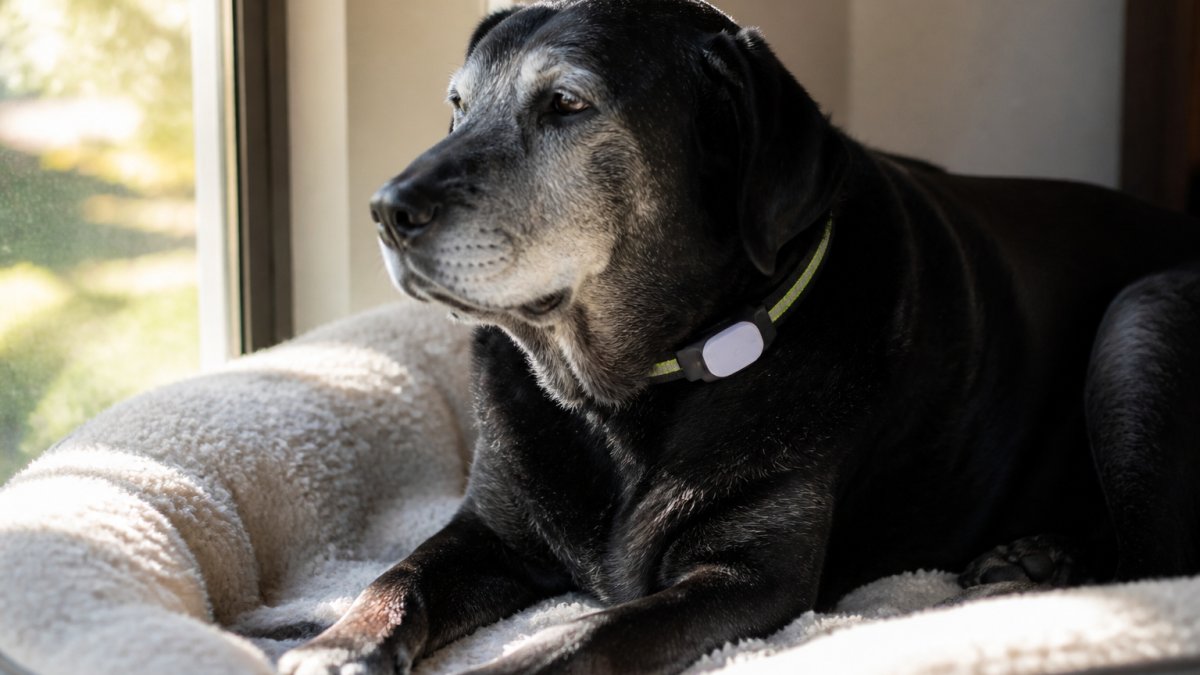
The best wearables for senior dogs weigh under 2 ounces and use adjustable, padded straps.
Smitty's Pet Store offers two collar options designed with senior dog comfort in mind. The Reflective Collar Waterproof Holder Case For Airtag ($21.54) provides a lightweight, adjustable nylon holder that protects your device while staying comfortable for all-day wear.

A collar that's too snug restricts neck movement; too loose and it slides around as a distraction.
Waterproof materials matter because senior dogs often have incontinence issues or spend time in damp environments. A moisture-absorbing collar traps bacteria and irritates skin, so look for quick-drying nylon or synthetics.
How to Choose the Right Wearable for Your Aging Dog
Start by identifying your primary need. Are you most concerned about location safety? Activity decline? Health monitoring?
If location safety is your main concern: Choose a GPS tracker like the G12 Pet Navigator. It's a one-time purchase with no subscription, making it affordable for long-term use.
If you want activity and rest tracking: Look for devices that measure daily movement and sleep patterns. These give you a baseline to compare against over time.
If health monitoring is your priority: Choose a wearable that tracks vital signs like heart rate and temperature. Pair it with regular vet checkups so your vet can interpret the data correctly.
For comfort and fit: Always choose adjustable, lightweight options. Reflective collars improve visibility during walks.
Consider your tech comfort level: some wearables need smartphone apps and Bluetooth setup, while others use simple plug-in chargers and manual checks. A simpler device can reduce frustration and increase actual use.
Budget matters, but don't choose on price alone.
Choosing the right wearable for your senior dog comes down to comfort, reliability, and your specific concerns. Start with the G12 Pet Navigator GPS tracker for location safety, then add a comfortable collar like our Reflective Camouflage Comfortable Dog Collar to ensure all-day wearability.

Frequently Asked Questions
What is the best wearable tech for senior dogs?
The best wearable tech for senior dogs depends on your priorities. GPS trackers like the G12 Pet Navigator ($38.86) offer location safety without ongoing subscription fees, making them ideal for dogs prone to wandering. For comfort-conscious pet parents, the Reflective Collar Waterproof Holder ($21.54) pairs with AirTags for affordable tracking. The key is choosing a lightweight, adjustable device that won't stress aging joints or sensitive skin.
Do dog GPS trackers require a subscription?
Not all. The G12 Pet Navigator is a one-time purchase with no monthly subscription fees, making it cost-effective for long-term tracking. However, subscription-based trackers often offer real-time live updates and broader coverage areas. For senior dogs with mobility concerns or escape risk, a subscription-free option like the G12 removes the ongoing financial burden while still providing essential location data.
Can a dog activity monitor detect changes in mobility in older dogs?
Yes. Activity monitors track daily movement patterns, rest periods, and exercise levels, making subtle changes in mobility visible over time. For senior dogs, this data is valuable: a sudden drop in activity can signal pain, arthritis, or illness worth discussing with your vet. Activity monitoring helps you catch health changes early rather than waiting for obvious symptoms to appear.
Are smart collars and wearable trackers safe for senior dogs?
Safety depends on fit and material. Nylon collars like Smitty's Reflective Camouflage Collar ($22.02) are durable and adjustable, reducing skin irritation on sensitive older dogs. The key is ensuring the collar isn't too tight (you should fit two fingers underneath) and checking regularly for hair loss or chafing. Lightweight trackers minimize strain on aging necks and joints, making comfort-first designs essential for senior dogs.