

Are Curated Pet Supplies Worth the Extra Cost?

Table of Contents
- How to Compare Curated Pet Supplies vs. Big-Box Alternatives
- Durable Dog Collars: The Real Cost of Replacing Cheap Gear
- Are the Best Pet Subscription Boxes Cost-Effective?
- How to Choose Safe Dog Toys Without Overpaying
- Long-Term Health Cost Avoidance: The Hidden ROI of Quality Supplies
- Waste Reduction and Sustainability: Do Eco-Friendly Materials Justify the Price?
- Personalization vs. Standardization: Which Approach Saves More?
- Frequently Asked Questions
Last Updated: September 17, 2026
How to Compare Curated Pet Supplies vs. Big-Box Alternatives
The question of whether curated pet supplies are worth the extra cost comes down to one thing: what you're actually buying. A big-box store sells you a product at a retail price. A curated retailer sells you a product that someone already vetted, sized, and matched to your pet. That vetting has a cost, and whether it's worth paying depends on how you calculate value.
This guide from Smitty's Pet Store breaks down the math. Below, we'll show you exactly how to compare price per unit, durability, and long-term health costs so you can decide for yourself.
The Price Per Unit Trap
The biggest mistake shoppers make is comparing only the sticker price. A cheaper bag of food or a cheaper collar looks like a win at checkout. It isn't always.
Price per unit only tells you the cost of one purchase. It doesn't tell you how many times you'll replace that item, or what happens when it fails. A flimsy collar that snaps after three months costs more over a year than a durable one that lasts three years. The Consumer Product Safety Commission guidance on pet product safety is a useful starting point for understanding what standards pet gear should meet.
What You're Actually Paying For
When you buy from a curated shop, part of your money goes toward selection. Someone has already filtered out the products that fall apart, the materials that irritate skin, and the sizes that don't fit real dogs.
That's the value proposition: fewer bad decisions. You're paying for a smaller, better list.
| What You're Buying | Big-Box Alternative | Curated Retailer |
|---|---|---|
| Product range | Thousands of SKUs | Hand-picked selection |
| Guidance | Minimal | Sizing and fit help |
| Durability | Varies widely | Vetted for longevity |
| Return experience | Standard policy | Often more flexible |
Durable Dog Collars: The Real Cost of Replacing Cheap Gear
Durable dog collars are the clearest example of why cheap gear costs more over time. A nylon collar that frays and stretches after a few months of daily walks gets replaced two or three times a year. A leather collar that holds its shape gets replaced once.
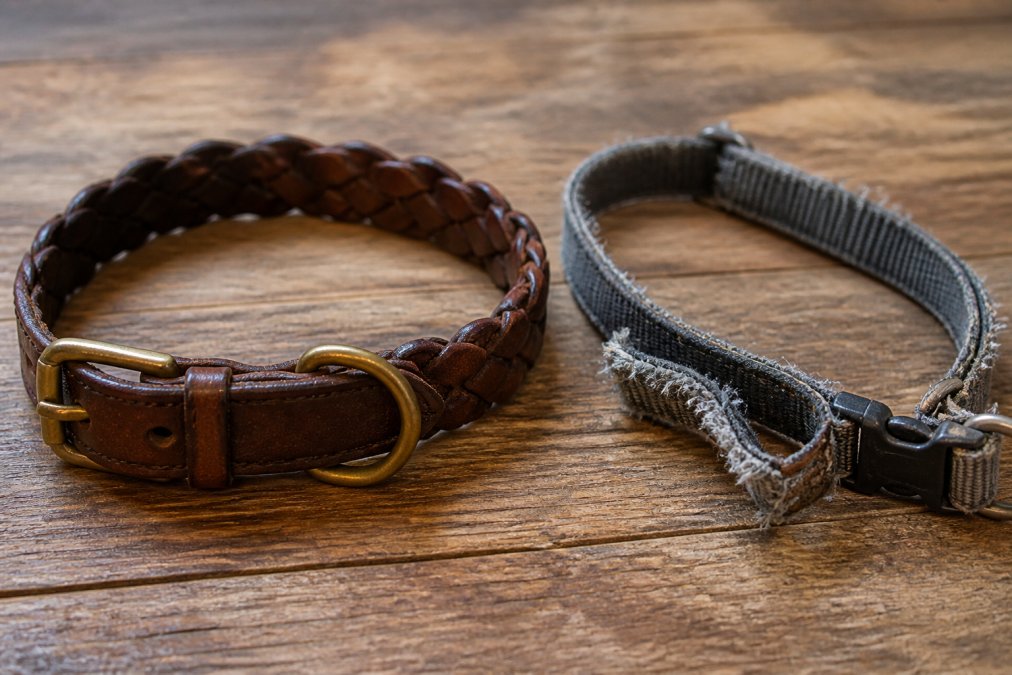
The math is simple. Three cheap collars at a low retail price usually beat one good collar on sticker price. But add up the replacements, the shipping costs each time, and the risk of a collar failing mid-walk, and the durable option wins.
Materials That Last: Leather vs. Nylon
Genuine braided leather gets better with age. It molds to your dog's neck, resists stretching, and holds a secure buckle. Nylon is lighter and cheaper, but it frays at stress points and loses shape.
For medium and large dogs, especially strong pullers, leather is the more cost-effective choice over a two-year window.
Are the Best Pet Subscription Boxes Cost-Effective?
The best pet subscription boxes are cost-effective when they replace purchases you'd make anyway, and wasteful when they ship items your pet won't use. The subscription model works on recurring revenue, which means the retailer benefits from you staying subscribed. Your job is to make sure the value flows both ways.
The Break-Even Calculation Most Shoppers Skip
A subscription box is worth its price when the retail value of the items your pet actually consumes exceeds what you pay, including the discount you'd get buying those same items on autoship or in bulk. Run the math on a per-item basis, not a per-box basis.
Here's the framework:
- List every consumable your pet uses in a month, food, treats, litter, waste bags, grooming supplies.
- Price each item at the unit cost you'd pay buying it individually.
- Add up that total. That's your baseline.
- Compare the box price against the baseline, then subtract the value of any items your pet won't use.
When Subscriptions Save Money (and When They Don't)
Subscriptions save money when they deliver consumables on a predictable schedule: food, treats, litter, grooming supplies. You avoid last-minute retail runs and often get discount incentives for committing. Autoship discounts on recurring essentials are one of the few places where a subscription reliably beats buying the same product off the shelf.
The Hidden Costs of Convenience
Convenience has a price, and it rarely appears on the box. Shipping fees on smaller boxes, the cost of items your pet rejects, and the storage space a backlog of unused toys consumes are all real expenses. So is the opportunity cost: money locked into a subscription is money you can't spend on a specific item your pet actually needs that month.
When to Choose Bulk Buying Over Curation
Bulk buying beats curation when the item is standardized, shelf-stable, and consumed at a predictable rate. Food, litter, and treats fit this pattern. You know the brand, you know the size, and the only variable is price per pound or per ounce.
How to Choose Safe Dog Toys Without Overpaying
Safe dog toys are sized to your dog, made from materials that won't splinter or detach, and sturdy enough to survive real chewing. Price is a poor proxy for safety. Some cheap toys are fine; some expensive ones fall apart.
The Waste-Reduction Math on Destroyed Toys
A cheap toy that lasts a week isn't a bargain. It's a recurring expense with a hidden disposal cost. If your dog destroys a low-cost plush in a single session, you're replacing it roughly 50 times a year to keep the toy bin stocked. A durable rubber or reinforced-fabric toy that survives months replaces dozens of those purchases.
Matching Toy Construction to Chewing Style
The most common toy mistake is buying for the wrong chew strength. A toy built for a light chewer will be destroyed by a heavy chewer in one session, and the pieces become a choking risk.
Match the material to the behavior:
- Light chewers, plush, rope, and softer rubber toys hold up fine. Replace when seams open.
- Moderate chewers, reinforced fabric, thick rope, and medium-density rubber. Check for loosening knots and exposed stuffing.
- Heavy chewers, solid rubber, nylon, and hard composite toys with no detachable parts. Skip anything with a squeaker, since the squeaker is the first thing destroyed and the first choking hazard.
A Practical Evaluation Checklist
Here's a checklist for evaluating any toy before it comes home:
- Size it up: the toy should be too large to swallow whole
- Check for small parts that can detach and become a choking hazard
- Squeeze it: if it crushes easily, it won't survive a determined chewer
- Look for non-toxic materials and strong stitching
- Match the toy to your dog's chewing style, not the trend
- Skip toys with squeakers if your dog destroys them in minutes
- Inspect weekly and discard at the first sign of cracking, tearing, or exposed filling
Long-Term Health Cost Avoidance: The Hidden ROI of Quality Supplies
Quality supplies can reduce long-term health costs, and that's the return most shoppers never calculate. A poorly fitted harness causes chafing that turns into skin issues. A cheap collar that snaps leads to a lost dog and a vet bill. These costs don't show up on the price tag.
Waste Reduction and Sustainability: Do Eco-Friendly Materials Justify the Price?
Eco-friendly materials justify their price when they last longer, not just when they're marketed as green. The sustainability value of a product comes from how many years it stays in use, not from the label on the package.
Personalization vs. Standardization: Which Approach Saves More?
Personalization saves more when fit and function matter. Standardization saves more when the item is genuinely one-size-fits-all. The trick is knowing which category you're shopping in.
Frequently Asked Questions
Are curated pet supplies actually worth the higher price?
It depends on the product category. For items your pet uses daily, like harnesses, collars, and toys, paying more upfront often costs less over time because durable materials don't need replacing every few months. A $34 harness that lasts three years costs less per year than a $12 harness replaced four times. For consumables like treats or litter, the value gap narrows. Evaluate each purchase by cost per month of use, not sticker price alone.
How do I know if a pet product is high-quality or just overpriced?
Look at materials, construction, and return policy. Genuine leather, reinforced stitching, and metal hardware signal durability. Check whether the brand explains its sourcing or safety testing. Overpriced products often rely on trendy packaging without detailing materials. A high-quality product tells you exactly what it's made of and stands behind it with a clear return policy. If a listing avoids specifics, that's a red flag.
Are subscription-based pet supply boxes cost-effective compared to buying individually?
Subscription boxes can reduce costs if they deliver items you'd buy anyway at a per-unit discount. They become wasteful when they include products your pet won't use or when shipping costs erase the savings. Track what you actually consume each month, then compare that total to the subscription price. If the box covers 80% or more of your regular purchases at a lower combined cost, it's worth it. Otherwise, buy individually.
What should I look for when evaluating durable dog collars?
Check the material first. Braided leather resists stretching and holds up to strong pullers better than thin nylon. Look for a secure buckle that won't slip, and confirm the collar is adjustable within the size range. Measure your dog's neck and add two inches for comfort. A collar that fits properly and uses quality hardware will outlast several cheaper replacements, making the higher upfront cost worthwhile over the collar's lifespan.