

Clean Pet Stains From Carpet Naturally

Last Updated: October 23, 2026
Quick Summary
To clean pet stains carpet naturally, start by blotting fresh urine immediately with white towels, then apply a vinegar and water solution mixed in a 1:1 ratio. For old or stubborn stains, use baking soda left overnight or hydrogen peroxide at 3% concentration to break down uric acid compounds.
- Blot fresh stains within the first few hours before urine bonds to carpet fibers and padding
- Mix one part white vinegar with one part water and spray to dampen the stain for 5-10 minutes
- Sprinkle baking soda generously over treated areas and let sit 6-8 hours or overnight for best odor absorption
- Use only 3% hydrogen peroxide solution and test on hidden carpet areas first to avoid bleaching
- Never rub or scrub stains, use hot water, or mix cleaning products together
Table of Contents
- Identifying Pet Stains and Damage
- How to Remove Dog Urine From Carpet
- How to Clean Cat Urine From Carpet
- How to Remove Old Pet Stains From Carpet
- How to Get Pet Odor Out of Carpet
- Natural Cleaning Solutions for Pet Stains
- Common Mistakes to Avoid
- When to Call a Professional
- Frequently Asked Questions
Identifying Pet Stains and Damage
To remove pet stains carpet naturally, you need to understand how they damage carpet fibers, seep into the backing and padding, and create odors that linger long after the visible stain disappears.
Fresh stains are still wet or recently dried; old stains have set into the fibers and padding. This distinction determines which cleaning method works best.
Fresh stains versus old stains
Fresh pet stains are easier to treat because the urine hasn't fully bonded to the carpet fibers.
Old or dried stains have already penetrated the carpet fibers and may have reached the carpet padding. These require stronger treatments like baking soda, hydrogen peroxide, or enzyme detergents to break down the urine compounds that have hardened over time.
Key differences:
- Fresh stains: wet appearance, strong odor, liquid still present
- Old stains: discoloration, stubborn odor even after cleaning, dried appearance
Checking carpet fibers and backing
Before cleaning, inspect the affected area closely and check whether the stain has soaked through to the backing or padding beneath.
If the stain has reached the backing, surface cleaning won't fix the odors. You may need to address the padding underneath or consider professional help for severe cases.
What to check:
- Carpet fiber color and texture changes
- Whether moisture reaches the backing when you lift the carpet edge
- The size and spread of the stain
How to Remove Dog Urine From Carpet
Dog urine is acidic and can cause permanent discoloration if left untreated. We recommend starting with blotting and a simple vinegar solution for most dog urine accidents.
Blotting and initial treatment
The first and most important step is blotting. Never rub or scrub a fresh stain, which pushes urine deeper into the fibers and makes the problem worse.
Use white paper towels or a clean white cloth. Press down firmly on the stain to absorb as much liquid as possible. Work from the edges toward the center to prevent spreading.
Blotting steps:
- Grab white paper towels or cloth immediately
- Press down firmly (do not rub)
- Work from outside edges toward the center
- Use fresh towels for each blot
- Continue until no more moisture transfers to the towel
Applying the vinegar and water solution
Once you've blotted, apply a vinegar and water solution. White vinegar neutralizes urine odor and helps lift stains from carpet fibers.
Mix one part white vinegar with one part water in a spray bottle. Spray the affected area thoroughly, enough to dampen the carpet but not soak it. Let it sit for 5 to 10 minutes.
Vinegar solution application:
- Mix ratio: 1 part white vinegar to 1 part water
- Spray to dampen (not drench) the stain
- Wait 5-10 minutes for the vinegar to work
How to Clean Cat Urine From Carpet
Cat urine is harder to remove because it contains higher concentrations of uric acid and ammonia compounds, so it smells stronger and lingers longer than dog urine. Vinegar works for fresh cat urine, but old stains often require stronger treatments.
Why cat urine requires different handling
Cat urine bonds more aggressively to carpet fibers than dog urine. Even after the visible stain disappears, uric acid crystals remain embedded in the fibers and padding, so odors persist or return after cleaning.
The key difference is that cat urine often requires enzyme detergents or hydrogen peroxide to fully break down these stubborn compounds. A vinegar solution alone may not be enough for older cat stains.
Step-by-step cleaning process
Start with blotting, then apply the vinegar and water solution. If the stain persists after the vinegar dries, move to baking soda or hydrogen peroxide for deeper penetration.
Sprinkle baking soda generously over the treated area and let it sit for several hours or overnight. The baking soda absorbs remaining odors and moisture. Vacuum thoroughly afterward.
Cat urine removal sequence:
- Blot fresh urine immediately with white towels
- Apply vinegar and water solution; wait 5-10 minutes
- Blot again to remove the solution
- Sprinkle baking soda over the area
- Let sit 6-8 hours or overnight
- Vacuum completely
- If odor persists, try hydrogen peroxide treatment
How to Remove Old Pet Stains From Carpet
Old stains that have dried and set into the carpet require more aggressive treatment. They've bonded with the fibers and may have soaked into the padding, so vinegar alone won't work, you need baking soda, hydrogen peroxide, or both.
Treating set-in stains with baking soda
Baking soda is one of the most effective natural remedies for old pet stains, neutralizing odors by absorbing the compounds that cause the smell.
Dampen the stain slightly with water or the vinegar solution. Then sprinkle baking soda heavily over the entire affected area. Let it sit for at least 6 to 8 hours, overnight is ideal.
Baking soda treatment:
- Lightly dampen the old stain with water
- Sprinkle baking soda generously
- Let sit 6-8 hours minimum (overnight is better)
Using hydrogen peroxide for stubborn stains
Hydrogen peroxide is stronger than vinegar and breaks down uric acid crystals that baking soda alone cannot dissolve. Test it on a hidden carpet area first to ensure it doesn't bleach or damage the fibers.
Use a 3% hydrogen peroxide solution (standard drugstore strength). Spray it on the stain and let it sit for 5 to 10 minutes.
Hydrogen peroxide caution:
- Test on hidden carpet area first (corner, closet)
- Use 3% solution only (standard drugstore strength)
- Never use higher concentrations, they can bleach carpet
How to Get Pet Odor Out of Carpet
Even after the visible stain is gone, pet odor can linger because urine soaks through the fibers into the padding and backing underneath. Surface cleaning alone won't eliminate odors trapped in these layers.
Addressing odor in carpet padding and backing
If the stain has soaked through to the padding, you're dealing with a deeper problem. The padding absorbs urine like a sponge and holds the odor, so surface treatments only mask the smell temporarily.
For moderate cases, baking soda sprinkled directly on the carpet and left overnight can help absorb odors from the padding below.
Odor in padding:
- Baking soda treatment helps absorb deep odors
- Enzyme detergents can break down compounds in padding
- Ventilation and air circulation speed up drying
Enzyme detergent for deep odor removal
Enzyme detergents use natural enzymes to digest the uric acid and ammonia that cause lingering odors, making them more effective than vinegar or baking soda alone for stubborn smells.
Apply an enzyme detergent according to the product instructions. Most require you to spray the solution on the stain, let it sit for several hours, and then blot.
Enzyme detergent use:
- Choose a pet-safe enzyme product
- Follow product instructions for dilution and application
- Let sit for the time specified (usually 4-8 hours)
Natural Cleaning Solutions for Pet Stains
Three natural cleaning solutions work well to remove pet stains carpet naturally: vinegar and water, baking soda, and hydrogen peroxide. Each has different strengths, so match the solution to the situation.
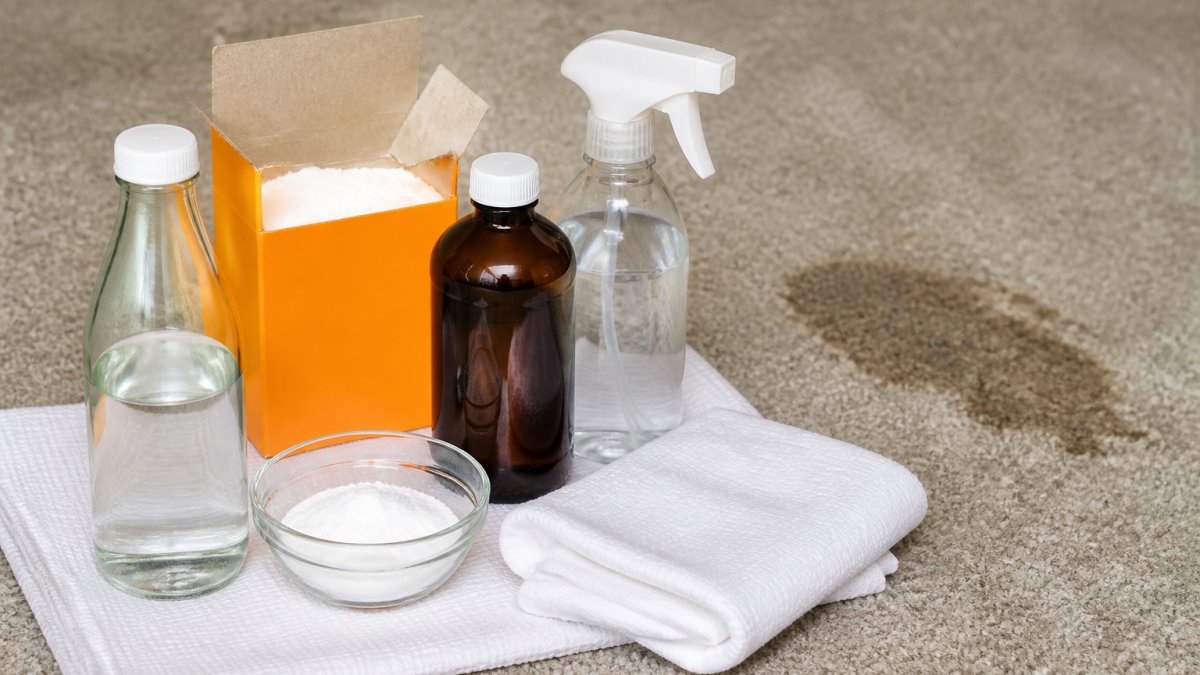
Vinegar solution preparation and safety
White vinegar is acidic and neutralizes the alkaline compounds in urine. It's safe for most carpet types and pet-friendly when used properly.
Mix one part white vinegar with one part water. Store in a spray bottle for easy application. The solution is safe to use around pets and children, though the smell of vinegar is strong while wet.
Vinegar solution safety:
- Use white vinegar only (not apple cider or other types)
- Safe for pets and children
- Test on hidden carpet area first if concerned
Baking soda effectiveness and pet safety
Baking soda is completely pet-safe and one of the most effective natural odor absorbers, chemically neutralizing odor-causing compounds rather than just masking the smell.
Sprinkle baking soda directly on the stain or dampen the area first and then apply. The longer you leave it, the more odor it absorbs. Overnight is ideal for stubborn smells.
Baking soda safety and use:
- Completely pet-safe
- Absorbs odors rather than masking them
- Works best when left overnight
Hydrogen peroxide concentration and cautions
Hydrogen peroxide at 3% concentration (standard drugstore strength) is pet-safe and effective for tough stains. Higher concentrations can damage carpet fibers and should never be used.
Always test hydrogen peroxide on a hidden area of your carpet first. Some carpet dyes can be affected.
Hydrogen peroxide cautions:
- Use 3% solution only (standard drugstore strength)
- Test on hidden carpet area first
- Never use higher concentrations
Three natural solutions work best for pet stains, each suited to different situations.
| Solution | Best For | Key Difference |
|---|---|---|
| Vinegar and water | Fresh stains | Neutralizes alkaline urine compounds |
| Baking soda | Old, set-in stains | Absorbs odors rather than masking them |
| Hydrogen peroxide 3% | Stubborn stains | Breaks down uric acid crystals |
| Enzyme detergent | Deep odor in padding | Digests odor-causing compounds |
Common Mistakes to Avoid
Most people make at least one of these mistakes.
Don't use hot water. Heat can set stains permanently by bonding urine compounds to carpet fibers.
Don't ignore old stains. Hoping a stain will fade on its own doesn't work.
Don't mix cleaning products. Combining vinegar with hydrogen peroxide or other chemicals can create toxic fumes.
When to Call a Professional
Some pet stains are beyond home cleaning. Knowing when to call a professional saves money and prevents further damage.
If the carpet is old or the stain is in a high-value area, professional cleaning is worth the investment.
For ongoing carpet maintenance after professional cleaning, a pet grooming brush tool or pet vacuum cleaner brush attachment can help remove pet hair and debris that contribute to odors and staining.
The best approach to pet stains is prevention. Potty training pads can help reduce dog accidents in the home.
Frequently Asked Questions
What's the best natural way to clean dog urine from carpet?
Start by blotting fresh dog urine with a clean cloth to absorb as much as possible. Mix equal parts white vinegar and water in a spray bottle, spray the stained area, let it sit for 10-15 minutes, then blot again. For stubborn odor, sprinkle baking soda over the damp spot, let it dry completely (4-24 hours), then vacuum. This combination tackles both the stain and urine odor naturally without harsh chemicals.
Can baking soda remove pet stains and smells from carpet?
Yes, baking soda is highly effective for pet odor removal, especially after initial cleaning. Sprinkle it generously over the stained area and let it sit for several hours or overnight to absorb odors trapped in carpet fibers and padding. For fresh stains, combine baking soda with a vinegar solution first, then apply the powder once the area is damp. Vacuum thoroughly once fully dry. Test on a small, inconspicuous area first to ensure it doesn't affect carpet color.
How do you remove old pet urine stains from carpet naturally?
Old stains require deeper treatment. Apply a vinegar and water solution, then layer baking soda over the damp area and let it dry completely. For particularly stubborn stains, use a 3% hydrogen peroxide solution mixed with a small amount of dish soap. Spray lightly, let sit 10 minutes, and blot thoroughly. If odor persists in the carpet backing or padding, you may need enzyme detergent or professional extraction to fully eliminate the source.
How do I prevent my pet from marking the same spot again?
After thorough cleaning, use enzymatic cleaners to break down urine compounds that pets can still smell. Thoroughly clean the area with a vinegar solution and baking soda to remove all odor traces. Consider using pet-safe enzymatic sprays designed to eliminate marking scents. Additionally, address the underlying cause: ensure your pet has regular bathroom breaks, manage stress or territorial behavior, and consult your veterinarian if marking persists, as it may indicate a medical issue.
