

Natural Alternatives to Dog Toothpaste: 2026 Vet Guide

Table of Contents
- Why Dog Toothpaste Matters for Canine Oral Hygiene
- Common Ingredients to Avoid in Dog Toothpaste
- Homemade Dog Toothpaste Recipe: Safe DIY Options
- Is Coconut Oil Good for Dog Teeth?
- How to Brush Dog Teeth Without Toothpaste
- Alternative Dental Care Methods to Support Oral Health
- Frequently Asked Questions
Last Updated: September 27, 2026
Why Dog Toothpaste Matters for Canine Oral Hygiene
Dog toothpaste is a pet-safe paste that removes plaque without the ingredients that make human toothpaste dangerous for dogs. Natural alternatives matter because periodontal disease is one of the most common problems vets diagnose in adult dogs, and daily brushing is the best prevention.
Signs of Dental Disease in Dogs
Bad breath is the first warning sign most owners notice, and it is rarely "just dog breath." Other indicators include:
- Yellow or brown tartar along the gumline
- Red, swollen, or bleeding gums
- Drooling more than usual
- Chewing on one side of the mouth
- Pawing at the face or dropping food while eating
- Loose teeth or visible tooth loss
Common Ingredients to Avoid in Dog Toothpaste
The most dangerous ingredient in any toothpaste is xylitol, a sugar alcohol used to sweeten human products. Small amounts can cause dangerous drops in blood sugar in dogs; larger amounts can damage the liver. Never share your toothpaste with your dog, and read labels on any dog dental product.
Other ingredients worth checking for:
- Fluoride, safe for humans in small doses, but dogs swallow toothpaste rather than spitting it out, so it accumulates
- Artificial sweeteners, xylitol is the worst, but others offer no benefit to a dog either
- Detergents like sodium lauryl sulfate, create foam, which dogs don't need and some react to
- Essential oils, tea tree, wintergreen, and eucalyptus are toxic to dogs in concentrated amounts, even though they appear in some "natural" products
Xylitol Toxicity and Other Hidden Dangers
Xylitol sends dogs to emergency clinics. It hides in sugar-free gum, some peanut butters, baked goods, and many mint-flavored products. If you suspect your dog ate something containing xylitol, call your vet or a pet poison hotline immediately, do not wait for symptoms.
The Essential Oil Trap: Toxic vs. Safe for Dogs
This is where most natural dog toothpaste guides fail their readers. A recipe calling for "a drop of peppermint oil" or "tea tree for freshness" can be genuinely dangerous: dogs metabolize essential oils differently than humans, and their livers lack the enzyme pathways that clear many compounds, so what smells harmless can accumulate to a toxic dose in a 15-pound dog.
Oils to never put in a dog's mouth:
-
Tea tree (Melaleuca), even small ingested amounts can cause vomiting, weakness, tremors, and in serious cases, seizures. It is one of the most common essential oil poisonings reported in pets.
-
Wintergreen, high in methyl salicylate, which is chemically related to aspirin. Ingested, it can cause stomach ulcers and bleeding.
-
Eucalyptus, causes drooling, vomiting, and lethargy when swallowed.
-
Peppermint, concentrated versions can trigger vomiting and mouth irritation; the menthol is the problem.
-
Cinnamon, clove, and citrus oils, irritating to gums and mucous membranes, and clove in particular is high in eugenol, which is toxic in quantity.
-
Birch and sweet birch, another methyl salicylate source, same risk profile as wintergreen.
-
Coconut oil, not an essential oil, but the workhorse base for most homemade pastes. Safe to swallow.
-
Food-grade fish oil, safe, but it belongs in the bowl, not the brush.
-
A single drop of food-grade peppermint in a large batch, used by some owners for breath, but the margin for error is thin. Skip it if unsure.
Reading a Label Like a Vet Tech
When picking up a commercial "natural" dog toothpaste, scan the ingredient panel in this order:
- Sweetener first. If you see xylitol, sorbitol, or anything ending in "-itol," put it down.
- Check for fluoride. It should not be there.
- Look at the oil list. If tea tree, wintergreen, eucalyptus, or clove appear, treat it as a no.
- Look for an enzymatic agent. Ingredients like glucose oxidase and lactoperoxidase are the ones with actual evidence behind them for reducing plaque bacteria.
- Check for the Veterinary Oral Health Council (VOHC) seal. Products that carry it have submitted data showing measurable plaque or tartar reduction.
Homemade Dog Toothpaste Recipe: Safe DIY Options
A homemade dog toothpaste recipe blends dog-safe ingredients into a paste thin enough to spread on a brush. The usual base is coconut oil, with a little baking soda for gentle abrasion and something tasty for cooperation.
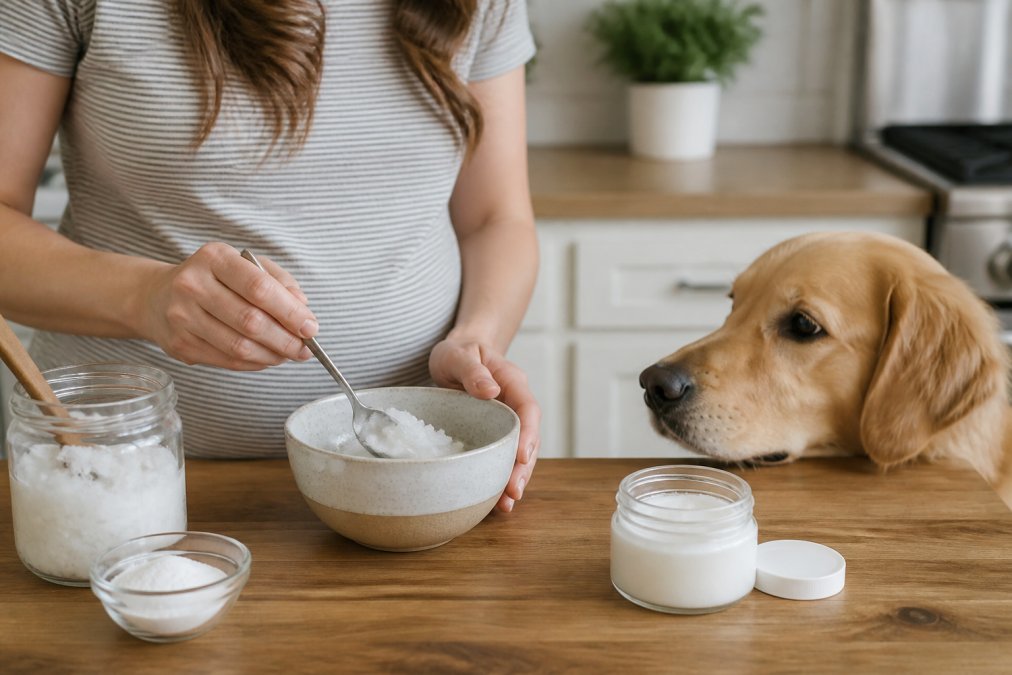
Ingredients:
- 2 tablespoons coconut oil
- 1 tablespoon baking soda
- 1 teaspoon plain unsweetened yogurt or a small spoonful of dog-safe chicken broth
Steps:
- Warm the coconut oil until it softens but does not liquefy.
- Stir in the baking soda until the mixture is smooth.
- Add the yogurt or broth for flavor and mix again.
- Store in a small covered jar at room temperature, or in the fridge if your kitchen runs warm.
- Apply a pea-sized amount to your brush or finger brush before each session.
Coconut Oil for Dental Health
Coconut oil earns its place in most homemade recipes for two reasons: it is safe for dogs to swallow, and its medium-chain fatty acids, including lauric acid, have antimicrobial properties that may reduce the bacteria behind plaque and bad breath while making brushing more pleasant. It is not a replacement for mechanical cleaning, it coats the teeth and gums but does not scrub tartar off.
Is Coconut Oil Good for Dog Teeth?
Coconut oil is a helpful addition to a dog dental routine, not a stand-alone cure. It supports gum health, freshens breath, and its antimicrobial properties may slow plaque formation, but it will not remove existing tartar or reverse periodontal disease. Where it shines is making brushing easier: dogs generally like the taste, so a coconut-oil-based paste turns a wrestling match into something closer to a treat.
How to Brush Dog Teeth Without Toothpaste
You can brush dog teeth without toothpaste using a soft brush or finger brush dipped in water, coconut oil, or dog-safe broth. The bristles' mechanical action removes plaque, so paste is optional, consistency is not.
- Start with your finger. Let your dog lick a dab of coconut oil off your fingertip, then gently rub their gums for a few seconds. Repeat for several days.
- Introduce the brush. Switch to a finger brush or a soft-bristled dog toothbrush with the same coconut oil. Let your dog chew on it briefly so it feels familiar.
- Brush the outside surfaces first. Focus on the outer cheek-facing teeth, where tartar builds fastest. The inner surfaces get some cleaning from the tongue.
- Work in short sessions. Aim for 30 seconds to start, building toward a full minute or two.
- Reward immediately. A treat, a walk, or praise right after brushing teaches your dog that the brush predicts good things.
- Brush daily if you can. A few times a week is far better than nothing, but daily is the goal.
Tools That Make Brushing Easier
The right tool changes everything: a human toothbrush is too large and too stiff for most dogs. Look for:

- A 3-sided brush for full coverage in one pass
- A finger brush for dogs who panic at anything long
- A long-handled brush for large breeds and owners who want to keep their fingers clear
- A flavored dog toothpaste if your dog refuses coconut oil
Alternative Dental Care Methods to Support Oral Health
Brushing is the foundation, but dental chews, water additives, dental powder, and chew toys can support canine oral hygiene between sessions, each with limits worth understanding before you rely on it.
Dental Chews and Water Additives
Dental chews work through mechanical cleaning: the texture scrapes plaque off the tooth surface as your dog chews. Size them appropriately, too small and they can be swallowed whole, too hard and they can crack a tooth.
| Method | What It Does | Best For | Limitation |
|---|---|---|---|
| Brushing with paste | Removes plaque mechanically | Daily maintenance | Needs dog cooperation |
| Dental chews | Scrapes plaque while chewing | Busy owners, chewers | Size and hardness matter |
| Water additives | Reduces oral bacteria | Dogs who refuse brushing | Does not remove tartar |
| Chew toys | Cleans teeth during play | Enrichment plus cleaning | Not a full substitute |
DIY Paste vs. Veterinary-Approved Enzymatic Cleaners: What the Evidence Actually Shows
Here is the comparison almost no natural-dog-toothpaste article makes, and the one that should shape your routine.
What this means in practice:
- If your dog tolerates brushing and you want a chemical-free experience, a DIY coconut-oil paste plus consistent brushing is a reasonable, low-risk routine. Just do not expect the paste itself to outperform an enzymatic product on plaque reduction.
- If your dog has a history of tartar buildup, gingivitis, or a breed predisposed to dental disease, an enzymatic paste paired with the same brushing technique will generally give you more measurable benefit.
- The two are not mutually exclusive. Many owners rotate: enzymatic paste on weekdays, coconut oil on weekends when the dog is more resistant.
The Palatability Test: Getting a Dog to Accept Any Paste
A paste your dog refuses does nothing. Before committing to a full batch, run a two-minute taste test.
- Offer a fingertip sample. Put a pea-sized dab of the paste on your finger and let the dog lick it. If they turn away, spit, or paw at their mouth, that flavor is out.
- Try the three-flavor rotation. Most dogs accept one of three profiles: savory (chicken or beef broth), neutral (plain coconut oil), or slightly sweet (a tiny amount of plain unsweetened yogurt). Test all three before deciding.
- Watch for the second-session reaction. A dog who licks the paste off your finger on day one may still refuse it on the brush on day three. The real test is whether they accept it when the brush is involved.
- Never mask with xylitol-sweetened anything. No peanut butter unless you have verified the label, and no human yogurt with added sugar.
- Pair the paste with the reward, not the punishment. Brush, then treat. Within a week or two, most dogs start associating the paste smell with the treat that follows.
Breed-Specific Dental Needs
Not every dog faces the same dental risks. Small breeds like Chihuahuas, Pugs, and Yorkies have crowded mouths that trap food and plaque, so tartar builds faster; they need more frequent brushing and earlier professional cleanings.
Frequently Asked Questions
What is the best homemade toothpaste for dogs?
A safe homemade dog toothpaste typically combines coconut oil with a small amount of baking soda or plain yogurt. Coconut oil provides antimicrobial properties and is generally safe for dogs, while baking soda acts as a mild abrasive to help remove plaque. Avoid adding xylitol, fluoride, or essential oils like tea tree or wintergreen, as these can be toxic to dogs. Always introduce any new ingredient slowly and watch for stomach upset. For best results, use a dog toothbrush and brush gently along the gumline.
Is coconut oil good for dog teeth?
Coconut oil contains medium-chain fatty acids with antimicrobial properties that may help reduce plaque-causing bacteria in a dog's mouth. While it isn't a replacement for brushing, it can be used as a base for homemade dog toothpaste or given in small amounts as a supplement. Some pet owners report fresher breath and less tartar buildup with regular use. However, coconut oil is high in fat, so limit portions to avoid weight gain or digestive issues, especially in dogs with pancreatitis.
How can I brush my dog's teeth without toothpaste?
You can brush your dog's teeth without toothpaste by using a soft-bristled dog toothbrush dipped in water or a small amount of coconut oil. Start slowly by letting your dog lick the brush, then gently brush one or two teeth at a time. Use circular motions along the gumline. If your dog resists, try a finger brush or a 3-sided toothbrush designed to clean all surfaces at once. Pair brushing with dental chews or water additives for extra support.
Are there risks to using DIY dog toothpaste?
Yes, DIY dog toothpaste can be risky if you include toxic ingredients. Xylitol, a common sweetener in human toothpaste, causes dangerously low blood sugar and liver failure in dogs. Essential oils such as tea tree, peppermint, and wintergreen can cause drooling, vomiting, or worse. Baking soda is generally safe in small amounts but can upset a dog's stomach if swallowed in excess. Always check with your veterinarian before trying a new recipe, and never use human toothpaste on your dog.
What natural thing can I brush my dog's teeth with?
You can brush your dog's teeth with coconut oil, plain yogurt, or a mixture of baking soda and water. Coconut oil is popular because it is safe to swallow and has antimicrobial properties. Plain yogurt contains probiotics that may help balance oral bacteria. A soft-bristled toothbrush or finger brush works well with these natural options. For dogs new to brushing, start with just your finger and a dab of coconut oil, then gradually introduce a brush.
Dental disease is one of the most preventable problems in dogs, and it starts with what you put on the brush. Smitty's Pet Store makes that decision easier with a curated selection of grooming and dental supplies chosen for real dogs and real owners, plus practical guidance so you know what to do with them. Start with a soft brush, a dog-safe paste, and a routine you can actually keep. Browse our dental care essentials and build a brushing habit your dog will tolerate, maybe even enjoy.