

How to Tell If My Cat Has a Fever at Home

Table of Contents
- Symptoms of Fever in Cats: What to Watch For
- Normal Cat Temperature Range: What's Healthy?
- How to Take a Cat's Temperature Rectally (Step-by-Step)
- When to See a Vet for Cat Fever
- True Fever vs. Hyperthermia: Why the Difference Matters
- What NOT to Do: Human Medications and Other Dangerous Mistakes
- Frequently Asked Questions
Last Updated: September 30, 2026
Symptoms of Fever in Cats: What to Watch For
Learning how to tell if my cat has a fever at home starts with noticing small changes in how your cat acts. Cats hide illness well, so the first clues are often behavioral, not physical.
Behavioral Changes That Signal Trouble
Watch for shifts in your cat's daily routine. These often show up before any physical sign:
- Lethargy: Your cat sleeps more and plays less, and may not greet you at the door the way she usually does
- Hiding behavior: She avoids her usual spots and stays under the bed, in a closet, or behind furniture she normally ignores
- Appetite loss (anorexia): Food sits untouched, even favorite treats, and she may turn away from the bowl entirely
- Reduced water intake: A cat with a fever often drinks less, which speeds up dehydration
- Depression: Less interest in you, toys, or grooming
- Changes in grooming habits: A dull, unkempt coat instead of a clean one, or a cat that stops grooming altogether
- Irritability or touch sensitivity: A cat that normally loves being petted may flinch, growl, or pull away when you touch her back or belly
- Posture changes: A hunched, tucked posture with the head lowered is a classic sign of discomfort in cats
Physical Signs: Warm Ears, Dry Nose, and More
Physical clues can help, but none of them confirm a fever on their own. Here's what each one actually tells you:
- Warm ears and paws: Blood vessels near the surface dilate when body temperature rises, so the ears and paw pads can feel warmer than usual. This is a weak signal on its own because ear temperature swings with room temperature and activity.
- Dry nose: A dry nose is common in a feverish cat, but it's also common in a cat that just woke up, is dehydrated, or is in a dry room. A wet nose does not rule out a fever.
- Shivering or trembling: Muscle shivering is the body's attempt to generate heat during a fever's rising phase, which is why a feverish cat can shiver even though she feels warm to the touch.
- Rapid breathing (tachypnea): A resting respiratory rate above roughly 30 to 40 breaths per minute in a calm cat is worth noting. Count breaths for a full 30 seconds while she sleeps, then double it.
- Rapid heart rate: A fever raises heart rate, but so does stress, so this is hard to judge at home.
- Dehydration: Gently pinch the skin at the back of the neck. If the tent doesn't spring back within a second or two, she may be dehydrated. You can also check the gums: tacky or dry gums instead of slick and pink is a warning sign.
- Reduced urine output: A dehydrated cat produces less urine, and the litter box may look drier than usual.
The Symptom Tracker That Beats Guesswork
Most articles hand you a list and send you on your way. A better approach is to write things down, because fever signs are easy to forget once you're worried. Jot down the date and time, the signs you're seeing, your cat's appetite and water intake for the day, and any temperature reading you take. Bring that note to the vet.
Normal Cat Temperature Range: What's Healthy?
The normal cat temperature range is 100.5°F to 102.5°F (38.1°C to 39.2°C). Anything above 102.5°F is a fever, and a reading over 104°F needs urgent vet care. A body temperature below 99°F is also an emergency, called hypothermia.
How to Take a Cat's Temperature Rectally (Step-by-Step)
A rectal reading is the most accurate way to check for a fever at home. It takes about two minutes and gets easier with practice. Here's the full process, from setup to cleanup.
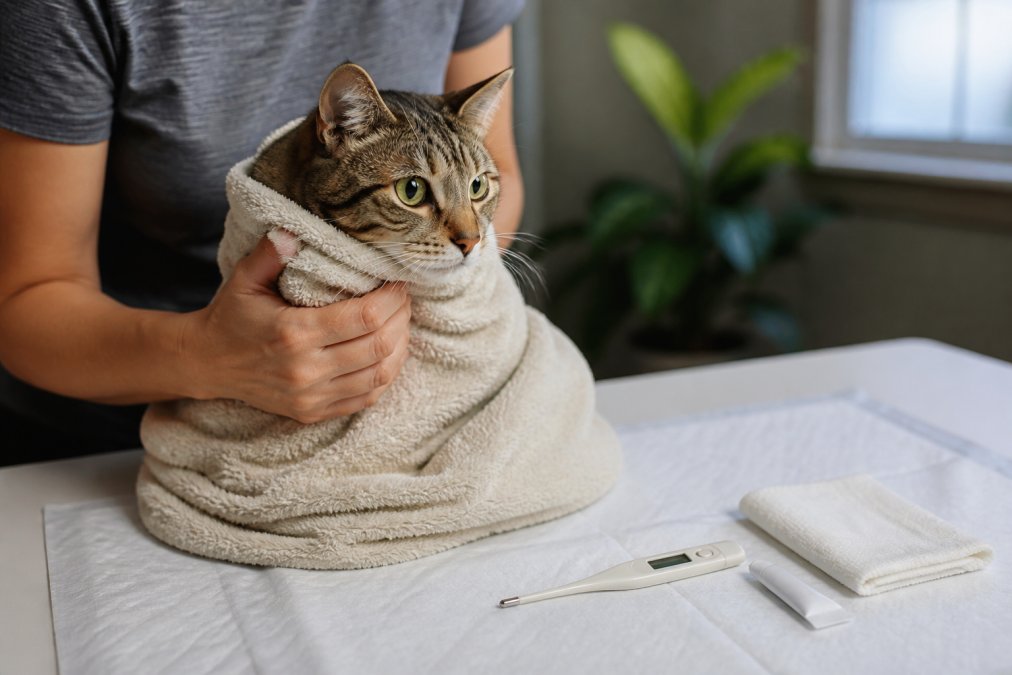
What You'll Need Before You Start
Gather everything first so you're not scrambling mid-task:
- A digital rectal thermometer (pet-specific or a human one)
- A water-based lubricant like petroleum jelly
- A clean towel for swaddling
- A helper, if your cat is squirmy
- Treats for afterward
- A watch or phone timer, in case the thermometer is slow
Label this thermometer for pet use only. Don't reuse it for humans. A dedicated pet thermometer avoids cross-contamination and keeps the reading consistent from one check to the next.
Safely Restraining Your Cat for Temperature Taking
Calm restraint keeps both of you safe. The goal is not to overpower your cat, it's to limit her movement just enough to get a clean reading without triggering a panic response. Follow these steps:
- Pick a quiet spot with good lighting and no other pets. A bathroom or a low table works well because there's less room for her to bolt.
- Let her settle first. Pet her and speak softly for a minute before you start. A cat that's already tense is harder to restrain and more likely to tense her anal sphincter, which makes insertion harder.
- Wrap your cat in a towel, leaving the tail end exposed. This is the "purrito" method. Tuck one front paw against her chest and fold the towel snugly but not tightly. Her head should stay out and uncovered.
- Position her correctly. Place her on her side or standing on all fours on a non-slip surface. Standing is often easier for a first attempt because it keeps the tail base accessible.
- Have a helper hold her against their body if she struggles. The helper supports the chest and shoulders while you handle the rear. If you're alone, kneel beside her and use your forearm to keep her steady.
- Lift the tail gently at the base, not the tip, and hold it up and slightly to the side. Never pull or twist the tail.
- Lubricate the thermometer tip with a water-based lubricant. A pea-sized amount is plenty.
- Gently insert the tip about one inch into the rectum, angled slightly upward toward the spine. If you meet resistance, stop and reposition. Never force it.
- Hold it in place until the thermometer beeps, usually under a minute. Keep one hand on her back to steady her.
- Remove slowly and read the result.
- Clean the thermometer with soap and water, then reward your cat with a treat and a few minutes of quiet attention.
Accuracy Pitfalls That Skew the Reading
Even a technically correct insertion can give you a misleading number. Watch for these:
- Insertion depth: Less than an inch can miss the core temperature and read low. More than about an inch and a half risks discomfort and a false high from straining.
- Timing: Wait at least 30 minutes after your cat has eaten, played hard, or been in a warm room. Activity and digestion both raise body temperature temporarily.
- Thermometer type: Ear and forehead thermometers sold for pets are less reliable than a rectal digital thermometer, so treat their results as a rough guide only. If you only have an ear thermometer, take three readings and average them.
- Battery and calibration: A weak battery can cause a slow or erratic reading. Replace it if the numbers jump around.
- One reading isn't the whole story: A single high number in a stressed cat should be rechecked after 20 to 30 minutes of calm. If it stays high, treat it as real.
What to Do With the Number
Write down the reading and the time you took it. If it's between 100.5°F and 102.5°F, your cat is in the normal range. Above 102.5°F is a fever, and above 104°F is an emergency. Below 99°F is hypothermia and also an emergency. Bring your written log to the vet, because a pattern of readings is far more useful than a single number.
When to See a Vet for Cat Fever
Call your vet right away if your cat's temperature is 103°F or higher, or below 99°F. Also seek care if a fever comes with vomiting, diarrhea, trouble breathing, seizures, or a cat that won't eat or drink for more than 24 hours. A fever over 104°F is an emergency.
True Fever vs. Hyperthermia: Why the Difference Matters
A true fever and hyperthermia look the same on a thermometer, but they have different causes and different treatments. A true fever is the body raising its own temperature on purpose to fight infection or inflammation. Hyperthermia is overheating from the outside, such as heatstroke, a hot car, or extreme stress during a vet visit.
What NOT to Do: Human Medications and Other Dangerous Mistakes
Never give your cat human fever medicine. This is the single most dangerous mistake pet parents make. Common drugs like acetaminophen and ibuprofen are toxic to cats, even in tiny doses. They can cause organ damage or death.
Avoid these mistakes too:
- Don't use a human ear thermometer and assume it's accurate
- Don't force food or water into a cat that won't eat
- Don't apply ice packs directly to your cat's body
- Don't wait days to call the vet because the fever seems mild
- Don't skip the vet because the fever dropped on its own, since the cause may still be there
Frequently Asked Questions
What is a normal body temperature for a cat?
A cat's normal body temperature typically ranges from 100.5°F to 102.5°F. Anything above 102.5°F is considered a fever. Monitoring your cat's temperature when they're healthy helps you establish a baseline, so you can recognize changes quickly. If the reading is 103°F or higher, contact your vet.
Can I use a human thermometer to check my cat's temperature?
You can use a digital rectal thermometer designed for humans, but never use a glass mercury thermometer due to breakage risk. Dedicated pet thermometers often have flexible tips and faster read times, which makes the process safer and less stressful for your cat. Always label the thermometer for pet use only and clean it thoroughly after each use.
Is a warm nose a sign of a fever in cats?
A warm or dry nose is not a reliable indicator of fever in cats. Nasal temperature varies with ambient conditions, hydration, and activity. The only accurate way to confirm a fever is by taking a rectal temperature with a digital thermometer. Relying on nose warmth alone can lead to false alarms or missed illness.
When should I take my cat to the emergency vet for a fever?
Seek emergency care if your cat's temperature exceeds 104°F, or if a fever above 103°F lasts more than 24 hours. Other red flags include lethargy, vomiting, diarrhea, difficulty breathing, seizures, or a complete refusal to eat or drink. Young kittens, senior cats, and those with chronic conditions should be seen promptly.
A fever in your cat is scary, and the signs can be easy to miss until she's really unwell. Smitty's Pet Store is here to make that care simpler, with a curated selection of trusted pet supplies and practical guidance you can act on. From digital pet thermometers and grooming essentials to everyday health products, our thoughtfully chosen range helps you feel confident as a pet parent. Get started with Smitty's Pet Store and keep your cat happy, healthy, and stress-free.