

How to Stop Cat Scratching Furniture: Step by Step

Table of Contents
- Why Cats Scratch Furniture
- Step 1: Identify Your Cat's Scratching Preferences
- Step 2: Choose the Best Scratching Posts for Cats
- Step 3: Place Scratching Surfaces Strategically
- Step 4: How to Redirect a Cat's Scratching Behavior
- Step 5: Apply Cat Scratching Deterrents for Furniture
- Step 6: Maintain Claw Health Through Regular Trimming
- Troubleshooting When Redirection Isn't Working
- Frequently Asked Questions
Last Updated: October 4, 2026
Why Cats Scratch Furniture
Cats scratch for reasons that go far beyond sharpening their claws. Understanding why your cat scratches furniture is the first step toward learning how to stop cat scratching furniture.
When cats scratch, they're marking territory with scent glands in their paws. They're also stretching their muscles, shedding dead claw sheaths, and managing stress.
The challenge isn't to stop your cat from scratching entirely. The goal is to redirect that scratching behavior toward appropriate surfaces instead.
Normal scratching behavior vs. destructive scratching
Most cats scratch multiple times daily. They choose vertical surfaces like sofas and door frames, or horizontal surfaces like carpets and rugs. This is completely normal.
Destructive scratching becomes a problem when:
- Your cat focuses exclusively on furniture rather than a variety of surfaces
- Damage accumulates quickly despite having scratching posts available
- The behavior intensifies suddenly without an obvious trigger
Normal scratching happens in short bursts throughout the day. Destructive scratching often involves prolonged, frantic sessions that damage furniture significantly.
When scratching signals a behavior change
A sudden increase in scratching behavior can indicate stress, anxiety, or even a medical issue. Cats may scratch excessively when they're adjusting to a new home, dealing with a change in their environment, or experiencing pain.
Watch for these warning signs:
- Scratching that appears obsessive or repetitive
- Hair loss or bleeding from excessive scratching
- Changes in eating, litter box habits, or sleep patterns
- Scratching that occurs when you're away or during stressful times
If your cat's scratching behavior changes dramatically, consult your veterinarian to rule out skin conditions, parasites, or underlying health concerns before assuming it's purely behavioral.
Step 1: Identify Your Cat's Scratching Preferences
Every cat has distinct scratching preferences. Some prefer vertical surfaces. Others favor horizontal ones.
Spend a few days observing where your cat scratches most often. Is it the corner of your couch? The edge of your bedroom door?
Also notice when scratching happens. Does your cat scratch after waking up? Before meals? During evening playtime? Timing patterns help you anticipate when to redirect behavior.
Document your cat's preferences in a simple list:
- Preferred location (which furniture or room)
- Preferred texture (rough, soft, woven)
- Preferred orientation (vertical or horizontal)
- Preferred time of day
This information becomes invaluable when choosing and placing scratching alternatives.
Step 2: Choose the Best Scratching Posts for Cats
The best scratching posts for cats match your cat's preferences and fit your home. A tall post that your cat ignores won't solve the problem. Neither will a short, wobbly post that tips over when your cat leans into it.
Height and stability matter
Cats need to fully extend their bodies when they scratch. A post that's too short won't satisfy this need. Most cats prefer posts that stand at least 30 inches tall, allowing them to stretch their front legs upward.
Stability is equally important. A post that wobbles or tips will be abandoned immediately. Your cat won't trust it, and the behavior won't redirect successfully.
Look for posts with:
- A solid, heavy base that doesn't shift when pressure is applied
- At least 30 inches of height for vertical scratching
- Sturdy construction that supports your cat's full body weight
Matching texture to preference
If your cat scratches your sisal-rope furniture, choose a post wrapped in sisal rope. If your cat prefers carpet, look for posts with carpet covering. If your cat scratches cardboard boxes, a corrugated cardboard scratcher may be the answer.
Texture matching increases the likelihood your cat will use the post instead of your furniture. Common post materials include:
- Sisal rope (durable, satisfying for many cats)
- Carpet or upholstery fabric (familiar texture)
- Corrugated cardboard (affordable, replaceable)
- Wood or bark (natural feel for some cats)
Consider offering variety. Multiple posts with different textures in different locations give your cat options and increase the chance one will appeal to them.
Step 3: Place Scratching Surfaces Strategically
Location is as important as the post itself.
Place scratching posts near the furniture your cat targets most. If your cat scratches the living room sofa, position a post right next to it.
You can also place posts in high-traffic areas where your cat spends time. Cats often scratch after waking, playing, or eating.
Start with multiple posts in multiple locations. Once your cat consistently uses them, you can gradually relocate posts to less visible areas if desired.
Consider these placement strategies:
- Next to targeted furniture (primary location)
- In high-traffic pathways
- Near windows or sunny spots
- Close to sleeping areas
- In rooms where your cat spends most time
Step 4: How to Redirect a Cat's Scratching Behavior
Redirection is the core technique for how to stop cat scratching furniture. When you catch your cat scratching the sofa, gently move them to an appropriate scratching surface nearby.
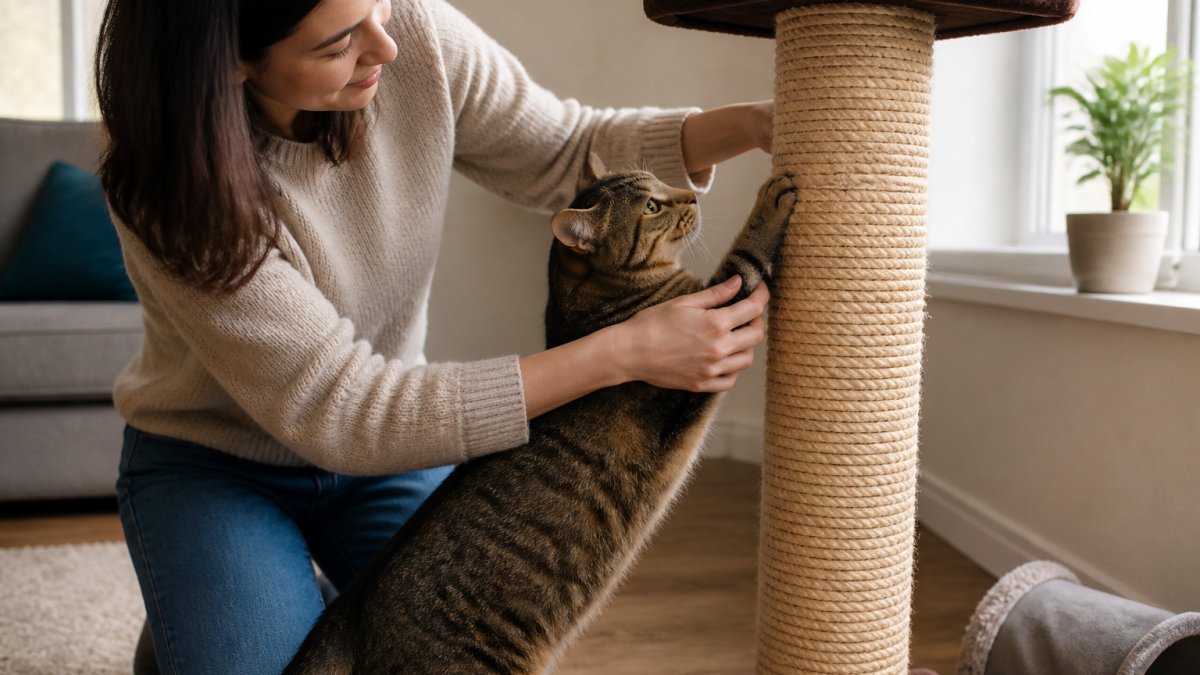
Stay calm and patient during redirection. Never yell or punish your cat. Punishment creates fear and stress, which often increases scratching behavior rather than reducing it.
The redirection process takes consistency. Every time you catch your cat scratching furniture, calmly move them to a post or appropriate surface.
Positive reinforcement and rewards
Reward your cat immediately when they use a scratching post voluntarily. Use treats, praise, or playtime. This positive association teaches your cat that scratching posts lead to good things.
Timing matters. Reward within seconds of the desired behavior so your cat connects the reward to the scratching action.
Effective rewards include:
- Small treats or favorite snacks
- Verbal praise and petting
- Playtime with favorite toys
- Extra attention and affection
Some cats respond better to certain rewards than others. Experiment to find what motivates your cat most.
What to avoid when redirecting
Never punish your cat for scratching furniture. Punishment damages your relationship and creates anxiety that worsens the behavior.
Avoid these common mistakes:
- Yelling or scolding after the fact (your cat won't understand the connection)
- Physical punishment or hitting (creates fear and stress)
- Ignoring the behavior (it continues unchecked)
- Inconsistent redirection (confuses your cat)
- Removing scratching posts out of frustration (removes the solution)
Consistency is key. Every household member must redirect the same way and reward the same behavior.
Step 5: Apply Cat Scratching Deterrents for Furniture
Deterrents work best as a temporary measure while you redirect behavior. They make targeted furniture less appealing without harming your cat.
Double-sided tape applied to furniture edges discourages scratching. Cats dislike the sticky sensation on their paws. Apply tape strips to corners and edges where your cat scratches most.
Plastic furniture covers protect sofas and chairs while deterrents work. These clear covers are removable and don't permanently damage furniture.
Other deterrent options include:
- Aluminum foil (some cats dislike the texture and sound)
- Upside-down carpet runners with nubby side facing out
- Commercial pet deterrent sprays with citrus or capsaicin scents
- Motion-activated air sprays that startle without harming
Humane deterrent options
The most humane deterrents create mild discomfort without pain or fear. Double-sided tape and plastic covers work well because they're non-toxic and don't frighten your cat.
Avoid deterrents that:
- Cause pain or injury
- Create loud, startling noises
- Contain toxic chemicals
- Generate excessive fear or anxiety
Natural scent deterrents like citrus or eucalyptus oil work for some cats. Apply diluted oils to furniture edges. Many cats find these smells unpleasant and avoid the area.
Safety and limitations of deterrents
Deterrents are temporary tools, not permanent solutions. They work best when combined with redirected scratching posts and positive reinforcement.
Limitations to understand:
- Deterrents only work on treated furniture (untreated areas remain attractive)
- Some cats adapt and ignore deterrents over time
- They don't address the underlying scratching need
- Removal is necessary once behavior improves
Never use deterrents alone without providing appropriate scratching alternatives. Your cat still needs to scratch. Deterrents simply make furniture less appealing while you train them to use posts instead.
Step 6: Maintain Claw Health Through Regular Trimming
Regular claw trimming reduces the need and urge to scratch.
Trim your cat's claws every 2-4 weeks. Most cats tolerate nail trimming well when introduced gradually and kept brief.
To trim safely:
- Use a cat-specific nail clipper (never human nail clippers)
- Trim only the clear or white tip of the claw
- Avoid the pink quick (blood vessel inside the claw)
- If you're unsure, have your veterinarian demonstrate first
Start young if possible. Kittens accustomed to handling accept nail trimming more easily as adults. Even older cats can learn to tolerate it with patience.
If your cat resists trimming, ask your veterinarian or a professional groomer for help.
Troubleshooting When Redirection Isn't Working
Some cats resist redirection despite your best efforts.
First, verify you're using the right post. Does it match your cat's texture preference? Is it tall enough? Stable enough?
Second, check post placement. Is it close enough to the targeted furniture?
Third, increase rewards. Make using the post more appealing than scratching furniture. Use higher-value treats or more frequent praise.
If redirection still isn't working after 4-6 weeks, consult your veterinarian or a certified cat behaviorist.
Multi-cat household challenges
Multi-cat households present unique challenges. Cats may compete for scratching posts or have different texture preferences.
Solutions for multiple cats:
- Provide more posts than the number of cats (3 cats = 4+ posts)
- Place posts in different locations throughout your home
- Offer variety in post styles and materials
- Ensure each cat has access without territorial conflict
- Monitor interactions to prevent one cat from monopolizing posts
Some cats prefer privacy when scratching. Corner posts or enclosed scratchers work well for cats that feel vulnerable in open spaces.
Watch for stress-related scratching. If one cat is scratching excessively while another appears anxious, territorial conflict may be the issue. Separate resources and consult a behaviorist if needed.
Measuring progress and adjusting your approach
Track your cat's progress weekly. Count scratching incidents on furniture and note improvements in post usage.
Progress indicators include:
- Fewer scratching episodes on furniture
- Increased voluntary post usage
- Visible claw marks on posts instead of furniture
- Longer periods without furniture scratching
- Your cat moving toward a post when the scratching urge hits
Expect gradual improvement rather than overnight change. Most cats show noticeable progress within 2-3 weeks and significant improvement by 6-8 weeks.
If progress plateaus, adjust your strategy:
- Try different post styles or materials
- Relocate posts to new areas
- Increase reward value or frequency
- Add additional posts in high-traffic areas
- Consult a professional if behavior worsens
| Progress Indicator | Timeline | What It Means |
|---|---|---|
| Fewer furniture scratching incidents | Weeks 1-2 | Redirection is taking effect |
| Voluntary post usage increases | Weeks 2-4 | Cat is learning new behavior |
| Visible wear on posts | Weeks 3-6 | Cat prefers posts over furniture |
| Significant furniture damage stops | Weeks 4-8 | Behavior modification is working |
Stopping cat scratching furniture requires patience, consistency, and the right tools. The process involves identifying your cat's preferences, providing appropriate alternatives, and reinforcing desired behavior. Smitty's Pet Store offers a curated selection of scratching posts, deterrents, and accessories.
Frequently Asked Questions
Why does my cat scratch furniture?
Cats scratch furniture to mark territory, stretch muscles, shed claw sheaths, and maintain claw health. Scratching is instinctive behavior that fulfills physical and emotional needs. When cats scratch, they leave scent marks from glands in their paws, which helps them feel secure in their environment. Providing appropriate scratching surfaces redirects this natural behavior away from your sofa and other furniture.
What can I put on my furniture to stop my cat from scratching it?
Humane deterrents include double-sided tape, plastic furniture covers, aluminum foil, and upside-down carpet runners placed on targeted areas. These textures and surfaces discourage scratching without harming your cat. Double-sided tape is sticky and uncomfortable on paws, while plastic coverings protect fabric underneath. Always combine deterrents with attractive scratching alternatives and positive reinforcement for best results.
How do I redirect my cat to a scratching post?
Place scratching posts near the furniture your cat targets, then gently guide your cat to the post when you notice scratching behavior. Use treats, praise, or play to reward your cat when it uses the post. Consistency is key, redirect every time you catch scratching on furniture. Reward good behavior immediately so your cat learns that the post is the preferred scratching location.
What kind of scratching post is best for cats?
The best scratching post matches your cat's texture preference and scratching style. Cats prefer vertical posts for stretching (sisal rope or carpet) or horizontal surfaces (corrugated cardboard). Choose posts at least 30 inches tall for full-body stretching, with a stable base that won't tip. Offer variety in textures and orientations since different cats have different preferences. High-quality posts encourage more use and faster behavior change.