

How to Make a Pet First Aid Kit at Home

Table of Contents
- Why Every Pet Parent Needs a First Aid Kit at Home
- Essential Pet First Aid Kit Supplies to Gather
- Dog First Aid Kit Essentials: What Your Canine Needs
- Cat First Aid Kit Supplies: Species-Specific Considerations
- Pet First Aid Kit Checklist: Step-by-Step Assembly
- Pet First Aid Kit Expiration Dates and Maintenance Schedule
- Items to Avoid and When to Seek Veterinary Care
- Frequently Asked Questions
Last Updated: October 8, 2026
Why Every Pet Parent Needs a First Aid Kit at Home
A pet first aid kit is a collection of supplies and tools you keep on hand to treat minor injuries and provide emergency care before you can reach a veterinarian. Every pet parent should have one at home. Accidents happen fast.
The difference between a quick response and a delayed one can matter. Even minor wounds need cleaning. Bleeding needs stopping. Your pet needs comfort while you arrange veterinary care. A well-stocked kit gives you confidence. You'll know exactly what to grab and how to help.
Dogs, cats, rabbits, and other animals all have different needs. A senior dog needs different supplies than a young puppy. A cat's kit looks different from a dog's.
Essential Pet First Aid Kit Supplies to Gather
The core supplies for any pet first aid kit fall into four categories: bandages and dressings, tools and equipment, wound care items, and protective gear. You don't need everything at once. Start with the basics and add items as you learn what your pet needs.
Bandages, Dressings, and Gauze
Sterile gauze pads are the foundation of wound care. They absorb blood and protect injuries from dirt. Stock multiple sizes: small (2x2 inch) for minor cuts, and larger (4x4 inch) pads for bigger wounds.
Adhesive bandages (like human bandages) work for very small cuts on paws or ears. However, many pets will chew them off, so use them only when you can watch your pet closely.
Elastic bandage wrap (like an ACE bandage) helps secure dressings and provides gentle compression for swelling. Keep at least two rolls in your kit. Non-stick sterile pads prevent gauze from sticking to wounds, which is especially important for pets with sensitive skin.
Tools and Equipment
A digital thermometer is essential for checking your pet's temperature. A fever often signals infection or illness. Most pets have a normal temperature between 101-102.5°F. Get a thermometer designed for pets if possible, as they're easier to use.
Scissors with rounded tips are safer than sharp ones when working around your pet. You'll use them to cut tape, gauze, or fur away from wounds. Tweezers remove splinters, thorns, or other foreign matter from paws or skin. A small magnifying glass helps you spot tiny objects embedded in paws.
Keep a thermometer, flashlight, scissors, and tweezers in a small pouch within your kit so they're easy to find. Label them clearly.
Cleaning and Wound Care Supplies
Saline solution (sterile saltwater) cleans wounds without stinging. It's gentler than tap water and won't introduce bacteria. Keep at least one bottle in your kit.
Antibiotic ointment (like Neosporin) prevents infection in minor cuts and scrapes. However, only use it if your vet approves, as some pets will lick it off and ingest it. Sterile wipes or gauze soaked in saline solution work well for cleaning without chemicals.
Cotton balls or cotton swabs help apply solutions and clean small areas. Keep a supply on hand. Pain relief options should only be used under veterinary guidance, never give your pet over-the-counter human pain medication.
Protective Items and Safety Gear
Non-latex gloves protect both you and your pet during first aid. Latex can trigger allergies in some animals. Keep several pairs in your kit. A pet muzzle may be necessary if your injured pet is in pain and might bite during treatment. Even a gentle pet can snap when hurt.
A soft muzzle made of fabric is safer than hard plastic for short-term use. An Elizabethan collar (cone) prevents your pet from licking or chewing wounds while they heal. Keep one that fits your pet's size in your kit. Towels or blankets help keep your pet warm and calm during treatment. They also protect your furniture from blood or dirt.
Dog First Aid Kit Essentials: What Your Canine Needs
Dogs are active and prone to cuts, scrapes, and injuries. A dog first aid kit should include everything from the basic supplies above, plus items specific to canine injuries.
Dogs also get ear infections and injuries. Include cotton balls and saline solution specifically for ear cleaning. Larger dogs may need bigger bandages and more gauze than small breeds.
For active dogs, include a flexible wrap for sprains. Dogs love to run and jump, and twisted ankles happen. An elastic bandage provides support while you arrange veterinary care.
Consider your dog's size when selecting tools. A small dog needs smaller scissors and tweezers. A large dog might need bigger bandages and more supplies overall.
Cat First Aid Kit Supplies: Species-Specific Considerations
Cats have different needs than dogs. A cat first aid kit should include smaller supplies designed for feline anatomy. Cats have delicate ears and sensitive skin.
Cats groom themselves constantly, so preventing them from licking wounds is critical. An Elizabethan collar sized for your cat is essential. Cats also get stressed easily, so include calming supplies like a soft blanket or towel.
Nail clippers designed for cats help trim nails if they're overgrown or torn. Cats scratch and climb, and broken nails happen.
Because cats are smaller, they need smaller doses of any medication. Never assume a cat's dose is just a smaller version of a dog's dose. Always consult your veterinarian before giving your cat anything.
Pet First Aid Kit Checklist: Step-by-Step Assembly
Assembling a pet first aid kit takes about an hour. Follow this step-by-step process to build one that's complete and organized.
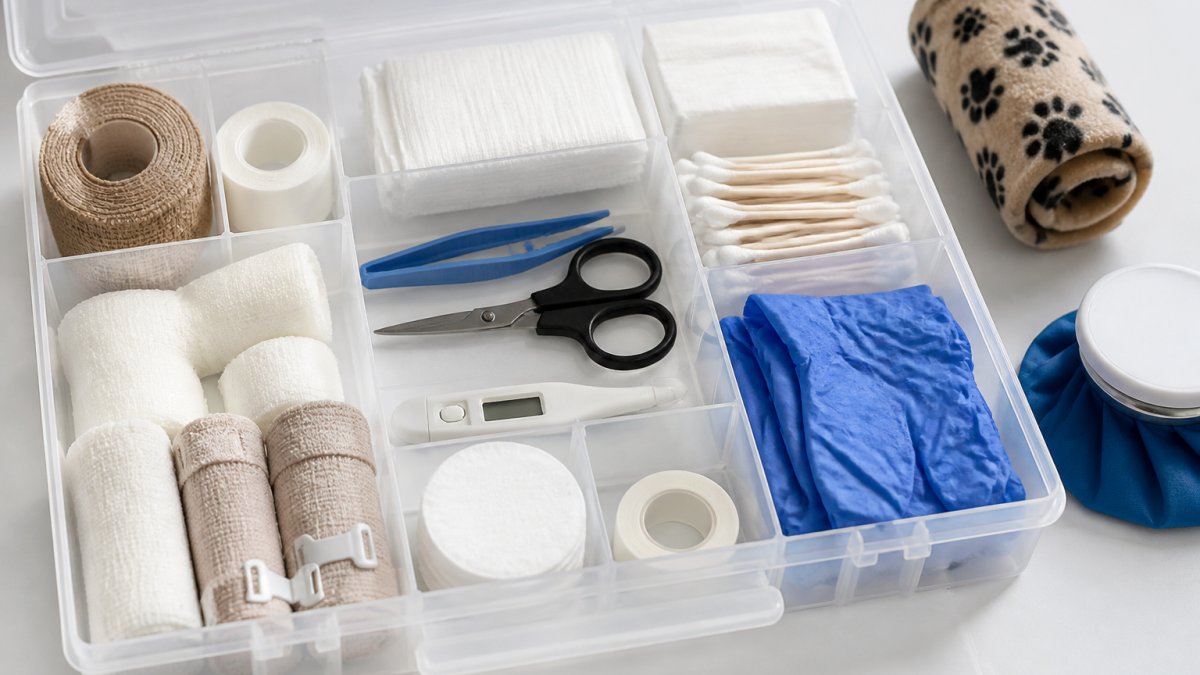
Choosing Your Container
Start with a clear plastic container with compartments. A fishing tackle box, tool organizer, or craft supply box works perfectly. Clear containers let you see what you have at a glance. Compartments keep items organized so you can find them quickly in an emergency.
The container should be large enough to hold all your supplies but small enough to carry easily. You might need to transport it to the vet's office or keep it in your car. A container about 12 inches long by 8 inches wide works for most households. Label the container clearly: "Pet First Aid Kit" with your pet's name.
Organizing Supplies for Easy Access
Group supplies by category. Keep all gauze and bandages together in one compartment. Put cleaning supplies in another. Store tools (scissors, tweezers, thermometer, flashlight) in a small pouch or zippered bag within the container.
Arrange items so the most-used supplies are easiest to reach. Gauze, bandages, and gloves should be in the front. Less frequently used items can go in the back. Label each compartment so anyone in your household can find what they need.
Include a waterproof pouch for items that might get wet or dirty. Keep medications (if any) in a separate, labeled container. Store this container in a cool, dry place, never in direct sunlight or extreme heat.
Adding Medical Records and Emergency Information
Include printed copies of your pet's medical records in your kit. Add vaccination records, microchip registration information, and any chronic health conditions your pet has. Include your veterinarian's name, phone number, and address. Add the address and phone number of a 24-hour emergency veterinary clinic in case you need care after hours.
Create a one-page summary of your pet's medical history. Include allergies, current medications, and any special health concerns. Laminate this page so it stays clean and readable. In an emergency, this information helps the vet treat your pet quickly and safely.
Include a photo of your pet in case it gets lost during the stress of an emergency. Write your contact information clearly on all documents.
Pet First Aid Kit Expiration Dates and Maintenance Schedule
Supplies don't last forever. Saline solution expires. Gauze can become contaminated. Medications lose potency. Check your kit every six months. Replace any expired items immediately.
Mark the purchase date on items when you add them to your kit. Set a phone reminder to check your kit twice a year, perhaps on the same date you check your smoke detectors.
Remove any items that show signs of damage, discoloration, or contamination. If gauze looks dirty or discolored, throw it out. If tape has lost its stickiness, replace it.
Keep a simple checklist inside your kit showing what should be there. Check off items as you restock them. This prevents you from forgetting supplies when you replace used items.
Items to Avoid and When to Seek Veterinary Care
Some items commonly found in human first aid kits are dangerous for pets. Never include aspirin, ibuprofen, or acetaminophen.
Avoid human antibiotic ointments if your vet hasn't approved them. Some contain ingredients that are toxic when ingested.
Never include essential oils or herbal remedies. Many are toxic to pets. Avoid alcohol-based products, which can dry out skin and cause irritation.
Know when home first aid isn't enough. If your pet has a wound that won't stop bleeding after ten minutes of pressure, seek veterinary care immediately.
Don't attempt to treat deep wounds, burns, broken bones, or poisoning at home. These require professional veterinary care.
Building a pet first aid kit puts you in control when emergencies happen.
Frequently Asked Questions
What supplies should be in a pet first aid kit?
A basic pet first aid kit should include sterile gauze pads and bandages, medical tape, antibiotic ointment, tweezers for splinter removal, scissors, a digital thermometer, disposable gloves, cleaning wipes, a flashlight, and a collar or leash for transport. Add any medications your veterinarian has prescribed, including antihistamines or pain relief. Keep a copy of your pet's medical records and your veterinarian's contact information. The exact contents may vary based on your pet's species, age, and any existing health conditions.
How do I know when items in my pet first aid kit expire?
Check expiration dates on all medications, ointments, and sterile supplies when you assemble your kit and again every six months. Sterile gauze and bandages typically remain safe for several years if kept in a sealed package in a cool, dry place. Medications and topical treatments have specific expiration dates printed on the package. Replace any expired items immediately. Mark your calendar or set a phone reminder to inspect your kit twice yearly to catch expired supplies before an emergency occurs.
Can I use human first aid supplies on my pet?
Some human first aid items are safe for pets, such as sterile gauze, medical tape, and clean towels for wound care. However, many human medications and topical treatments are toxic to animals. Never use human pain relievers, antihistamines, or ointments containing ingredients like aspirin, ibuprofen, or certain essential oils without explicit veterinary approval. Always consult your veterinarian before applying any human product to your pet. When in doubt, use pet-specific first aid supplies or call your vet for guidance.
When should I call a veterinarian instead of treating my pet at home?
Seek immediate veterinary care if your pet has severe bleeding that doesn't stop after 10 minutes of pressure, difficulty breathing, signs of shock (pale gums, weakness, rapid heartbeat), suspected broken bones, eye injuries, ingestion of toxins, or deep wounds. Also call your vet for uncontrolled vomiting, diarrhea lasting more than a few hours, inability to urinate or defecate, signs of extreme pain, or any injury affecting the head, spine, or abdomen. Home first aid is appropriate only for minor cuts, scrapes, or minor burns. When uncertain, contact your veterinarian, it's always better to err on the side of caution with your pet's health.