

How to Introduce New Pets Safely: A Step-by-Step Guide

Table of Contents
- Prepare Your Home Before the New Pet Arrives
- Understanding the 3-3-3 Rule for New Pets
- Scent Swapping Techniques for Pets
- How Long to Keep Pets Separated During Introduction
- Supervised Introduction: Step-by-Step Process
- Recognizing Signs of Aggression Between Pets
- Managing Post-Introduction Regression and Age-Specific Dynamics
- Emergency Exit Strategies and Resource Guarding Prevention
Last Updated: August 12, 2026
Prepare Your Home Before the New Pet Arrives
Create a safe environment before your new pet arrives. Designate a sanctuary room, a spare bedroom, bathroom, or den, stocked with food and water bowls, a litter box (if applicable), bedding, toys, and hiding spots. Your new pet will spend the first days or weeks adjusting here while acclimating to their new home.
Secure escape routes and remove hazards. Install baby gates or temporary barriers that allow pets to see and smell each other without direct contact. Check that doors close securely, windows are locked, and toxic substances are stored safely away.
Set up separate feeding stations in different rooms to prevent resource guarding tension. At Smitty's Pet Store, we recommend gathering supplies before arrival: enzymatic cleaners, extra bowls, age-appropriate toys, and comfort items like blankets or calming aids. Minimize noise and activity with dim lighting and soft background music to help both pets feel secure.
Understanding the 3-3-3 Rule for New Pets
The 3-3-3 rule for new pets describes three adjustment phases. The first "3" represents the first three days, when your new pet is in survival mode, overwhelmed by new sights, sounds, and smells. Keep interactions minimal; hiding and refusing food are normal.
The second "3" covers the first three weeks. Your new pet relaxes and shows personality, but behavioral issues or aggression may emerge as initial shock wears off. This is when introductions hit their first real test.
The final "3" spans three months. Your new pet has settled into routines, understands hierarchy, and has developed a relationship with your resident pet. Full integration typically occurs during this phase.
Many pet parents expect immediate harmony and feel discouraged when the process takes longer. Patience during each phase prevents rushing into face-to-face contact before either animal is ready. Post-introduction regression, when a pet that seemed fine suddenly shows aggression or anxiety weeks later, is normal and part of the adjustment timeline.
Scent Swapping Techniques for Pets
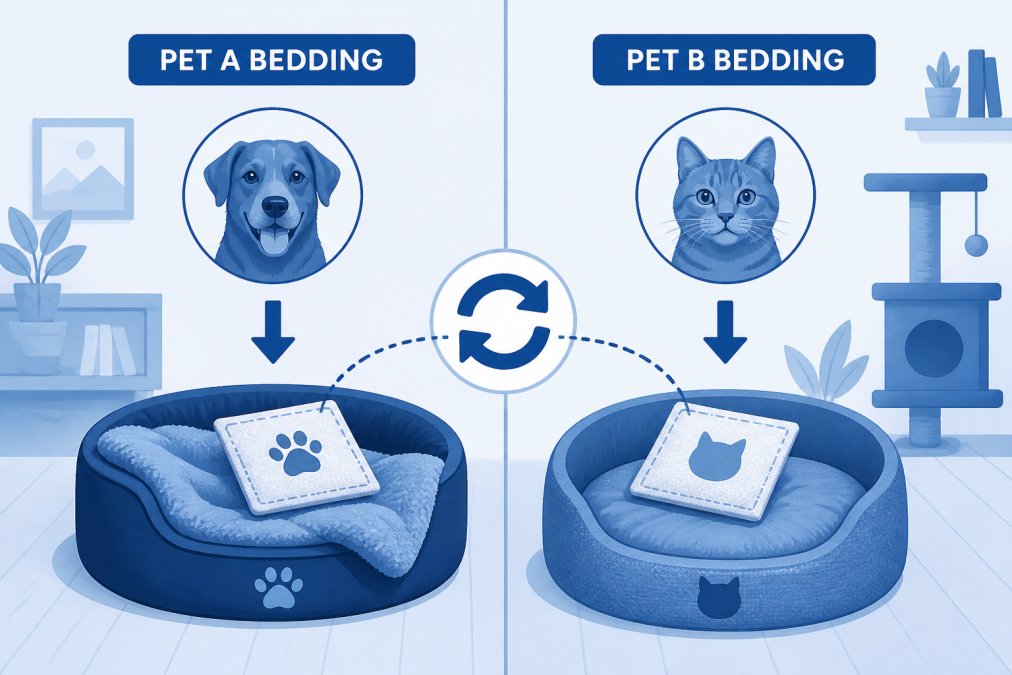
Before your pets see each other, they need to become familiar with each other's scent. Scent swapping techniques for pets create a foundation of familiarity that makes visual and physical introductions less threatening.
Exchange bedding by placing a blanket your resident pet has slept on in your new pet's sanctuary room, and vice versa. Rub a towel on one pet and place it near the other's food bowl to create positive associations. Swap toys between pets as well. Some pet parents wipe one pet's face with a cloth and place it near the other's sleeping area to transfer calming facial pheromones.
Observe your resident pet's reactions during scent swapping. Curiosity and sniffing are positive signs. If your pet shows stress signals, pacing, whining, or avoidance, slow down the process. Scent swapping typically lasts 3-7 days, depending on your pets' temperament. Anxious pets or those with resource guarding tendencies may need longer. There's no penalty for taking extra time here; it's the most critical foundation for successful introductions.
How Long to Keep Pets Separated During Introduction
The duration of separation depends on your pets' age, temperament, and history. Most introductions begin with complete separation for 3-7 days while scent swapping occurs.
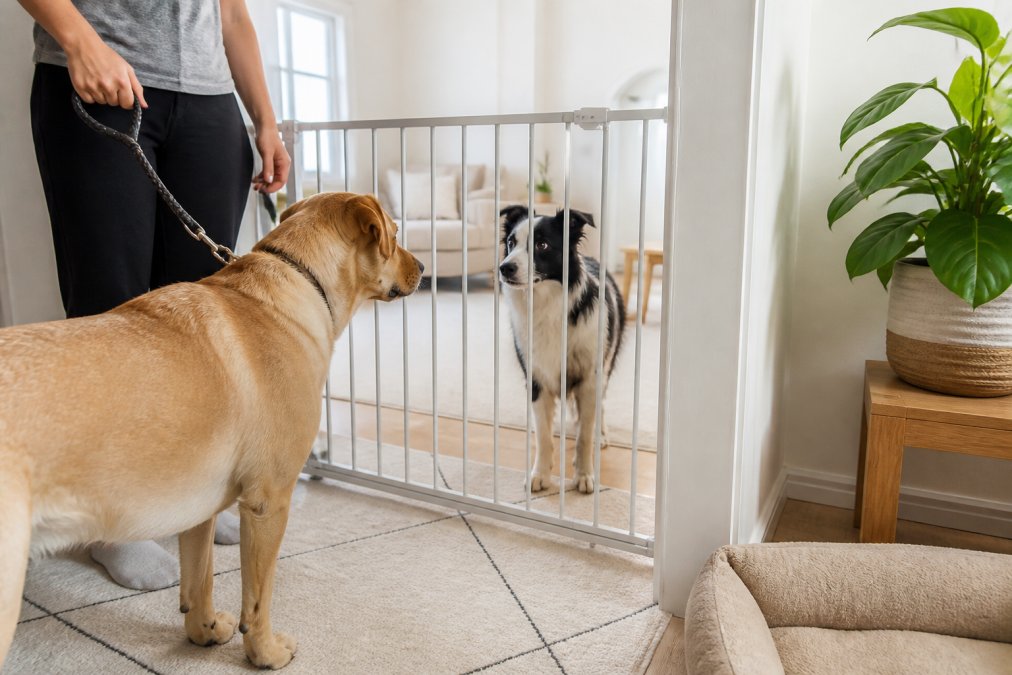
After the initial scent-swapping phase, introduce visual barriers. A closed door with a gap underneath or a baby gate lets pets see each other without physical contact. This phase typically lasts 3-14 days, though anxious pets may need longer.
Age-specific dynamics significantly impact timeline. A young, social pet usually progresses faster than a senior animal set in their routines. If your resident pet shows aggression, stress signals, or extreme anxiety during visual contact, extend the separation period. Pushing forward too quickly escalates tension and makes eventual integration harder.
Some pet parents keep pets separated for months if the resident pet shows territorial behavior or resource guarding. This isn't failure; it's respecting your pets' individual needs. Watch for signs that your pets are ready to progress: calm behavior during visual contact, relaxed body posture, and curiosity rather than aggression.
Supervised Introduction: Step-by-Step Process
Once scent swapping and visual barriers have built familiarity, supervised introduction begins.
Step 1: Start with Visual Barriers
Open the door between the sanctuary room and the rest of your home while maintaining a physical barrier. Position yourself calmly and let your pets approach at their own pace. Reward calm behavior with treats and praise.
Watch for stress signals: stiff body posture, raised hackles, growling, or intense staring. If you see these, close the barrier and return to scent swapping for another few days. Keep these sessions short, 10-15 minutes initially. Multiple short sessions work better than one long exposure. Repeat daily for 3-7 days, gradually extending duration as comfort increases.
Step 2: Progress to Direct Sight
Once both pets are calm during visual barriers, remove the physical obstruction while keeping them on leash (for dogs) or in controlled positions (for cats). Use a long leash to maintain control and create distance. Keep the introduction in a neutral space, not your resident pet's favorite room.
Let them investigate each other at their own pace. Sniffing and calm curiosity are positive. If either pet shows aggression, lunging, snarling, or attempting to bite, calmly separate them and end the session. Return to visual barriers for several more days. These sessions typically last 15-30 minutes.
Step 3: Allow Controlled Face-to-Face Contact
Once your pets are calm during supervised direct contact, allow short periods without leashes in a controlled space. Watch for positive signs: relaxed body posture, play bows, mutual sniffing, and ignoring each other.
If aggression emerges, even minor growling, separate immediately and return to the previous phase. Post-introduction regression is common around the 2-3 week mark. Gradually extend unsupervised time as trust builds. Many pet parents keep pets separated at night or when away for several weeks, even after successful daytime interactions.
Recognizing Signs of Aggression Between Pets
Understanding aggressive body language helps you intervene before minor tension escalates to injury.
Stress signals often precede aggression: ears back or pinned to the head, tucked or lowered tail, stiff body posture, lip licking, yawning, or panting. If you see stress signals, separate the pets and give them space.
Mild aggression includes growling, snarling, or showing teeth without contact. Raised hackles indicate arousal and potential aggression.
Serious aggression involves lunging, snapping, or biting. Separate immediately and consult a professional animal behaviorist.
Resource guarding is aggression triggered by food, toys, or territory. Your pet may stand over a resource, eat faster when the other pet approaches, or growl during feeding. This requires separate feeding spaces and careful management of high-value items.
Territorial aggression emerges when your resident pet defends their space, especially around doorways, favorite resting spots, or resource areas.
Early intervention prevents serious incidents. Ignoring early stress signals and hoping aggression resolves on its own doesn't work. Slow the introduction, increase separation time, or consult a behaviorist.
Managing Post-Introduction Regression and Age-Specific Dynamics
Even after successful introductions, behavioral regression happens. Your pets may have been calm for weeks, then suddenly show aggression, anxiety, or territorial behavior. This is normal and doesn't indicate failure.
Post-introduction regression typically occurs around 2-4 weeks after first contact. When it occurs, return to the previous phase of introduction. If your pets were doing well with supervised contact, go back to visual barriers for a few days.
Age-specific dynamics significantly impact introduction success. A young pet's energy and curiosity can overwhelm a senior animal. A senior pet's irritability may frighten a young newcomer.
For introducing a young pet to a senior resident, provide the senior with escape routes and high perches (for cats) or separate rooms. Let the senior set the pace. When introducing a senior newcomer to a young resident, manage the young pet's energy with leashes and reward calm behavior.
Territorial behavior is more pronounced in senior pets and those with resource guarding history. Provide multiple feeding stations, litter boxes (for cats), and resting areas so they don't feel threatened.
Emergency Exit Strategies and Resource Guarding Prevention
Knowing how to safely separate fighting pets and prevent resource guarding protects everyone involved.
Emergency separation requires calm, quick action. If your pets are fighting, don't put your hands between them. Use a broom or chair to physically separate them, or create a loud noise to startle them apart. Once separated, move one pet to another room immediately.
Never punish a pet for aggression during introduction. Punishment increases anxiety and teaches your pet that the other animal's presence predicts bad things, worsening aggression.
Resource guarding prevention starts before introduction. Feed your pets in separate rooms with closed doors. Remove toys and chews during initial interactions. If resource guarding emerges, consult a professional trainer or behaviorist.
Create multiple resources so competition doesn't occur. Two cats need multiple litter boxes (one per cat plus one extra). Dogs need separate water bowls in different locations. Toys should be abundant enough that sharing isn't necessary.
Some pets have a history of severe resource guarding or aggression that makes coexistence unsafe. In these cases, permanent separation might be necessary. This isn't failure; it's responsible pet ownership that keeps both animals safe.
Building a multi-pet household takes time, patience, and realistic expectations. At Smitty's Pet Store, we help pet parents navigate this process with quality supplies and guidance that make introduction less stressful. From sanctuary room setup to behavioral support resources, having the right tools and knowledge transforms the introduction into a manageable, rewarding process.
Successfully introducing new pets safely requires understanding each animal's needs, respecting their individual timelines, and recognizing when professional help is necessary. The 3-3-3 rule, scent swapping, and gradual exposure create a foundation for peaceful coexistence. When challenges arise, aggression, resource guarding, or post-introduction regression, return to earlier phases and slow the process to prevent serious conflict. Smitty's Pet Store offers the supplies and guidance you need to create a calm environment where both your resident pet and newcomer can thrive together.
Frequently Asked Questions
What is the 3-3-3 rule for new pets?
The 3-3-3 rule breaks the adjustment timeline into three phases: 3 days to decompress in their sanctuary room, 3 weeks to learn your routine and feel comfortable, and 3 months to fully settle and show their true personality. This framework helps pet parents understand that bonding and behavioral adjustment take time. Most pets need this gradual transition to reduce stress and build trust with their resident pet and new family.
How long should I keep my new pet separated from my current pet?
Start with complete separation for at least 3-5 days while your new pet adjusts to the home. During this time, use scent swapping to help them become familiar with each other's smell. After this initial period, begin supervised introduction through barriers like baby gates or closed doors. Full unsupervised access typically requires 2-4 weeks of gradual, positive interactions. Every pet pair is different, so watch for stress signals and body language cues before extending freedom.
What are the signs that pets are not getting along?
Watch for stiff body posture, raised hackles, pinned-back ears, intense staring, growling, hissing, or lunging. Stressed pets may also hide, refuse food, or show excessive panting. Resource guarding over toys or food bowls is a serious warning sign. If you see these behavioral cues, separate the pets immediately and slow down the introduction process. Consult a veterinarian or certified animal behaviorist if aggression escalates, as professional intervention may be necessary to prevent injury.
How do I know if my new pet is stressed during introduction?
Stressed pets display trembling, excessive panting, loss of appetite, or hiding behavior. They may also show avoidance of their new housemate, excessive vocalization, or changes in sleep patterns. Some pets regress in house training or become unusually clingy. These stress signals are normal during the adjustment period, but they mean you should slow down the introduction pace. Provide escape routes, vertical space for cats, and a calm environment where each pet can retreat to their safe zone without pressure.
This article was written using GrandRanker