

How to Groom a Dog at Home Safely: A Guide for Pet Parents

Table of Contents
- Preparing Your Dog and Space for a Safe Grooming Session
- Best Dog Grooming Tools for Beginners
- Brushing and Bathing Techniques for a Healthy Coat
- How to Trim Dog Nails Without Hurting Them
- Handling Ears, Eyes, and Teeth
- How Long Does a Full Dog Grooming Session Take?
- Troubleshooting Common Grooming Issues and Injuries
- Frequently Asked Questions
Last Updated: September 23, 2026
Preparing Your Dog and Space for a Safe Grooming Session
Learning how to groom a dog at home safely starts long before you pick up a brush. It begins with the room you choose and the mood you set. Most grooming struggles trace back to environment, not technique. A calm dog on a stable surface is easier to handle than a nervous dog on a slippery bathroom floor.
Setting Up Your Grooming Area
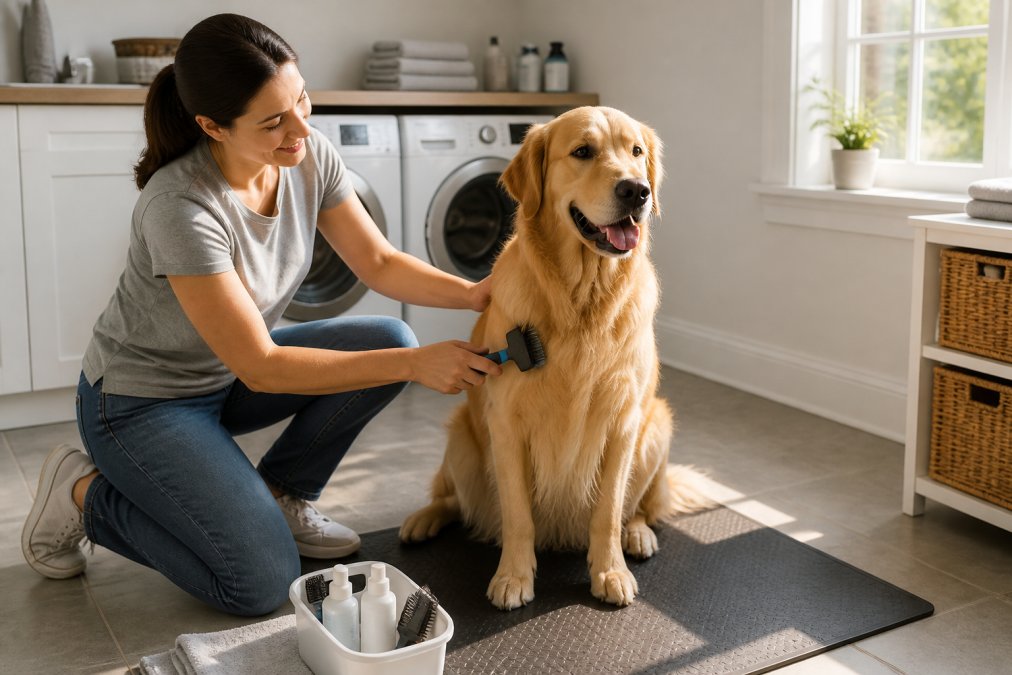
Pick a quiet, well-lit space with a door you can close. Lay down a non-slip mat or towel so your dog's paws stay planted. Set your tools within arm's reach before you bring your dog in, because turning your back mid-session invites wiggling and escape attempts.
Desensitization and Positive Reinforcement
Best Dog Grooming Tools for Beginners
The best dog grooming tools for beginners are a slicker brush, a metal comb, a pH-balanced dog shampoo, nail clippers, and styptic powder. That five-tool kit covers brushing, bathing, nails, and ears for most coat types. What changes by breed is not the list, it is which brush you reach for first and how often you use it.

Match the Tool to the Coat Type
Most grooming frustration comes from using the wrong brush on the wrong coat. Here is how the major coat categories break down:
| Coat Type | Examples | Primary Tool | Key Rule |
|---|---|---|---|
| Double coat | Husky, golden retriever, German shepherd | Undercoat rake + slicker | Never shave; the undercoat regulates temperature |
| Curly / doodle | Poodle, goldendoodle, labradoodle | Metal comb + slicker | Comb to the skin daily; curls mat from the inside out |
| Wire coat | Terrier, schnauzer | Slicker + stripping comb | Hand-strip or clip; do not over-bathe |
| Smooth / short | Beagle, boxer, dachshund | Rubber curry brush | Little brushing needed; watch for skin issues |
| Long silky | Yorkie, shih tzu | Pin brush + metal comb | Comb daily around ears, armpits, and tail |
Essential Tools for Brushing and Bathing
For bathing, choose a pH-balanced shampoo made for dogs, since human shampoo disrupts their skin barrier. Dogs' skin sits at a different pH than ours, and repeated use of human products leads to itching, flaking, and dull coat. For double-coated breeds, add an undercoat rake, a comb with rows of short teeth that reaches the dense layer without scratching skin.
Nail and Ear Care Essentials
You need nail clippers sized to your dog, plus styptic powder for the occasional nick. Add cotton balls and a vet-approved ear cleaner. Skip cotton swabs, since they push debris deeper into the ear canal. If clippers make you nervous, a grinder offers more control, especially on dark nails where you cannot see the quick.
What You Do Not Need
Beginners often buy too much. You do not need a full clipper set with a dozen blades, a grooming table with an arm and noose, or a cabinet of specialty shampoos. Those make sense once you know your dog's coat and temperament. Start with the five-tool kit, add a grinder if nails are a struggle, and add an undercoat rake if your dog sheds heavily.
Brushing and Bathing Techniques for a Healthy Coat
Brushing and bathing do different jobs, and doing them in the wrong order creates problems. Always brush before you bathe. Water tightens existing mats into felt-like knots that no shampoo can rinse out.
How to Brush Your Dog's Coat
Work in sections, starting at the hindquarters and moving forward. Part the fur with one hand and brush from the skin outward, not just along the surface. A common mistake is brushing only the top layer, which leaves the undercoat packed and matting unchecked.
Bathing Your Dog Safely
Use warm water, never hot. Wet your dog from the neck down, lather shampoo away from the eyes and ears, and rinse until the water runs clear. Leftover shampoo residue causes itching and dull coat condition.
How to Trim Dog Nails Without Hurting Them
The safest way to trim dog nails is to remove small slivers and stop before the quick, the pink blood vessel and nerve bundle inside each nail. On light or clear nails you can see the quick as a pink shadow. On dark nails, look at the cut surface after each slice: it starts chalky white, turns gray, then shows a pink or red dot. Stop at gray.
Professional Pet Grooming Kit →
Clipper vs. Grinder: Which to Use
Nail clippers remove length fast but leave a sharp edge. Grinders (rotary sanders) round the edge and let you sneak up on the quick in tiny increments, which is why many owners of dark-nailed or thick-nailed dogs prefer them. The trade-off: grinders make noise and vibration, so they need the same desensitization as clippers.
Step-by-Step Nail Trim
- Hold one paw firmly but gently, thumb on the pad, fingers supporting the top of the paw
- Isolate one nail and clip at a 45-degree angle, removing a thin slice
- Look at the cut surface after every slice
- Stop when you see a gray or pink dot
- Reward, then switch paws
- Dip any nick in styptic powder and apply steady pressure for 30 seconds
Trim nails every three to four weeks. If you hear a clicking sound on hard floors, the nails are already too long. The AVMA's pet care resources note that overgrown nails change how a dog stands, which can strain joints over time.
What to Do If You Nick the Quick
It happens to almost everyone. Stay calm, your dog reads your reaction. Press styptic powder (or cornstarch in a pinch) into the nail tip and hold pressure for 30 seconds. If bleeding continues past a few minutes, apply a fresh pinch and keep pressure on. Skip that nail for the rest of the session and end nail work for the day.
When to Skip the Clippers Entirely
Some nails should not be trimmed at home: nails that are cracked, split, or growing into the pad; nails on a dog with a known bleeding disorder; and nails on a dog that has already had one bad trim experience and now panics. In those cases, a professional groomer or veterinary clinic can use restraint and equipment you do not have at home. There is no prize for finishing the job yourself.
Handling Ears, Eyes, and Teeth
Ear cleaning, eye wiping, and tooth brushing round out a full grooming routine, and each takes under two minutes once your dog accepts handling. Check ears weekly for redness, odor, or discharge. Squeeze cleaner into the canal, massage the base, and let your dog shake. Wipe the outer flap with cotton, never a swab.
How Long Does a Full Dog Grooming Session Take?
A full grooming session takes 45 to 90 minutes for most dogs, split across brushing, bathing, drying, nails, ears, and teeth. The grooming frequency matters more than session length. Short, regular sessions beat occasional long ones.
| Task | Time | Frequency |
|---|---|---|
| Brushing | 5-10 min | 3-4 times weekly |
| Bathing | 20-30 min | Every 4-8 weeks |
| Nail trimming | 5-10 min | Every 3-4 weeks |
| Ear cleaning | 2 min | Weekly |
| Tooth brushing | 2 min | 3-4 times weekly |
Troubleshooting Common Grooming Issues and Injuries
Most grooming injuries are minor and preventable, but knowing what to do matters. A nicked quick, a scratched eye, or a hot spot from trapped moisture all have clear first responses.
- Nicked quick: Apply styptic powder, press for 30 seconds, and stop nail work for the day
- Matting: Never cut mats with scissors near skin, since it is easy to slice the dog; work them loose with a dematting tool or see a professional groomer
- Ear infection signs: Redness, odor, or head shaking warrant a vet visit, not home treatment
- Dry, flaky skin: Often from overwashing or harsh shampoo; switch to a pH-balanced formula and space baths further apart
- Dander and shedding: Regular brushing with a vacuum attachment reduces both on furniture and in the air
Frequently Asked Questions
What is the easiest way to groom a dog at home?
Start with short, positive sessions using the right tools for your dog's coat type. A slicker brush and a grooming comb handle most brushing needs. For bathing, use a pH-balanced shampoo and warm water. Trim nails with a clipper designed for pets, taking small amounts at a time. Keep sessions under 20 minutes for beginners and reward your dog with treats and praise to build comfort.

How often should you groom your dog at home?
Grooming frequency depends on coat type. Short-haired dogs need brushing once a week, while long-haired or double-coated breeds may need daily brushing. Bathe most dogs every 4 to 6 weeks unless they get dirty. Trim nails every 3 to 4 weeks. Check ears weekly and brush teeth several times a week. Adjust based on your dog's activity level and coat condition.
Is it safe to trim a dog's nails at home?
Yes, with care and the right tools. Use sharp nail clippers made for dogs and trim small amounts at a time to avoid the quick, the blood supply inside the nail. If you accidentally cut the quick, apply styptic powder to stop bleeding. For dogs with dark nails, trim tiny slivers or ask a professional groomer or vet to show you the technique first. Never use human nail clippers.
How can I keep my dog calm during a grooming session?
Create a calm environment with minimal noise and a non-slip surface. Use positive reinforcement: offer treats and praise for calm behavior. Start with short sessions and gradually increase time. Practice handling your dog's paws, ears, and muzzle when you are not grooming so they get used to being touched. If your dog shows severe anxiety, consult your veterinarian or a professional groomer.