

How to Choose a Comfortable Cat Harness

Table of Contents
- Understanding Cat Harness Types
- How to Measure a Cat for a Harness
- How Tight Should a Cat Harness Be
- Materials, Breathability, and Durability
- Escape Resistance and Security Features
- How to Get a Cat Used to a Harness
- Fit Verification and Safety Checks
- Frequently Asked Questions
Last Updated: October 15, 2026
Understanding Cat Harness Types
Learning how to choose a comfortable cat harness starts with understanding your options. The three main types, vest, jacket, and strap, each offer distinct advantages and trade-offs.
Vest-style harnesses distribute pressure evenly across your cat's chest and torso. They're ideal for cats with sensitive necks or those prone to backing out. Jacket-style harnesses provide more coverage and security, wrapping around the body for maximum control. Strap-style harnesses are minimal and lightweight, best for cats already comfortable with restraint.
Your cat's personality matters here. An anxious cat often does better with a vest that feels secure and snug. An active, escape-prone cat needs escape-proof design with reinforced attachment points.
Vest-Style Harnesses
A vest-style harness wraps around your cat's torso like a small jacket. It covers more surface area than other styles, which spreads the leash tension across a larger area rather than concentrating it on one spot.
Vest harnesses work well for:
- Cats with delicate necks or trachea concerns
- Senior cats needing extra support
- Nervous cats that need a secure, enclosed feel
- Kittens learning to walk on a leash
The downside is bulk. Some cats find the extra fabric restrictive or uncomfortable in warm weather. They also take longer to put on than strap styles.
Jacket-Style Harnesses
Jacket-style harnesses sit between vest and strap designs. They offer more coverage than straps but less bulk than full vests. The chest piece connects to a back piece, creating a secure loop around the body.
These work best for:
- Cats with strong pulling habits
- Outdoor explorers who need reliable security
- Cats that have escaped from simpler harnesses
- Cats that tolerate more structured gear
The trade-off is that jacket harnesses can be harder to adjust properly. Getting the fit right takes more attention than strap styles.
Strap-Style Harnesses
Strap-style harnesses use thin straps that loop around the neck and torso. They're minimal, lightweight, and easy to put on quickly. Many cats barely notice they're wearing one.
Strap harnesses suit:
- Cats already comfortable with leash training
- Indoor cats taking occasional outdoor walks
- Cats sensitive to bulk or weight
- Situations where quick on-and-off matters
The limitation is security. Strap harnesses offer less escape resistance than vests or jackets. A determined cat can sometimes back out or slip free.
How to Measure a Cat for a Harness
Proper measurement is the foundation of a comfortable fit. Most harness problems stem from incorrect sizing, not bad design. Take two key measurements: neck and chest girth.
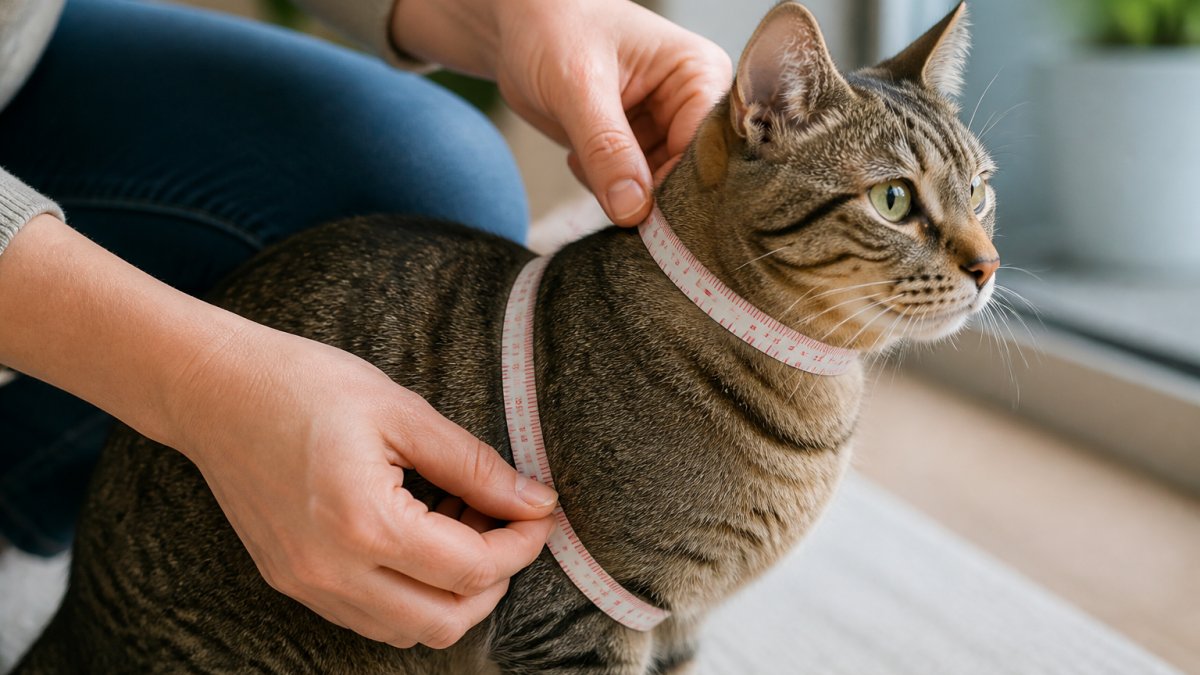
Taking Neck and Chest Measurements
Start with the neck. Use a soft measuring tape, never a hard ruler. Wrap it gently around your cat's neck where a collar would sit. The tape should rest loosely, not tight. Write down this number.
Next, measure the chest. Find the widest part of your cat's torso, just behind the front legs. Wrap the tape around this spot, keeping it snug but not compressing the body. This is your chest girth measurement.
Do both measurements twice to confirm. If your numbers vary, use the larger one. Always measure when your cat is calm and standing naturally, not stretched out or hunched.
Using Sizing Charts Effectively
Every harness brand provides a sizing chart. Match your measurements to the chart, then look at the recommended size range. Most charts show neck and chest measurements alongside size labels (XS, S, M, L, XL).
Here's the key: if your cat falls between two sizes, choose the larger one. A slightly loose harness is safer than one that's too tight. You can always adjust straps to create a snug fit on a larger size.
Check the chart for weight ranges too. Weight alone isn't enough, a muscular cat and a fluffy cat at the same weight need different fits. Prioritize your actual measurements over weight recommendations.
| Measurement Type | How to Measure | What to Note |
|---|---|---|
| Neck girth | Wrap tape where collar sits | Keep loose, not tight |
| Chest girth | Measure widest part behind front legs | Should be snug but not compressed |
| Size selection | Match both measurements to chart | Choose larger size if between two |
| Adjustment | Use chart to set initial strap positions | Fine-tune after putting harness on |
How Tight Should a Cat Harness Be
This is where most people struggle. Too tight causes discomfort and skin irritation. Too loose and your cat escapes. The right fit sits between these extremes.
The Two-Finger Rule for Snug Fit
Use the two-finger rule to check fit. After putting the harness on, slide two fingers under each strap, at the neck, chest, and torso. You should fit two fingers comfortably with slight resistance. If you can't fit two fingers, it's too tight.
Check multiple points. The neck area often needs tighter adjustment than the chest. Your cat should be able to move freely but not slip free. When your cat walks, the harness should stay in place without shifting or rotating.
Adjust one strap at a time. Make small changes, a quarter inch can make a big difference. After adjusting, walk your cat for a few minutes and recheck. Harnesses often settle into a different position after initial wear.
Checking for Rubbing and Skin Irritation
After wearing a harness for 15-20 minutes, remove it and inspect your cat's skin. Look for red marks, hair loss, or irritation. Some redness fades quickly, that's normal. Persistent marks or raw spots mean the fit needs adjustment.
Pay special attention to:
- The neck area where the harness crosses
- Armpits and where straps meet the torso
- Anywhere the harness bends or folds
If you see irritation, loosen the affected strap slightly. Sometimes moving the harness position by half an inch prevents rubbing. If rubbing persists after adjustments, the harness style may not suit your cat's body shape.
Soft fabrics reduce irritation risk. Materials matter more than you might think. Cotton and breathable mesh cause fewer problems than rough nylon.
Materials, Breathability, and Durability
The material your harness is made from affects comfort, longevity, and how your cat tolerates wearing it. Look for soft fabrics that won't chafe delicate skin.
Cotton and cotton blends are ideal for comfort. They're breathable, soft, and gentle on fur. Cotton doesn't hold heat, which matters during warm weather or longer walks.
Nylon is common because it's durable and affordable. Quality nylon feels soft initially but can become rough with wear. Check the weave, tightly woven nylon lasts longer than loose weaves.
Breathable mesh is excellent for active cats or warm climates. Mesh allows air circulation, reducing overheating risk. It's also lightweight, which some cats prefer.
Escape-Proof Pet Harness & Leash →
Avoid harnesses with rough seams or cheap plastic buckles. These cause discomfort and fail quickly.
Durability matters because a failing harness is a safety risk. Look for:
- Double-stitched seams
- Metal or high-quality plastic hardware
- Reinforced stress points where straps meet the torso
Escape Resistance and Security Features
An escape-proof design keeps your cat safe during outdoor adventures. This matters most for cats with a history of backing out or slipping free.
Chest harnesses offer better escape resistance than neck-only designs. The chest piece prevents your cat from backing out.
Leash attachment points matter too. Harnesses with both front and back attachment options give you more control.
Snap closures and buckles need to be sturdy. Test them before buying. They should click firmly and not open with light pressure.
Reflective strips don't prevent escapes, but they're important for safety. Reflective material makes your cat visible during dawn, dusk, or evening walks.
The Escape-Proof Pet Harness & Leash from Smitty's Pet Store features a secure chest design specifically engineered to prevent backing out.

How to Get a Cat Used to a Harness
Introducing a harness takes patience. Most cats resist at first. Rushing the process leads to stress and negative associations. Taking time upfront makes the difference between a cat that tolerates the harness and one that accepts it.
Step-by-Step Acclimation Process
Start indoors. Let your cat see and smell the harness before wearing it. Place it on the floor near your cat's favorite spot.
Next, hold the harness near your cat without putting it on. Offer treats while you hold it. This builds positive associations.
When your cat seems comfortable, gently drape the harness over their back for just a few seconds. Don't fasten it yet. Reward with treats immediately.
Now fasten the harness loosely. Keep it on for only 30 seconds the first time. Reward heavily.
Once your cat wears the harness calmly indoors for 10+ minutes, add the leash. Let your cat walk around the house dragging the leash.
Finally, take your cat outside in a safe, enclosed space like a patio or cat-proofed yard.
Positive Reinforcement and Patience
Never force the harness on. Forcing creates fear and resistance. If your cat panics, remove the harness and try again tomorrow.
Use high-value treats during each step. Treats your cat rarely gets work best. Praise enthusiastically when your cat cooperates. Your tone matters, cats respond to genuine encouragement.
Some cats take two weeks to acclimate. Others need a month. This is normal. Patience now prevents ongoing struggle later.
Watch for signs of stress: excessive meowing, thrashing, or refusing to move. These mean you're moving too fast. Go back to the previous step and spend more time there.
Once your cat walks comfortably on a leash, outdoor time becomes enjoyable for both of you. The investment in acclimation pays off every time you walk together.
Fit Verification and Safety Checks
Before each walk, verify the fit and check for safety issues. This takes 30 seconds and prevents problems.
The fit check:
- Slide two fingers under each strap
- Confirm your cat can move freely
- Check that the harness hasn't shifted since last wear
The safety check:
- Look for loose stitching or fraying
- Test all buckles and snaps
- Confirm the leash attachment is secure
- Check for any signs of wear or damage
If you notice wear, address it immediately. A failing buckle or weakened strap can cause escape. Replace the harness if damage is significant.
Inspect your cat's skin where the harness touches. Red marks that fade within an hour are normal. Persistent marks or raw spots mean adjustment is needed.
After walks, remove the harness and give your cat a break. Cats shouldn't wear harnesses all day. A few hours at a time is ideal.
Knowing how to choose a comfortable cat harness comes down to three things: the right style for your cat's personality, precise measurements matched to a sizing chart, and proper fit verification before each use.
At Smitty's Pet Store, we stock harnesses in multiple styles and sizes because we know every cat is different. Our curated selection includes the Adjustable Pet Harness with fully adjustable chest straps for a customized fit, the Breathable Reflective Dog Harness Vest, and the No-Pull Reflective Dog Harness with front and back attachment options for superior control.

Frequently Asked Questions
What type of cat harness is most comfortable?
Vest-style harnesses are generally the most comfortable for cats because they distribute pressure evenly across the chest and torso rather than concentrating it on the neck. Look for soft, breathable materials like mesh or cotton that won't cause overheating or skin irritation. The key is finding a harness that fits snugly without restricting movement or breathing.
How do you measure a cat for a harness?
Measure your cat's neck girth just below the ears where a collar would sit, and measure the chest girth at the widest point behind the front legs. Use a soft measuring tape and keep it snug but not tight. Write down both measurements and compare them to the sizing chart before ordering. If your cat falls between sizes, choose the larger size for comfort.
How tight should a cat harness be?
A properly fitting cat harness should be snug enough that your cat cannot slip backward or wiggle free, but loose enough that you can fit two fingers between the harness and your cat's skin. Check the neck, chest, and torso areas. The harness should not leave indentation marks, cause rubbing, or restrict your cat's ability to move naturally or breathe comfortably.
How can you get a cat used to wearing a harness?
Start by letting your cat sniff and explore the harness indoors without putting it on. Gradually place it on your cat for short periods while offering treats and praise. Practice inside your home for several days before attempting outdoor walks. Be patient, some cats need weeks to acclimate. Use positive reinforcement, avoid forcing the harness, and never leave it on unsupervised until your cat is completely comfortable.