

Dog Food for Weight Management: 2026 Review

Table of Contents
- What Makes Dog Food Effective for Weight Management
- How to Help an Overweight Dog Lose Weight
- Calculating Daily Caloric Needs for Dogs
- Safe Rate of Weight Loss for Dogs
- Tools and Supplements to Support Weight Management
- Transitioning Your Dog to a New Diet
- Frequently Asked Questions
Last Updated: October 2, 2026
What Makes Dog Food Effective for Weight Management
Choosing the right dog food for weight management 2026 review requires understanding how nutrition directly impacts your dog's ability to lose weight safely.
The most effective weight management foods share three core characteristics: controlled caloric density, high protein content to preserve lean muscle mass, and adequate fiber to promote satiety. These elements work together to help your dog feel satisfied while consuming fewer calories, the fundamental principle behind sustainable weight loss.
Key Nutritional Considerations for Weight Loss
Weight loss success depends on nutritional balance, not just calorie reduction.
The guaranteed analysis on any weight management formula tells you the protein, fat, and fiber percentages. Look for foods with higher fiber content (typically 10-15%) because fiber increases satiety without adding significant calories.
Protein deserves special attention. Many budget weight management foods cut protein too aggressively, which can lead to muscle loss during dieting.
Protein Content and Muscle Maintenance
During weight loss, protein becomes your dog's best ally for maintaining muscle mass. When caloric intake drops, the body breaks down tissue for energy.
Animal protein sources, chicken, beef, fish, and turkey, provide complete amino acid profiles that support muscle maintenance more effectively than plant-based proteins alone.
Target foods with protein levels of at least 20%, though 25-30% is preferable during active weight loss. This becomes even more critical for senior dogs, whose muscle mass naturally declines with age.
Fiber and Satiety Levels
Fiber is the secret weapon in weight management formulas. It provides bulk without calories, helping your dog feel full on smaller portions.
Soluble fiber (from ingredients like beet pulp) and insoluble fiber (from whole grains and vegetables) work differently in the digestive system.
A fiber content of 12-15% provides meaningful satiety benefits without causing digestive upset. Higher fiber can sometimes lead to increased stool volume or gas, so the balance matters.
How to Help an Overweight Dog Lose Weight
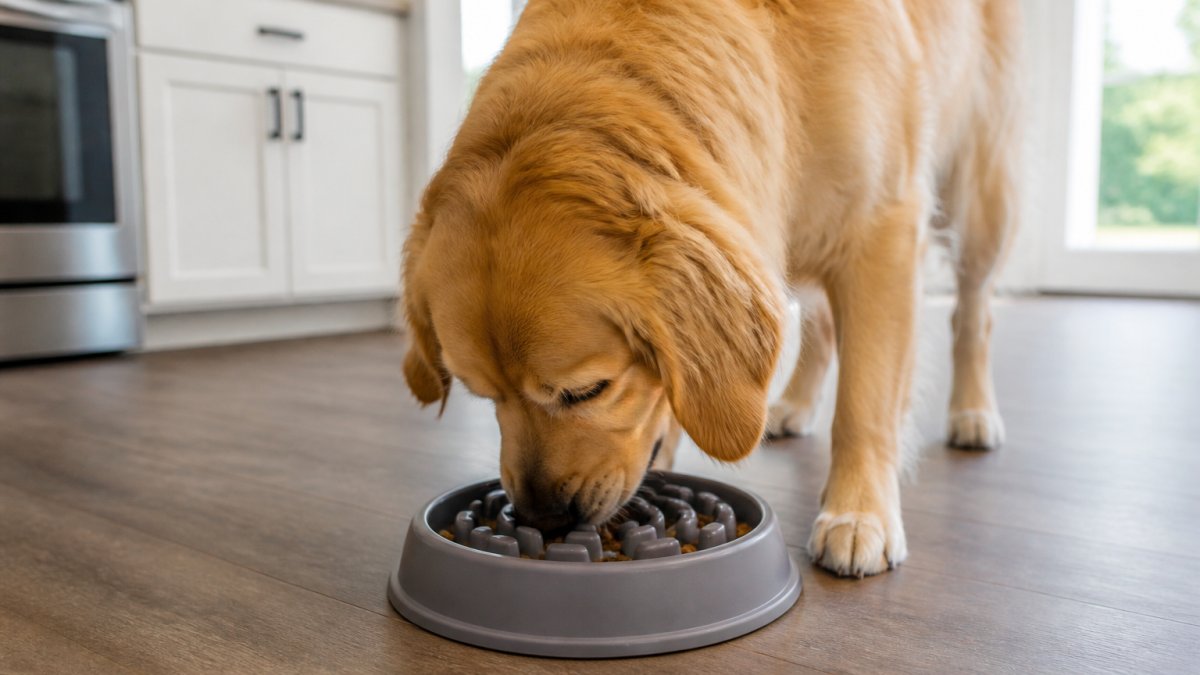
Weight loss requires more than just changing the food bowl. A successful program combines the right nutrition with behavioral changes, portion control, and consistent monitoring. Most pet parents underestimate how much their daily feeding habits, treats, table scraps, and extra snacks, contribute to weight gain.
Portion Control and Feeding Tools
Precise portion control forms the foundation of any weight loss program. Many dogs are overfed simply because owners estimate portions by eye rather than measuring. A kitchen scale or measuring cup becomes essential equipment for tracking exactly how much your dog consumes daily.
The Smitty's Pet Store Slow Feed Pet Bowl ($26.22) encourages slower eating while making portions visually apparent. By slowing down mealtime, your dog's satiety signals have time to register in the brain, reducing the urge to overeat. This single change often helps dogs feel satisfied with smaller portions.

For busy pet parents, the Automatic Pet Feeder with Timer & Stainless Steel Bowl ($46.65) provides portion control consistency. Programmable feeding times prevent the common mistake of "topping off" the bowl throughout the day. The stainless steel bowl resists bacterial growth, and the sealed design keeps kibble fresh between meals.

Portion guidelines on weight management food bags typically recommend 20-30% less food than maintenance formulas. Work with your veterinarian to calculate your dog's specific caloric needs based on current weight, target weight, and activity level.
Behavioral Changes During Dieting
Dogs often gain weight due to behavioral patterns, not just food quality.
Addressing these patterns requires consistency from everyone in the household. If one family member strictly portions meals while another gives extra treats, weight loss stalls.
Many pet parents use treats as their primary way to show affection or reward behavior. During weight loss, redirect this energy toward play, walks, and interactive engagement.
Calculating Daily Caloric Needs for Dogs
Determining the right caloric intake is crucial for safe, sustainable weight loss.
A common starting point uses the Resting Energy Requirement (RER) formula: multiply your dog's current weight in pounds by 30, then add 70.
For weight loss, most veterinarians recommend reducing calories to about 75-80% of the RER. This creates a caloric deficit without triggering metabolic slowdown or muscle loss.
Your veterinarian can provide more precise calculations based on your dog's individual metabolism and health status.
Safe Rate of Weight Loss for Dogs
Rapid weight loss in dogs carries real health risks. Losing weight too quickly can trigger gallstone formation, nutritional deficiencies, and metabolic complications. A safe target is 1-2% of body weight per week.
For a 60-pound dog, this means losing 0.6-1.2 pounds weekly. At this pace, a dog would reach a target weight of 50 pounds in roughly 8-10 weeks. Slower is actually better, it allows the body to adapt metabolically and reduces the risk of complications.
Recognizing Signs of Healthy Weight Loss
Healthy weight loss shows up in multiple ways beyond the scale.
Energy levels often improve during weight loss. Dogs that were sluggish or reluctant to play frequently become more active as excess weight comes off, creating a positive cycle where increased activity supports further weight loss.
Coat quality typically improves as well. Better nutrition and reduced inflammation from excess weight often result in shinier, healthier-looking fur. Breathing becomes easier, and your dog may show less panting during normal activity.
Managing Weight Loss Plateaus
Weight loss plateaus are frustrating but completely normal. After initial rapid weight loss, the rate typically slows as your dog's body adapts.
When progress stalls, resist the urge to cut calories further. Instead, evaluate whether hidden calories have crept back in, extra treats, table scraps, or flavored medications.
If a plateau persists beyond 2-3 weeks despite verified portion control and increased activity, consult your veterinarian.
Tools and Supplements to Support Weight Management
Beyond food and portion control, targeted tools and supplements can support your dog's weight loss journey and overall health during the transition.
Feeding Equipment That Encourages Slower Eating
Slow feeding directly impacts satiety and portion control. The Smitty's Pet Store Slow Feed Pet Bowl ($26.22) uses a maze-like design that forces your dog to work for each bite, extending mealtime and allowing satiety signals to develop. This is particularly effective for dogs that typically gulp their food in seconds.
The Automatic Pet Feeder with Timer ($46.65) ensures consistent portions throughout the day, preventing the common mistake of allowing dogs to graze or demand extra meals. The stainless steel bowl resists bacterial growth and is easier to keep clean than plastic alternatives.
Interactive Toys and Mental Stimulation
Boredom often drives overeating in dogs. Interactive toys redirect this energy toward play and mental engagement, increasing daily activity and reducing food-focused behaviors.
The Pet Toys Acorn Shape Feeding Toy Ball ($28.85) dispenses treats slowly as your dog rolls and nudges it, combining feeding with play. This turns a portion of your dog's daily calories into an earned reward rather than a passive meal.
The Pet Dog Sniff & Snack Puzzle Ball ($26.89) engages your dog's natural foraging instincts. Hide small portions of kibble or low-calorie treats inside, and your dog spends extended time searching and sniffing, mental exercise that burns calories and satisfies the urge to hunt.

The Brain Games Treats Birthday Squeaky Pet Toys ($26.01) combines puzzle elements with sensory engagement. Dogs love solving the puzzle and finding hidden treats, providing hours of enrichment that prevents boredom-related overeating.
Supplement Integration for Overall Health
During caloric restriction, supplementation can support joint health, coat quality, and overall wellness. The Pet Multivitamin Health Supplement ($32.33) provides essential micronutrients that might be lacking in reduced-portion diets.
Weight loss puts stress on joints, particularly in larger breeds or dogs with pre-existing joint issues. Omega-3 fatty acids support skin and coat health while providing anti-inflammatory benefits.
Consult your veterinarian before adding supplements, particularly if your dog takes medications. Some supplements interact with pharmaceuticals or may not be appropriate for dogs with certain health conditions.
Transitioning Your Dog to a New Diet
Switching to a weight management formula requires a gradual transition to prevent digestive upset.
A typical transition spans 7-10 days.
Monitor your dog's stool quality during the transition. Firm, well-formed stools indicate good tolerance.
Appetite changes are common during the first week on a new food.
Weight management success depends on combining the right nutrition, portion control, behavioral changes, and consistent monitoring.
Frequently Asked Questions
What is the best dog food to help a dog lose weight safely?
The best dog food for weight loss combines high protein to preserve lean muscle mass, adequate fiber for satiety, and controlled caloric density. Look for formulas that meet AAFCO nutritional adequacy standards while reducing overall calories. Pair any weight management food with portion control using tools like automatic feeders (priced at $46.65) and slow feed bowls ($26.22) to prevent overeating and support healthy weight loss.
How long does it typically take for a dog to see weight loss results?
Most dogs begin showing visible weight loss results within 4-6 weeks when following a consistent calorie-restricted diet combined with regular activity. The safe rate of weight loss for dogs is 1-2% of body weight per week. For a 100-pound dog, that means losing 1-2 pounds weekly. Patience is essential, as rapid weight loss can stress your dog's system. Monitor your dog's body condition score monthly and adjust portions if progress stalls.
Does weight management dog food actually work for all breeds?
Weight management food works across breeds, but effectiveness depends on consistent portion control, activity level, and metabolic rate. Larger breeds may require different caloric adjustments than smaller dogs. The key is calculating your individual dog's daily caloric needs based on current weight, age, and activity level, then selecting a food with appropriate nutrient density. Interactive toys and mental stimulation also play a role in preventing boredom-related overeating.
What ingredients should I look for in a weight management dog food?
Prioritize foods with high-quality animal protein sources to maintain lean muscle mass during calorie restriction. Seek fiber-rich ingredients that increase satiety without excess calories. Avoid high-fat formulas and those with excessive whole grains that add caloric density. Check the guaranteed analysis on packaging for protein percentages, fat content, and fiber levels. AAFCO compliance ensures the formula meets minimum nutritional standards for safe weight loss.