

Why Dog Dry Skin After Oatmeal Shampoo

Last Updated: October 22, 2026
Quick Summary
Dog dry skin after oatmeal shampoo usually results from improper bathing technique, incomplete rinsing, or using the wrong formula rather than the oatmeal itself. Hot water, shampoo residue, over-bathing, or irritating ingredients strip natural oils and prevent moisture absorption. Most cases improve by using lukewarm water, rinsing thoroughly for 2-3 minutes, bathing less frequently, and choosing a formula without sulfates or fragrance.
- Bathe dogs with healthy skin once every 2-4 weeks, and dogs with dry skin once monthly or every 6 weeks
- Rinse continuously for 2-3 minutes with lukewarm water until it runs completely clear with no soap bubbles
- Water temperature should feel warm like a comfortable shower, ideally between 98-104°F, never above 104°F
- Check shampoo ingredients and avoid sulfates, fragrance, alcohol, and dyes that irritate sensitive skin
- See a veterinarian if dryness persists after fixing technique or if you notice redness, swelling, hair loss, or intense itching
Table of Contents
- Why Does My Dog Get Dry Skin After Using Oatmeal Shampoo
- Dog Dry Skin After Bath: Troubleshooting the Root Cause
- How to Rinse Shampoo Out of a Dog Properly
- Dog Allergic Reaction to Shampoo: Spotting the Difference
- Medicated Shampoo Causing Dry Skin in Dogs
- How to Choose the Right Oatmeal Shampoo for Your Dog
- When to See a Veterinarian
- Conclusion
- Frequently Asked Questions
Why Does My Dog Get Dry Skin After Using Oatmeal Shampoo
Oatmeal shampoo is supposed to soothe dry skin, not cause it. Yet many dog owners report experiencing dog dry skin after oatmeal shampoo, with their pups ending up drier and itchier after a bath.
Colloidal oatmeal does have real moisturizing and soothing properties. But if your dog's skin feels worse after bathing, something in your process is stripping away natural oils or leaving residue behind.
How Colloidal Oatmeal Works
Colloidal oatmeal is finely ground oatmeal suspended in liquid. When applied to skin, it forms a protective barrier that locks in moisture. The oatmeal also contains compounds that reduce inflammation and calm irritated skin.
Here's what it does:
- Seals moisture into the skin
- Reduces itching and redness
- Soothes inflammation from allergies or environmental irritation
- Provides temporary relief from scratching
The key word is "temporary." Oatmeal shampoo helps manage symptoms, but it doesn't treat underlying causes like yeast, fungal infections, or food allergies.
Common Reasons for Post-Bath Dryness
Several things can undo the moisturizing benefits of oatmeal shampoo.
Hot water strips natural oils. Warm water opens the coat and allows the shampoo to clean.
Shampoo residue left behind creates buildup. If you don't rinse thoroughly, dried shampoo particles sit on the skin and coat.
The wrong formula for your dog's condition. Some oatmeal shampoos contain fragrance, sulfates, or other ingredients that irritate sensitive skin.
Dog Dry Skin After Bath: Troubleshooting the Root Cause
If your dog's skin is drier after using oatmeal shampoo, work through these steps to identify what's causing the problem.
Step 1: Check Your Water Temperature and Duration
The water temperature matters more than most people realize. Test the water with your inner wrist before wetting your dog.
Here's what happens at different temperatures:
- Too hot (above 104°F): Strips oils, damages the skin barrier, causes dryness and irritation
- Warm (98-104°F): Ideal for cleaning without damaging the coat
- Cool (85-98°F): Safe but less effective at opening the coat for cleaning
Also limit bath time. Soaking your dog for more than 10 minutes allows water to penetrate too deeply and soften the skin barrier.
How often should you bathe your dog? Most dogs with healthy skin do fine with bathing once every 2-4 weeks.
Step 2: Evaluate Your Rinsing Technique
Incomplete rinsing is the most common cause of post-bath dryness. Shampoo residue left on the skin creates a waxy coating that prevents moisture from absorbing.
Signs you're not rinsing enough:
- Coat feels sticky or stiff after drying
- Skin looks flaky or scaly the next day
- Dog scratches more after baths than before
- Coat looks dull instead of shiny
To rinse properly, use lukewarm running water and work from the head down.
Pay special attention to areas where shampoo pools: armpits, between toes, under the tail, and behind the ears. These spots trap residue easily.
Step 3: Assess the Shampoo Formula
Not all oatmeal shampoos are created equal. Some formulas contain ingredients that actually worsen dryness.
Check the ingredient list for these potential irritants:
- Sulfates: Harsh detergents that strip natural oils
- Fragrance or perfume: Can irritate sensitive skin
- Alcohol: Dries skin and coat
- Dyes: Often trigger allergic reactions
Look for formulas with minimal ingredients. The best options for dry skin include colloidal oatmeal plus natural moisturizers like aloe vera, coconut oil, or glycerin.
How to Rinse Shampoo Out of a Dog Properly
Getting all the shampoo out is non-negotiable. Residue buildup is one of the biggest reasons dogs end up drier after bathing.
The Right Rinsing Method
Start by diluting the shampoo slightly before applying it. Mix the shampoo with a small amount of water in your hand, then work it through the coat.
When rinsing, use a handheld shower head or bucket if you have one. Direct water flow is more effective than pouring from a cup. Work section by section:
- Rinse the head and neck first
- Move to the shoulders and front legs
- Rinse the back and sides
- Finish with the rear legs, tail, and underside
- Do a final full-body rinse with fresh water
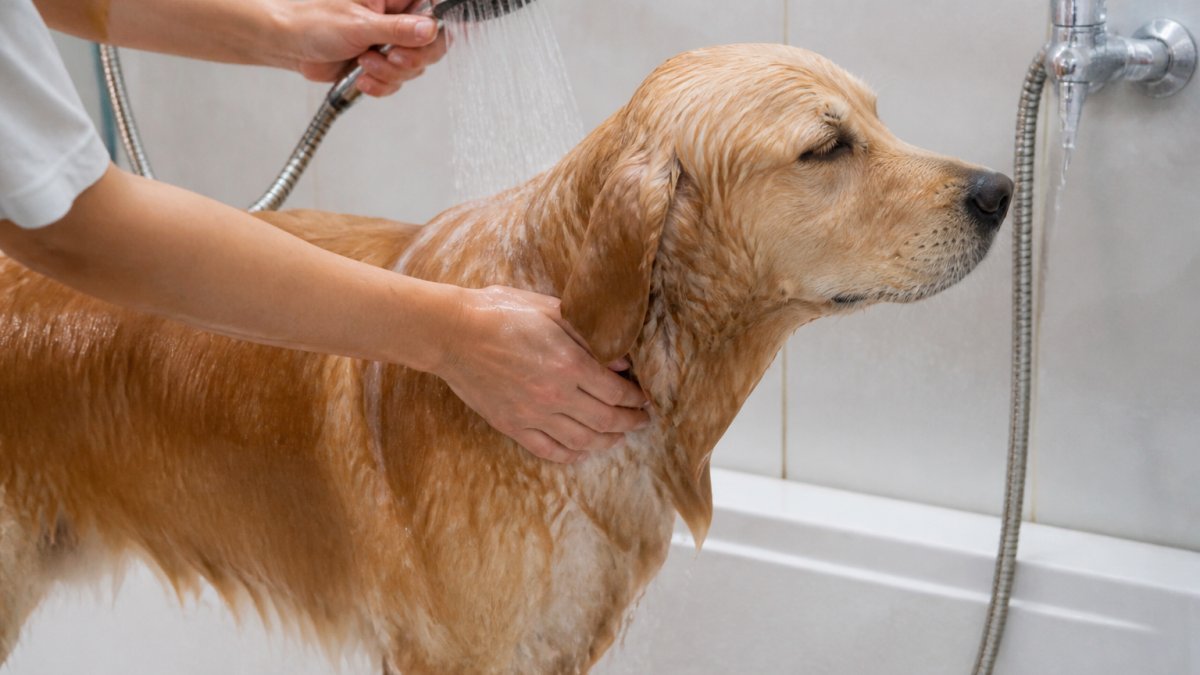
The water should run completely clear before you stop. If you see any bubbles or cloudiness, keep rinsing.
Signs of Incomplete Rinsing
Check these indicators to know if you've rinsed thoroughly enough:
- Coat texture: Should feel soft and smooth, not sticky or waxy
- Skin appearance: Should look clear, not flaky or dull
- Smell: Should smell like your dog, not like shampoo
- Behavior after drying: Your dog shouldn't scratch excessively or bite at the coat
If you notice any of these signs of incomplete rinsing, do an extra rinse cycle. It's better to over-rinse than under-rinse.
Dog Allergic Reaction to Shampoo: Spotting the Difference
Sometimes the problem isn't dryness from technique, it's an actual allergic reaction to the shampoo formula.
Allergic Reaction vs. Normal Dryness
Normal dryness from technique issues appears gradually over a few hours. The coat feels tight, skin may flake, and your dog might scratch more. But there's no redness, swelling, or open sores.
Allergic reactions show up quickly, often within minutes to an hour of bathing. Watch for:
- Redness or hives on the skin
- Swelling of the face, ears, or paws
- Intense itching that leads to scratching or biting
- Discharge or weeping from the skin
If you see signs of an allergic reaction, rinse your dog immediately with plain water to remove all shampoo. Contact your veterinarian if symptoms persist or worsen.
Ingredient Sensitivities to Watch For
Dogs can develop sensitivities to specific ingredients, even natural ones. Common culprits include:
- Fragrance or essential oils: Lavender, tea tree, and citrus oils irritate sensitive skin
- Oatmeal itself: Rare, but some dogs react to oat-based products
- Aloe vera: Can cause skin irritation in sensitive dogs
- Protein sources: Some dogs react to wheat, corn, or soy in shampoos
- Dyes and preservatives: Artificial colors and chemical preservatives trigger reactions
If your dog reacts to one oatmeal shampoo, try a different brand before assuming oatmeal is the problem. Different formulas have different ingredients. When you find a formula your dog tolerates, stick with it.
Medicated Shampoo Causing Dry Skin in Dogs
If your veterinarian prescribed a medicated shampoo for yeast or fungal issues, dryness is sometimes a side effect, not a sign the treatment isn't working.
Why Medicated Formulas Can Worsen Dryness
Medicated shampoos contain active ingredients designed to kill yeast or fungal organisms. These ingredients are stronger than regular shampoos and can be drying, especially with repeated use.
Common medicated ingredients and their effects:
- Ketoconazole: Effective against yeast but can dry skin with overuse
- Chlorhexidine: Antibacterial and antifungal but harsh on the skin barrier
- Miconazole: Targets fungal infections but may cause irritation
- Salicylic acid: Helps remove flaky skin but is drying
If your dog's skin feels drier after starting a medicated shampoo, talk to your veterinarian. You may need to:
- Use the shampoo less frequently than prescribed
- Alternate medicated shampoo with a gentle moisturizing one
- Switch to a different medicated formula
- Use a leave-in conditioner between treatments
Never stop a medicated shampoo without veterinary guidance, even if it's drying. The underlying infection needs treatment.
Yeast and Fungal Concerns
Here's what often confuses owners: yeast and fungal infections cause dryness and flaking. So does using the wrong shampoo. The symptoms look similar, but the treatment is different.
Yeast or fungal infection symptoms:
- Persistent itching and scratching
- Flaky, scaly skin that doesn't improve with bathing
- Musty or yeasty odor
- Redness that doesn't go away
- Symptoms get worse without treatment
Dryness from shampoo residue or technique:
- Improves within a few days after a thorough rinse
- Gets better with proper bathing technique
- Doesn't have a strong odor
- Improves with moisturizing products
If your dog's skin symptoms don't improve after fixing your bathing technique and rinsing thoroughly, a veterinary visit is needed. Your vet can determine whether it's a skin infection, allergic reaction, or something else entirely.
How to Choose the Right Oatmeal Shampoo for Your Dog
Not every oatmeal shampoo works for every dog.
For sensitive skin: Choose hypoallergenic formulas with minimal ingredients. Look for products labeled "fragrance-free" and "dye-free."
For itchy skin from allergies: Select formulas designed for itch relief.
For puppies or very sensitive skin: Start with the gentlest formula available.
We carry a curated selection of oatmeal shampoos for different skin types.
When to See a Veterinarian
Dryness that doesn't improve after fixing your bathing technique warrants a veterinary visit. Your vet can rule out underlying health issues that cause dry skin.
See a vet if your dog has:
- Persistent dryness that lasts more than a few weeks
- Intense itching that leads to hair loss or open sores
- Flaking or scaling that covers large areas
- Redness, swelling, or discharge from the skin
- Odor that suggests infection
Your veterinarian can perform skin scrapings or fungal cultures to identify infections. They can also check for allergies, nutritional deficiencies, or hormonal issues that cause dry skin. Treatment might involve a medicated shampoo, oral medication, dietary changes, or supplements.
Conclusion
Dog dry skin after oatmeal shampoo usually isn't a shampoo problem, it's a technique or formula problem.
The most common fix is simply rinsing better and longer than you think necessary.
If dryness continues despite proper technique, or if you see signs of allergic reaction or infection, contact your veterinarian.
Finding the right shampoo and bathing routine takes some trial and error, but it's worth the effort.
Frequently Asked Questions
Can oatmeal shampoo irritate a dog's skin?
Yes, oatmeal shampoo can irritate a dog's skin in specific situations. While colloidal oatmeal is generally soothing, irritation may occur if shampoo residue builds up on the skin, if your dog has a fragrance sensitivity, or if the formula contains additional ingredients your dog reacts to. Incomplete rinsing is a common culprit. If irritation develops immediately after use, discontinue the product and consult your veterinarian to rule out an allergic reaction.
Why is my dog's skin dry after a bath?
Dog dry skin after bath can result from several factors: water that's too hot, bathing too frequently, incomplete rinsing leaving shampoo residue, or a formula that strips natural oils. Oatmeal shampoos are moisturizing, but if your dog's skin is still dry afterward, check your rinsing technique, water temperature (use lukewarm water), and how often you bathe your dog. Some dogs also have underlying skin conditions that make them prone to dryness regardless of the product used.
How do I know if I rinsed all the shampoo out of my dog's coat?
To confirm thorough rinsing, run your fingers through your dog's wet coat. The water should run clear with no soapy feel or squeaking sound. If you feel any slickness, continue rinsing. After drying, the coat should feel soft without any sticky residue. Incomplete rinsing leaves shampoo buildup that can irritate skin and cause flakiness. Take extra time with dogs that have thick or double coats, as water may not penetrate easily to the skin.
When should I take my dog to the vet for dry or irritated skin?
Contact your veterinarian if your dog shows persistent redness, excessive scratching, open sores, hair loss, or a strong odor after using oatmeal shampoo. These symptoms may indicate an allergic reaction, yeast or fungal infection, or an underlying skin condition unrelated to the shampoo. Also seek veterinary care if dryness doesn't improve after adjusting your bathing routine and rinsing technique, or if your dog seems uncomfortable.