

Clicker Training Tools for Beginners: A Practical Guide

Table of Contents
- What Clicker Training Tools Are and Why They Work
- How to Start Clicker Training: The Foundation
- Clicker Training Treats: Choosing High-Value Rewards
- Dog Training Treat Pouch: Organizing Your Rewards
- Clicker Training Session Length: Building Consistency
- Selecting the Right Clicker Training Tool for Your Needs
- Common Mistakes Beginners Make With Clicker Training
- Frequently Asked Questions
Last Updated: October 17, 2026
What Clicker Training Tools Are and Why They Work
Clicker training tools are small handheld devices that emit a distinct click to mark the exact moment your pet performs a desired behavior. The click bridges behavior and reward, creating clear communication about what earned the treat.
Clicker training works because of how animals learn. Clicking at the precise instant your dog sits, your cat uses the litter box, or your bird lands on your finger creates an unmistakable marker: "That sound means I did something right, and a reward is coming." This beats saying "good dog" a half-second too late, a delayed reward loses its connection to the behavior, but a click is instantaneous and consistent.
Most pets respond within days because the system removes ambiguity. Unlike verbal praise, which varies in tone and timing, a click is always the same, your bird hears it identically whether you're excited or tired. That consistency accelerates learning dramatically compared to traditional methods.
How to Start Clicker Training: The Foundation
Conditioning Your Pet to the Click Sound
Before using clicker training for any specific behavior, your pet must understand what the click means. This conditioning phase typically takes 3-5 days of short, frequent sessions: click and immediately offer a high-value treat, 10-15 times per session, until your pet anticipates the treat after hearing the click.
The goal is simple: your pet looks at you expectantly or moves toward you when they hear the click. Once that happens, the clicker is conditioned and your pet understands the language you're speaking.
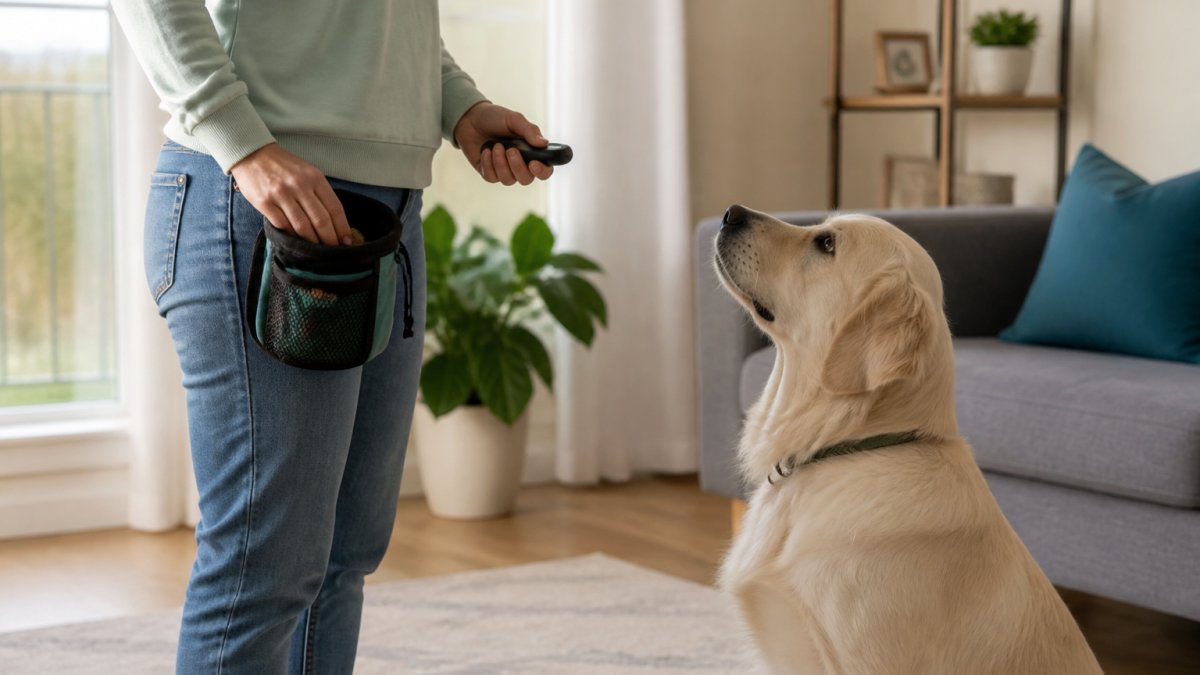
Work in short bursts, five minutes is enough. Multiple short sessions throughout the day beat one long one, since clicker training is most effective when your pet is focused and motivated.
Pairing the Click With Rewards
Clicker training works by pairing the click with something your pet genuinely wants: small pieces of chicken, cheese, or training treats for dogs; tuna or a favorite toy for cats. The reward must be immediate and worth the effort.
Timing is everything. Click at the exact moment the behavior happens, click two seconds after a sit and the connection breaks; click before it's complete and you mark the wrong behavior. This precision is the power of clicker training: you reward the exact behavior you want repeated, not effort or approximation.
Clicker Training Treats: Choosing High-Value Rewards
Your choice of treat affects how fast your pet learns, but the deeper issues are reward value hierarchy and delivery mechanics. Most beginners fail not because they picked the wrong treat, but because they used one treat for every behavior and delivered it too slowly.
Building a Three-Tier Reward System
Experienced trainers typically organize rewards into three value tiers:
- Everyday tier: Kibble or regular treats used for easy, well-known behaviors.
- Mid-value tier: Small pieces of cheese, freeze-dried meat, or commercial training treats used for new behaviors.
- High-value tier: Real chicken, beef, or fish reserved for difficult tasks, new environments, or breakthrough moments.
Matching the tier to the difficulty of the behavior teaches your pet that effort pays off. A harder task earns a better reward, which sustains motivation across a session.
Size, Delivery, and Timing
Treats should be tiny, pea-sized for small dogs, even smaller for cats, so your pet finishes quickly and refocuses on you. A large treat interrupts the flow and slows repetitions.
Delivery matters as much as size. Keep treats in a training pouch within arm's reach so you can click and treat within 1-2 seconds; fumbling in a pocket breaks the rhythm and confuses your pet about what earned the reward.
Species-Specific Reward Choices
- Dogs: Real meat, cheese, or training-specific treats. Reserve high-value items for difficult behaviors.
- Cats: Small portions of tuna, chicken, or a favorite toy. Cats often respond to movement-based rewards as much as food.
- Birds: Millet or seeds they do not get daily. Keep portions tiny to avoid overfeeding.
- Rabbits and small mammals: Small pieces of safe vegetables or fruit, used sparingly.
Troubleshooting: When Your Pet Is Not Motivated
If your pet seems indifferent, the reward isn't valuable enough, experiment with textures and smells until you find what genuinely motivates them. In multi-pet households, train one pet at a time behind a gate so rewards aren't stolen. If your pet startles at the click, pair a quieter clicker with a high-value treat to rebuild a positive association before resuming formal training.
Dog Training Treat Pouch: Organizing Your Rewards
A training treat pouch keeps rewards accessible and your hands free during clicker training. You need to click, treat, and reset for the next repetition quickly. Fumbling in your pockets breaks the rhythm and confuses your pet about what they're being rewarded for.
Choose a pouch with a secure opening that closes quickly so treats don't spill or get raided between repetitions. A waist- or shoulder-worn pouch keeps both hands available, one for the clicker, one for the treat, preventing the juggling that slows sessions.
Organization within the pouch matters. Some trainers use separate compartments for different treat values, matching the treat to the difficulty of the behavior so a harder task earns a better reward.
Clicker Training Session Length: Building Consistency
Short, frequent sessions beat long, infrequent ones. Most pets have a 5-10 minute attention window; after that, focus drops and mistakes increase. Two 5-minute sessions per day beat one 15-minute session.
Consistency matters more than duration. Training three times weekly beats one marathon session, because your pet's brain consolidates learning through repetition and spacing, multiple short sessions build strong neural pathways over a week.
Watch your pet's body language. If they're offering behaviors spontaneously and responding quickly, keep going; if they're slow or distracted, end the session. Quit while they're still interested, this keeps training positive and makes them eager for next time.
Selecting the Right Clicker Training Tool for Your Needs
Not all clickers are equal, and the best one for beginners depends on your pet, your hands, and your training environment. Below is a practical buying framework plus five beginner-friendly clicker training tools.
How We Evaluated These Tools
These criteria reflect what matters in real sessions: you click hundreds of times per session, so comfort and consistency beat novelty.
The Five Best Clicker Training Tools for Beginners
1. Standard Box Clicker (Baseline Choice) The classic box clicker remains the most common beginner tool. It produces a loud, distinctive click that most dogs learn quickly, and it is widely available at low cost.
2. Quiet or Soft-Click Clicker Quiet clickers produce a gentler sound while remaining distinct. They suit cats, birds, rabbits, and noise-sensitive dogs.
3. Button Clicker with Wrist Strap Button clickers attach to a wrist strap or keychain, keeping the tool accessible and hands free. The button mechanism is often smoother than a box clicker, reducing hand fatigue.
4. Pen Clicker Pen clickers are compact, pocket-sized, and discreet. They are useful for training in public or when you want a quieter marker.
5. Whistle or Verbal Marker (Alternative) A whistle or a consistent verbal marker (such as a sharp "yes") can replace a clicker entirely. Whistles carry farther outdoors, making them useful for recall work, while verbal markers require no tool at all.
Matching the Tool to Your Pet and Environment
- Dogs: A standard box clicker or button clicker with wrist strap works well for most beginners. Choose a quiet model for nervous or older dogs.
- Cats: Cats often respond well to quiet clickers and short sessions. A pen clicker or soft-click model keeps the sound gentle.
- Birds: Birds are highly sound-sensitive. Use a soft-click clicker and keep sessions to 3-5 minutes.
- Rabbits and small mammals: Their hearing is sensitive, so a quiet clicker is essential. Sessions should be 2-3 minutes with frequent breaks.
- Horses: A louder, distinctive clicker carries better from a distance for ground work.
Accessibility and Troubleshooting
If you have arthritis or limited hand strength, test the clicker before committing. A button clicker with minimal actuation force is easier than a stiff box clicker. If your pet is startled by the sound, switch to a quieter clicker or a visual marker such as a light flash. If the clicker is unavailable mid-session, a consistent verbal marker can substitute temporarily, but return to the clicker once possible to preserve consistency.
Common Mistakes Beginners Make With Clicker Training
The most common mistake is inconsistent timing, clicking a half-second late or early teaches the wrong behavior.
Another frequent error is clicking without immediately following with a reward. Every click must predict a reward, without exception, click and forget the treat, and your pet stops trusting the click and training stalls.
Many beginners also use the clicker as an attention-getter. The clicker is a marker, not a command, use it to mark behavior that already happened, not to prompt behavior. This distinction is crucial.
Choosing low-value treats is another pitfall. Your pet should be excited about the reward; if they seem indifferent, experiment until you find what genuinely motivates them.
Finally, some people rush into complex behaviors before conditioning the clicker. Spend the first week just clicking and treating, letting your pet fully understand the language before you ask for anything, this foundation accelerates everything that follows.
Clicker training is one of the most effective ways to build confidence in both you and your pet. The clarity of communication removes frustration and creates a positive training experience.
Frequently Asked Questions
How do I start clicker training my dog as a beginner?
Start by conditioning your dog to the click sound. Click the clicker once, then immediately give a high-value treat. Repeat this 5-10 times per session for 2-3 days until your dog expects a reward after hearing the click. Once your dog understands the click means a treat is coming, you can use it to mark desired behaviors like sitting or making eye contact. Keep early sessions short, around 2-5 minutes, to maintain focus and enthusiasm.
What should I look for in a clicker training tool as a beginner?
Choose a clicker with a clear, consistent click sound that isn't too loud or startling for your pet. Look for ergonomic design so it fits comfortably in your hand during training sessions. Consider wrist straps or pocket clips for convenience. If you have sound-sensitive animals, seek quieter options or whistle-based markers. Test the button feel to ensure it clicks reliably without requiring excessive pressure, especially if you plan longer training sessions.
What treats work best for clicker training?
Use high-value treats your pet loves but doesn't get regularly. Small, soft pieces work best because they're quick to eat and won't interrupt training flow. For dogs, consider chicken, cheese, or specialized training treats. Cats often prefer small pieces of cooked fish or poultry. Keep treats low-calorie to avoid overfeeding during multiple training sessions. Rotate treat types occasionally to maintain novelty and motivation. Store training treats separately in a treat pouch so they feel special and distinct from everyday food.
How long should clicker training sessions be for beginners?
Keep initial clicker training sessions between 2-5 minutes, especially during the conditioning phase. Short sessions prevent frustration and maintain your pet's focus and enthusiasm. Most pets learn better with multiple short sessions throughout the day rather than one long session. As your pet becomes familiar with clicker training, you can gradually extend sessions to 10-15 minutes, but always watch for signs of fatigue or loss of interest. Consistency matters more than duration.