

Choosing the Right Pet Accessories for Small Breeds

Table of Contents
- Why Small Breeds Need Different Accessories
- How to Measure a Dog for a Harness and Collar
- Harnesses and Leashes: Fit, No-Choke Design, and Safety
- Durable Dog Collars for Small Breeds: ID Tags and Everyday Wear
- Toys, Feeders, and Bowls Sized for Small Mouths
- Bedding, Travel Gear, and Weather-Ready Extras
- Budget vs. Longevity: Where to Spend and Where to Save
- Frequently Asked Questions
Last Updated: September 26, 2026
Why Small Breeds Need Different Accessories
Choosing pet accessories for small breeds starts with one fact: a Chihuahua and a Labrador do not share a size chart for pet accessories. This guide from Smitty's Pet Store covers the measurements, materials, and gear decisions that keep toy and miniature breeds safe.
Small Breed Anatomy and Injury Risk
A toy breed's trachea is proportionally thinner than a large dog's, so flat collars and leash pressure are a genuine concern. Pulling against a standard collar concentrates force on a narrow band of the neck, which for breeds prone to tracheal collapse can trigger or worsen a chronic cough. A no-choke harness distributes force across the chest.

Material Toxicity and Durability
Cheap hardware fails first. Quick-release buckles on low-cost harnesses can pop under a sudden lunge, and thin webbing frays at the adjustment points within months. Look for non-toxic materials and durable construction rather than a low sticker price. Breathable mesh and reinforced stitching hold up better over daily use.
How to Measure a Dog for a Harness and Collar
Measuring a dog for a harness or collar takes about five minutes with a soft tape measure. Do it while your dog stands still, and measure snugly without pulling tight.
Girth, Neck, and Back Length Measurements
Take three measurements:
- Girth: wrap the tape around the widest part of the ribcage, just behind the front legs. This is the single most important number for harness sizing.
- Neck circumference: measure the base of the neck where a collar sits, leaving room for two fingers underneath.
- Back length: run the tape from the base of the neck to the base of the tail for clothing and sweaters.
Write the numbers down and compare them against the brand's size chart before ordering. When a dog falls between two sizes, size up.
Harnesses and Leashes: Fit, No-Choke Design, and Safety
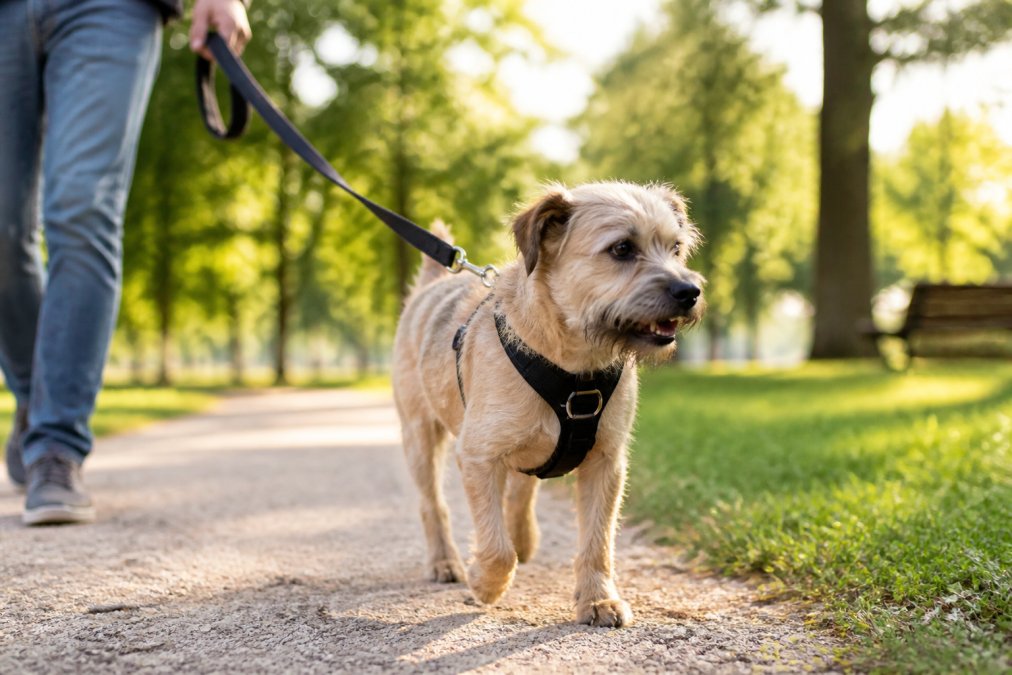
A harness touches your dog under load on every walk, so fit matters more here than anywhere else. The goal is to redirect force away from the throat and onto the chest and shoulders, where a small breed's skeleton can absorb it.
Why the Neck Is the Wrong Place to Attach a Leash
A toy or miniature breed's trachea is narrow relative to body mass, and its cartilage rings are softer than a large dog's. Pulling against a flat collar concentrates force on a band of tissue only a couple of inches wide, and that repeated pressure is a recognized contributor to tracheal collapse, the honking cough many owners mistake for a hairball, allergies, or a cold.
Front-Clip vs. Back-Clip: What Each One Actually Does
Attachment point changes how the dog's body responds to tension:
- Back-clip: the leash sits between the shoulder blades. Comfortable for casual walks, but a determined puller can lean into it and tow.
- Front-clip: the leash attaches at the chest. When the dog pulls forward, the geometry turns the body slightly toward the handler, which interrupts the pull. Best for dogs that lunge at squirrels, bikes, or other dogs.
- Dual-clip: two attachment points let you use a double-ended leash, front for training walks, back for relaxed ones. The most flexible setup, and the most expensive.
The Five-Point Fit Test
A correctly fitted harness passes all five checks. Run them every time you put it on for the first few weeks, then monthly:
- Two-finger rule at the chest strap. You should be able to slide two flat fingers under the strap that crosses the chest. Less and it chafes; more and the dog can back out.
- Shoulder clearance. The front leg should move through a full stride without the strap catching the armpit. Pinching causes rubbing and restricted gait.
- No gap at the back. With the dog standing, the back panel should sit flat. If you can lift it more than an inch, it is too loose.
- Escape test. Gently pull backward on the harness (not the leash) while the dog stands. If it slides over the shoulders, it will fail during a real bolt.
- Weight check. A harness weighing more than roughly 5% of your dog's body weight will drag on the shoulders and change gait, a real concern for a 5-pound dog in a medium-sized harness.
Leash Weight and Length
Match the leash to the dog, not to your hand. A standard 6-foot nylon leash with a heavy brass snap can weigh more than a small breed's collar and harness combined, pulling on the neck and shoulder with every step. A lightweight 4-to-6-foot leash in 1/2-inch or 5/8-inch webbing is the right scale for most toy and miniature breeds.
Hardware That Survives a Lunge
Look for hardware that survives a lunge:
- Welded or reinforced D-rings rather than split rings, which can open under load.
- Metal buckles on the load-bearing strap if your dog is a serious puller; plastic is fine for calm walkers but not for a dog that hits the end of the leash.
- Bar-tack stitching at stress points, the dense zigzag reinforcement you can see at the D-ring and buckle attachments.
A Note on Material Safety
Dogs chew straps, lick hardware, and sleep against fabric, so anything with a strong chemical smell or flaking coating is a poor choice. Non-toxic materials and breathable mesh with reinforced stitching avoid the plasticizers and coatings some dogs react to. If a harness smells like a new shower curtain, air it out for a week; if the smell persists, return it.
Durable Dog Collars for Small Breeds: ID Tags and Everyday Wear
Durable dog collars for small breeds should be light enough to wear all day and strong enough to hold an ID tag. A collar is primarily an identification tool, not a walking tool, for a small dog.
Toys, Feeders, and Bowls Sized for Small Mouths
Size-appropriate toys prevent choking. A ball that fits easily in a small mouth can be swallowed, so choose toys rated for your dog's weight class and inspect them weekly for cracks or loose squeakers.
Slow Feeders and Bowl Height
Slow feeders help dogs that gulp their food, which is common in small breeds and a known contributor to digestive upset. A slow feeder with shallow ridges works better than a deep maze for tiny muzzles. Raising the bowl slightly reduces neck strain for dogs with long backs or short legs.
Bedding, Travel Gear, and Weather-Ready Extras
Small breeds lose body heat faster than large ones because they have more surface area relative to their mass, and they carry their weight on very small joints. That drives every decision here, from bed thickness to coat warmth.
Beds: Support, Entry Height, and Washability
Orthopedic support matters because small breeds carry their weight on very small joints, and long-backed or short-legged breeds are prone to patellar luxation and intervertebral disc issues. A bed with a firm base and a low entry point is easier on the joints than a deep, plush nest your dog has to climb into. Look for:
- Memory foam or high-density foam at least 2 inches thick for adult dogs. Thin batting compresses within weeks and offers no joint support.
- A low entry lip, under 3 inches for toy breeds.
- A removable, machine-washable cover. Small breeds shed, drool, and occasionally have accidents.
- Non-slip bottom. A bed that slides across hardwood is a fall risk for a dog with small paws and a low center of gravity.
Crate Sizing: The Two-Number Rule
Kennel sizing follows a simple rule: the crate should be tall enough for your dog to stand without ducking and long enough to lie flat. Too large and a small breed may eliminate in one corner; too small and it is uncomfortable. Measure two numbers:
- Height: from the top of the head (or ear tips, if they stand up) to the floor while standing normally. Add 2 to 3 inches.
- Length: from the tip of the nose to the base of the tail while lying down. Add 2 to 3 inches.
Car Travel: Crash-Tested or Nothing
For travel, choose a carrier that meets airline cabin requirements if you fly, and always secure your dog in the car with a crash-tested carrier or harness rather than letting them ride loose. A loose small dog becomes a projectile in a sudden stop and can interfere with the driver. 'Crash-tested' means the product was evaluated in a dynamic sled test simulating a frontal impact, with published results, a claim without a test report is marketing, not engineering.
Cold-Weather Gear: When a Coat Is Actually Needed
Cold-weather gear is worth having for short-coated and toy breeds. A common rule of thumb: below about 45°F, a coat is reasonable for a small, short-coated, or senior dog. Below freezing, keep walks short and watch for lifted paws, shivering, or reluctance to move, early signs of cold stress.
Material Safety for Anything Your Dog Sleeps On or Wears
Small breeds chew, lick, and sleep against their gear, so material choice is a safety issue. Look for:
- No loose small parts, buttons, bows, and decorative trim are choking hazards for a dog that chews.
- No strong chemical odor. If a bed or coat smells like solvent or plastic, air it out; if the smell persists after a week, return it.
Budget vs. Longevity: Where to Spend and Where to Save
Spend on the items that touch your dog's body under load: harness, leash, collar, and bed. These take daily stress and are where cheap construction fails fastest.
| Category | Spend | Save |
|---|---|---|
| Harness and leash | Yes, safety-critical | Never |
| Collar and ID tag | Yes, identification | Moderate |
| Bed | Yes, joint support | Moderate |
| Toys | Rotate a few | Buy in bulk |
| Clothing | One or two staples | Skip seasonal extras |
Frequently Asked Questions
What are the essential accessories every small dog needs?
Start with a properly fitted harness, a durable collar with an ID tag, a 4 to 6 foot leash, and a bed sized to your dog's length. Add food and water bowls, a slow feeder if your dog eats quickly, and a few toys scaled to your dog's mouth. For travel, a carrier or crash-tested kennel and potty pads are useful. The key is size-appropriate gear: a harness that sits across the chest, a collar that won't slip over the head, and a bed that supports joints without being too large.
How do I determine the correct size for small breed harnesses and collars?
Measure your dog's chest girth at the widest point behind the front legs, then measure neck circumference at the base of the neck. Use a soft tape measure and keep it snug, not tight. Compare those numbers to the manufacturer's size chart. For harnesses, if your dog falls between sizes, go up one size. For collars, you should fit two fingers between the collar and your dog's neck. Recheck measurements every few months for puppies and senior dogs.
What safety features should I look for in small dog accessories?
Look for a no-choke harness design that redirects pulling without pressure on the throat, since small breeds are prone to tracheal collapse. Quick-release buckles make walks easier, and reflective stitching keeps your dog visible in low light. Adjustable straps at the chest and neck let you dial in a secure fit. Check that materials are non-toxic and that hardware is metal, not thin plastic that can snap. Durable construction matters more on small breeds because their gear takes daily wear.
Are there specific materials that are better for small breed comfort?
Breathable mesh and soft cotton work well for small breeds because they reduce chafing on delicate skin and fur. Look for non-toxic materials with no strong chemical smell, which can indicate low-quality dyes or coatings. For collars, nylon webbing is lightweight and durable. For harnesses, padded straps with breathable mesh lining prevent rubbing behind the front legs. Avoid stiff, heavy hardware that weighs down a 5-pound dog. Weather-resistant fabric helps if you walk in rain or snow.
How often should I replace accessories for my small dog?
Inspect gear monthly for fraying, cracked buckles, or stretched straps. Replace a harness or collar every 12 to 18 months with daily use, sooner if you see wear at stress points. Chewed toys should be replaced as soon as they show holes or loose pieces, since small breeds can swallow fragments. Beds last longer but should be washed regularly and replaced when the filling flattens and stops supporting joints. A good rule: if a strap or seam looks weak, replace it before it fails on a walk.
How do I know the products you're recommending are actually safe and high-quality?
At Smitty's Pet Store, we look for adjustable fit, non-toxic materials, and durable construction before adding anything to our catalog. For example, our Adjustable Pet Harness uses a step-in design with adjustable chest straps, and our No-Pull Reflective Dog Harness has front and back leash attachment points plus reflective strips. We avoid gear with thin plastic buckles or strong chemical odors.
I'm a new pet owner and feel lost about what to buy. Where do I start?
Start with the essentials: a harness, a collar with an ID tag, a leash, food and water bowls, a bed, and two or three toys. Measure your dog before you shop so you order the right size the first time. Add travel gear and weather protection later. If you are unsure, contact us with your dog's breed, weight, and chest girth, and we can point you to the right size. You do not need everything at once; build your kit as you learn your dog's routine.
Choosing the right pet accessories for small breeds comes down to fit, materials, and matching gear to your dog's actual measurements. It is a lot to track when you are also juggling work, vet visits, and everything else. Smitty's Pet Store makes it simpler with a curated selection of trusted supplies, practical sizing guidance, and everyday essentials chosen to keep small pets happy and healthy. Get started with Smitty's Pet Store and give your small breed gear that fits from the first walk.