

How to Choose the Right Pet Harness: A Practical Guide

Table of Contents
- Why Harness Choice Matters for Your Dog's Health
- How to Measure Your Dog for a Harness
- Front Clip vs Back Clip Harness: Which Type Works Best
- Best Dog Harness for Pulling: Features That Make the Difference
- Matching Harness Type to Your Dog's Activity Level and Body Type
- Ensuring Proper Fit and Comfort: The Two-Finger Rule
- Harness Materials, Durability, and Maintenance
- How to Put On a Harness Correctly
Why Harness Choice Matters for Your Dog's Health
The wrong harness can cause neck strain, restrict shoulder mobility, and reinforce pulling behavior. A harness distributes leash pressure across a wider surface area than a collar, reducing stress on the trachea and neck vertebrae, especially critical for breeds prone to tracheal collapse like Chihuahuas, Pomeranians, and toy breeds. Even large, healthy dogs benefit from proper pressure distribution.
The harness you choose also influences training outcomes. A front-clip harness redirects pulling behavior naturally, while a back-clip design prioritizes freedom of movement. The right choice depends on your dog's body type, activity level, and behavioral needs. At Smitty's Pet Store, we understand that harness selection directly impacts your dog's long-term comfort and training success.
How to Measure Your Dog for a Harness
Accurate measurements are the foundation of proper fit. You'll need a soft measuring tape, your dog standing calmly in a normal stance, and about five minutes.
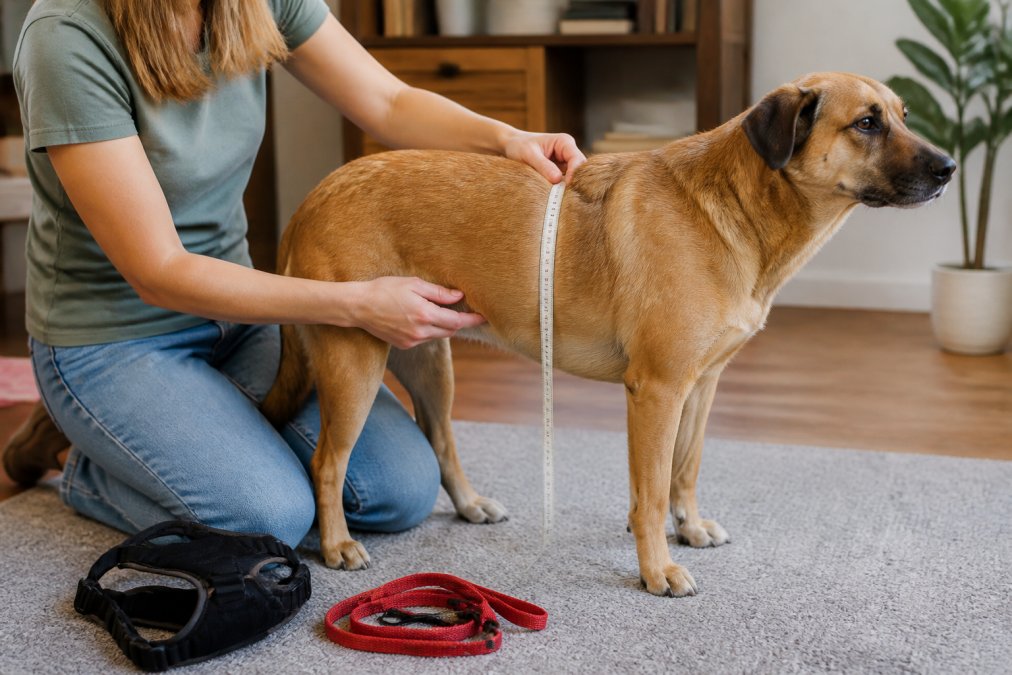
Taking Girth and Chest Measurements
The girth measurement, the circumference around your dog's chest at the widest point, just behind the front legs, is the most critical measurement for harness fit. Place the measuring tape snugly but not tight around the chest where the harness chest plate will rest. Record this number in inches.
Next, measure around the narrowest point of your dog's torso, just behind the ribcage. This helps determine if your dog has a pronounced waist or a barrel-shaped body. Dogs with deep chests and narrow waists (like Greyhounds) need different harness styles than stockier breeds.
Measure the distance across your dog's chest from shoulder point to shoulder point. A padded chest plate that's too narrow concentrates pressure; one that's too wide may slip or chafe.
Recording Neck and Shoulder Width
Measure around the base of your dog's neck where a collar would sit, snug but allowing one finger to slip underneath. This gives you a reference point for overall frame size.
Shoulder width is the distance between the highest points of your dog's shoulder blades. This determines whether your dog will fit comfortably in harnesses designed for narrow versus broad-shouldered breeds. Write all measurements down, as different manufacturers use different sizing standards.
Front Clip vs Back Clip Harness: Which Type Works Best
The attachment point of the leash fundamentally changes how the harness functions.
Front-Clip Harnesses for Pulling Control
A front-clip harness has the leash attachment point on the chest, between the front legs. When your dog pulls, the leash redirects their forward momentum sideways, naturally turning them back toward you. This creates a self-correcting mechanism without requiring you to apply force.
Front-clip harnesses excel for dogs with strong pulling behavior, especially large breeds. A 60-pound dog pulling hard becomes manageable because the physics work in your favor. The trade-off is that some dogs experience the snug chest plate as restrictive, and the harness may rotate slightly during movement, requiring periodic adjustment.
Back-Clip Harnesses for Comfort and Freedom
A back-clip harness has the leash attachment on the dog's back, between the shoulder blades. This design provides maximum freedom of movement and is ideal for dogs that don't pull excessively, senior dogs, and dogs with orthopedic issues.
The limitation is that back-clip harnesses don't provide pulling control. A dog pulling hard pulls you forward, and the harness doesn't self-correct. Some harnesses offer both attachment points for versatility.
Best Dog Harness for Pulling: Features That Make the Difference
When your dog pulls, specific harness features determine whether you're fighting the physics or working with them.
The most critical feature is a sturdy d-ring or leash attachment point that's reinforced and won't shift during use. Look for attachment points that are stitched and riveted, not just glued.
A padded chest plate distributes pressure over a larger area, reducing strain on any single point. The padding should be firm enough to maintain shape but soft enough not to chafe. Adjustable straps let you customize fit for dogs with unusual body shapes. Quick-release buckles allow you to remove the harness quickly. Reflective stitching improves visibility during early morning or evening walks.
Matching Harness Type to Your Dog's Activity Level and Body Type
A dog that spends most time in calm neighborhood walks has different needs than one that hikes or participates in dog sports. A casual walking dog benefits from maximum comfort; an active dog that pulls needs durability and control features.
Dogs with athletic builds typically do well in standard harnesses with front-clip options. Dogs with deep chests and narrow waists often escape from standard harnesses and need escape-proof designs with snug chest plates.
Breed-Specific Sizing and Considerations
Breed-specific sizing addresses the reality that dogs vary dramatically in body shape. A Dachshund and a Corgi both weigh around 25 pounds but have completely different harness needs.
Brachycephalic breeds (Bulldogs, Pugs, Boston Terriers) have compressed airways and are extremely sensitive to neck pressure. These breeds should always wear harnesses, never collars, and look for designs with chest plates that sit well forward of the neck.
Large, broad-shouldered breeds (German Shepherds, Rottweilers, Mastiffs) need harnesses with wide chest plates and sturdy construction. Small breeds prone to tracheal collapse (Chihuahuas, Toy Poodles, Pomeranians) benefit from harnesses that completely bypass the neck.
Senior Dogs and Health-Related Harness Needs
Senior dogs and dogs with orthopedic conditions need harnesses that minimize strain on joints and allow easy on-and-off without requiring the dog to step through leg holes. Some senior dogs benefit from harnesses with handles on top, which allow you to provide gentle support during walks.
A dog with hip dysplasia or degenerative myelopathy needs a harness that distributes weight evenly and doesn't pull the hind legs backward. Back-clip harnesses are generally better for these conditions.
Ensuring Proper Fit and Comfort: The Two-Finger Rule
A properly fitted harness should be snug enough that it won't slip off, but loose enough that your dog can breathe and move comfortably. You should be able to fit two fingers (not your whole hand) under the harness straps at any point where the harness touches your dog's body.
Check fit at the chest plate, the neck opening, and the girth straps. The harness should sit flat against your dog's body without bunching or twisting. Check for chafing or hair loss after wearing the harness. Common problem areas are the armpits, the base of the neck, and where the girth strap crosses the ribcage.
Your dog's comfort level is the ultimate test. A dog that resists wearing the harness, moves stiffly, or shows signs of discomfort may have a fit problem. Poor fit doesn't improve with time.
Harness Materials, Durability, and Maintenance
Most harnesses use nylon, polyester, or a blend of both for the main body, with padding made from neoprene, foam, or fleece. Nylon is durable and easy to clean but can be stiff. Polyester is softer and more breathable but may not last as long. Blended materials combine benefits of both.
The stitching and attachment points determine durability. Double stitching and reinforced stress points last longer than single stitching. Most harnesses can be hand-washed with mild soap and water, then air-dried completely. Never machine wash or use a dryer. Inspect your harness monthly for wear, loose stitching, or damaged buckles. Store in a dry place away from direct sunlight.
How to Put On a Harness Correctly
Putting on a harness correctly ensures it fits properly every time and prevents twisting or misalignment.
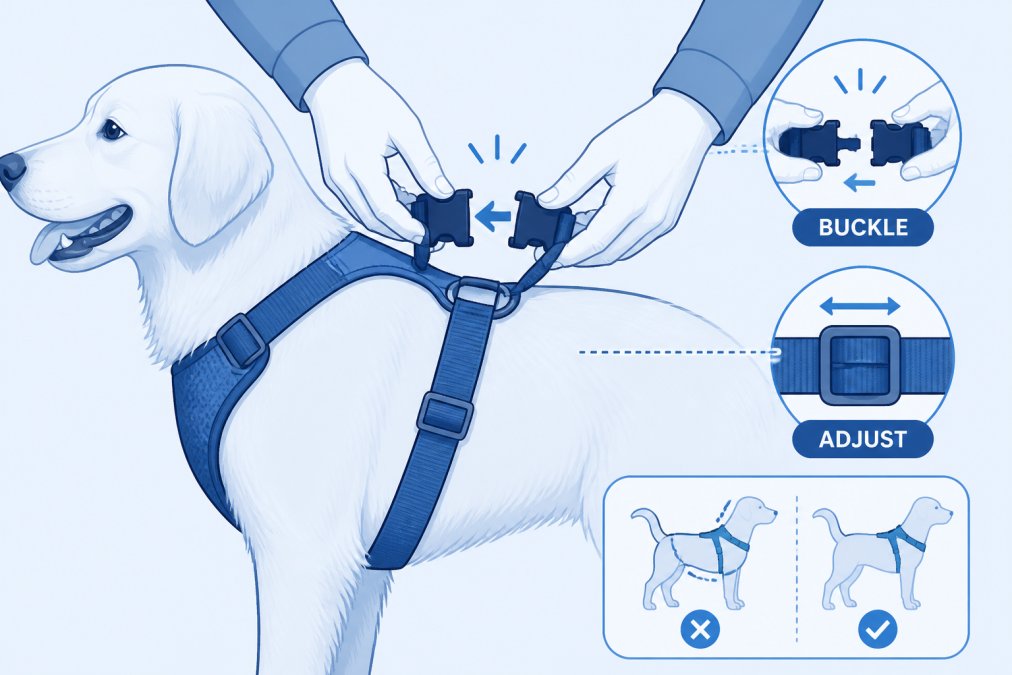
Start by identifying the front and back of the harness. The front should have the widest plate and the leash attachment point. The back should have the attachment point that sits between the shoulder blades.
For harnesses with leg holes, place the harness on the ground and have your dog step into it front legs first, then back legs. For wrap-around or side-opening harnesses, position the main body around your dog's torso and secure the fasteners on the side or back.
Once the harness is on, adjust all straps for a snug fit using the two-finger rule. Double-check that all buckles, snaps, or velcro closures are fully secured. Before heading out, have your dog walk a few steps and watch for any twisting, bunching, or signs of discomfort.
Choosing a harness that fits your dog's body, matches their activity level, and addresses their specific needs transforms walks into an enjoyable experience. At Smitty's Pet Store, we understand that confident pet parenting starts with the right equipment. Our curated selection of trusted harnesses, combined with guidance on proper fit and maintenance, helps you find the solution that keeps your dog safe, comfortable, and happy. Browse our harness collection and discover the difference a well-chosen harness makes in your daily routine.
Frequently Asked Questions
How do I know if a dog harness fits correctly?
A properly fitting harness should allow you to slip two fingers under the straps at the chest and girth areas. The harness should sit snugly without restricting shoulder mobility or causing chafing. Check that the leash attachment point aligns with your dog's center of gravity, and ensure no gaps exist between the harness and your dog's body. Recheck the fit after a few days of use, as some materials stretch slightly.
What type of harness is best for a dog that pulls?
Front-clip harnesses are most effective for dogs that pull because they redirect forward motion toward your side rather than allowing your dog to pull straight ahead. This design naturally discourages pulling without requiring harsh corrections. For dogs with severe pulling behavior, a front-clip harness combined with consistent training yields the best results. Back-clip harnesses offer less pulling control but more freedom of movement, making them better for calm walkers.
How do I measure my dog for a harness?
Measure your dog's girth by wrapping a soft tape measure around the widest part of the chest, just behind the front legs. Record the neck circumference where a collar would sit, and measure the distance across the shoulders. Use a sizing chart from your harness manufacturer to match these measurements to the correct size. Take measurements while your dog stands naturally, not stretched or hunched, for the most accurate fit.
Should I use a harness or a collar for my dog?
Harnesses distribute pressure across the chest and shoulders, reducing strain on the neck and trachea, especially important for small breeds prone to tracheal collapse. Collars work for calm, well-trained dogs but can cause neck strain during pulling. Harnesses provide better control and are safer for dogs with health conditions, senior dogs, or any dog prone to pulling. Many veterinarians recommend harnesses as the primary walking tool for most dogs.
This article was written using GrandRanker