

5 Best Budget Enrichment Toys for High-Energy Puppies

Table of Contents
- Why Enrichment Toys Matter for High-Energy Puppies
- Quick Comparison: Our Top 5 Budget-Friendly Picks
- 1. Brain Games Treats: Puzzle Toys for Foraging Instinct
- Safe Chew Toys for Puppies: Durability and Material Matters
- Food-Dispensing Toys for Dogs: Mental Stimulation Through Play
- Indoor Activities for High-Energy Puppies: Keeping Them Busy at Home
- Affordable Puppy Puzzle Toys: Finding Value Without Breaking the Bank
-
How to Choose the Right Toy for Your Puppy
- Match the toy to the developmental stage, not just the birthday
- Size, weight, and the swallow test
- Chewing intensity is individual, and it changes
- Supervision rules that actually prevent emergencies
- Difficulty progression: start easy, then make it harder
- Build an actual enrichment routine
- Start small, then expand
- Frequently Asked Questions
Last Updated: October 13, 2026
Why Enrichment Toys Matter for High-Energy Puppies
High-energy puppies need mental stimulation as much as physical exercise, and enrichment toys high-energy puppies can access help meet both needs.
Enrichment toys tap into natural instincts like foraging, problem-solving, and hunting. A bored puppy becomes destructive; an engaged one becomes well-adjusted.
The best enrichment toys high-energy puppies can use combine mental challenge, physical activity, and reward.
Quick Comparison: Our Top 5 Budget-Friendly Picks
| Toy | Price | Best For | Key Feature |
|---|---|---|---|
| Brain Games Treats | $26.01 | Foraging instinct | Squeaky, hidden treats, plush |
| Pet Dog Sniff & Snack Puzzle Ball | $26.89 | Scent work | Fleece fabric, 20cm size |
| Pet Toys Acorn Shape Feeding Ball | $28.85 | Slow feeding | Acorn design, treat dispenser |
| Dog Molars Pet Toy Ball | $27.71 | Aggressive chewers | TPU material, tooth cleaning |
| Pet Latex Toys Hippo Squeaky | $22.07 | Light chewers | Squeaker, crinkle texture |
All five are budget-friendly, battery-free, and address a different play style and chewing intensity.

1. Brain Games Treats: Puzzle Toys for Foraging Instinct
The Brain Games Treats toy is our top pick for high-energy puppies, combining puzzle-solving with foraging.
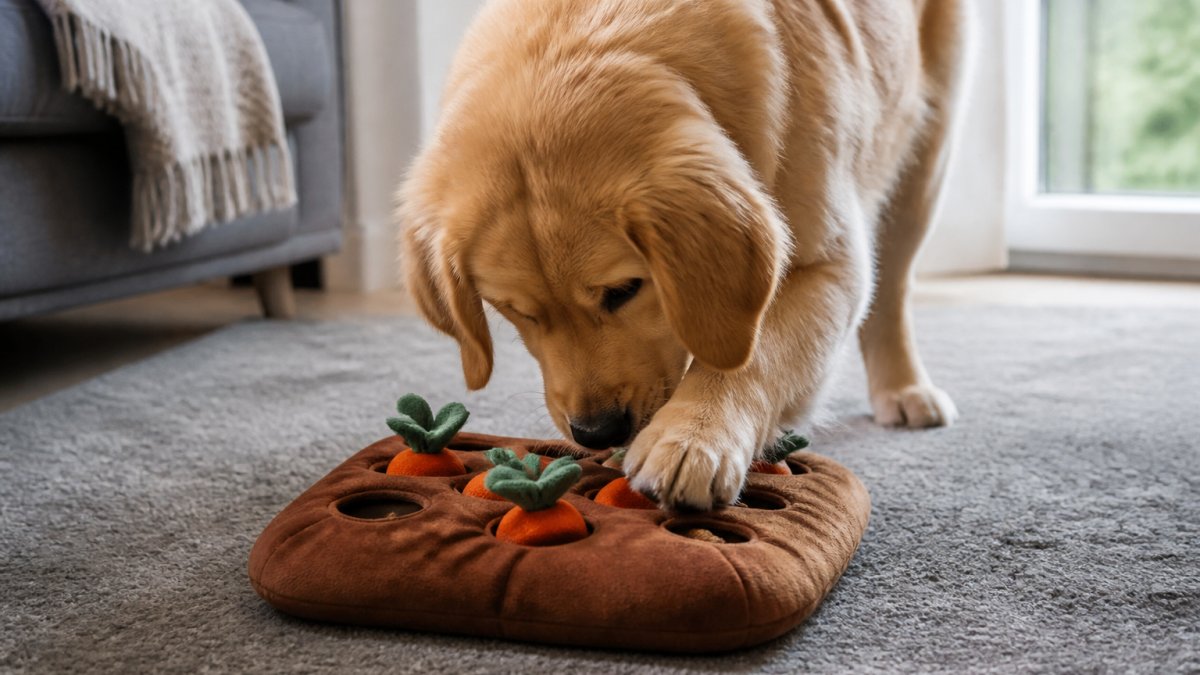
Your puppy must figure out how to access treats by pushing, squeezing, and sniffing, mental work that tires puppies faster than physical exercise alone.
The squeaker gives immediate feedback, and the plush material is gentle on teeth yet strong enough for active dogs.
Safe Chew Toys for Puppies: Durability and Material Matters
Safe chew toys must withstand puppy teeth without splintering. Material choice impacts safety and longevity: the wrong toy becomes a choking hazard, the right one lasts months.
Puppies explore with their mouths, and baby teeth are sharp but not fully strong.
The Dog Molars Pet Toy Ball ($27.71) uses TPU, a non-toxic, food-grade, and environmentally friendly ETPU material that withstands most aggressive chewing tests, and its corn grain design helps to clean pet’s teeth.
The Pet Latex Toys Hippo Squeaky ($22.07) suits gentler chewers: soft latex is gentle on teeth and gums, and it's built for light chewers.
Material durability affects value: a toy lasting two months costs more per week than one lasting six months, even at a lower price.
Food-Dispensing Toys for Dogs: Mental Stimulation Through Play
Food-dispensing toys turn mealtime into a puzzle.
The Pet Toys Acorn Shape Feeding Ball ($28.85) dispenses treats as puppies roll and nudge it, teaching that movement releases rewards and encouraging independent problem-solving.

Fill the ball with dry kibble or small treats; your puppy pushes it around, triggering release.
Food puzzles channel a high-energy puppy's energy constructively: a mentally tired puppy is less likely to find trouble.
Slow feeding extends the psychological reward of eating: your puppy gets satisfaction from the puzzle itself, not just the food.
Indoor Activities for High-Energy Puppies: Keeping Them Busy at Home
Rain, snow, or extreme heat sometimes prevents outdoor play, making indoor enrichment essential. The right toys keep energy manageable indoors without much space.
The Pet Dog Sniff & Snack Puzzle Ball ($26.89) is made from polar fleece, soft enough for apartment living with no loud squeaks or clattering.

Rotate toys every few days: a toy ignored on Monday becomes fascinating again on Friday, keeping your budget low and engagement high.
The Cooling Dog Chew Toy with Dental Cleaning ($24.01) also works indoors: fill it with water, freeze for 1-2 hours, and hand it over. The cold soothes teething gums and the zigzag ridges reach molars, incisors, and sharp teeth to remove plaque and tartar buildup, keeping your puppy occupied and cool.
Affordable Puppy Puzzle Toys: Finding Value Without Breaking the Bank
Budget-friendly means real value. Our five toys range from $22.07 to $28.85, all under $30, and each delivers months of use and genuine behavioral benefits.
Cost-per-use math you can do at home
Cost-per-use is the only honest way to compare a $22 toy against a $29 toy: purchase price divided by the sessions you realistically get before it wears out.
- A $22.07 latex squeaky toy that a light chewer plays with twice a day for 90 days = roughly $0.12 per session.
- A $28.85 treat-dispensing ball used once daily for 180 days = roughly $0.16 per session.
- A $27.71 chew ball that survives six months of daily chewing = roughly $0.15 per session.
Those numbers land close together, which is the point: the cheapest sticker price rarely wins. What matters is how long the toy survives and how often your puppy engages with it.
Replacement cost is part of the budget
Every enrichment toy has a lifespan. Plush toys with hidden treat pockets wear out fastest; TPU and hard rubber chew toys last longest; latex squeakers sit in the middle, fine for gentle mouthing, short-lived for a determined chewer.
A practical rule: budget one replacement per toy per year for gentle chewers, two to three for aggressive chewers. That turns a $22 toy into a $44-$66 annual line item, and a $28 toy into a $28-$84 one.
Cleaning and longevity: the hidden cost saver
Treat-dispensing and snuffle-style fabric toys collect saliva, kibble dust, and bacteria. Most are top-rack dishwasher safe if you remove any squeaker or insert first; check the care label. Fabric snuffle toys go in a mesh laundry bag on a gentle cycle, then air-dry, heat can shrink fleece and warp seams.
Toys that pass go back in rotation; toys that fail get retired immediately, no "just one more week."
Brain Games Treats Birthday Squeaky Pet Toys Brain Games Treat Dispensing →
Keep a small bin for "resting" toys. Wash them, let them dry fully, and reintroduce them two weeks later. A clean toy that's been out of sight reads as brand new to your puppy, which stretches your budget without buying anything.
Which pick wins on value
The Hippo Squeaky Toy ($22.07) is the lowest-priced option and works well for light chewers, delivering months of entertainment at the lowest entry cost.
The Brain Games Treats toy ($26.01) offers strong overall value, stacking puzzle-solving, foraging, and squeaking into one purchase.
The Dog Molars Pet Toy Ball ($27.71) is durable for aggressive chewers. Higher upfront cost, fewer replacements, lower annual spend.
Buy fewer, rotate smarter
Avoid buying a dozen cheap toys. One durable toy lasting six months beats five fragile toys that fall apart in two weeks each.
A four-toy rotation is plenty: one puzzle, one treat-dispenser, one chew toy, one soft/scent toy. Rotate weekly, each toy stays novel and lasts longer.
The cheapest toy isn't always the best value. A durable toy that keeps your puppy engaged for months costs less per week than a fragile toy that breaks in weeks, and the math is easy to run once you know the formula.
How to Choose the Right Toy for Your Puppy
The right toy depends on more than age, size, and chewing intensity, though those matter. What most guides skip is the puppy-specific layer: teething stages, supervision rules, difficulty progression, and daily routine fit.
Match the toy to the developmental stage, not just the birthday
Puppies move through predictable mouthing stages, and the right toy changes with each one.
- 8-12 weeks (early teething): Gums are tender and baby teeth are erupting. Soft latex, plush, and fleece toys are appropriate. Freeze-and-chew toys help most at this stage. Avoid hard rubber and TPU, too firm for sore gums.
- 3-4 months (peak teething): This is when chewing intensity spikes. Introduce firmer textures like the Dog Molars Pet Toy Ball ($27.71) and treat-dispensing balls. Soft toys start losing the battle here.
- 4-6 months (jaw strengthening): Adult teeth are coming in. Durable TPU and hard rubber become the workhorses. Plush toys shift to supervised-only use.
A toy that's perfect at 10 weeks can be a choking hazard at 5 months. Reassess every month.
Size, weight, and the swallow test
A toy should be too large for your puppy to swallow whole. The practical test: if any part can fit entirely behind your puppy's back molars, it's too small.
Treat-dispensing balls come in multiple diameters for this reason: a ball sized for a Chihuahua puppy will be swallowed by a Labrador puppy. Check the manufacturer's weight range, not just the photo.
Chewing intensity is individual, and it changes
Some puppies mouth toys gently; others attack them ferociously. Gentle chewers can enjoy latex and plush. Aggressive chewers need TPU or hard rubber that withstands sustained pressure. Watch your puppy for three to four days before committing:
- Does your puppy carry toys or destroy them?
- Do they prefer soft textures or hard ones?
- Do they lose interest in minutes or stay engaged for 20?
Those observations guide every purchase better than any breed chart.
Supervision rules that actually prevent emergencies
No toy is 100% safe unsupervised. The realistic rules:
- Plush, fleece, and latex toys: supervised only. These are the toys most likely to be shredded and swallowed.
- TPU and hard rubber chew toys: can be left with a puppy for short periods once you've confirmed they don't chip or crack the material.
- Treat-dispensing toys: safe unsupervised once your puppy reliably empties them without chewing through the dispenser opening.
Check every toy weekly for tears, loose seams, exposed squeakers, or chewed edges that catch a fingernail. When in doubt, throw it out.
Difficulty progression: start easy, then make it harder
A puzzle that's too hard frustrates a puppy; one that's too easy gets ignored after two sessions. The right progression:
- Week 1: Leave treats partially visible so your puppy wins immediately.
- Week 2: Bury treats slightly deeper or use the toy's easier difficulty setting.
- Week 3+: Use the hardest setting, or combine two toys in one session.
If your puppy gives up within 30 seconds, back off a level. If they solve it in under a minute, increase difficulty.
Build an actual enrichment routine
A toy alone doesn't meet a high-energy puppy's needs. A balanced approach combines four elements:
- Physical activity: two to three structured exercise sessions daily, scaled to age and breed.
- Mental work: two to four short enrichment sessions of 5-15 minutes each. Short and frequent beats long and rare.
- Rest: puppies need 16-20 hours of sleep per day. Enrichment without rest creates an overtired, over-aroused puppy.
A sample day: morning walk, breakfast from a treat-dispensing ball, mid-day snuffle session, afternoon chew toy while you work, evening training games, then rest. That structure uses these toys as tools inside a routine, not as a substitute for one.
Start small, then expand
Start with one or two toys from our list. Watch how your puppy interacts with them for a week. Add others based on what actually works. You'll quickly learn what keeps your specific puppy engaged, safe, and appropriately challenged, and you'll spend less doing it.
The best toy for your puppy is the one that matches their current developmental stage, passes the swallow test, survives their chewing style, and fits into a routine that includes exercise, mental work, and rest. Age, size, and chewing intensity are the starting point, not the whole answer.
Frequently Asked Questions
What are the best enrichment toys for high-energy puppies?
High-energy puppies thrive with toys that combine physical and mental challenge. Puzzle toys, food-dispensing toys, and snuffle balls work best because they encourage problem-solving and foraging behavior. The Brain Games Treats toy ($26.01) and Pet Dog Sniff & Snack Puzzle Ball ($26.89) are excellent choices that keep puppies engaged for extended periods while preventing boredom-related destructive behavior.
Are affordable puppy puzzle toys as effective as expensive ones?
Yes. Budget-friendly puzzle toys deliver the same cognitive and enrichment benefits as premium options when made from safe, durable materials. Smitty's Pet Store offers quality puzzle toys starting at $22.07. What matters most is matching the toy's difficulty level to your puppy's age and experience, not the price tag. Rotating toys keeps them fresh and engaging.
How do I know if a chew toy is safe for my puppy?
Look for toys made from non-toxic, food-grade materials like TPU, TPR, or soft latex. The toy should be appropriately sized for your puppy's mouth and age. Avoid toys with small parts that could be swallowed. Always supervise play, especially with new toys. Smitty's Pet Store toys are made from pet-safe materials and designed for puppies of various sizes, making them reliable choices for young dogs.
What indoor activities can keep a high-energy puppy busy during bad weather?
Food-dispensing toys, snuffle mats, and puzzle feeders are ideal for indoor enrichment. Hide treats around the house for scent-work games, or use a puzzle toy like the Acorn Shape Feeding Toy Ball ($28.85) to make mealtime mentally stimulating. Rotate toys every few days to maintain novelty. These activities channel energy constructively and reduce destructive chewing or excessive barking.
How often should I replace my puppy's enrichment toys?
Inspect toys weekly for wear, tears, or loose parts. High-quality toys like those from Smitty's Pet Store made from durable materials like TPU can last months with proper care. Replace toys immediately if they show signs of damage or if pieces could be ingested. Rotating between 3-4 toys extends their lifespan and keeps playtime fresh and engaging for your puppy.