

The 3-3-3 Rule for Pets: A Complete Adjustment Guide

Table of Contents
- What Is the 3-3-3 Rule for Pets?
- The First 3 Days: Decompression and Initial Shock
- The First 3 Weeks: Learning Routines and Beginning to Settle
- How to Help a Rescue Dog Adjust to a New Home
- The First 3 Months: Building Trust and Feeling at Home
- How the 3-3-3 Rule Applies to Cats and Other Pets
- Individual Variation: Why Every Pet Adjusts at Their Own Pace
- Essential Supplies to Support Your Pet's Adjustment
- Frequently Asked Questions
Last Updated: October 6, 2026
What Is the 3-3-3 Rule for Pets?
The 3-3-3 rule for pets describes how newly adopted animals adjust in three stages: the first 3 days, the first 3 weeks, and the first 3 months.
This timeline sets realistic expectations: the 3-3-3 rule for pets explains why your new companion might hide, refuse food, or act anxious, and why patience pays off.
Knowing what to expect lets you respond with calm support instead of worry.
The First 3 Days: Decompression and Initial Shock
The first three days are about survival, not comfort. Your pet has just left everything familiar, home, scents, routines, sometimes a previous owner.
This period is called decompression. Many newly adopted dogs and cats won't eat, won't play, and may hide for hours. Nothing is wrong, your pet is processing a massive change.
What to Expect During Decompression
Expect minimal interaction and plenty of stress signals.
Your rescue dog might:
- Hide in a corner or under furniture
- Refuse food or water
- Show no interest in toys
Your newly adopted cat might:
- Stay in one room and avoid you completely
- Not use the litter box initially
- Refuse to eat or drink
These behaviors are normal, the 3-3-3 rule for pets explains this is temporary.
One common mistake is pushing interaction during these first three days. Trying to pet, play, or coax them out adds stress. Instead, give them space.
Creating a Safe Haven
Set up a quiet, confined decompression zone before your pet arrives.
For a rescue dog:
- Use a spare bedroom, bathroom, or large closet
- Include their bed, water bowl, and food bowl (placed away from each other)
- Add a litter box if they're not yet house-trained
For a newly adopted cat:
- Use a single room (bedroom or bathroom works well)
- Place the litter box in one corner, food and water in another
- Add hiding spots: a cat tree, cardboard box, or covered bed
This space limits overwhelming stimuli and lets your pet decompress.
During these first three days, check only for essentials, refill water, offer food, clean the litter box, then leave them alone.
The First 3 Weeks: Learning Routines and Beginning to Settle
By day 4, survival instinct settles and the learning phase begins.
During the first three weeks, your newly adopted dog or cat learns the routine, where the bathroom is, when food appears, what sounds mean. Personality starts showing through the fear.
Establishing Consistent Schedules
Routine is the antidote to anxiety. Pets feel safer when they know what happens next.
Create a daily schedule and stick to it:
- Morning: Wake at the same time. Take your dog outside immediately (or let your cat use the litter box)
- Feeding: Offer food at the same times each day (usually morning and evening)
- Play: Short, gentle play sessions at consistent times
Your newly adopted dog needs to go outside:
- First thing in the morning
- After every meal
- Before bedtime
Consistency prevents accidents and builds trust. For cats, keep feeding, play, and quiet time predictable too.
During these first three weeks, your pet will test boundaries, chewing, accidents, jumping on furniture. These aren't signs of a "bad" pet, but of one comfortable enough to explore.
Introducing Family Members and Resident Pets
If you have children or other pets, introduce them gradually during the first three weeks.
For a newly adopted dog meeting children:
- Keep first meetings short (5-10 minutes)
- Have children sit quietly so the dog approaches at their own pace
- Teach children not to grab, squeeze, or corner the dog
For a newly adopted dog meeting a resident dog:
- Do the first meeting on neutral ground (a park, not your home)
- Keep both dogs on leash
- Walk them side by side for 10-15 minutes
For a newly adopted cat meeting other animals:
- Keep them separated for the first week
- Let them smell each other under the door
- Use a baby gate so they can see each other without direct contact
The 3-3-3 rule for pets acknowledges these weeks are fragile, one scary experience can reset progress. Let your pet set the pace.
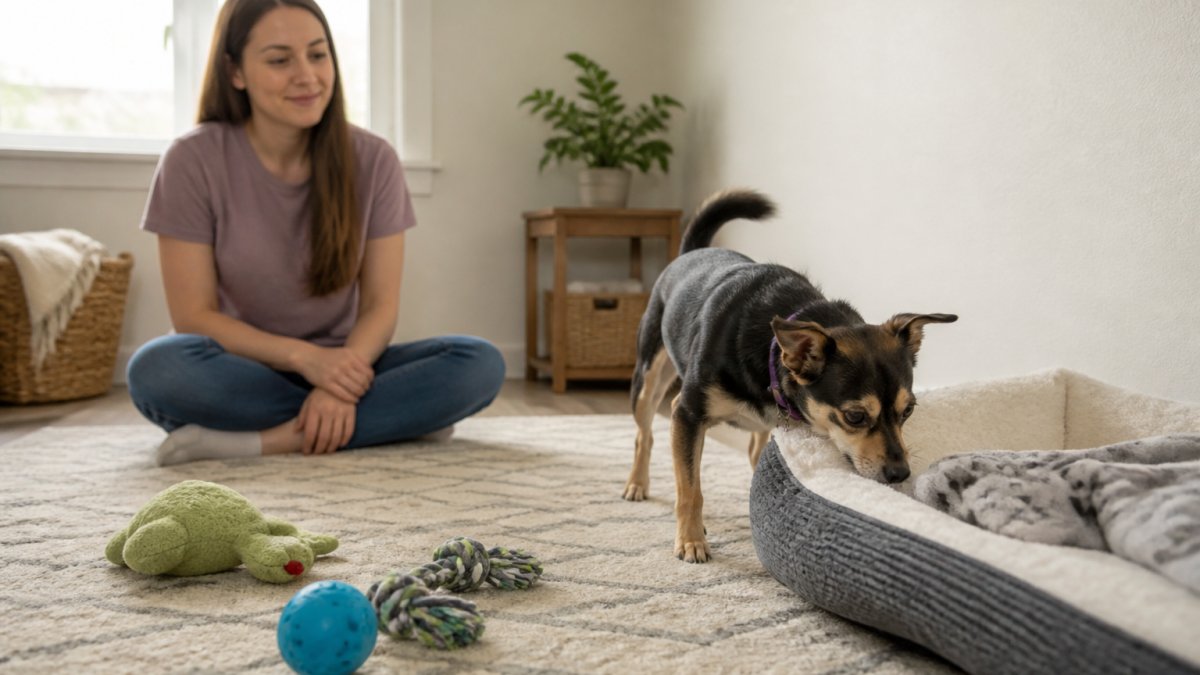
How to Help a Rescue Dog Adjust to a New Home
Rescue dogs carry unknown histories, abuse, neglect, abandonment, and may have trauma you don't know about.
The first three weeks are when your rescue dog begins to trust again, and your calm, patient presence is your most powerful tool.
Patience and Positive Reinforcement
Every interaction during the first 3 weeks shapes your rescue dog's trust.
Use positive reinforcement, not punishment:
- When your dog uses the bathroom outside, praise immediately and offer a small treat
- When your dog eats from their bowl, praise calmly
- When your dog approaches you, let them initiate contact
Your rescue dog needs to learn good things happen here, food appears, gentle hands offer pets, scary things don't.
One common mistake is correcting accidents indoors. Your dog isn't defiant, they're stressed and don't know the routine.
Patience during the first three weeks prevents behavioral problems later, a dog that feels safe becomes confident and well-behaved.
Gradual Exploration and Building Confidence
Don't let your newly adopted dog have access to the whole house immediately.
For the first week:
- Keep your rescue dog in their designated safe space
- Let them explore only when you're actively supervising
- Use a leash indoors if they seem anxious
After the first week:
- Open one additional room at a time
- Supervise exploration
- Watch for signs of anxiety (panting, pacing, whining)
By week 3, your rescue dog can usually handle more space. But move at their pace, not yours.
Confidence builds through small wins, finding the water bowl, navigating the hallway without panicking, resting on the couch without anxiety.
The 3-3-3 rule for pets explains that this gradual approach isn't slow, it's the fastest way to a confident, secure dog.
The First 3 Months: Building Trust and Feeling at Home
By month 2, your pet has settled into routine and their real personality emerges, the first three months transform a scared, uncertain animal into a family member.
Personality Emerges and Bonds Deepen
Around week 4, you'll notice your rescue dog or cat acting like themselves, playing, seeking attention, having opinions.
During months 2 and 3:
- Increase playtime and exercise gradually
- Continue consistent routines
- Introduce new experiences slowly (car rides, new people, different environments)
Your dog might suddenly bark at the mailman despite seeming calm before. That's not regression, they're comfortable enough to react to their environment.
Bonding deepens through consistency and presence, sit with your pet, play, take walks, be predictable. Over three months, trust becomes attachment.
When to Seek Professional Help
Most pets adjust within three months; some need professional support.
Seek help from a trainer or behaviorist if:
- Your rescue dog shows aggression toward people or other animals
- Your pet has severe anxiety that doesn't improve after 4-6 weeks
- Your pet shows signs of trauma (extreme fear, freezing, inability to function)
A professional trainer can assess your pet's situation and create a tailored plan. The 3-3-3 rule for pets provides a general timeline, but every animal is unique, a trainer helps you understand your individual pet.
How the 3-3-3 Rule Applies to Cats and Other Pets
The 3-3-3 rule for pets was developed for dogs, but it applies to cats and other animals with adjustments.
Cats and Their Unique Adjustment Needs
Cats are more territorial than dogs, so a new home feels like an invasion, the first three days and first three weeks matter even more.
During the first three days with a newly adopted cat:
- Confine them to a single small room (not a large bedroom)
- Keep the room quiet and dimly lit
- Provide a hiding spot (covered bed, cardboard box, or cat tree)
Cats need more decompression time than dogs, some hide for the entire first week. This is normal.
During the first three weeks:
- Gradually open access to more rooms
- Use vertical space (cat trees, shelves) so they feel safe above floor level
- Play with toys on string or wand toys to encourage gentle interaction
During the first three months:
- Cats begin to claim the space as theirs
- They'll rub their face on furniture and your hands (this is good, they're marking you as family)
- Personality emerges more slowly than with dogs
Cats adjust to the 3-3-3 rule for pets on a longer timeline, what takes a dog three months might take a cat four to six months.
Other Species: Rabbits, Guinea Pigs, and Small Animals
The 3-3-3 rule for pets extends to rabbits, guinea pigs, hamsters, and other small animals, though their adjustment looks different.
Rabbits (prey animals with strong stress responses):
- First three days: Keep in a quiet, dark space with hiding spots
- First three weeks: Begin gentle handling and let them explore a safe room
- First three months: They may bond deeply if treated with patience
Guinea pigs (social animals that feel safer in groups):
- First three days: Provide hiding spots and minimal handling
- First three weeks: Introduce to other guinea pigs gradually if applicable
- First three months: They'll show personality and enjoy interaction
Hamsters and gerbils (nocturnal, stress-sensitive):
- First three days: Minimal disturbance, dark enclosure, hiding spots
- First three weeks: Short, gentle handling sessions if they're comfortable
- First three months: They may become handleable and less fearful
Small animals follow the same three-stage pattern, but the timeline compresses because their lives move faster.
Individual Variation: Why Every Pet Adjusts at Their Own Pace
The 3-3-3 rule for pets provides a framework, not a guarantee. Factors that affect adjustment speed:
Age: Younger animals often adjust faster. A young dog might settle in two months; an older rescue might need six months or longer.
Temperament: Some animals are naturally confident, others anxious. Temperament doesn't change, but confidence builds over time.
Your consistency: Pets adjust faster with predictable, reliable routines; inconsistency extends the adjustment period.
Existing pets: Calm, welcoming resident pets help a newly adopted animal settle faster; a chaotic household slows adjustment.
The 3-3-3 rule for pets is a guideline, not a deadline.
Some pets never fully "adjust" as we expect and remain reserved or anxious.
Essential Supplies to Support Your Pet's Adjustment
The right supplies make adjustment easier for both of you.
For the safe space:
- A comfortable bed or crate
- Food and water bowls (separate from each other)
- A litter box (for dogs not yet house-trained and all cats)
For building confidence:
- Treats for positive reinforcement
- Toys that match your pet's interests (balls for dogs, feather toys for cats)
- A collar and leash for dogs
For daily routines:
- Quality food appropriate for your pet's age and health
- A brush for grooming (helps bonding)
- Waste bags for dogs
The right supplies create the safe, predictable environment your pet needs to thrive.
Bringing a newly adopted pet home is one of the most rewarding experiences you can have. The 3-3-3 rule for pets gives you a realistic roadmap through the adjustment journey. With a calm approach and consistent routines, you'll transform a scared, uncertain animal into a confident family member.
Frequently Asked Questions
How long does it take a rescue dog to adjust to a new home?
The 3-3-3 rule provides a realistic timeline: expect three days of decompression, three weeks to learn routines, and three months to truly settle and bond. However, every dog is unique, some adjust faster, while others need extra time, especially if they experienced trauma. Patience during this newly adopted dog adjustment period is essential, and you should avoid major changes during the first few weeks.
What should I expect during the first three days with an adopted dog?
Your new pet will likely be in shock and overwhelmed by their new environment, sounds, and smells. Expect hiding, reluctance to eat, or withdrawn behavior, this is normal decompression. Keep interactions low-key, provide a quiet safe space, and don't force socialization. Your rescue dog needs time to process the transition before beginning to explore and interact more openly with you.
Can the 3-3-3 rule apply to cats?
Yes, the 3-3-3 rule works for cats, though cats often need even more time and space than dogs. Cats may hide for days during decompression and prefer a single quiet room initially. By three weeks, many cats begin exploring and showing personality. Three months is when most newly adopted cats feel truly secure and bond with their owners. Respect their slower pace and avoid forcing interaction.
What should I do if my new pet is still anxious after three months?
Some pets need longer than three months to fully adjust, especially rescue animals with unknown backgrounds. If anxiety persists or worsens, consult a veterinarian or certified animal behaviorist to rule out medical issues or trauma-related behaviors. They can recommend professional training, behavioral modification, or other support tailored to your pet's specific needs and history.